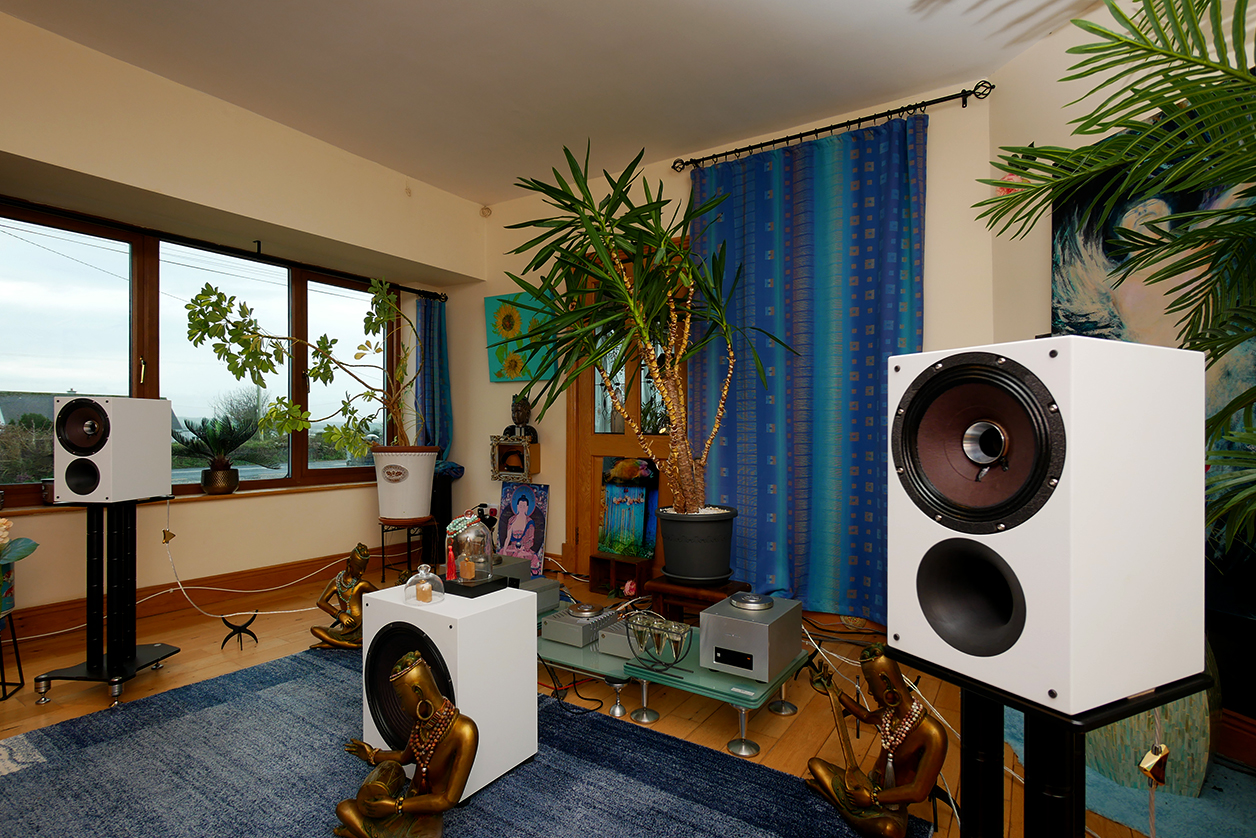
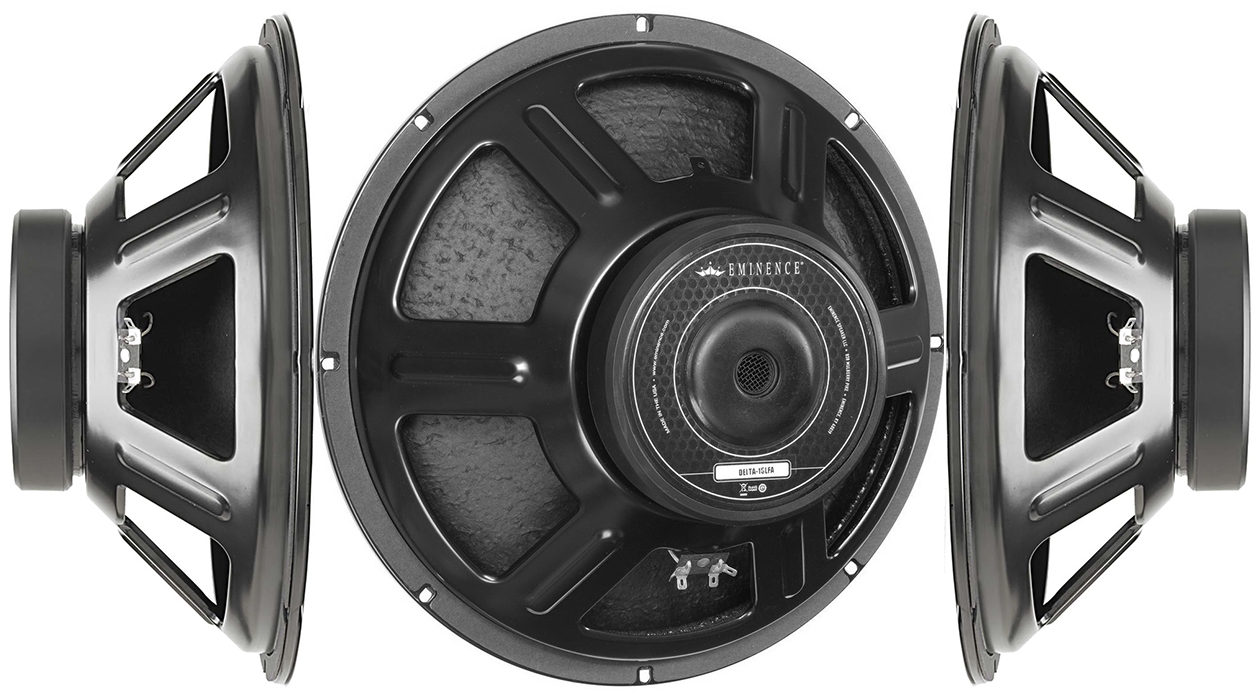
Methodology? In the home-theatre space, a subwoofer review could focus on SPL vs Hz. How loud and low can it go at what distortion? Zu spec "20Hz/95dB without appreciable distortion". That's no infrasonic THX excess. But for music which generally goes neither as low nor loud as Hollywood, a more relevant yardstick might be a passive speaker good to 25Hz. How does our stereo 2.1 or 2.2 system compare on seamless integration, textural continuity, transient power and raw reach? It's less about specs and far more about a Houdini which eliminates ear-apparent assist as though we really faced an excellent 2.0 system. Whilst a 3-piece Method pack won't hide from view, to our ears it must vanish. That's as much about integration—setup and correct adjustments—as it is about the box. "Included are rubber footers and levelling footers. I find the rubber footers to give the best general sound but each room, floor, space and pair of ears and eyes has their own needs. The levelling footers as well as the installed oval-ended no-see-'em footers couple sub and floor across very broad bandwidth. The rubber footers float the sub above the floor. This lowers the cabinet's resonant frequency, giving the 15-inch driver more effective mass to push against. After I installed new firmware prior to shipping, leaving the P3 preset wide open as you requested meant setting the cut/boost filter to 50kHz. This removes all effects of the plate electronics on phase or group delay across the audible bandwidth so is as close to a true bypass as this platform allows. With the Fusion amp of inherently very wide bandwidth as is the wickedly fast Eminence 15, impulse response on this setting looks darn close to what an engineer would spec for a theoretically near-perfect response."
"Again, P1 as we program it—though clients with a Windows computer, USB cable, Hypex filter-design software and a bit of know-how can change it all—is a simple monopole low pass with 13Hz node for a good transition between Method Sub and Method Bookshelf or similar speakers. There is good bleed'n'blend and great sub agility which carries further up into the main speakers' bandwidth. With the wider bandwidth of a monopole, we maintain good impulse response and the transform is lightning-fast on the processor. P2 is a two-pole split-frequency low pass. One pole sits at 13Hz, the other at 41Hz."
Those keen on getting geeky have the following graphs. Those who just want the upshot, there's no latency issue with either preset. These measurements were conducted in the acoustic lab of Spectra 1964® Airport Facility in Ogden/Utah with an Earthworks M23R mic, RND-511 mic pre, RME ADI-2/4 Pro SE and MacOS all calibrated to Audiomatica Clio-12.
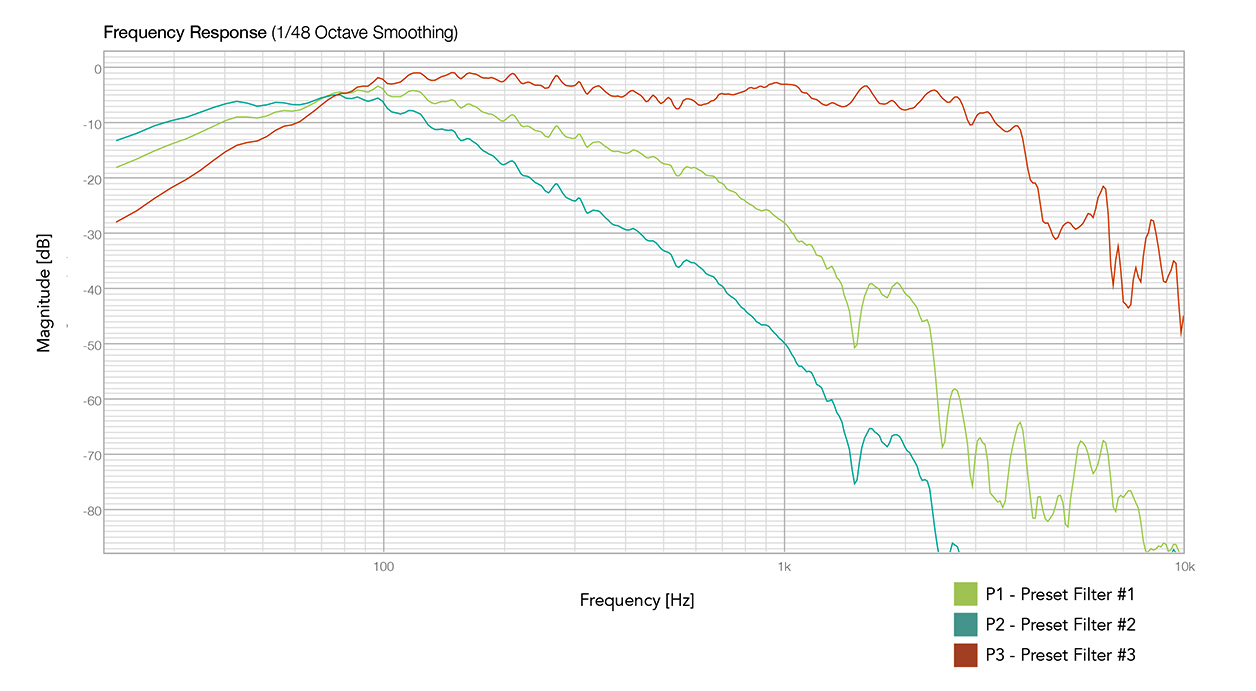
Here we see the amplitude plot for the three presets.







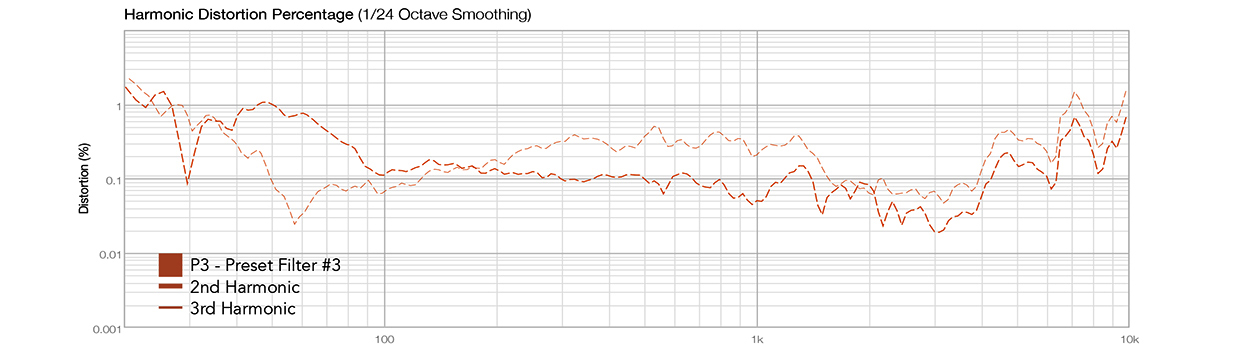
Here we see a wide window to 10kHz for the 'bypass'.
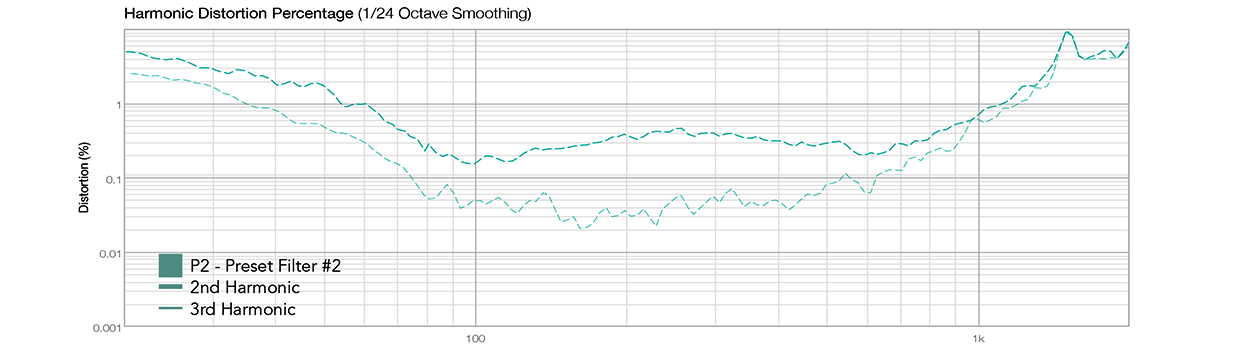
Here is a decade of bandwidth for the 2nd-order filter…
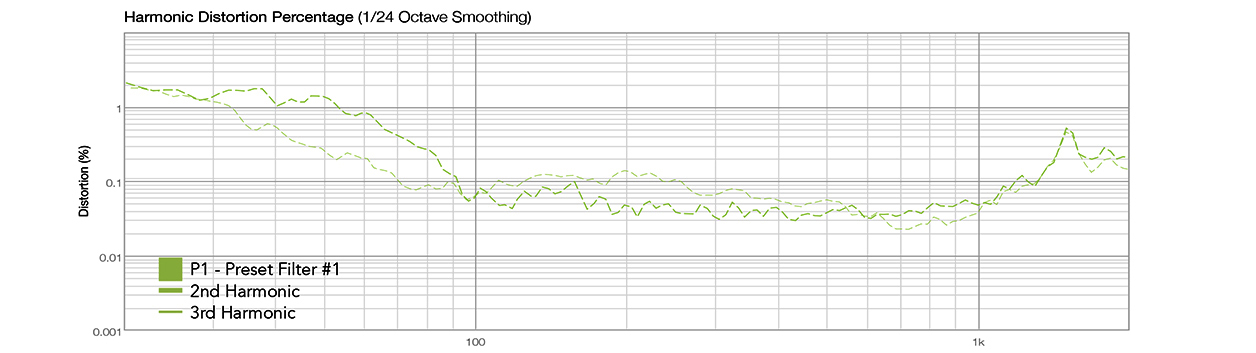
… followed by the equivalent graph for the 1st-order filter.