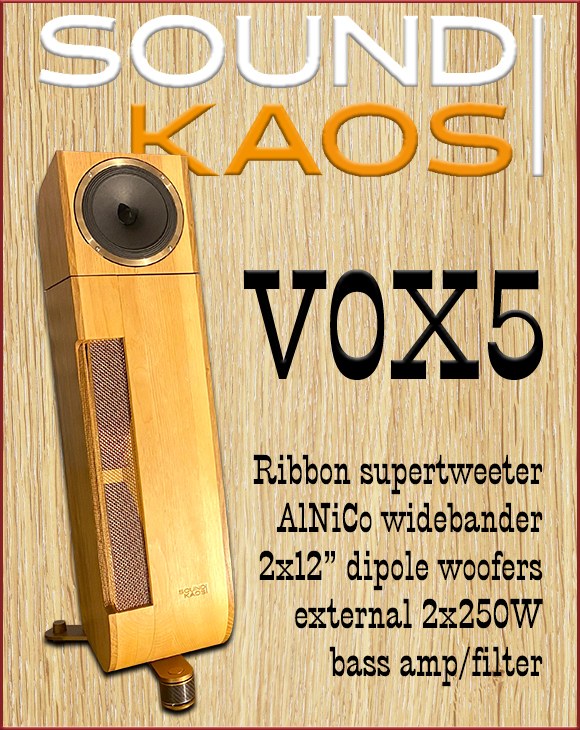
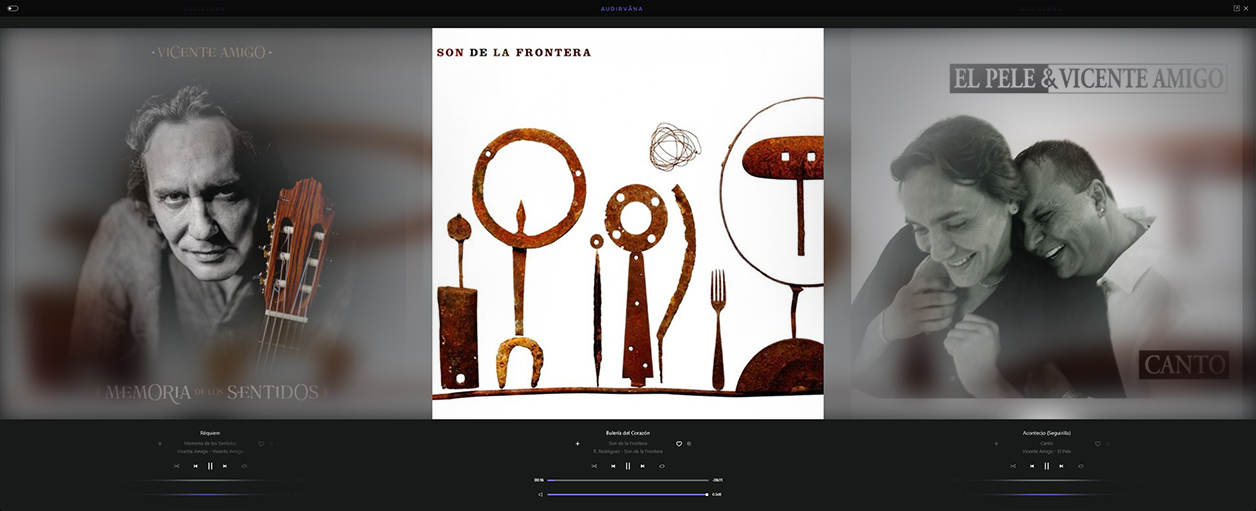
 Data density. On a jar of my favourite Lowicz plum butter we can get even in rural Ireland, it promises "182g of fruit in every 100g of product". By boiling off water content, the plums lose their volume but intensify in flavour. It gives a very concentrated hit of fruit-acid tang. Chefs call it a reduction. I thought of these plummy Polskis once back on the Polish speakers. Of the four speakers I tried, they were the most data intense. As you'd expect from a big direct-coupled widebander, it was the biggest dynamic twitcher. It educated me most on tone modulations. It could do peppery palmas and lightning-y foot work on Flamenco accompaniment whilst diving deep into the flavour profile of Diego del Gastor's Cuban tres against classic Spanish guitar on Son de la Frontera's "Bulerías del Corazon". On Vicente Amigo's famous "Requiem" for Paco de Lucía from Memoria de los Sentidos, the recurring melody sung by Arcángel then Niña Pastori then Rafael de Utrera then Miguel Poveda then Pedro El Granaíno, in-between by varying choral combinations plus Vicente's guitar, I felt deeply rooted in their unique timbres and emotive charge. Waves upon waves of pure vocal passion engulfed my chair. This led naturally to El Pele and his Canto collaboration with Vicente Amigo. Try "Aconteció" for truly hair-raising vocal emoting. All of this directness and intensity I refer to, perhaps erroneously, as speed. Transients rise more steeply, timing quickens, hesitation and half-heartedness vanish. It's a definite fully committed nearfield sensation of electrified energies. Nenuphar v2 on the SIT4 exemplified that particular sonic aesthetic. The important qualifier? It wasn't paid for in haggard coin or dehydrated caffeination. Let's call that the sugar in the plum butter. Here Lowicz smartly don't use too much to kill off the lively acids. Neither did the SIT4. In sonic terms, what flavour depth. I've not heard these Cube speakers this utterly persuasive before. It was one of those audiophile matches made in the 6th Heaven which a reviewer hopes others could experience exactly as he did. Then there'd be no need for wordy reviews. That's my cue to wrap. But first, more listening. Business and pleasure. Then a few final thoughts.
Talking points at a glance. One extremely overrated part for both voltage and current concentrated in a single gain stage. By implication, single-ended pure class A. The device conducts at all times, be it idle or under signal. Power draw is 20 x higher than the power delivered to the speakers. No phase splitting, no paralleled devices. Zero feedback as voted by an experienced listener panel. Harmonic distortion profile groomed for the negative-phase 2nd as the tuning most favoured by buyers of the original adjustable SIT1. Common Source mode like the SIT1 and 2, not common drain like the more powerful SIT3. It's convenient to extrapolate that the circuit's radical singularity and Tokin transistor's gonzo power make it so organic, communicative, potent and direct. As the one manipulating all variables after having vetted and eliminated lesser alternatives, only Nelson Pass knows for sure. For the user, 'why' and 'how' are academic. We're into 'what'. Let's call that classic class A for its fluid, dense and colour-deep aspects which connoisseurs of the type recognize and expect. We then must add aspects of speed, lit-uppetiness and dynamic hustle which on speakers excelling there categorically counter notions of a dark, energetically plump and texturally thick class A signature. The SIT4 manages to sound organic and radiantly resolved. As usual, the transducer it drives controls the final detail density that gets through. In this case the less/more delta—between my Albedo, Cube and Zu for example—was uncommonly wide. This amp magnified rather than minimized hardware changes. My three ideal speaker mates were the Monacoustic SuperMon Mini, Zu Soul VI and Cube Audio Nenuphar v2. All were crossover-less widebanders whose add-on tweeters, if present, enter on a simple high-pass above 10kHz. Special speakers behind a special amp do special results make. Aside from the audiophile aspects already listed, there was also that voodoo of easy emotional engagement. Why some gear triggers our 'erogenous' zone more predictably than others is mysterious. It's always key regardless that we take charge of our own experience. No power switch should trip with 'do me' demands as though a machine could make us stop feeling shut down, morose or locked in the head like shaven Rapunzel. And it's also true that when we're fully open, tuned in and turned on, pretty much any hifi can be magical. All the more ordinary lesser times are the real trouble. How to get from there to here? Now it's my observation that kit like today's lowers the barriers of zonal entry or participatory shift. We must certainly still arrive prepared but the right hardware asks less of us. For me the SIT4 punched out such easy tickets even though I haven't the foggiest what in its specs would predict it or actually make it so.









What he said; but. My general findings clearly concur with Dawid's. Perfect overlap for an ovation twice as loud. That's ~10dB more signal from a bit less than four times the power. But having reviewed the very pair of Zu DWX he used and with a pair of his sound|kaos Vox3a also playing my wife's office, I appreciate how he hasn't yet met the SIT4 on the racetrack. For that one needs a different kind of widebander like an AER, Cube, Lowther, Rethm or Voxativ. They show the zero-feedback Tokin capable of still higher reflexes, more inside-out reveal across the top octaves and presence region, more intense separation and resultant 3D mapping. It's as though with such transducers, the SIT4's hidden turbo kicks in. It gets to show off speed, resolution and dynamic muscularity that exceed what the tone-centric tunings of a sound|kaos and Zu pursue. On said score, Dawid's report was incomplete. Synchronicity allowed me to fill in his gap. I still leave other holes. There's the JBL/Klipsch crowd John Darko enjoys so much. Would a prospective 12" or 15" woofer plus 3-way crossover find the SIT4's control ideal or a bit wanting regardless of raw sensitivity? I don't know. There's the horny crew of Avantgarde & Sons. With their active bass systems and 100dB+ spherical horns sections, they should be ideal 4-sitters as long as under their extreme scrutiny, residual noise remains low enough. Would it into a 109dB Avantgarde Duo? I don't know. All I know is that in a single 300B's power range, the SIT4 is the best amp I've yet heard. Hard stop. It took my Cube Nenuphar v2 to places they've not previously gone. That sent me on a second White Lotus honeymoon; to the sexy west coast of Ireland, not faraway Sicily or Thailand.

 Now socialist strategy enters. Should the forthcoming SIT5 monos with their anticipated ~40 watts hit the same sonic target to seriously expand the circle of prospective speaker friends, I want to reserve my award for greater less exclusive joy. My pages here already enthusiastically co-signed Dawid's award. The SIT4's wheels really don't need any more shine. And, Nelson kindly earmarked a pair of pending SIT5 for an Irish layover. There's justifiable reason to be stingy with our very limited blue ink. For today, the takeaway is simplicity itself. If you're an 8-watt 300B person to understand and accept the small print, the FirstWatt SIT4 is a red-hot alternative you should really audition before committing yourself to a lifetime of endless glass maintenance and the presence of an output transformer that puts a quarter mile of highly resistive copper windings between your microphonic output device and high-efficiency voice coil. There's a simper far more direct and—to my ears which are the only ones I know—superior way. Even at this circuit's full power, you'll merely be tapping the mighty Tokin at 1/40th its potential. That's a freaky 'just coasting' ratio and, perhaps, one reason why it flies as high as it does. It takes SITuational awareness to know about. Now you do. Pass it around.
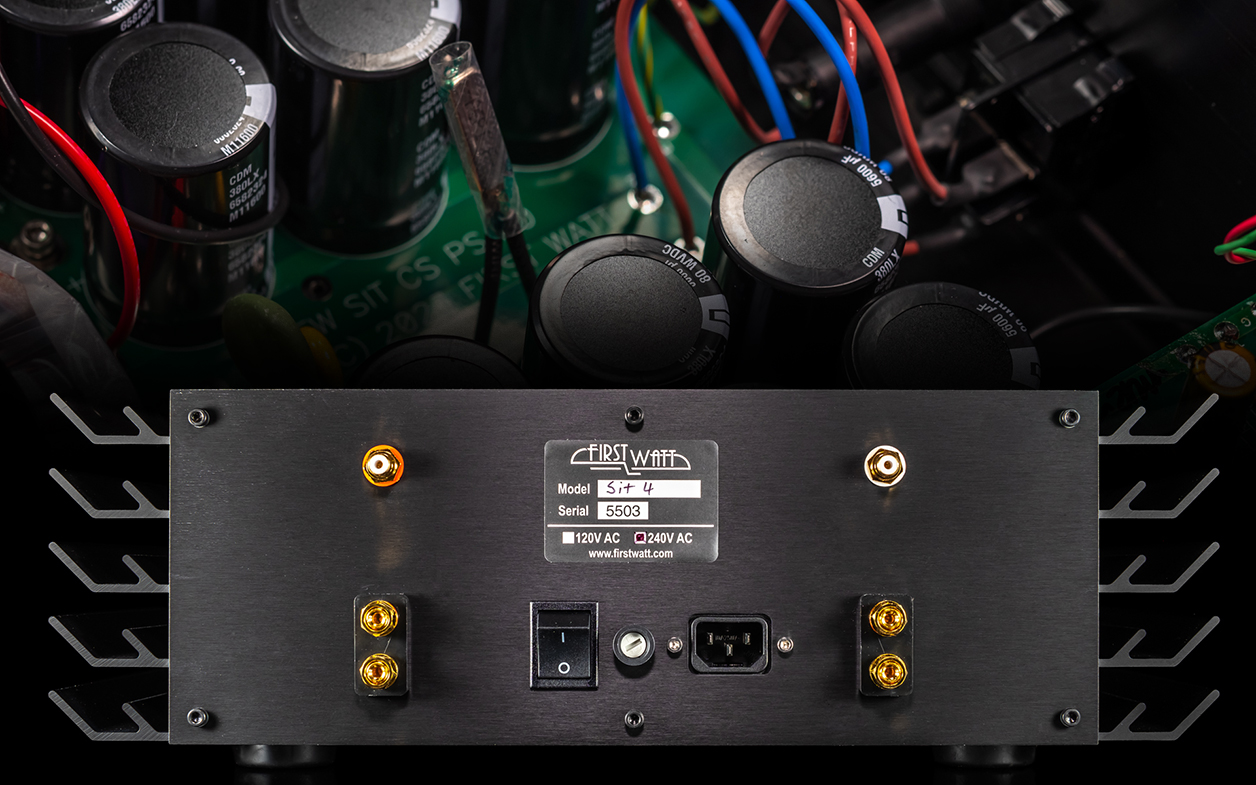
PS: With two pairs of Voxativ Hagen2 inbound to sample its two driver options—one of them meant to be augmented by sub or the company's own Alberich2 active extender—I asked and was granted permission to hold onto this SIT4 sample to drive those 5" single-driver monitors. We'll thus hear of some more of the amp's special expertise with such filterless loads.