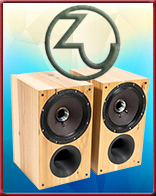
For dreams of even grander machismo—by speakers harder of hearing than JBL, Klipsch, Zu & Bros—I asked Nelson by email a what-if. If he allowed himself an XA-30.8 stereo chassis from the Pass Labs catalogue so its bigger heatsink and power supply, how much wattage could he wring from this circuit after making the necessary parts-value modifications? With my email hitting Desmond first, "this SIT device can handle a lot of power. It mostly comes down to heat dissipation. The SIT5 monos in the same chassis will be 30-40 watts. In a bigger chassis we could get even more power but I'll forward your question to Nelson for a more specific reply." From what-if to around the bend in a minute; just not in a Pass Labs case. Back in the hear-now, I remained stumped by the SIT4's unexpected mix of qualities and the hybrid aroma this creates. Trained modern bartenders call themselves mixologists for a reason. Over the years I've drifted into the 3rd-harmonic camp which in the FirstWatt catalogue was the F5. From there I moved into direct-coupled class AB circuits of very high bandwidth executed with lateral Exicon Mosfets not bipolars. Those amp choices quite naturally attracted me to ancillaries and speakers which suited that preference transition for a quicker leaner more 'nearfield' sound. The warmer Zu found a home on our TV where the focus is on comfort not resolution.
The SIT4 now mixed what I heard as classic class A attributes so warmth, density, saturation and flow with the greater separation powers even occasional flashes of incisiveness on piquant cymbal strikes and the energetic 'distance shrinking' I associate with faster wide-bandwidth circuits. With it, class A had just gained a new lease on my life. How would this transition to different loads?







Sapperlot. It's archaic German slang. I'd not thought of it in ages. What else lingers forgotten in my attic? It means zounds. Gee whiz. I flashed on it because phonetically it might as well spell zap a lot. That and not Sir Lancelot greeted me when Cube's Nenuphar v2 took over. This was a far more lit-up peppery gestalt with blitzing transients of extreme separation and the kind of precisely mapped walkabout soundstages visual listeners dream of. This was 'my' sound: far more lit up and illuminated, not as materially chunky and chewy as the Zu which for it is more opaque in the presence region but playing it altogether more electrified and quicksilvery. Whilst bass mass was lighter particularly in the 80-160Hz band, bass textures were ideally damped. Reach breached the 1st octave to ~35Hz. Sir SIT the Fourth had relinquished his tweeds and brogues for a polo shirt, joggers and trainers. This was an altogether sportier occasion. It meant accelerated reflexes to demand lighter attire. Sonically it behaved far more like my usual 2.5MHz direct-coupled diet. Yet those Kinki amps completely overdamp and dry out these loads to give out prematurely down low. Electrically that match is all wrong. The SIT4 meanwhile had these multi-whizzer widebanders sing off the leash; deep-throated and full throttle. Now electronica with synth bass earned its keep as did audiophile productions with their extra resolution not wall-of-sound aesthetic. More unexpected behaviour from our Tokin transistor. Sapperlot!

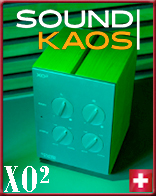
Time for Herr SIT4 to meet Fräulein Chicane. Hello 2×15" cardioid sound|kaos sub crossed in at 100Hz 4th-order Linkwitz-Riley and the speakers out at the same frequency and rate via precision active analog filter from Manchester's Lifesaver Audio. With its resonant quarter-wave tuning in a big box, Nenuphar's extension is freaky – for a single-driver speaker. But neither does it hit 25Hz nor grip that bandwidth with a Ripole's extreme damping and super-dipole dispersion pattern cancelling a lot of ringy room gain. Following the old adage that it ain't bragging if true, I routed the SIT feed through the crossover then compensated the low-pass level to account for the new balance against the mono-bridged Pascal switching amps from Gold Note driving the sub.