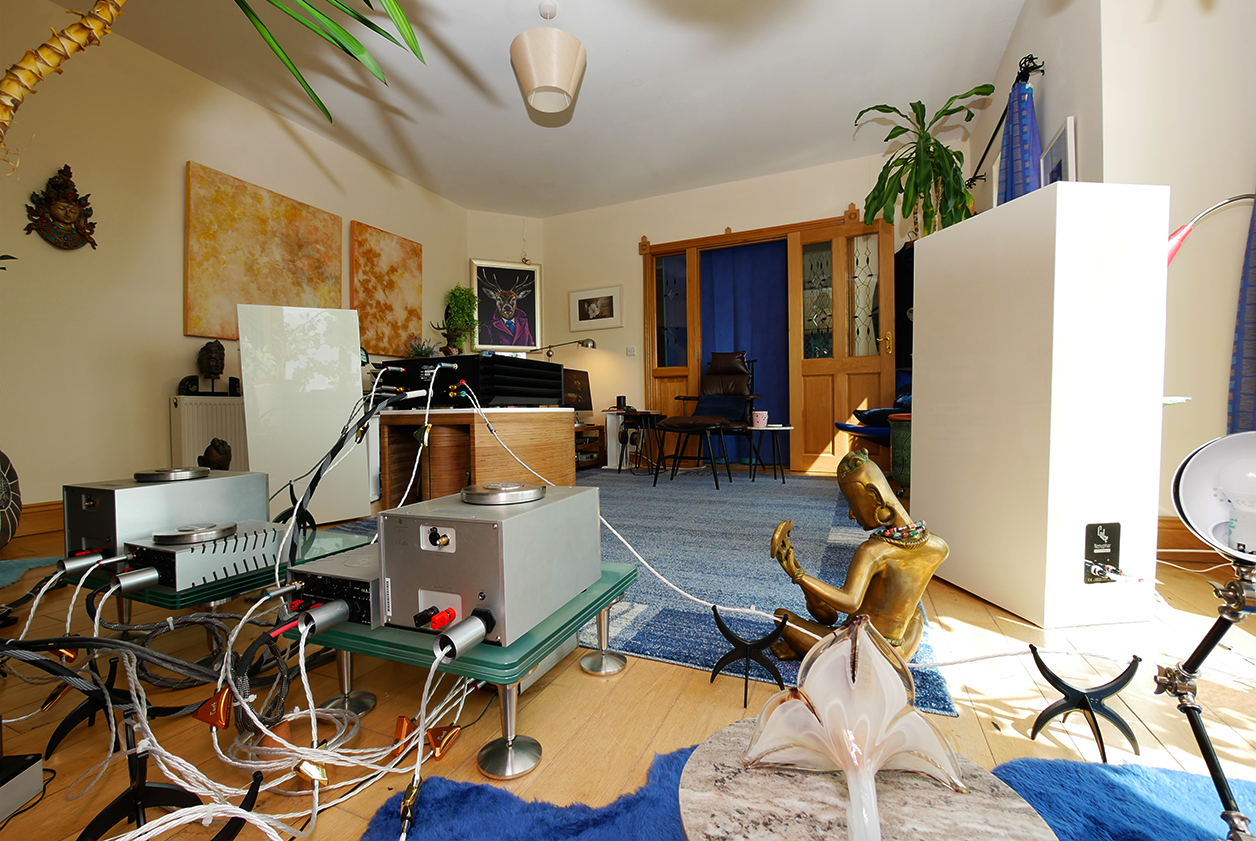
Perfection is the enemy of great. This now was superlative sound across the full audible range. If we recall how according to my old boss Pat McGinty of speaker house Meadowlark, each halving of frequency quadruples driver excursion, eliminating two octaves from ever showing at the widebanders' voice coils seriously eases their throw tax. That paid dividends on resolution. Meanwhile the lower 2½ octaves detached from the room and Cube's box resonances. That created still better textural continuity with the higher bands. It's a proven trick to optimize low-power amps even on speakers which otherwise would recommend against them. Simply subtract bass from the equation. Now they graze off the fat of the land, not dry patches. To be sure, the SIT/Nenuphar combo didn't need the more complex signal path and extra hardware. For anyone unfamiliar with Ripole bass, that combo was done and dusted already. Being so used to cardioid bass in conjunction with PSI Audio's active bass traps in my front corners, I simply knew how below 100Hz, more was possible. Most of it was down to cancelling sidewall reflections and the room mode between them. A bit was extra reach and more weight particularly in the upper bass than Nenuphar does on its own. It's precisely what Cube's Lotus 10 addresses with its extra woofer crossed in high. It had little to do with the amp itself so is pure anecdotal data, no critique. But in my hardware context, Fräulein Chicane certainly had chick power in her corner. On purely personal terms, this setup had me in no haste to return to my usual 250-watt monos and Qualio 3-ways.
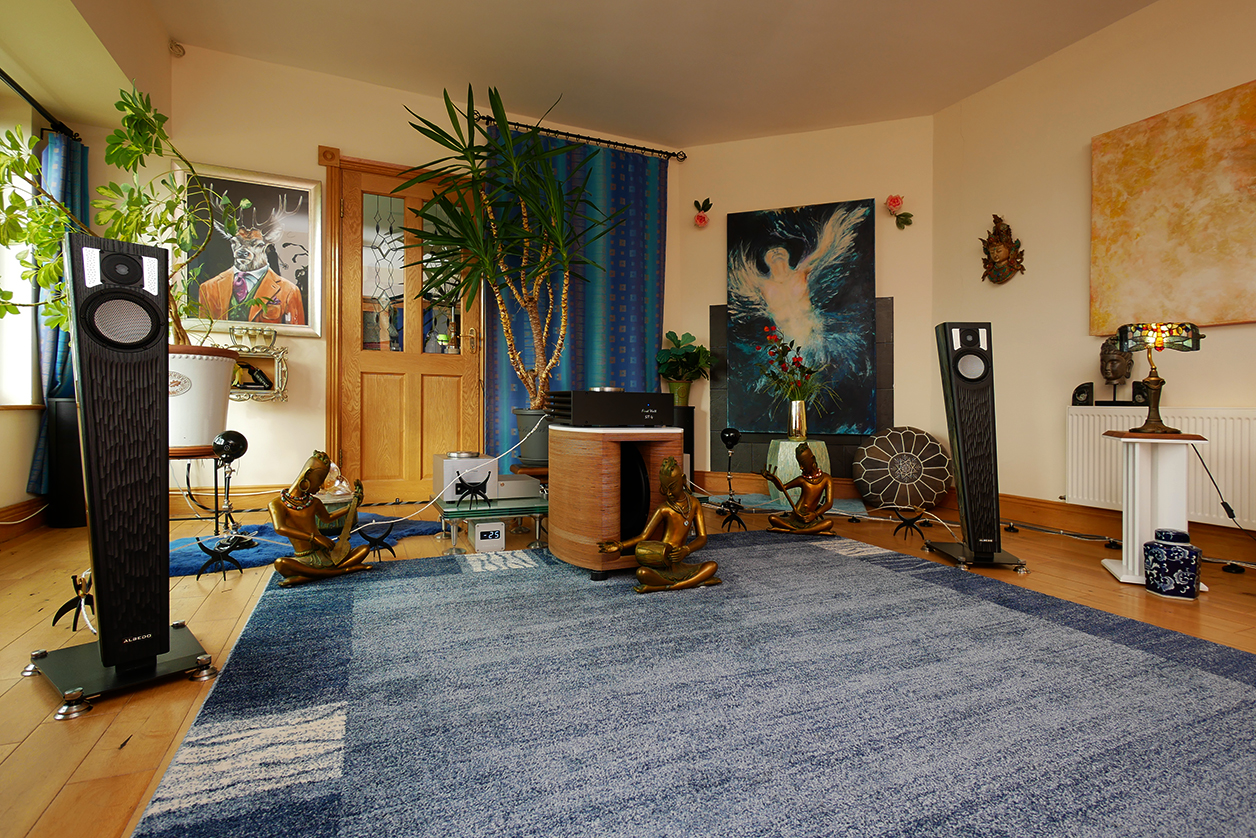
The environmental tariff for toking on the Tokin is heat. This is one hot-running amp. If you're a Club Medizen who calls 30°C normal, it'll have to be your winter amp. Otherwise your air con will battle 200-watt heat dissipation. No matter the winner, your utility bill will bite. That's how this beauty extracts its price. Green it is not; more like red hot. Time for more chicane; in my 2nd system. It plays the same stereo 2.1 tune because its tiny isobaric widebanders with 15kHz AMT don't really reach past 60Hz. Here I've set the handover to 70Hz with a matching external crossover. With the upstairs sub a conventional force-cancelling sealed type to radiate omni not cardioid, I want the filter frequency as low as possible to minimize room involvement. Additionally my chair sits in a bass null to avoid the room's longitudinal node. Because this is my night-time and smaller system, I don't use it for high SPL and bombastic fare. SPL requirements are deliberately tame; just what a low-power amp loves when it dates low-ish speaker sensitivity. It's another super-basic trick to exploit low power: reroute the bass; don't crank the volume (not that a smaller room wants high SPL to begin with). If we peak at an occasional 80dB with our median level at 60-65dB in the seat, 10 watts go surprisingly far even into an 85dB speaker. And no, that's not the SIT4's native habitat. But given the downstairs joy, I was curious whether I could pass this Tokin around.







First a few words from Nelson. "As you would imagine, I am most gratified to read the comments about the SIT4. One item though, apparently you received an earlier draft of our technical statement. The final amplifier does not have any feedback and the schematic is wrong in showing the resistor going from the output back to the input. A relatively minor issue but it turns out that it makes a significant difference in the performance. The almost-production prototype had 6dB of feedback to get more power out of the amp into 4Ω but our listening panels didn't like it as much so I pulled the resistor and made everyone happy. About your what-if question, with enough dissipation surface a single 2SK182es could theoretically deliver ~400 watts Class A but that would leave no margin for reliability so it would likely be half that. I know that this sort of sonic signature appeals to the "lower power" crowd but I'm not certain of the market for a high-power version; and it's also uncertain how well that sound could be delivered at high power levels. What is certain is that it would have a large set of heat sinks." My takeaway is that in this game, listening beats measurements. Next, there exists a 'mainstream' sound with a big audience, a 'niche' sound with a small audience – and Nelson has pretty clear ideas on either. Finally, does the SIT4 sound like it does because its output transistor is so ridiculously overspec'd? Even Nelson doesn't seem sure whether this performance will automatically scale up to 200 watts which would still be just 'half power' but not the current 1/40th fraction. If it were a matter of fractions, an equivalent 200-watt amplifier's output devices should really be capable of 8kW. Unlikely. Before we move the show up the stairs, a bit of 'reverse fractional' idiocy for downstairs. With a name like 6moons, you'd expect no less. Albedo Audio's 1st-gen Aptica are 6¼" 2-way micro towers with pre-Cell Accuton drivers in a self-damped transmission line with Helmholtz resonator to cancel the primary organ-pipe resonance. Efficiency is 85dB. The crossover is a minimum-phase 1st-order type so nothing as complex as what's in our Audio Physic Codex 4-way. Electrically it's ideally suited to the Kinki monos; sonically not so much. These hard diaphragms prefer more tone density and colour saturation. With plenty of untapped voltage gain on hand, would the mighty Tokin shower Aptica with luv?
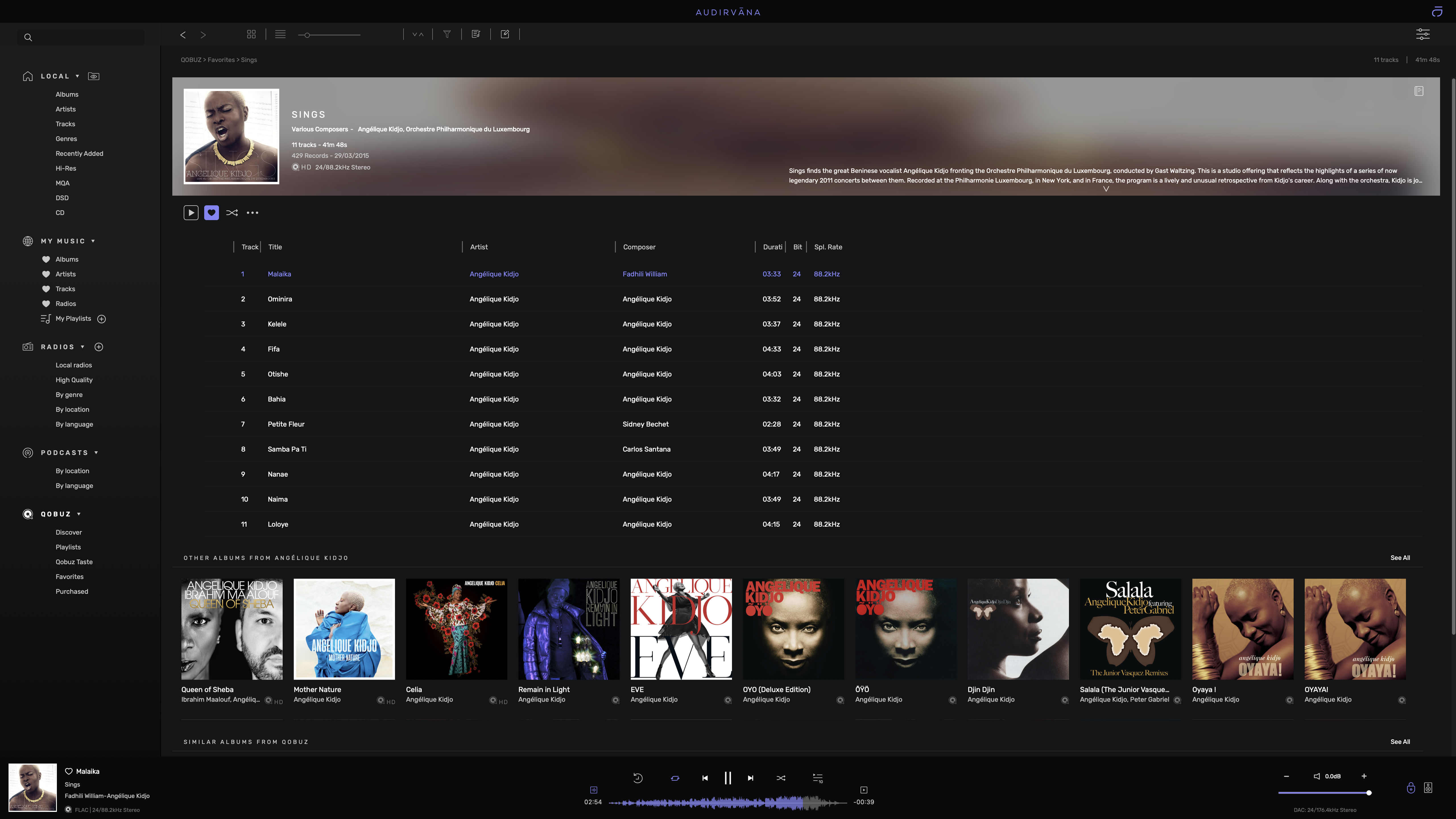
Now coming off the DAC's 6.2Vrms XLR outputs into the crossover, the latter's remote-controlled attenuator sat at -25dB when a recording's median level was very low and I in my medium zone. The following Angélique Kidjo track in my loud zone required 20. I was most gainfully employed; again. Though perverse on paper, it wouldn't have to be a temp job either. Therein lies a tiny tale.