My Precious by N.P. Tokin? First, a short riff on aromas. During the Victorian era, botanical hunters scoured the globe for exotic specimens to bring back to Blighty where unknown plants would suddenly enhance a rich collector's garden or heated greenhouse. Whilst today's world has become a global village where an Irishman buys Turkish apricots and Indonesian pineapples at his local grocer's without giving it a thought, rose fanciers still crossbreed different varietals to create new colours and scents. One reason why high-efficiency speakers enjoy a devout audience is that such transducers become fertile black soil wherein to plant exotic power triodes from a bygone age. Their owners can sample unique tonal flavours nobody has heard since those tubes stopped being made. Solid statesmen and women meanwhile limit themselves to just a few popular varietals and routinely don't even know or care for their make. Whilst the SIT4 doesn't offer plug'n'play transistor swaps like a triode amp with switchable bias might for valves of a shared pin type, it does resurrect an aroma class forgotten since the early Sony and Yamaha SIT amps. Then it throws in the industrial Tokin wrinkle to become even more unfamiliar.
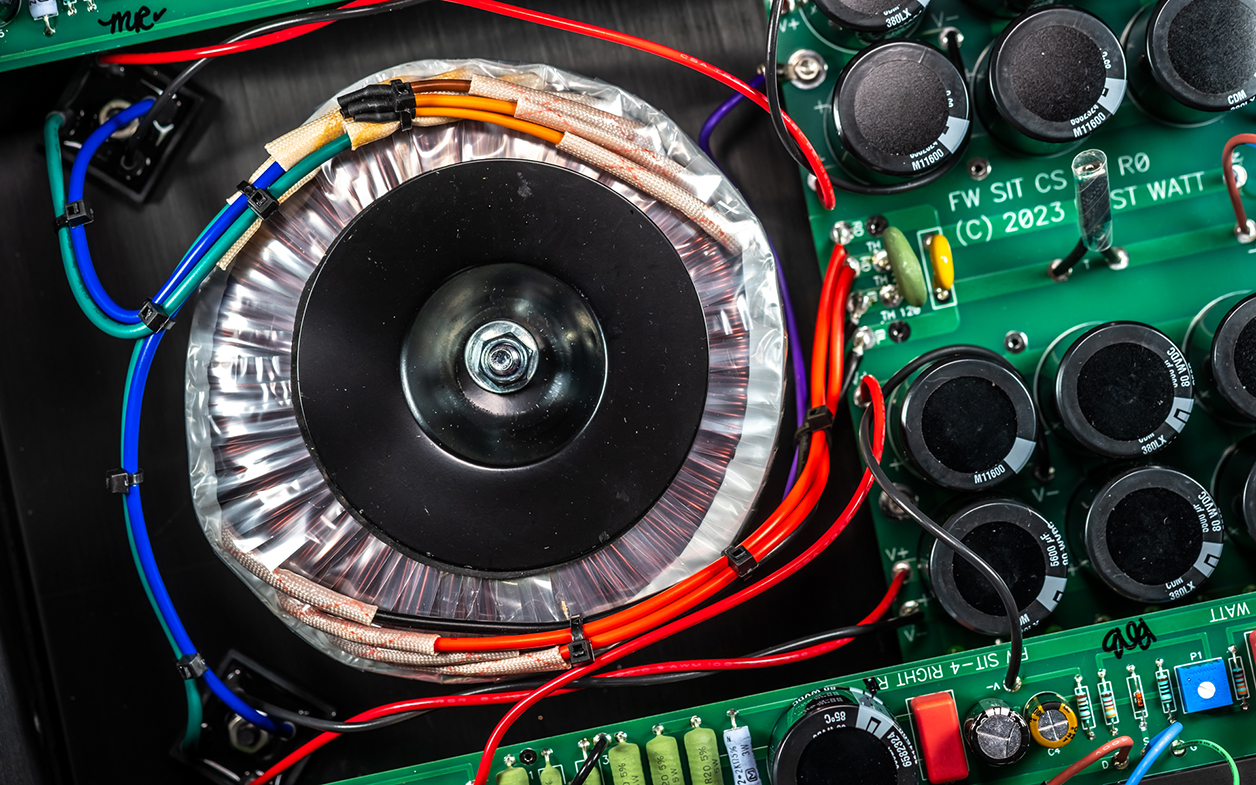
The pursuit and enjoyment of aural aromas is clearly a very different concept and aesthetic than adherence to some idealized 'textbook' specs. An audience which pursues class D for its ultra-low measured distortion and power density can't conceive of exotic audio aromas being an allowable never mind enjoyable pursuit. It's one more reason why even if they had appropriate speakers, the SIT4 wouldn't be for them. The entire concept is too contrary to their narrowly defined notions of correctness. A rare orchid fancier meanwhile couldn't care less about that 'c' word. Walking in that fellow's lady slippers with transistors was a personally very rare opportunity. The only other one this year was my first encounter with Germanium devices in SAEQ's Hyperion Ge. But today Dawid and I would get to sample Nelson's mega Tokin SIT rescued from oblivion by his strategic acquisition of remaining parts. There's rumours already of monaural SIT4 versions to double the output power. As to where else adventurous aural pilgrims might sample SIT, I know of just Alexei Syomin's S.A. Lab of Moscow where SIT and Germanium parts of USSR origins remain available. Over to you, Dawid.







Reviewer: Dawid Grzyb
Transport: Innuos Statement, fidata HFAS1-S10U
DAC: LampizatOr Pacific (KR Audio T-100 / Living Voice 300B + KR Audio 5U4G Ltd. Ed.)
USB components: iFi audio Mercury3.0
Network: Fidelizer EtherStream, Linksys WRT160N
Preamplifier: Trilogy 915R, Thöress DFP
Amplifier: Trilogy 995R, FirstWatt F7, Enleum AMP-23R
Speakers: Boenicke Audio W11 SE+, sound|kaos Vox 3afw
Headphones: HifiMan Susvara
Interconnects: LessLoss Entropic Process C-MARC, Boenicke Audio IC3 CG
Speaker cables: Boenicke Audio S3, LessLoss C-MARC
Speaker signal conditioning: LessLoss Firewall for Loudspeakers, Boenicke ComDev
Anti-vibration conditioning: 12x Carbide Audio Carbide Base under DAC, preamp and speakers
Power delivery: Gigawatt PC-3 SE EVO+/LC-3 EVO, LessLoss C-MARC, LessLoss Entropic Process C-MARC, Boenicke Audio Power Gate, ISOL-8 Prometheus
Equipment rack: Franc Audio Accessories Wood Block Rack 1+3
Music: NativeDSD
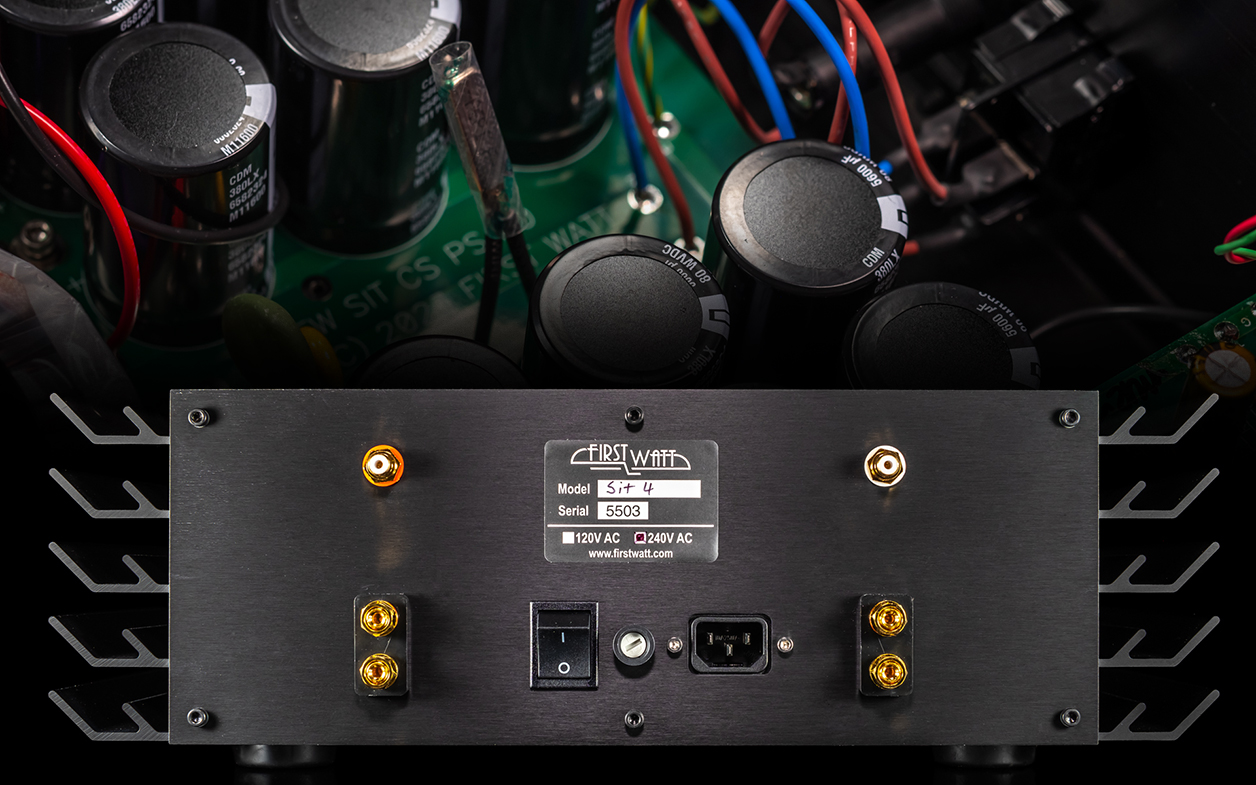
To compare the SIT4 to my FirstWatt F7, let's briefly revisit the latter. Many years ago this elegantly voiced amp showed me that low power groomed for rich euphonic colours and sensuality can also do spacious, quick and detailed. A properly tailored load is all it takes to secure these often mutually exclusive traits. The F7 avoids excess. It prioritizes tone, vividness and intimacy and avoids grain, harshness and stuffiness as we'd expect from deep class A bias. It casts a nicely moist, organic and breathing soundstage which allows images to blossom naturally from within instead of overdrawing their outline edges. The F8 followed suit on typical class A goods then struck me as more athletic and muscular than the F7 which in that comparison naturally felt chunkier, denser and more relaxed. The F8 felt more mainstream universal than the mellower thicker F7. A small loss in roundness financed the F8's extra bite, snap and clarity in a fair trade. There was just one catch. Back then I remarked that a dense amp ought to feel lazier than one primed for fitness and articulation. The milder F7 should have had the softer bloomier bass, the sportier more authoritative F8 do that tighter and more ripped. But it was au contraire. Neither was the F7 lightning-quick nor the F8 slow and bloated but a gap between them registered. Low output impedance typically means high damping so more woofer control. The F8's was 2.5 x higher than the F7's. Perhaps Nelson deliberately injected a touch of playfulness to the otherwise sporty F8 for another layer to its already complex personality? I only know that it's a lot of amp for the money.