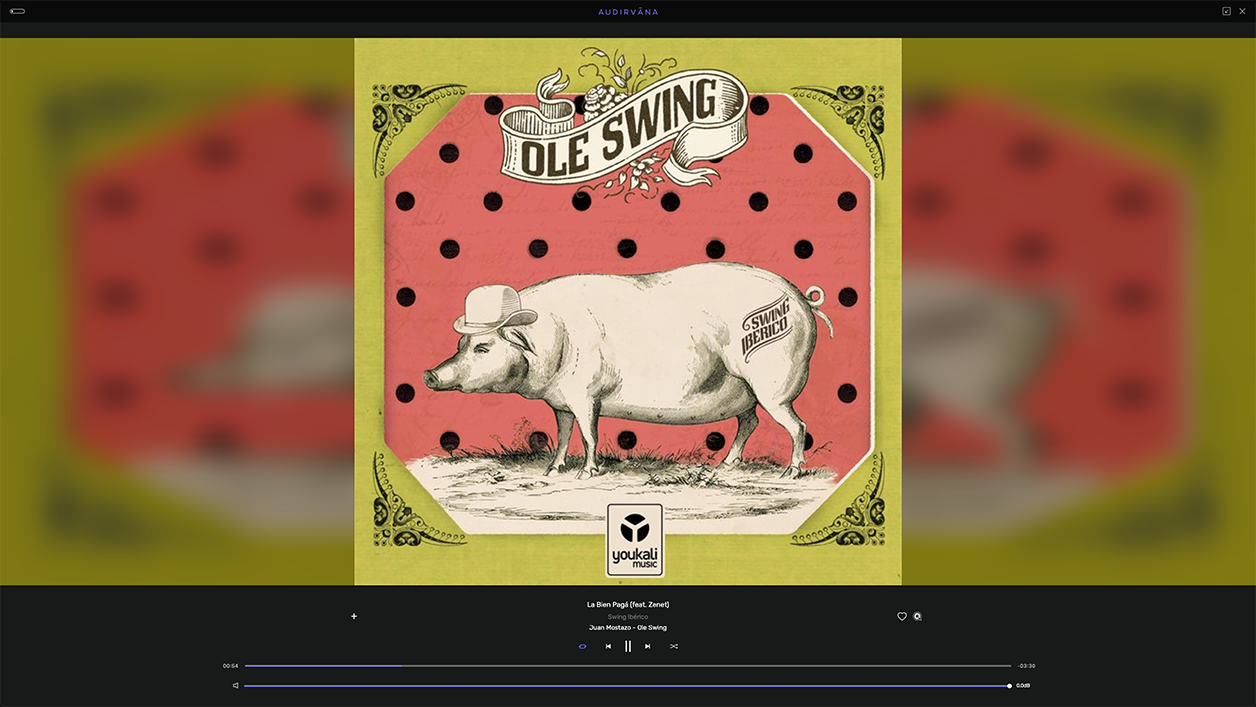
The pink porker? With apologies to our hapless inspector Clouseau, this segment called for appropriate cover art. Et voilà, Youkali Music had it. The SIT4/Aptica combo in 2.1 mode gave me brilliant mainstream sound. The (in)famous German ceramic membranes retained their peculiar transient performance but on tonality and fill grew quite a set. Be it piano, Flamenco or Jazz Manouche guitar as three common sources of tinkly plink 'n' plonk—or in the case of Django's heirs, glassy stridency—these instruments all showed wonderfully modulated harmonic substance. Whilst the speakers couldn't entirely shed their undertone of coolish damped precision, I found them perfectly enjoyable in this take on a modern hi-rez sound. It settled two things for me: sufficiently chameleonic responsiveness that had the SIT4 sound decidedly different from load to load; plus an innate intensity and muscularity which transferred no matter what. If sounds were floating balloons, with the SIT4 their hollows were pressure stuffed like bulging sausages, their skins paper thin to transmit changes in internal colouring aka tone modulations. Yet this wasn't a fat congealed dark sound at all. Hence the question mark on this paragraph's bolded lead-in. With my preconceptions on class A and wide-bandwidth DC-coupled class AB, I will call the effect class A for individual images, class AB for the context they arose in. The performers themselves had pink porkiness but the space between them was filled with light for excellent visibility on depth layers and ambient cues. Density plus separation. On top of that, the temporal quality had strut and swagger. It wasn't laid back like a wall flower that's glued to a chair whilst the wild bunch dry-humps on the dance floor.
Obviously I'm not a mainstream guy. I don't find mainstream sound that interesting. I'm also not keen to promote a combo which nobody would pursue. Just because we can doesn't always mean we should. While adding useful data to my collection of impressions, Aptica did though show that yes, one really could stick to this temp job and feel well paid. Time for my last bit of 'unnatural' experiments before we settle on the best most realistic combination. In case it wasn't clear yet, on these Italian speakers the SIT4 minced my 250-watt monos. Tone and textures were undeniably superior.










Upstairs the isobarically twinned spider-less 4" Mark Audio Alpair widebanders probably never get my 250wpc stereo amp out of its narrow class A envelope. Other than 'only' leaving 20dB of untapped headroom in the bank—of the Sonnet Pasithea DAC's R2R ladder's 4V XLR outputs with variable reference voltage for zero-loss remote volume—the SIT4 was a virtual sonic stand-in. Relative to rhyme 'n' reason, it in fact was far more of a shoo-in when 250 watts in this application are utter overkill. That's simply what I have and love the sound of. When Jan Garbarek leans with abandon into his soprano sax's top register to surf the sunrays on In Praise of Dreams on ECM, the SIT4 was as open, shiny and brilliant as I'm used to. This once again flummoxed notions on darker less sparkly class A. Being theoretically good for 50MHz as per its earlier specs, the Tokin part is clearly eminently capable in the treble when the right transducers grant it passage. Whilst this again was no mainstream proposition because too many shoppers reject subwoofers for music not movies then fail to recognize their undeniable advantages once dovetailed via active external hi/lo-pass filter, this in fact was an eminently sane hardware match. Minimalism on monitor size and amplifier power signed on the dotted line of a small room's actual needs. The heavy lifting was handled by two active hence adjustable 9½" sealed woofers fronted by 500 watts of class D, 2.5ms of digital latency compensated by 86cm forward placement. The only practical advantage my own amp held was being half the price; running cool as a cucumber; and catering to my silver preference like the original SIT1 monos did.
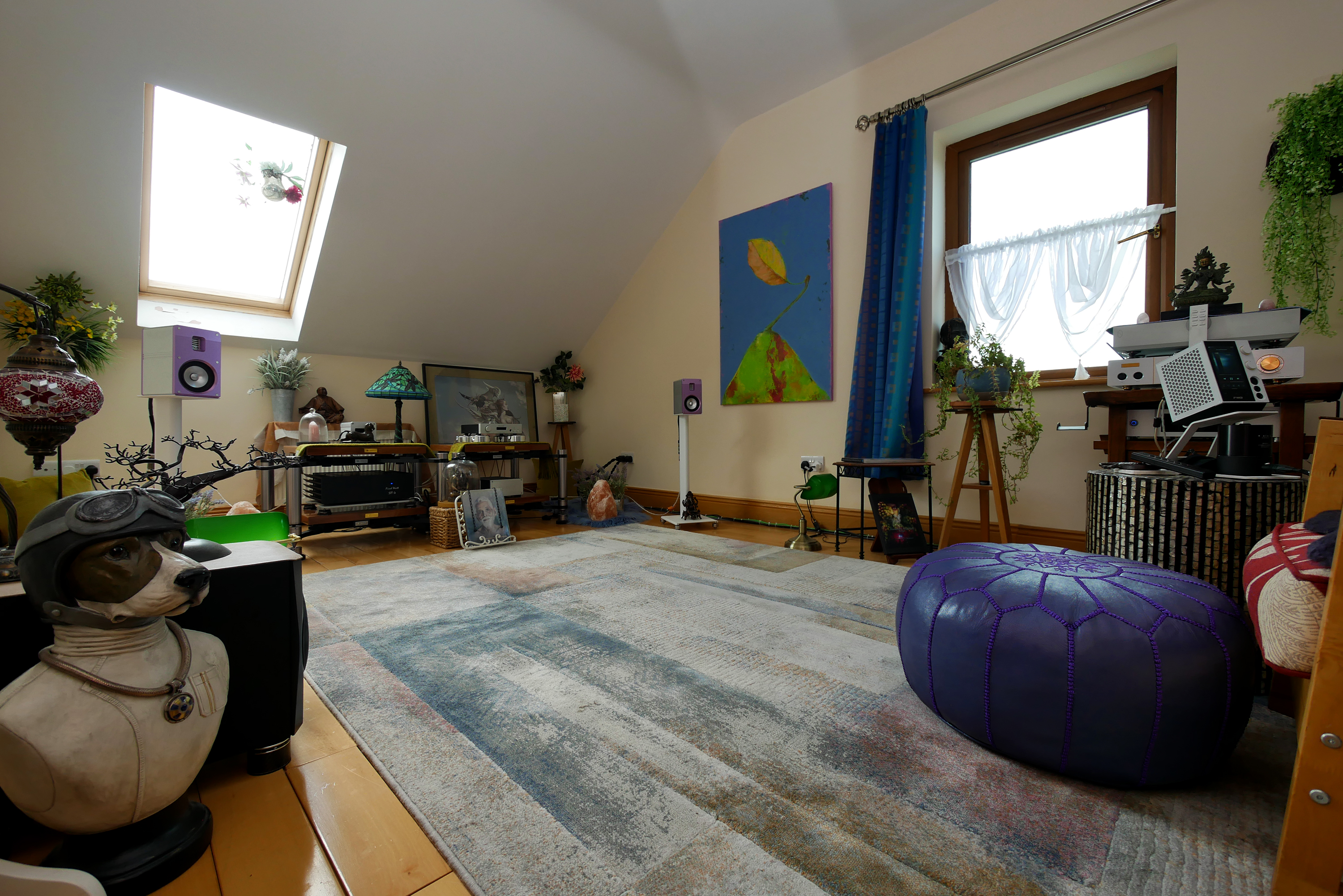
Between this and the Cube Nenuphar v2 combo, I thought of the latter as the most realistic representation of a SIT4's target customer I could rustle up. That's what I returned to for the remainder of the gig. For some very basic parting math, we're told that our brains correlate a 10dB loudness jump with twice as loud. Operating this upstairs setup at 20dB below max source voltage shows that I could theoretically listen 4 x (!) louder than I want before running out of gas. Chances are that by then these small drivers would jump out of their hoops and distort like bandits. So the point is understanding what watts we use. Then we can make an educated decision and possibly get by with far less than assumed; or apply our budget to fewer but better watts to not sit on a rusty stash like greedy hoarders who lost track of 90% of squirreled-away loot.