Even in low gain, the chain with the Serbian amp of 0.7V input sensitivity had copious excess voltage gain into Zu's widebander with its tweeter in the whizzer's throat.
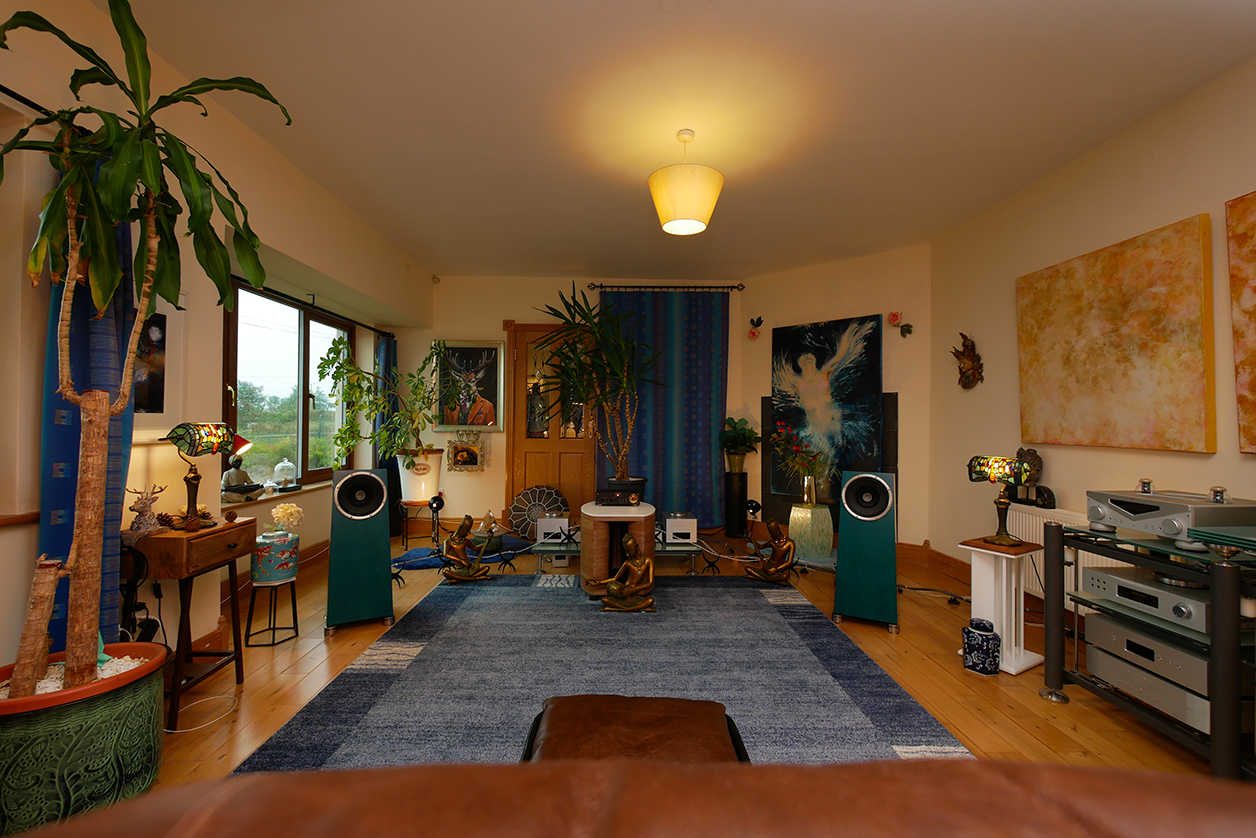
I expected likewise for the SIT4. Relative to 'unusual' speakers that have low-power amps sing not choke, the Soul VI is one of the least fussy least outré examples I know of. Its only limitation is ultimate low-end reach. So in its usual spots bracketing our TV, the 2-stage 50Hz bass boost on our Gold Note integrated is engaged. Zu's robust Eminence-based driver is perfectly capable. Its cubic volume confined to 81.5cm height with non-tube finger slots facing the floor limit 1st-octave breach. That welcomes some strategic analogue EQ for movie soundtracks. No such chicane for this review of course. But if things went as sterling as Dawid's award suggested, I had other chicane in mind for this beefy Tokin transistor.

Thinking readers already suspected that a single-stage amplifier like the SIT4 would invert phase. To compensate, its '-' terminals wire up 'live' and the '+' terminals grounded so we needn't compensate by inverting our cables. We'll do it automatically by proceeding mindlessly so normal: red to red, black to black.







As anticipated, I sat at ~30dB or more below my DAC's 3.1Vrms RCA outputs for headroom to spare. Just a bit of common sense in these matters sees the light. As a big believer in first impressions—of gear arriving preconditioned then properly warmed up—here are mine. With the SIT4, I felt in a warm embrace. An embrace reaches out. It bridges distance. It connects. Without Dawid's nearfield trickery which can simulate a quasi-surround perspective, this must have been my version of what he called immersiveness. It was a more 'active' sound than the SAEQ's in having this peculiar effect of feeling invited into a musical hug. I call it peculiar since it had nothing whatsoever to do with forwardness where music casts in front of the speakers. Not. The soundstage stretched wall to wall well behind them as usual. Yet to it there was a projecting aspect. That differed. It wasn't come hither as in, 'meet me over yonder'. It said, 'feel me here in your seat' like an invisible lap dance. Quite uncanny; and I suspect, impossible to correlate with a specific measurement? Also unusual in the context of such a dense fleshy saturated sound was excellent separation. Solo vocals and instruments peeled out from surrounding thicket with extra alacrity. This again didn't have them stand forward or aloof. It simply made them easier to see as discrete entities meshed up with other expansive so intermingling sounds. It's an aspect of high resolution which in this instance worked independent of higher 2nd-harmonic THD. I found this particularly out of the ordinary. I associate a warm sound with a more opaque less teased-out sound. The SIT4 begged to disagree. Message received. My bad.
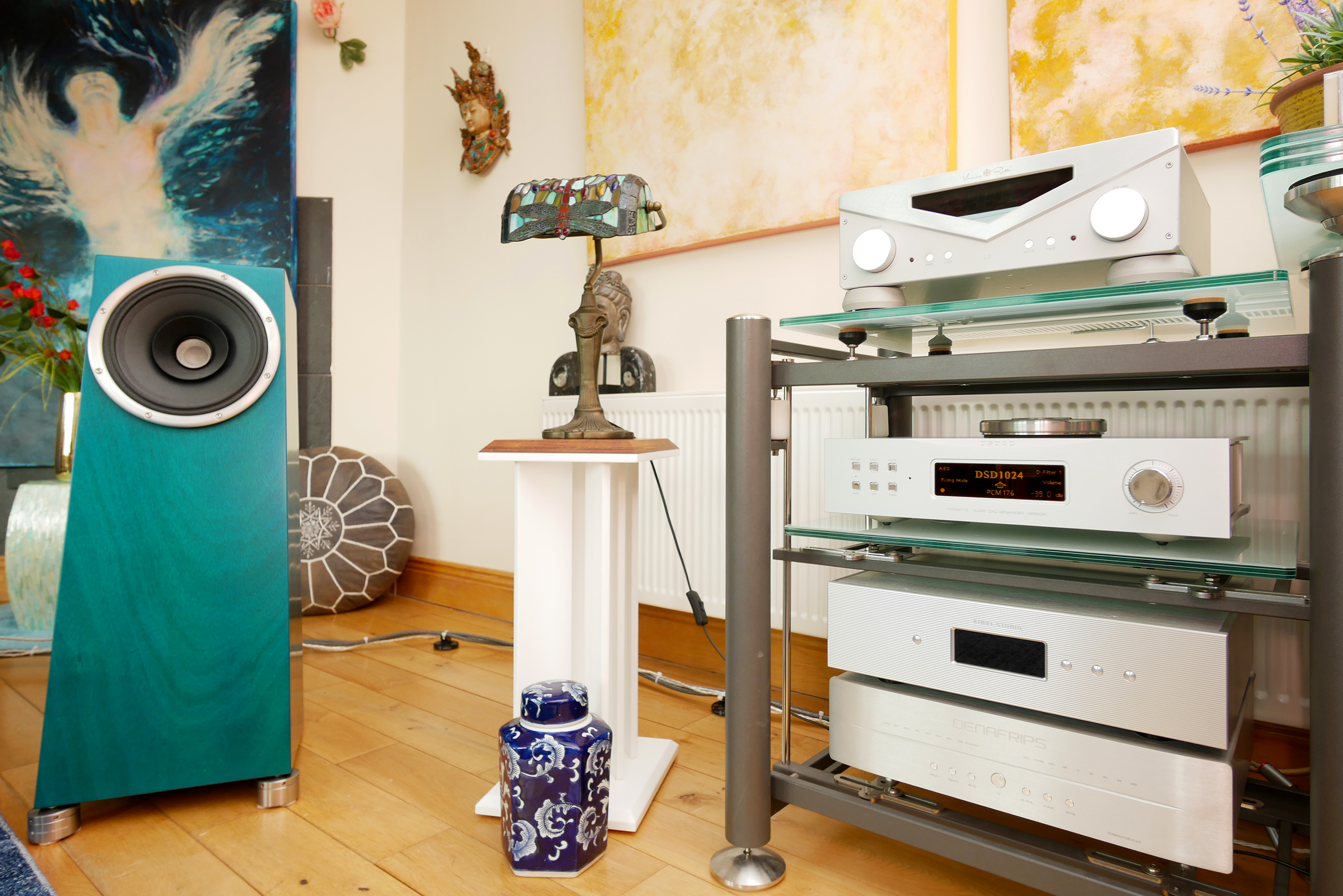 Use mouse-over loupe enlarger to see actual volume setting on DAC.
On a minor minus ledger just then sat low bass which was slightly underdamped compared to the Serbian amp's less than 0.05Ω outputs. I thus wanted to experiment with removing the risers from beneath the speakers for a far smaller floor gap with possibly better self damping of the driver. So what if soundstage height came down a bit. I wasn't lacking for bass extension, just some control. The 3-stage class AB amp also sounded dynamically twitchier and quicker but in trade felt more passive. Energetically its sound happened more 'over there'. Like a basic bartender, I definitely had two distinctive flavours on tap.
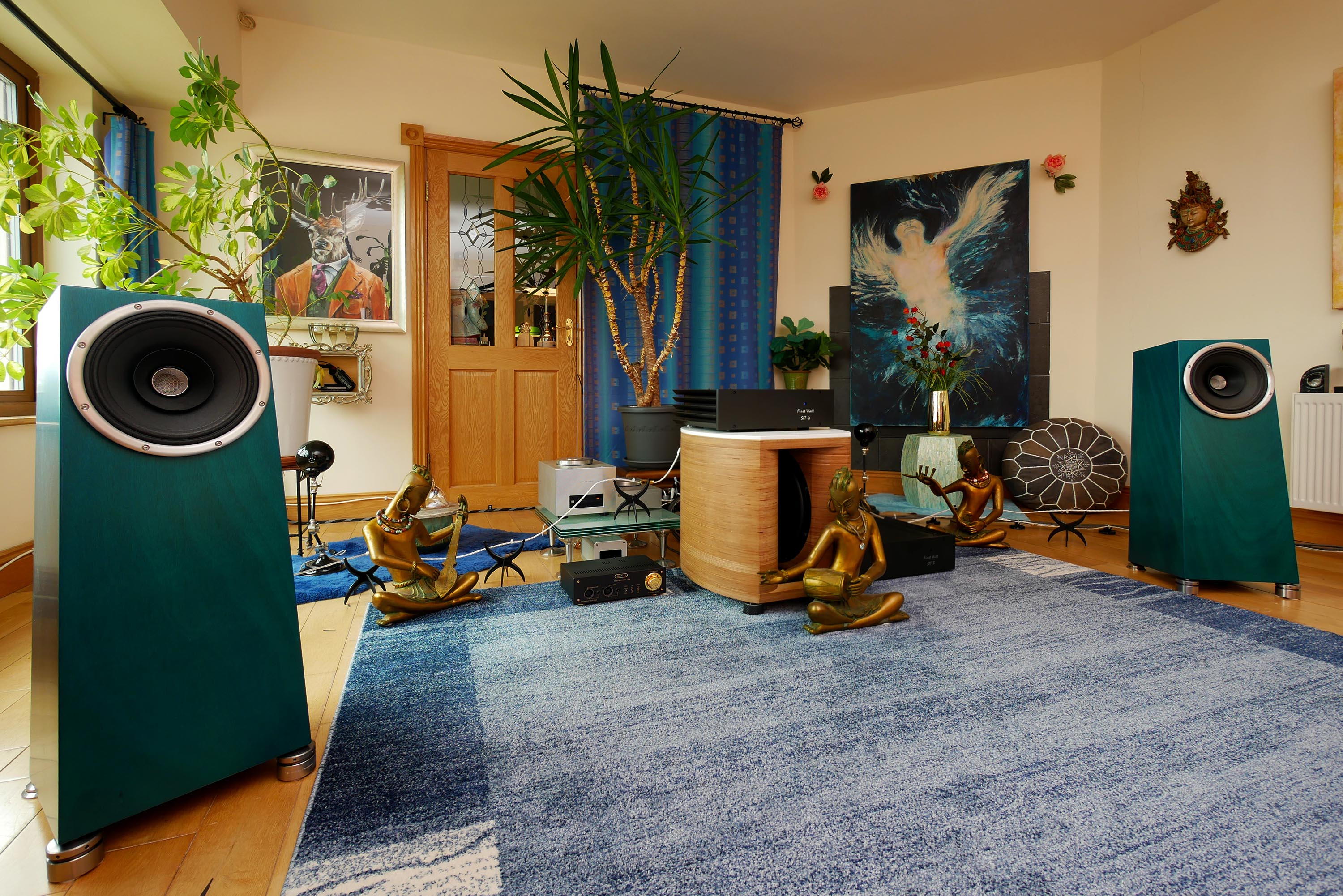 Two-eyed equally black SIT3 in standby for comparison purposes.
Given the one-eyed SIT4's chassis colour, "I'll have one more of the black stuff" was the only proper response. Guinness and Ireland. Two peas in a stout pod. Even Pass Labs' Desmond Harrington knows. He relocated to County Cork south of us and has gone native already. Sláinte, Desmond! Now back to listening. Removing all isolation footers beneath the Zu for an even but minimal floor gap increased bass amplitude but not damping. Playing a few rounds of footsies, I ended up with nothing on the speakers' rear and the original risers shrunk by nearly 2cm in height on the front. That gave me the best balance of output and control. The 4th SIT was clearly not bass shy. Versus the 3rd SIT, I worshipped at the perception pox box because on paper, the discontinued chap was rather burlier at 18/30wpc into 8/4Ω, had about 20 x lower output impedance plus lower noise and distortion. At the ear meanwhile, the roles reversed. The newcomer was the macho, the oldie the sissy. The SIT4 had superior muscle tone, gumption, projection, intensity, density, saturation and resolution. It was more involving and communicative. It made for a rather lopsided session in its favour. With reviews not being blood sports where a downed opponent gets hammered to a pulp, let's leave it there and park the SIT3 on my hifi storage rack behind my office.