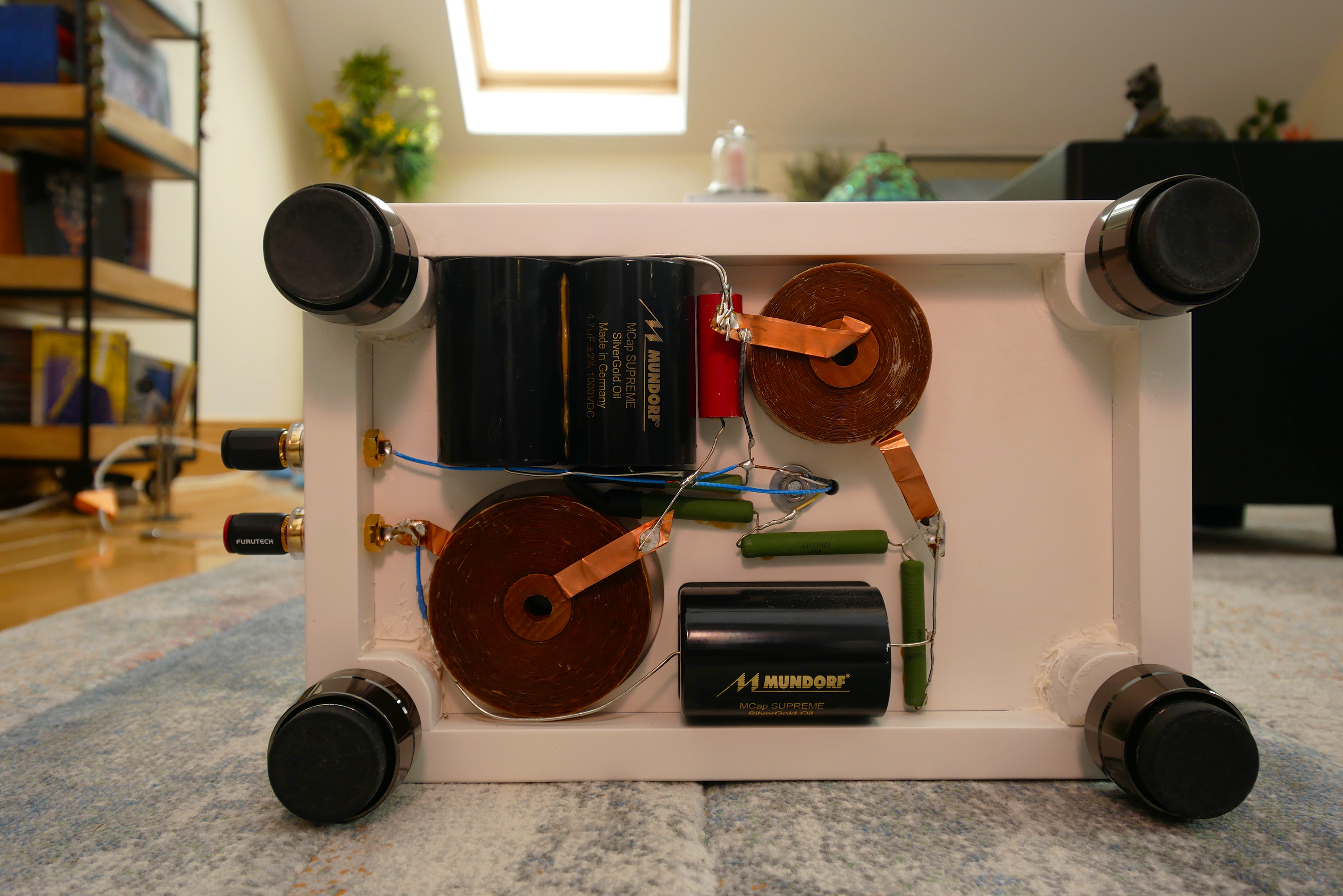
The crossover in the plinth wasn't potted or enclosed but a downfacing open baffle. That the subwoofer would lack threaded footer inserts I knew. Yet my eyebrows still did their arched thing then doubled up over being pawned off on thin rubbery pads. Thankfully a quad of proper large Virtual Vibron footers in inventory corrected this quickly. As to fit'n'finish, check out the excess glue in this next photo. You won't see it right-side up but if this is A1 execution, Daudio work to a different alphabet than I was taught in Germany. Ditto for the active filter/preamp's little plexi window which unceremoniously fell out—little rookie remnants that hadn't yet 100% hit hardcore commercial mode. The same went for the thin plastic bags of the previous page to protect the speaker paint from the wooden crate's hard-foam liners. Echoes of DIY is not what most clients investing €6'850 into a pair of 2-way monitors expect to see.
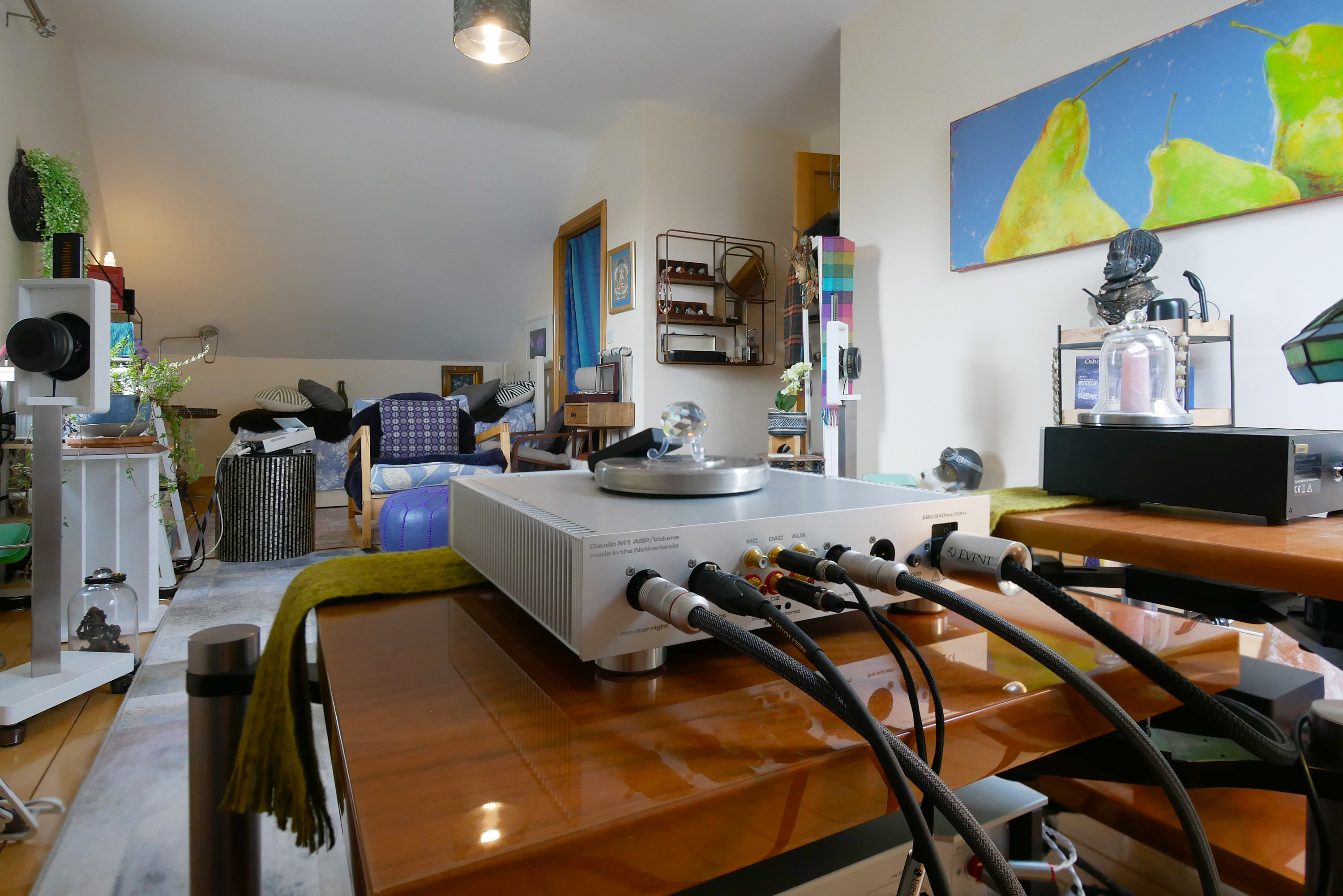
My sample ASP configured with RCA inputs and XLR outputs. Presumably a paying client can request a different mix to accommodate resident hardware. Daudio hadn't inquired whether my sources have RCA outputs, my amplifiers XLR inputs. Luckily here I had the right sockets and a spare 6m RCA cable to swap for my customary 6m XLR connection between the sidewall source stack and front-wall amplification.











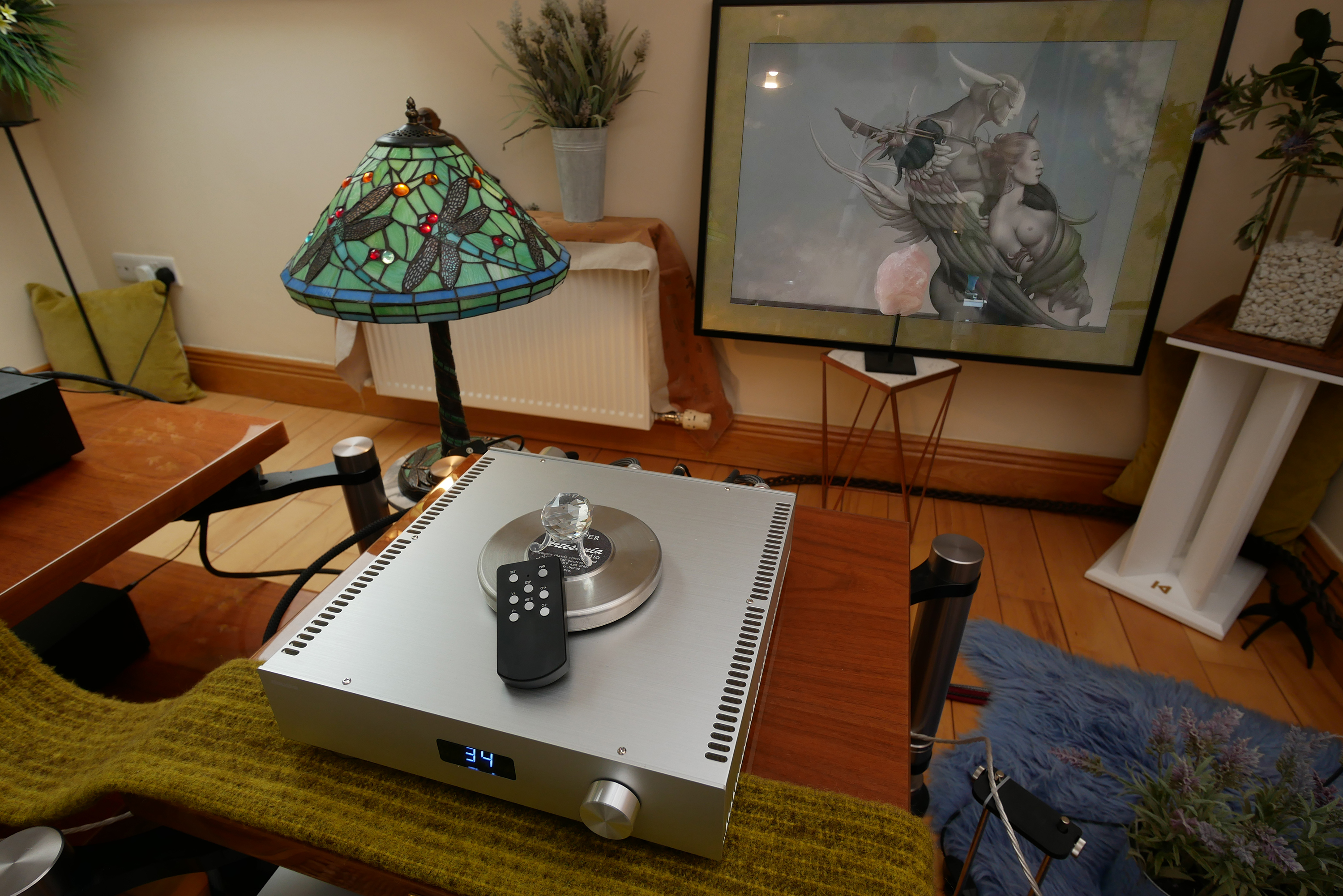
For a close-up on this remote, use the mouse-over loupe or open the image in a new window at full size. The ASP's casework is the same Japanese issue that Nord Acoustic in the UK use as upgrade option for their Hypex, ICEpower and Purifi amps. My NC500 monos from them use it, too. These are nicely finished low-mass chassis I've always loved for their non-bling build that's perfectly appropriate for cool-running electronics not priced as luxury goods with 2-inch face plates. The subwoofer's rear restricts itself to an XLR input, volume pot and IEC power inlet with mains switch. Why did Daudio opt for a sealed sub over a folded-dipole version? Again, box bass radiates omni to involve all of our room's reflective surfaces unlike more room-agnostic dipole dispersion. "We would prefer a RiPol or dipole sub but 99% of our M1 clients have a small room and put the sub against the wall. It's why they pick the compact M1/sub system to still enjoy open-baffle mids and highs. That is the practical reason for a sealed sub whose force-cancelling array is impulse-compensated for no vibrations and therefore almost insensitive to footers beneath it. The main subtle difference is the height of different footers which creates more or less acoustical floor coupling. With a fixed 4th-order 120Hz Linkwitz-Riley low pass, it is set up to integrate specifically with the M1 so we don't sell it separately. Our motional feedback option only comes with the older Seas woofers. The upgraded AT units in your sample are so good that MFB would merely add complexity but no acoustic benefits."
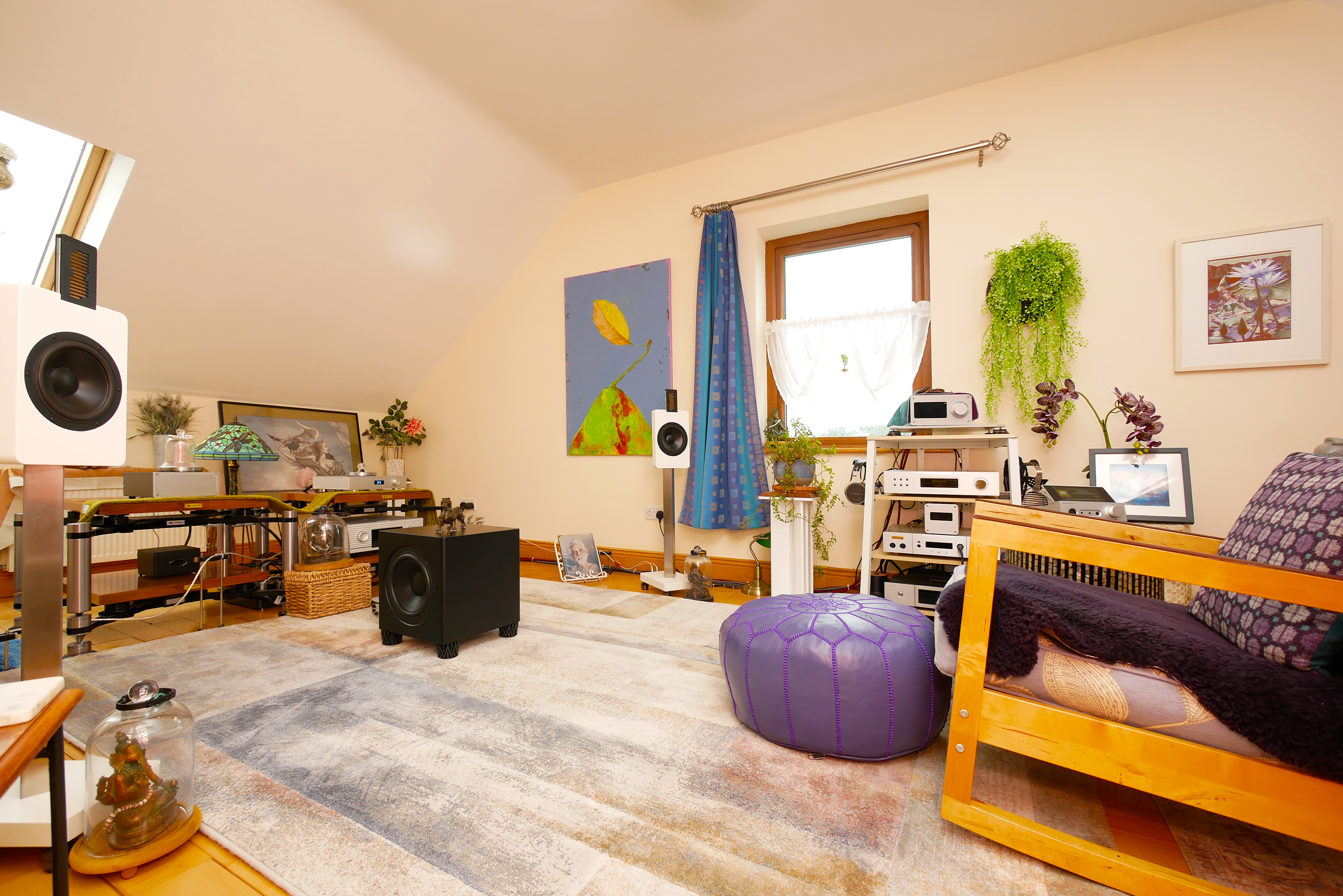
Here we see my complete first chain: Shanling EM7 as 1TB microSD transport ⇒ USB ⇒ Cen.Grand DSDAC 1.0 Deluxe ⇒ 6m RCA ⇒ ASP ⇒ 1m XLR ⇒ Kinki/Vinshine Dazzle ⇒ M1 whilst the ASP's low pass fronted the sub via Daudio's included single XLR cable. A lovely bonus of these plinth-mounted Furutech terminals is not wasting a metre of speaker cable dangling off high terminals. It also makes for a cleaner look. To wrap preliminaries, not many speaker brands have the stones to promote a compact 2.1 system that wouldn't even work in 2.0 mode. Given my perspective on stereo 2.1 and how to do it properly, that alone deserves major recognition and applause because here it is done truly seamlessly—perfect integration guaranteed. Now let's listen.