Country of Origin

Reviewer: Srajan Ebaen
Financial interests: click here
 Main system: Sources: Retina 5K 27" iMac (i5, 256GB SSD, 40GB RAM, Tahoe 26), 4TB external SSD with Thunderbolt 3, Audirvana Studio, Qobuz Sublime, Gustard U26 USB bridge, LHY Audio SW-8 & SW-6 switch, Sonnet Pasithea; Preamp: Hattor Audio ARP-S; Active filter: spl Audio Crossover MkII; Power amplifiers: Vinshine/Kinki Dazzle & Audiophonics NCx500 on subwoofer; Loudspeakers: Qualio IQ [on loan]; Subwoofer: sound|kaos D15; Cables: Exact Express Flame, Furutech; Power delivery: 2 x Kinki/Vinshine Tai Hang on amps and source stack, Furutech DPS-4.1 between wall and conditioners; Equipment rack: Artesanía Audio Exoteryc double-wide 3-tier with optional glass shelves, Exoteryc amp stands; Sundry accessories: Acoustic System resonators, AudioQuest FogLifters; Room: 6 x 8m with open door behind listening seat; Room treatment: 2 x PSI Audio AVAA C214 active bass traps
1st upstairs speaker system: Source: Shanling EM7 into Soundaware D300Ref SD transport to Cen.Grand DSDAC 1.0 Deluxe with POW; Preamp/filter: Lifesaver Audio iCon 4SE & Gradient Box 2; Amplifier: Kinki Studio EX-B7 monos; Loudspeakers: sound|kaos Vox3awf; Subwoofer: sound|kaos D12 on twin Nord Acoustic NC500 monos; Cable loom: Exact Express Earth; Power delivery: Vibex Granada/Alhambra, Akiko Audio Corelli Corundum & Castello Solo; Equipment rack: Hifistay Mythology Transform X-Frame [on extended loan]; Sundry accessories: Furutech cable lifts, Furutech NFC Clear Lines; Room: ~3.5 x 8m
1st upstairs headfi system: DAC: Cen.Grand DSDAC 1.0 Deluxe with POW; Headamp: Cen.Grand Silver Fox; Headphones: Raal 1995 Magna, HifiMan Susvara
Desktop system: Source: HP Z2 workstation Win11/64; USB isolator: LHY UIP; LAN distributors: LHY AS6 Pro & SW6-SFP; Ethernet reclocker: Stack SmoothLAN; DACs: Gustard R26II & Audalytic DR70; Preamp: Topping A900; Speaker amps: Topping B200 monos; Headphone amp: Enleum AMP-23R; Loudspeakers: Virtual Hifi Viper; Headphones: Final D-8000, aune SR7000, FiiO FT7, HifiMan Susvara Unveiled
2nd upstairs headfi system: Shanling EM5; Headphones: Meze 109 Pro, Fiio FT3, HifiMan HE1000 Unveiled
2nd upstairs speaker system: Source: smsl PL200T CD transport; DAC: Shanling EM7 w. 1TB microSD; Crossover: Lifesaver Audio Gradient Box II; Amplifiers: LAIV Crescendo Chorus monos; Loudspeakers: MonAcoustic SuperMon Mini with Dynaudio S18 subwoofer
2-channel video system: Source: Oppo BDP-105; All-in-One: Gold Note IS-1000 Deluxe; Loudspeakers: ModalAkustik MusikBoxx; Subwoofer: 2 x Zu Method; Power delivery: Furutech eTP-8, Room: ~6x4m
Review component retail (ex VAT ex transport): €13'900 as reviewed [subtract €1K for basic ASP with single RCA or XLR input and no volume control]
 |
 |
 |
 |
 |
 |
D for Dutch dipole. I'd just published a syndication for Hans Beckeringh, on their MOB3 written up by Warsaw correspondent Dawid Gryzb. The response was unexpected. "I read in your reviews of Qualio's IQ and ModalAkustik's MusikBoxx speakers that you too are enthusiastic over Mundorf's dipole AMT. We use that in our C1 model. We use the larger version in our High-Line models which we consider even better—and tweeter designer Andreas Rullmann agrees as he thinks it his finest design to date. We combine this amazing 25D AMT with a custom AudioTechnology mid/woofer on an open baffle with a very fine passive filter—a bit like Qualio but with a deliberately smaller baffle. We currently sell our High Line systems mainly in the Netherlands because we think it important that our speakers be properly installed and driven so accompanied by sound advice. At the moment we haven't yet found international dealers who really understand open-baffle systems and are willing to promote them with proper care. We are however looking into how we could start selling our High Line models globally and are currently gathering experience with our MOB models. Personally I think that our M1 2.1 system might well align with your preferences. That's why I am curious whether you would be open to reviewing our Daudio M1 system. This link is presently in Dutch only but you can translate it in your browser. I look forward to your response."
"Yes³!"
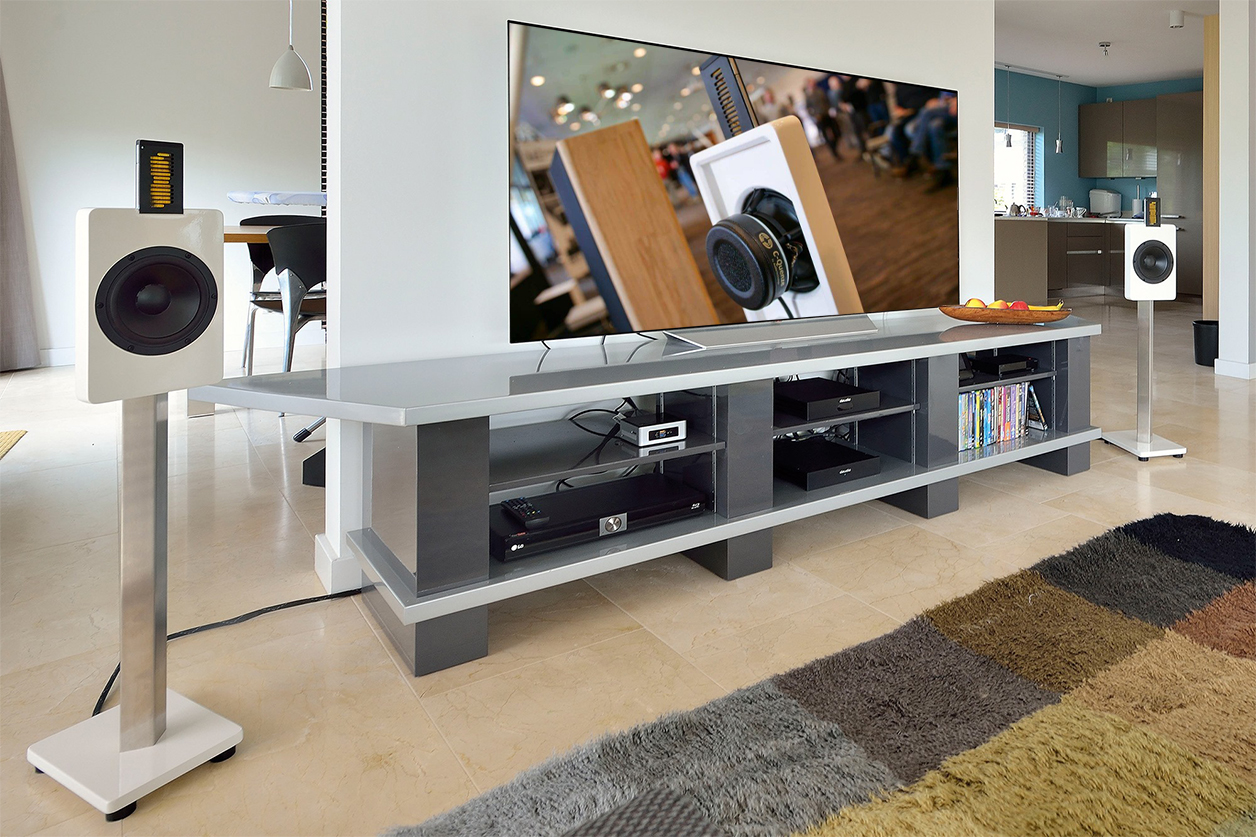
1/ I had experienced Mundorf's big dipole AMT in Virtual's radical Cobra monitor; an even bigger version in Virtual's Supernova. 2/ I luv open-baffle mids. 3/ I'm sold on stereo 2.1. Hence 'yes' in triplicate. After three decades on this beat, I know what I like. If you're still hazy on 'd'—perhaps think it short for dubious or daft—here's my dipole ditty: Lose the box. Good-bye to enclosure resonances; undue pressure on the cone's rear; inward radiation leaking out through membranes smeared in time. Stop murdering half the generated acoustic energy with an expensive Magico-type box. Play your room like a musical instrument. Benefit from figure-8 cancellation to eliminate your sidewalls as reflective sound sources. For a sub, shun ports and passive radiators. Go with a force-cancelling twin-woofer design like my upstairs Dynaudio S18. For more exotica, go RiPol aka Ridthaler Dipole as I do downstairs with a sound|kaos of twin 15-inchers with 700w/4Ω power each; and shortly with another dual 12er for upstairs. For ultimate dynamic expression and resolution, apply an active high pass to the monitor. By neither doing nor seeing low bass, that should be visually inconspicuous and attractive. Voilà, 'd' for discerning, discriminating and Daudio M1 dipole.









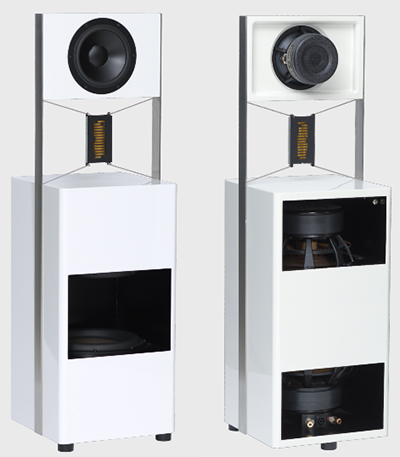 Why 2.1 music systems aren't dumb includes active adjustable bass beating passive fixed bass. With dipole's acoustic short of long low wavelengths wrapping around baffles to cancel out, raw cone surface compensates lesser room gain. The late Siegfried Linkwitz still added DSP compensation. As with hornspeakers forced to operate into the bottom octave, full-range dipoles get large—they need big even paralleled big woofers—and tend to soak up excursion power to get loud down low. A classic sealed sub across the bottom 2½ octaves shrinks cone surface needs. Activating it with a dedicated bass amp adds adjustability and shrinks load burdens on the main amp driving the open-backed upper 2/3rds.
Daudio's design decisions redlined my sensibility needle. Add white dress code. Now you have all my reasons for accepting this gig with genuine excitement. 'D' for do me. If you're not yet 'D' for due diligence, revisit Dawid's review. Read up on the brand's background. It'll spare us duplication. To extricate a salient detail, their principals weren't born yesterday. They are model years '62 and '64; like me. They've been around the block a few times. This suggested maturity beyond youthful excess and bookish idealism. It promised hard-earnt experience; ability to differentiate what matters after having tried a lot then discarded less effective or ultimately flawed solutions. Add Dawid's most positive MOB3 findings. My spider sense tingled hot.
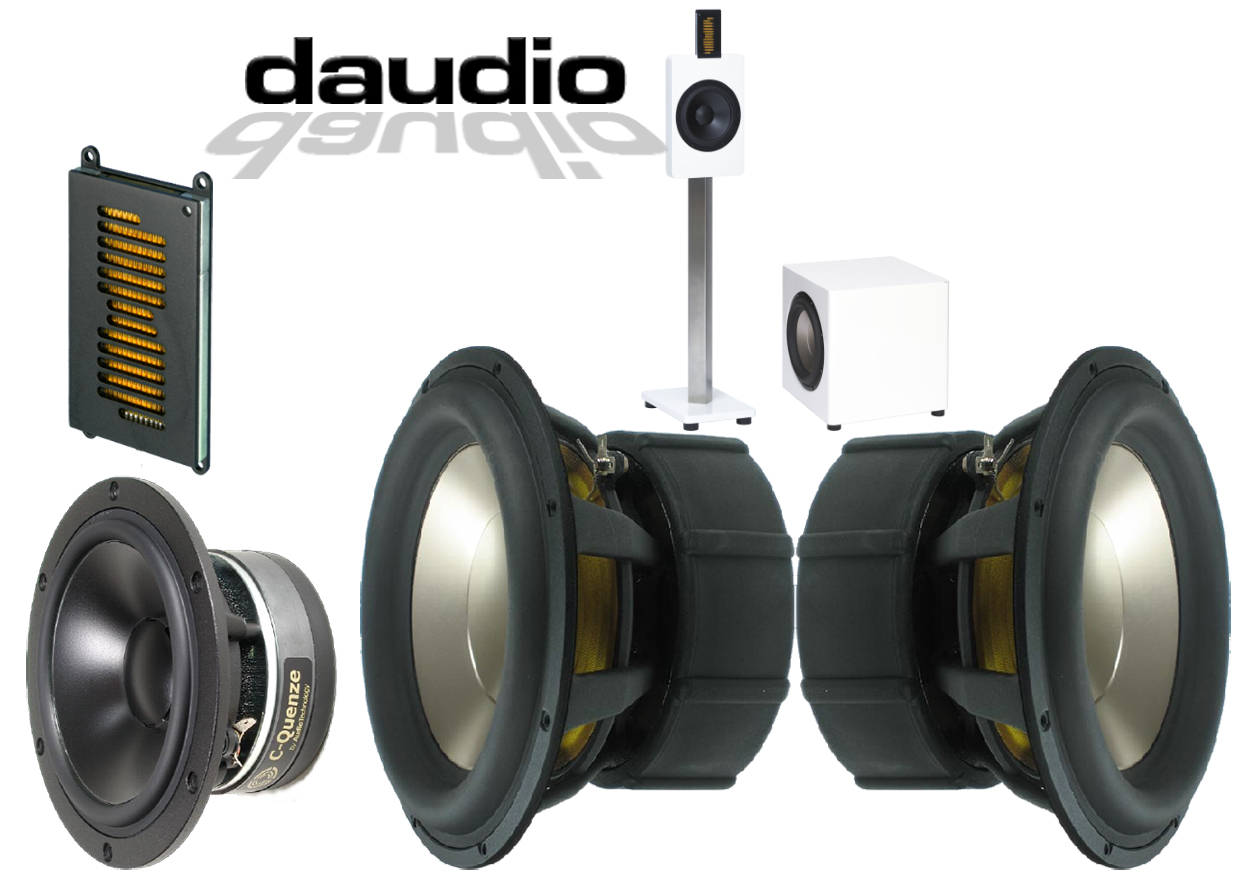
At left a glance at Daudio's maiden model, the W1 with wire-suspended dipole AMT and RiPol bass turned 90°. My eyes call it groomed simplicity; clever integration of important decisions executed at a high level. Back on M1, filter transitions are 120Hz and 2'400Hz with 89dB sensitivity, silver/gold Mundorf oil caps and matching wiring for the passive 2-way network. Dimensions for the 8.4kg monitor are 20x4x30.6cm. The 31.2kg sub goes 36cm³ cubic. More sensible stats.
The sequence of events leading up to this gig were entirely unchoreographed so happenstance. Dawid had accepted an Aalborg invite to Børresen's launch party for their €1M flagship speaker. He subsequently wanted to replicate some of the experience with a radically smaller wallet and room. It had him seek out Daudio for an open-baffle loaner. His write-up led to a syndication request, its publication to today's solicitation. Now here we are.
Synchronicity.