Country of Origin

 This review published on HifiKnights.com March 2026. By request of the manufacturer and permission of the author, it is herewith syndicated to reach a broader audience. – Ed.
Reviewer: Dawid Grzyb
Transport: Innuos Statement, fidata HFAS1-S10U
DAC: LampizatOr Horizon360 w. Stradi 5U4G + Psvane Art TIII 4x KT88 / 2x 6SN7
USB components: iFi audio Mercury3.0
Network: Fidelizer EtherStream, Linksys WRT160N
Preamplifier: Trilogy 915R, Thöress DFP
Amplifier: Trilogy 995R, FirstWatt F7, Enleum AMP-23R
Speakers: Boenicke Audio W11 SE+, sound|kaos Vox 3afw
Headphones: HifiMan Susvara
Interconnects: LessLoss Entropic Process C-MARC, Boenicke Audio IC3 CG
Speaker cables: Boenicke Audio S3, LessLoss C-MARC
Speaker signal conditioning: LessLoss Firewall for Loudspeakers, Boenicke ComDev
Anti-vibration conditioning: 12x Carbide Audio Carbide Base under DAC, preamp and speakers
Power delivery: Gigawatt PC-3 SE EVO+/LC-3 EVO, LessLoss C-MARC, LessLoss Entropic Process C-MARC, Boenicke Audio Power Gate, ISOL-8 Prometheus
Equipment rack: Franc Audio Accessories Wood Block Rack 1+3
Review component retail: starting at €7'350/pr
If this hobby teaches us anything over time, it's that exposure breeds preferences. The more gear we hear, compare, dissect and occasionally obsess over, the more certain design approaches begin to feel like home turf. Audio reviewers aren't immune to this. Quite the opposite. We're exposed to far more hardware than the average enthusiast so the mental map of what works for us tends to crystallize quickly. Naturally, that map also contains biases. Everyone has them. The only practical difference between reviewers and regular consumers is that we don't fund this education entirely out of our own pockets. That small occupational perk makes the learning curve far less painful. Over the years I've learnt a fair bit about my own sonic preferences. Some are predictable, others less so. For instance, I tend to favor passive power distributors over active conditioners. The latter often promise miracles but can occasionally deliver subtle dynamic constipation instead. When done right, distributors behave like proper infrastructure—quiet, competent, dynamically unrestrained and very potent. A similar pattern appears in resonance control. My bias leans firmly toward hard solutions rather than their soft counterparts. Cables and accessories? Here I gravitate toward designs built around noise rejection. Lower a system's noise floor and everything else tends to follow: better contrast, sharper spatial cues and greater microdynamic nuance. It's a simple concept yet highly effective when executed well. That it compounds doesn't hurt either. Amplifiers bring another set of preferences into play. When it comes to output devices, solid-state designs remain my practical weapon of choice. They deliver the grip, control and bandwidth that modern loudspeakers often appreciate. Tubes still hold a special place in my heart—but upstream where they inject their unfiltered flavour in my DAC and preamp. As for sources, I haven't yet ventured into vinyl and as a reviewer would have little of value to add. While I understand the allure of spinning records, for me the ritual and tactile charm never quite outweighed the practical drawbacks. Streaming on the other hand feels like the most sensible evolution of music consumption. Infinite libraries, instant access and steadily improving digital front-ends make it very difficult to argue otherwise.
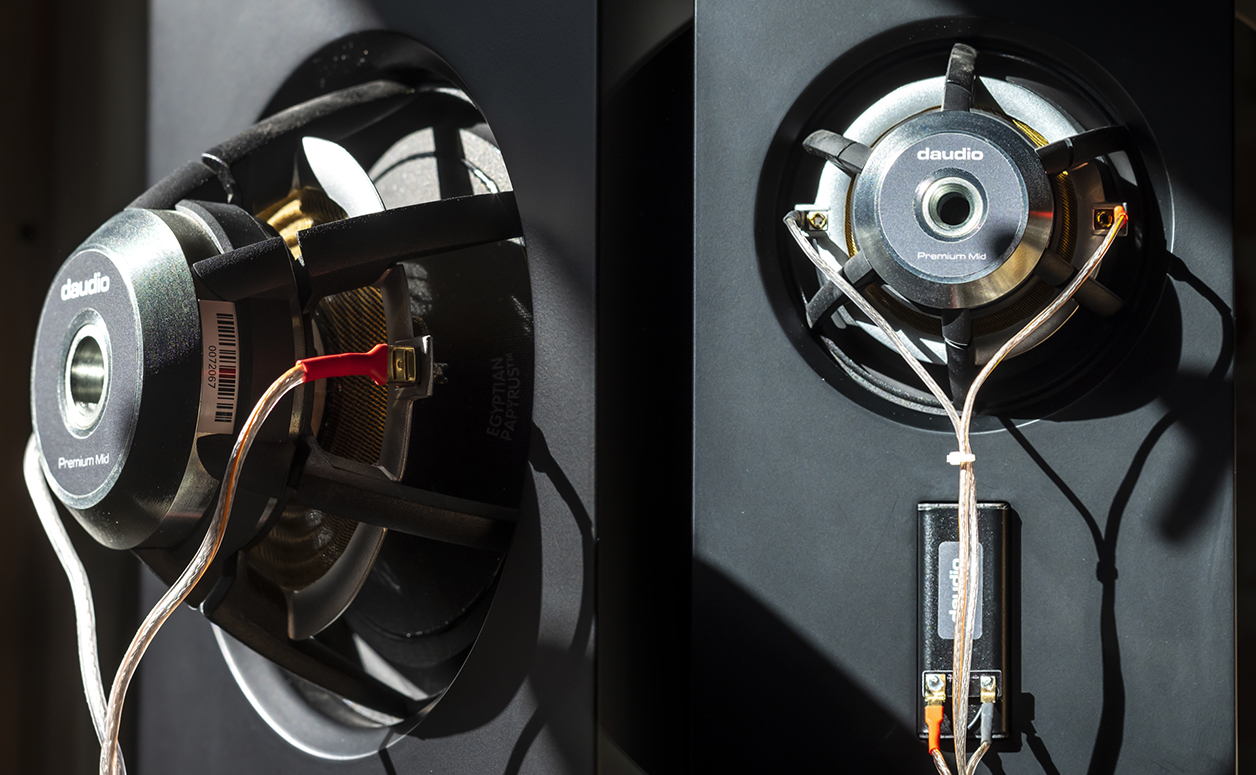
Loudspeakers form another category where my biases are fairly obvious. For many years I've had a soft spot for purist unfiltered widebanders. I'm deeply fond of their point-source dispersion whose coherence and temporal integrity can be startling. When the vast majority of the audible spectrum emanates from essentially the same acoustic centre, the resulting imaging can feel uncannily natural—almost headphone-like in its precision and exceptionally immersive because of it. And while we're listing personal constants, my coffee tastes best with almond milk and a drop of honey. All these preferences accumulated over time through countless listening sessions and the occasional surprise encounter. One such moment happened recently during a visit onto Danish soil. There Audio Group Denmark officially unveiled their latest statement loudspeaker, the Børresen M8 Gold Signature. Priced at a cool one million euros per pair, this towering creation sits firmly in the realm of audio fantasy. Yet in the interest of full honesty, it's also the finest loudspeaker I've ever heard anywhere. Period. Massive, unapologetically expensive and engineered without compromise, the M8 Gold Signature represents the sort of project that exists precisely because someone somewhere decided that limits are optional. Naturally, as much as one might enjoy daydreaming about such hardware, reality has a way of restoring perspective rather quickly. Speakers of this magnitude—physically, financially and logistically—remain the kind of wet dream most of us will never realize. Still, the engineering behind the M8 Gold Signature is fascinating. At first glance the design might appear conventionally vented yet that impression would be misleading. The central D'Appolito-styled enclosure is actually almost fully open at the rear while the heavy lifting in the bass delegates to two dedicated RiPol modules. Each houses six 8" woofers, resulting in a combined cone area roughly equivalent to three 15" drivers per channel and then some. Predictably, the amount of air these drivers can move is enormous. More interesting is how they move it. RiPol systems sidestep box compression and cabinet chatter associated with traditional enclosures. The result is low-frequency output that feels simultaneously powerful, clean and liberated—immense pressure without the typical sense of confinement and room talk.








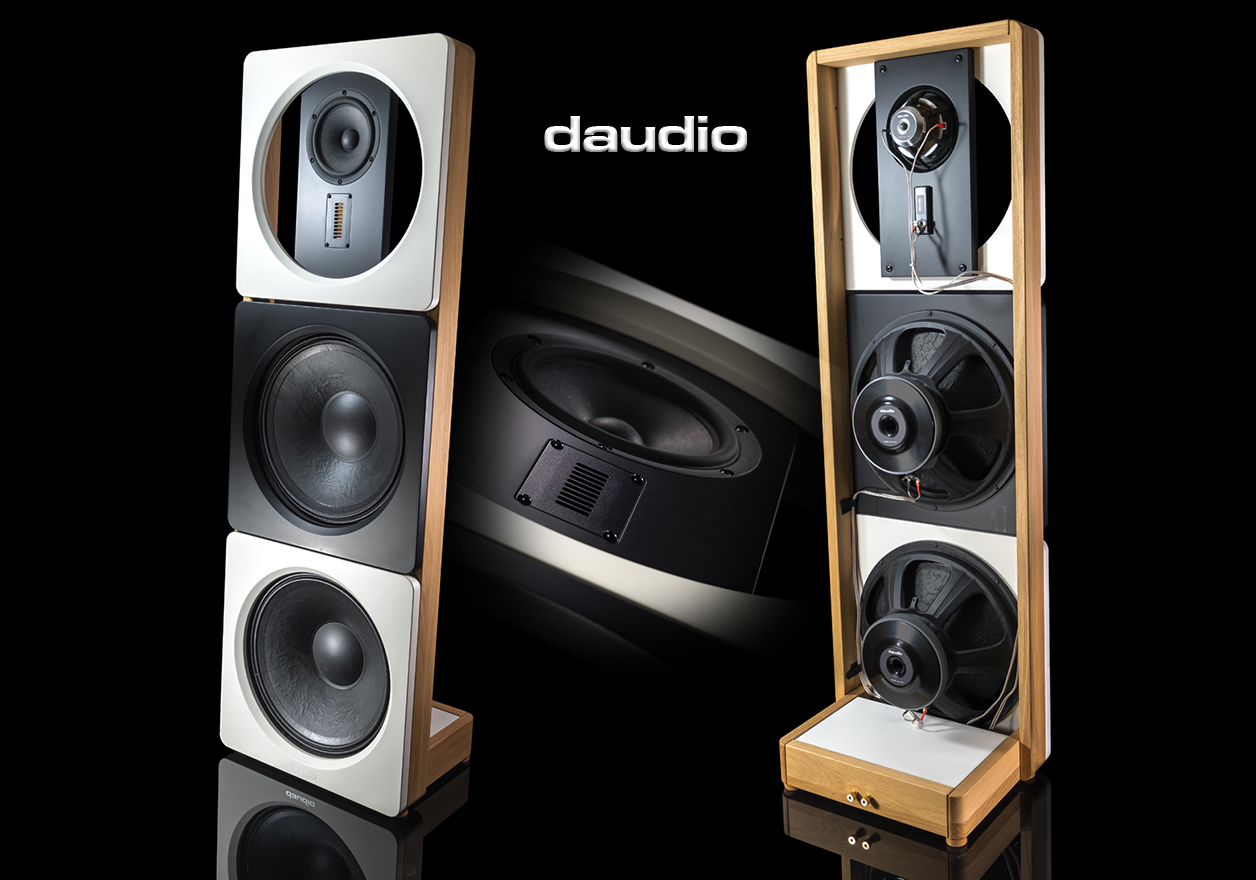
The first time the M8 Gold Signature flexed its bottom-end muscles, the experience bordered on the surreal. The scale of bass wasn't merely about depth or volume but how the system communicated physical authority. The room filled with energy that felt less like sound reproduction and more like a controlled release of geological forces. That Danish encounter was a blunt reminder: free from conventional enclosures, dipole speakers possess a kind of grip that just doesn't let go and is nigh impossible to replicate elsewhere. I've always had a weakness for them—nearly as much as for proper widebanders. That experience planted a stubborn idea. Whilst recreating anything close to Børresen's top dog was out of the question at home, perhaps a fraction of that philosophy, at a fraction of the cost, wasn't? As it turned out, the means to attempt exactly that didn't come from Denmark but the Netherlands. I had been aware of them for months. The recent trip to Aalborg merely gave me the push to act. The Netherlands have long harboured a surprisingly vibrant open-baffle underground. For decades local enthusiasts have experimented with figure-8 radiation, large drivers and minimalist baffles in search of sound less constrained than classic boxes. Concepts popularized by designers such as Siegfried Linkwitz certainly fuelled the movement but much of its character grew from Dutch DIY culture itself. In that environment, abandoning conventional enclosures became less an eccentric idea and more a recurring design theme. Established in October 2010 by Hans Beckeringh and Jeroen Dezaire, today's company Daudio—short for dipole design audio—emerged directly from said culture. Both founders had spent decades experimenting with speaker concepts before formalizing their work into a company built entirely around open-baffle principles. Shortly after launching the brand, they introduced their first commercial loudspeaker, the W1 dipole/RiPol affair which already showcased port-free think. From the outset Daudio focused on combining large open-baffle woofers with carefully selected midranges and AMT tweeters aimed at achieving a spacious low-coloration presentation reminiscent of live music. When approached with my many questions, Daudio's founding fathers proved refreshingly open and generous, kindly introducing themselves along the way. I firmly believe that getting to know the engineer/s behind a product helps us connect with it and better understand the thinking that shaped it so let's start there. Born on October 9, 1962, Jeroen Dezaire grew up in a strongly musical family. His mother was a pianist, his brother a violinist and composer. He began piano lessons at seven and later took up the flute, playing it intensively for several years. During his student years he toured with the Netherlands Student Orchestra which exposed him to a wide range of concert acoustics and deepened his interest in live sound. Alongside this musical background he developed a strong technical curiosity, particularly regarding how instruments are reproduced by loudspeakers. The violin in particular captivated him not least because of his brother's performances. Experiencing that instrument across different environments sparked a long-standing question: why does it so rarely sound the same through speakers?
An early encounter with the Rogers LS3/5a convinced him that speakers could reproduce voices and string instruments with convincing realism. Later experiments with open-baffle speakers further expanded that understanding and demonstrated that faithful piano reproduction was not limited to electrostatic systems. After earning his electrical engineering degree from Eindhoven University of Technology in 1988, Dezaire combined his technical expertise with his musical ear to pursue speaker development more seriously. His focus on filter technology proved crucial in integrating drivers into coherent systems. His long-term goal remained clear: faithful reproduction of acoustic instruments and voices. By 2010 his work with dipole speakers had reached a level he felt deserved wider exposure, which ultimately led to the founding of Daudio. Born on May 20, 1964, Hans Beckeringh too grew up in a musically active family. His father played guitar, his mother sang jazz and his sister played piano. Beckeringh himself played trumpet, flügelhorn and trombone in a brass band, later became active in soul and blues bands as drummer and singer. Since his mid-thirties he has performed as a vocalist with several big bands. Alongside music he developed an early fascination with audio tech. By fifteen he was already building and modifying loudspeakers and amplifiers and soon joined an audio club where he was introduced to dipoles. By his mid-twenties he had fully embraced what he describes as the dipole bug, drawn to their speed, openness and natural presentation. For years Beckeringh experimented with electrostatic loudspeakers, focussed on improving their bass performance. Later he discovered that dynamic midrange drivers could deliver equally convincing dipole behaviour while AMT tweeters allowed dynamic systems to surpass electrostats in the treble. He studied Industrial Engineering and Management at the University of Twente where he learned the importance of combining engineering, design, marketing and sales. That interdisciplinary mindset remains central to his work. As he put it in one of his emails, innovation means questioning conventions and thinking beyond established solutions—an approach he continues at Daudio.