By early April 2026, the speaker project had grown into a different time-aligned shape. "I'm currently focused on a version for a broader audience. It features two SB Audience 15OB350 15" woofers—one in a slot, one front-firing—with a 7½" Satori TeXtreme midrange from the same catalogue and that large Mundorf AMT. I assembled the first bass cabinet yesterday and another pair is already at the paint shop. The fit is perfect, the bass tight and impressive. I attached a graph showing the bass and midrange response without AMT. I expect to have the speakers ready in ~1-2 months though two months is probably more realistic. The upper 3D-printed waveguides are directional to equalize pressure. The ~20kg bass bins will get painted, the bolts remain visible. The one thing I plan to add is a front panel like Cobra's. It will cover the whole front of the bass bin in 5-10mm plate so that the bolt heads are visible only at an angle. I'll see how it works out on my first painted pair. I'll hopefully finish the crossover by then." Lest we think twin 18-inchers had left Greg's studio, "the 15" drivers should satisfy all humans. Later I'll do a bigger version with 18" woofers for aliens like myself. I'm getting ever more down the rabbit hole and expect an ultimate roller-coaster experience from such a system. It has to have plenty of horse power just for those dynamic moments when needed."
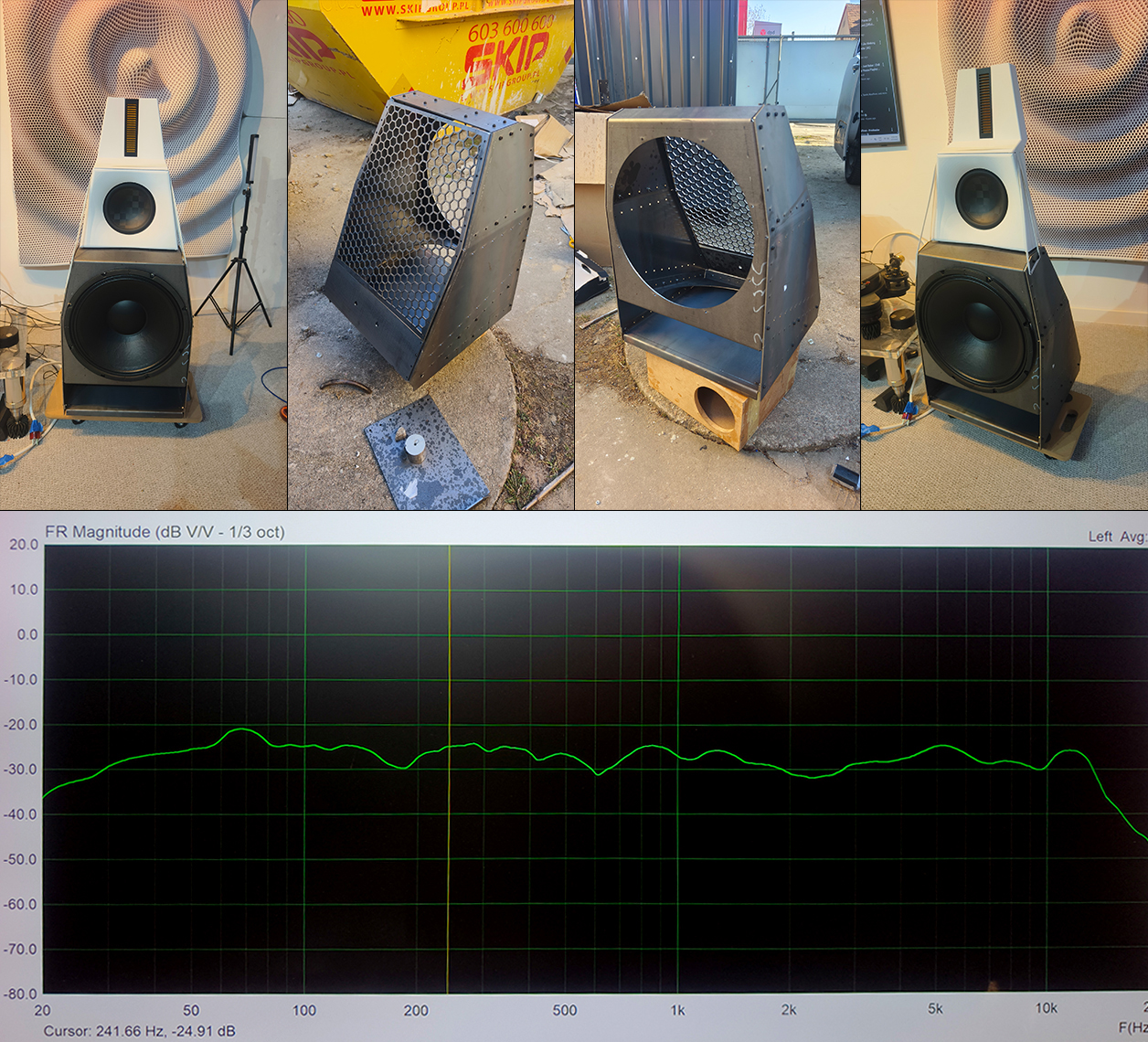
 Grzegorz's atypical bass geometry would marry line-of-sight shove from a face-on woofer with highly self-damped crunch from the down-fire slot-loaded mate whilst the final form factor suggested a wedge from a Mayan step pyramid. The visual illusion of the full-frontal look toed-in—of an actual enclosure—should only crumble once we walk closer and look from the side. June 25th: "I noticed your preview of the Matter Axion open-baffle dynamic speakers. That should be interesting. Their tall AMT does look similar to mine but is a different part. I can see that the back pole pieces are bent and the magnets smaller. About my Basilisk project, I wasn't satisfied with the performance of the first woofers so sourced new ones for testing. This slightly delayed the project. An August completion date now seems more realistic when as I also had to order new laser-cut steel. It's quite a pity that I had to swap woofers and redo my bass bins. But it goes to show that most standard 15" woofers simply won't work properly in open baffles. I hope that the new SB Audience Nero15 will be my saving grace. Even a pair of recently best 15" woofers caused upper-suspension distortion in a big slot/H-frame to not support 30Hz bass at the same level as 1kHz."
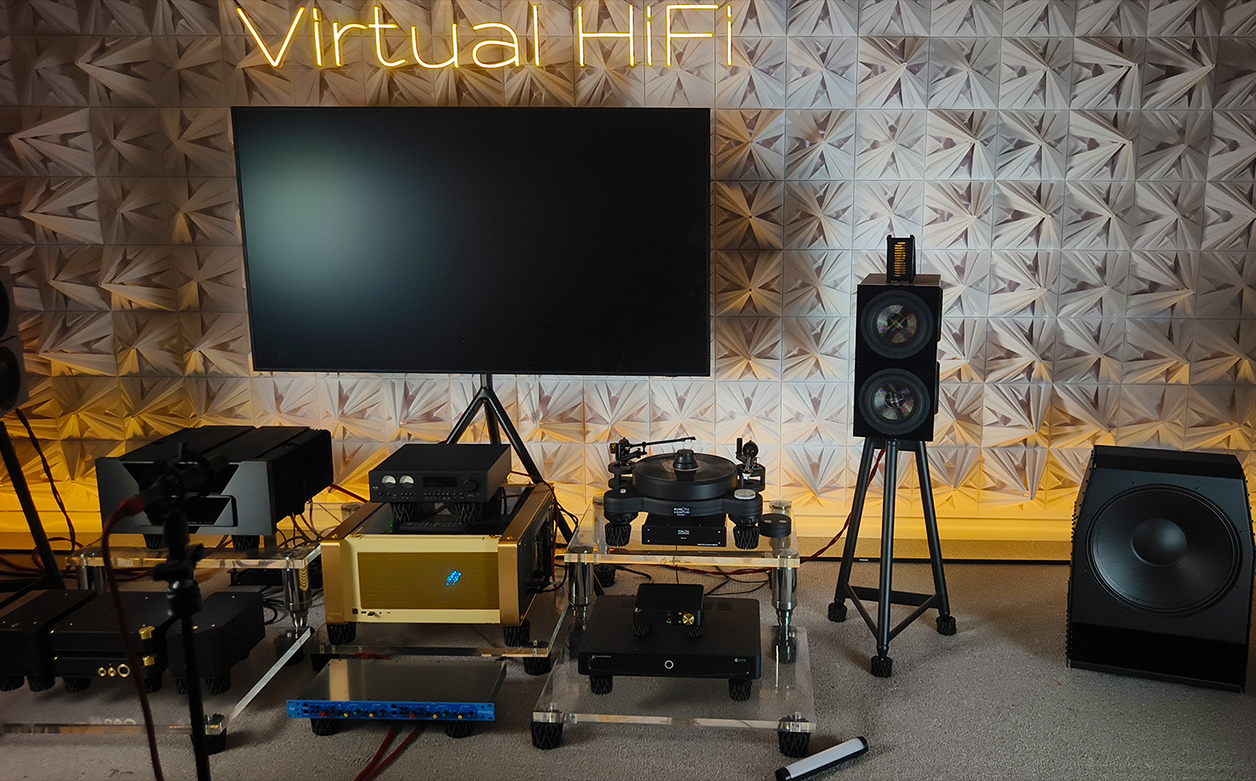 The new wall treatment.








R&D peppers with trials 'n' errors, prototype and parts rejects, losses of time and money. Especially for sole operators, all of it is extra challenging. One writes off losses as costs of a valuable education but must still recoup investments with sales. Given Virtual's boutique status, direct sales and madcap design style, we're not talking mainstream volumes. It takes dogged individuals to pursue such a path. July 12th then wondered whether said path had split; or elevated to a higher plateau. "For the rarest most powerful stars, the next stage is a supernova. A spectacular event. Immense in scale, impossible to ignore. For Virtual Hifi, Supernova represents the next stage in our loudspeaker journey; a new reference open-baffle project created to deliver more of what makes music feel real. Greater scale, dynamics, immersion and realism. Our most ambitious loudspeaker project yet will unveil in August." Greg's photo showed dual woofers, an SB Acoustics Satori spread-tow carbon-fibre mid and tall AMT in a flared waveguide resembling half a truncated pyramid. The structure clearly had short sidewalls for some loading of the rear wave. Was this the next model past Basilisk? Or had Basilisk ended up on the cutting-room floor?
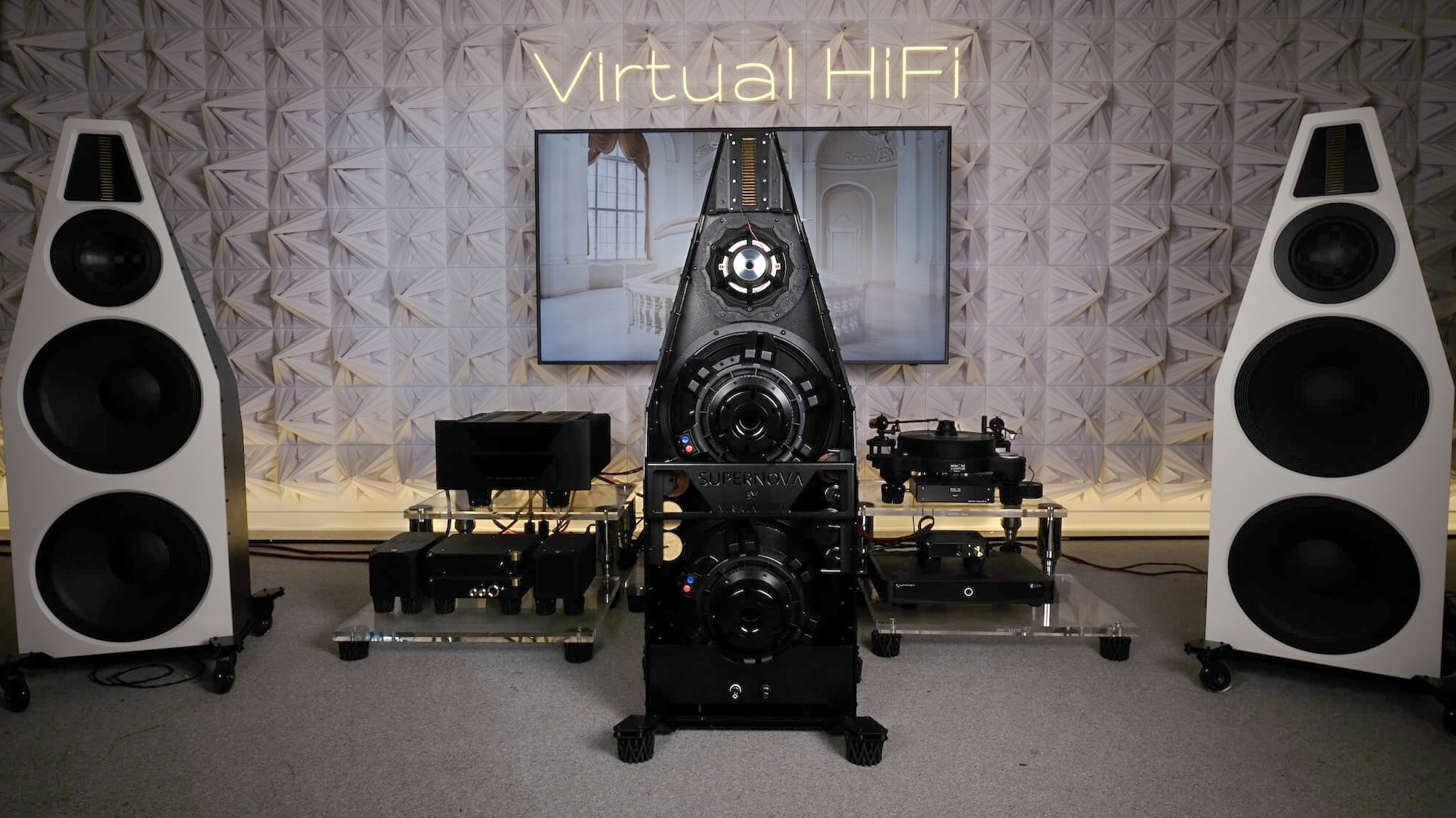
"Supernova won't replace Basilisk. It's the model below it. The transition to the new 15" Nero woofers eliminated the need for slot loading. Their performance is incredible without. This enabled a classic open-baffle configuration for impressive kick and pressure. I updated the project accordingly and already finalized the prototype. It's essentially a classic OB executed the Virtual HiFi way. I still plan on an 18" Basilisk. That will require slot loading to keep correct height for proper midrange/tweeter placement. It'll give me more time to experiment with the MSLA 3D-printing tech I want to use for its waveguides." Now our detour through the bends of discarded permutations has arrived at today's review subject. Given the preamble, we understand that Supernova is the Basilisk project aimed at civilians even if Grzegorz expects that his forthcoming twin 18-inch alien "will conquer the hearts of a few earthlings". We appreciate that whilst Supernova looks classically OB if somewhat industrial, the road to it wasn't straightforward. We even understand the technical reasons. A closer look at the woofers which helped streamline the design because they were engineered specifically for ambitious dipole apps shows a 25Hz resonant frequency, 0.8 Qts, 91dB sensitivity, 11Tm force factor, 130g moving mass, die-cast aluminium basket, neodymium motor with extended copper cap, 4" voice coil, triple-pleated cloth surround and paper cone doped with fibreglass and graphene. Plug-in math knows that twin 15" woofers add to the cone surface of a single 21" whilst their dipole nature would achieve the air motion of a 30" unit were it not for the signature cancellation pattern and 1st-order acoustic roll-off. "The baffle section measures 125x42x20cm HxWxD. The footer array expands to 50x40cm WxD. Weight is 45kg, sensitivity ~90dB/4Ω. The 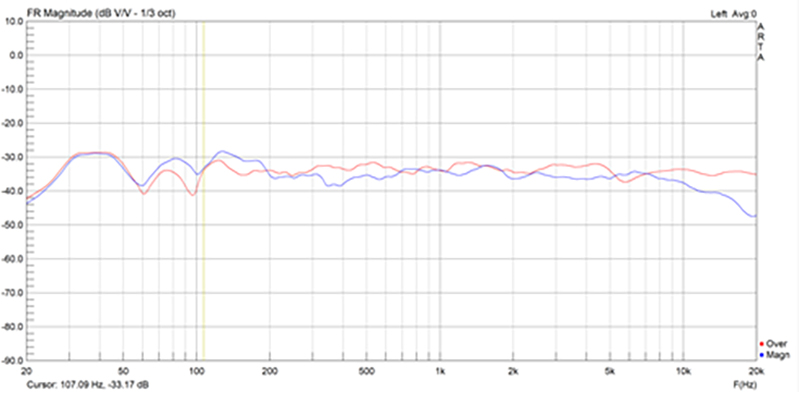 crossover points currently sit at 250Hz with 2nd-order slopes on either side; and at ~2.5kHz with a 2nd-order low pass for the midrange and a 1st-order high pass for the AMT.
"These values may be subject to minor tweaks over the next month as the baffles finalize. They use constrained-layer damping similar to Basilik. My triple-layer sandwich consists of two 3mm hard steel plates bonded to 2mm rubber. It's a highly rigid combo super effective at resonance damping. While the black industrial look with visible bolts of your lead image remains an option, Supernova also offers magnetically attached panels in the buyer's colour choice to dress up the front. Minimum Ω is 3.15/46Hz which should be manageable for most transistor amps though dual 15" woofers predestine Supernova for powerful amplification that won't choke during more demanding playback. The side rails not only stiffen the baffle but add strategic driver loading. We're looking at 25Hz/-3dB with an overall +3dB bass tilt lowest to highest. This isn't another OB to enjoy the soundstage, openness, dynamics, vocals, clarity and kick bass with only for dense instrumental music, organ, rock and electronica to immediately expose a low-bass limitation—or complete lack of low bass. Supernova is a totally different beast. These measurements are from my 40m² studio. The red line is the on-axis response, the blue line 30° off axis."