Country of Origin

 Reviewer: Simone Ragionieri
Source: Generic 5G router into Taiko Audio network switch both powered by a Zayin Audio Suprareg; Taiko Olympus XDMI Server; LampizatOr Horizon 360 DAC
Headphone amplifier: Riviera Audio Labs AIC-10
Headphones: Spirit Torino Valkyria, Raal 1995 Immanis
Loudspeakers: Diesis Audio Aura SE
Cables: complete Faber's Cables La Potenza loom
Power delivery: Faber's Cables La Potenza power distributor and ground box, Furutech NCF AC wall plugs on a dedicated spur
room size: 5 x 4.5 x 2.7m
room treatments: Eight ceiling diffusers, floor-to-ceiling acoustic curtains on sidewalls, Vicoustic VicTotem Ultra VMT in front corners
Review component retail ex VAT: €4'590 grid protector; €4'990/5 multi guard; €5'990/4 piccolo protector; €4'590 EMI protector; €15K/4 reflectors
Disclosure x protected IP. Today's subject matter and this brand's specific executions trigger natural speculations. Those invite predictable misunderstandings. To banish them would want the firm explaining their tech to reveal secrets they do not wish their competitors to have. How to solve this? Sometimes it's best to state what one isn't doing. It's how LessLoss deal with explaining that their proprietary accelerated conductor aging isn't cryogenics or prolonged exposure to ultra-high voltages. Whilst they won't tell us what they do, this suffices to differentiate themselves. How would Schnerzinger respond to Simone asking about their MO? From published descriptions we know their devices to work up into the 2-3-digit GHz range; and eliminate such growing UHF radiation via counter-phase cancellation. For that common sense demands a power source; a measuring mechanism to diagnose the offending signal's precise makeup; a signal generator to create its inverse; and minimal latency between the two. Would Simone learn anything more specific before reporting on the subjective effects of Schnerzinger's interference control technology? As someone sensitive to WiFi radiation, my curiosity was at max. – Ed.
In my personal hierarchy of what's most important to enjoy music replay, there are two things so foundational as to be prerequisites. These two are you the listener; and the room in which the musical event is being recreated. And yes, we the listeners do influence the system in a Heisenbergian mechanism whereby our emotional, physical and intellectual condition substantially affects the listening experience. The physical space in which we listen is the next piece of the puzzle. Aside from the obvious acoustic signature it imparts, it also plays more subtle but no less significant roles in the overall experience. A silent background yet not oppressive like an anechoic chamber; the colours, materials and arrangement of the furniture; the shape of the objects filling the room, even their significance in our personal history; the lighting and smells – all of it participates whether we want it to or not. It all modulates how we process organized sounds through our sensory apparatus. In the present post-modern era, this sacred space is invaded by invisible energy fields which operate at frequencies in the audible band then reach up into the GHz sphere to become more and more intrinsic to our system's functioning. Some interactions are more easily apparent like a 50/60Hz hum, buzzing transformer or ground loop. The effect of cheap switching supplies might be less immediate to categorize and qualify but can be heard when SMPS unplug to often result in a smoother less fatiguing sound. We deal with a type of noise no longer heard in isolation as noise but instead a kind of disturbing influence which pollutes the electromagnetic music signal's original purity.
These effects are known, studied, characterized and accepted. When we scale to higher frequencies in the EMI then RF realm, our ears no longer detect these disturbances in isolation although more sensitive people may be affected by headaches or anxiety. Yet our electronics certainly respond and participate. Considering the amount of gear that produces conducted or radiated emissions in a typical household (anything with electric motors, LED lighting, heating/cooling systems, smart-home gear, WiFi routers), the electromagnetic pollution that swamps us is massive. Power lines are the first entry point where interference fields from the urban electricity grid inject then share across powered home appliances including our audio gear. Exotic transformers and all the power supplies in our system contribute to the mix. Even the slight currents circulating through ground cables participate. As for radiated power, even well-shielded cables act as antennae that capture and produce high-frequency fields. I count over a dozen cables in my listening room alone. Now add two security cameras, a WiFi router, a few mobile phones and several live computers when I sit on my couch to listen. Yet this still ignores the pollution coming from outside the room even house. I am not sure whether you had this experience but when you see a microscopic magnification of your skin, it looks disturbingly strange. For the same reason I wouldn't want to see an EMI map of my environment. I believe it would be equally unsettling. Sometimes ignorance is bliss. When it comes to correlating these effects with a perceived deterioration of our sound quality, the publicly available literature backed up by scientific research seems practically non-existent. We therefore deal with a scenario where the only option for the open-minded and curious audiophile is to experiment and trust his/her own ears. It was with this in mind that I participated in two demonstrations of Schnerzinger products. The effect was so immediate and profound that I requested their equipment for review, feeling most compelled to reproduce the effect at home and evaluate the potential long-term impact on my listening habits and playback enjoyment. With the help of Aldo Zaninello of Extreme Audio, our Italian dealer for Schnerzinger then Michael Schwab of Zellaton who curates their exclusive worldwide distribution, I was able to obtain an almost complete set of the brand's Interference Control Technology components.









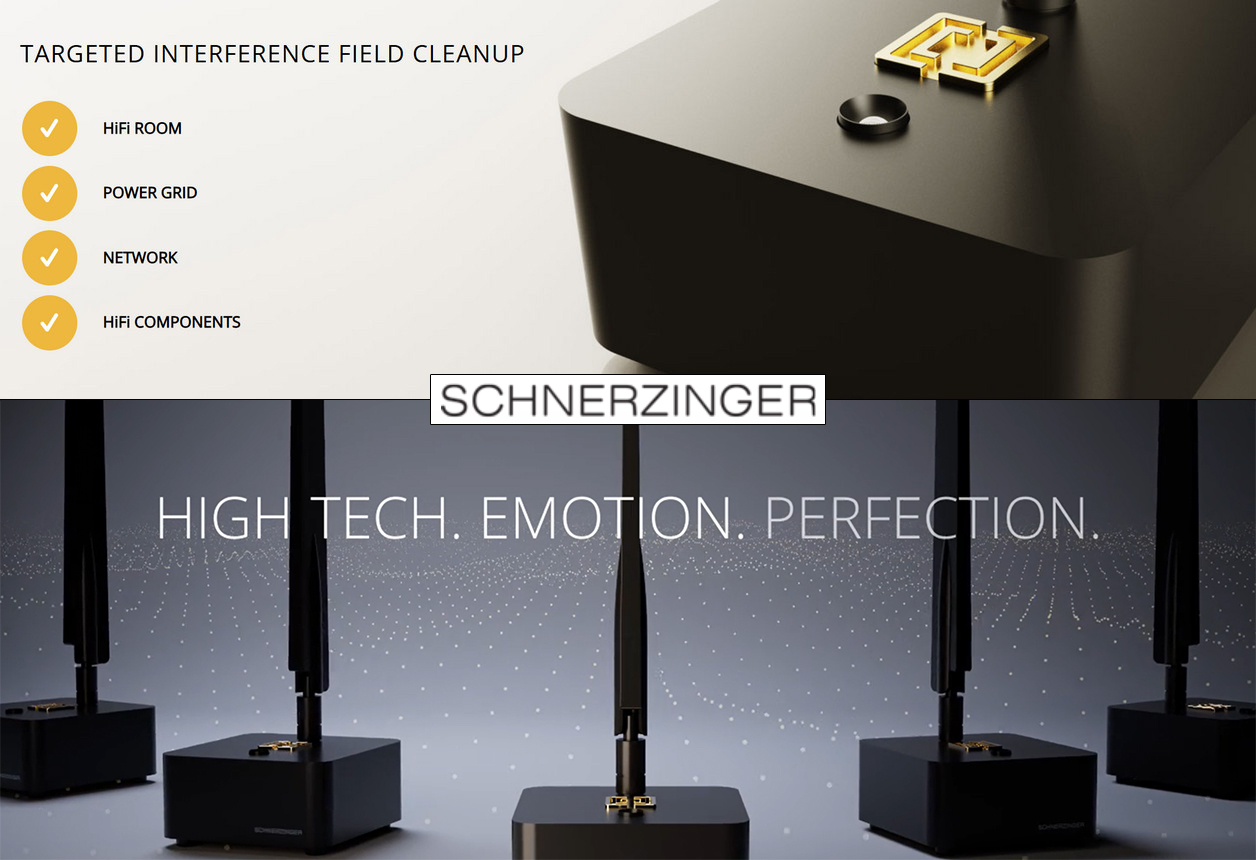
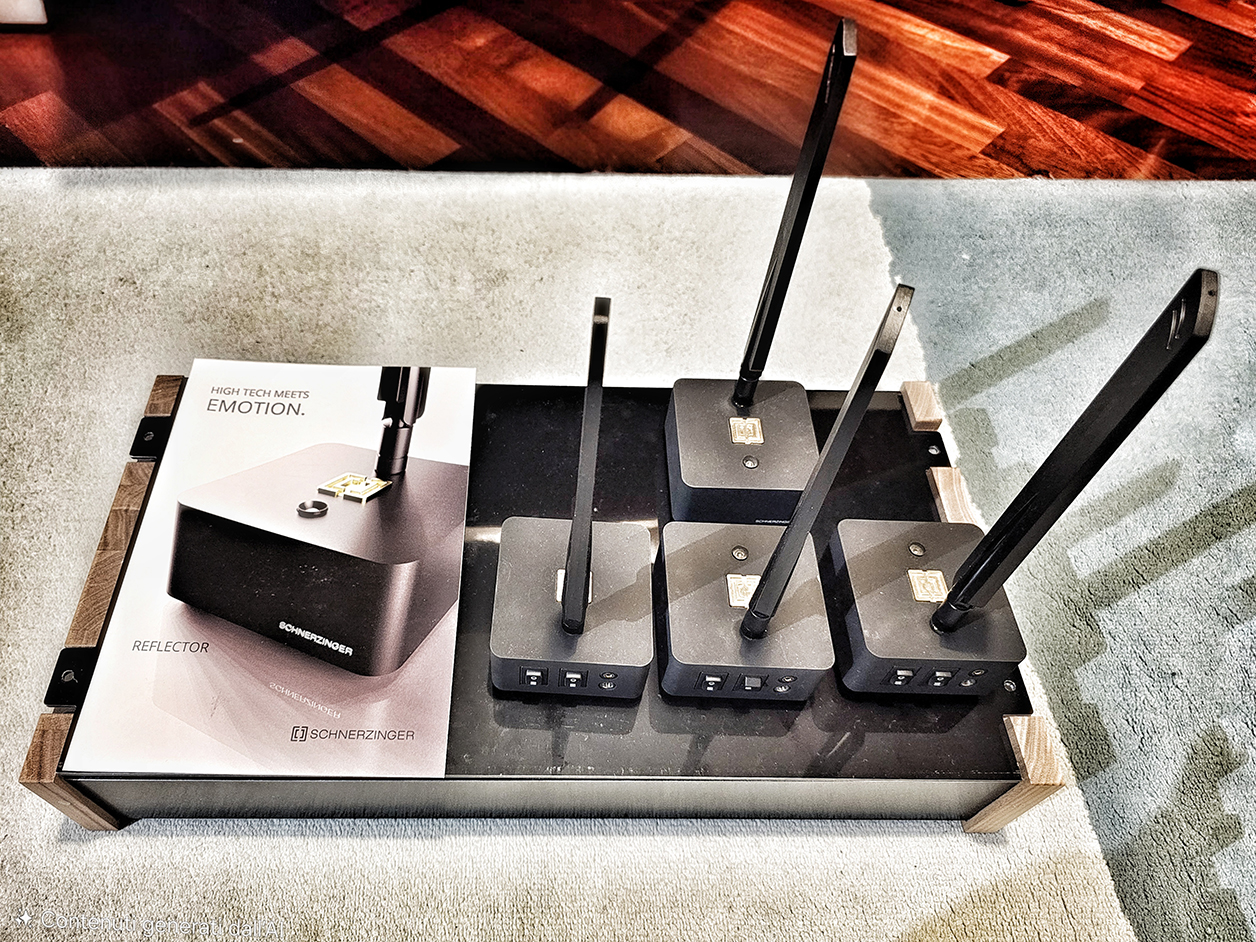
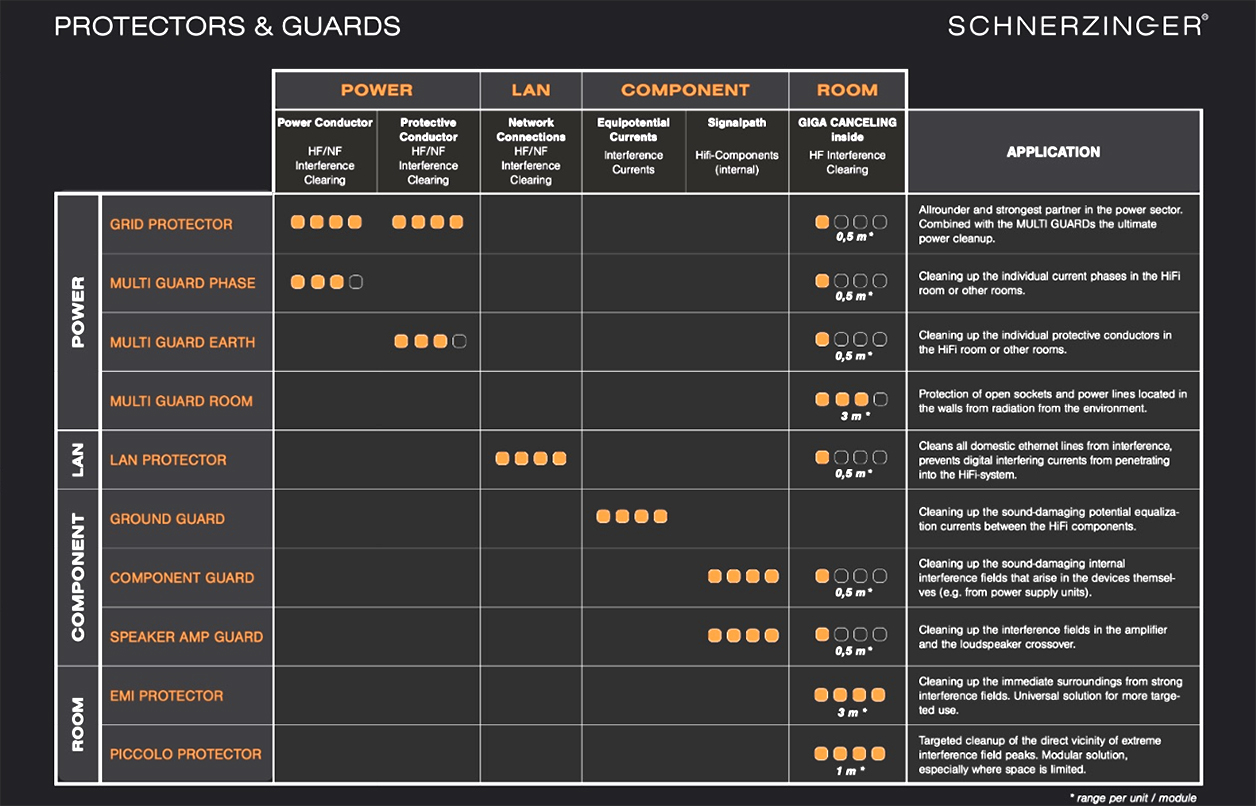
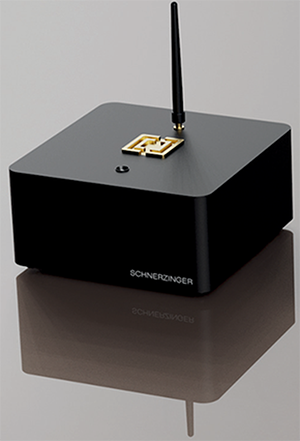 Schnerzinger products are designed to form an ecosystem to most thoroughly cancel EMI disturbances across the entire currently active bandwidth. The foundation of their ecosystem is a cable and power distribution line claimed to reduce incoming pollution directly at the source of wall-socket-injected noise and the circulating interference across our arterial cable system. The products I received belong to the Interference Control Technology line which complements the cable line by addressing power grid, network, room and component-related fields. More specifically, the grid protector and multi-guard phase/earth target our power line while the multi-guard room, EMI protector and piccolo protector aim at airborne HF interference. The latter components are where the proprietary giga cancelling technology implements to the fullest. The newly released reflector is the most advanced and expensive room protection product of the family which premiered the giga cancelling Plus+ tech. Acquiring a complete set of Schnerzinger products in one shot is a significant outlay, hence part of this review is about how, in my system/room and to my ears, the progressive integration of the various elements of the system resulted in sonic changes to share a possible prioritizing strategy. The next section provides a brief description of each component. We then move to the results of my step-by-step journey into Schnerzinger's world. Given how secretive they are about their tech and how the various products operate, the following derives from published descriptions and user manuals whose advice I mostly followed during my experiments.
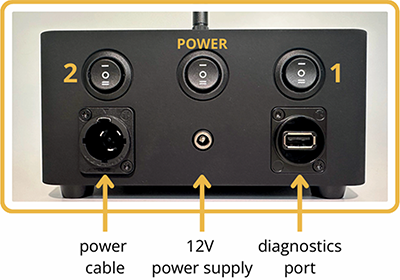 The grid protector is a 4kg 16x16x8cm box with a 11cm antenna which connects to the power line via its power cable, and optionally via an additional 12V SMPS. On its back it has switches for power, bandwidth (1) and clocking (2). Each switch has three positions: 0 (default), I and II, making for nine permutations all valid and worth exploring. The optimal setup will vary from case to case so there's no set'n'forget formula. To use 'power' at I or II requires the SMPS although the manual states that “the power switch usually remains in the default position 0". When the 'power' switch is moved to I or II, a beam of light at increasing intensity emits by an LED through the window on top of the unit. That is not merely an indicator for the user but participates in increasing the interference cancelling potency. It is recommended that the grid protector power cable be connected at the first outlet of our system's power distributor (which is what I did) or at least to the same electrical circuit. However, the manual mentions that we should experiment with alternative locations across our dwelling. By cleaning the electrical network where disturbance is strongest e.g. the kitchen or home office, we might net more benefit in our listening room. When located there, the grid protector antenna must orient toward the LED and the chassis front face the listener by unobstructed view. Hiding Schnerzinger gear behind a rack or curtain is not a good idea.