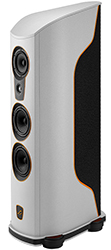
 One country east of Poland sits Lithuania. There we'd find the Vantage M floorstander from Audio Solutions of Vilnius. It's this 4-way with 2.5cm beryllium tweeter, 6" mid, twin 6½" upper woofers and downfiring 10" woofer. The latter works below 50Hz, the midrange from 200Hz-8kHz. Tom Martin reviewed this $123'000/pr speaker for The Abso!ute Sound. He commented on its superlative soundstaging then wondered whether the widebander-ish bandwidth of its midrange boosted that particular quality. My own experience with the breed—Camerton, Cube, Lindemann, MonAcoustics, Rethm, Voxativ—believes the correct answer to be an unqualified 'yes'. Their entire lot were imaging aces; even past dual-concentrics which already nail it. Aside from finely graduated left/right localizations, they all excelled at very specific depth layering to magnify a sense of locale other than our own. Again, compact Quanteen belongs to the same class. To match the Vantage M's lower bandwidth, one (cough) could add my €1'400 2 x 9½" Dynaudio Pro sub set to 40Hz/4th-order. That bolts on the first octave whilst running Quanteen wide open to avoid the expense of an external high-pass solution. This next photo shows that setup for illustrative purposes only. To cater to regular stereo listeners as promised, my concluding sonic comments had it turned off. My point is, for significantly less cashish and visual intrusion than the stylish Lithuanian, we could secure equivalent bandwidth, the same midrange concept and enjoy more room adaptiveness. And of course, near(er) field listening mandates a point source to come off properly. Implicit in such proximity are lower SPL to compensate for the relative lack of cone surface which on bombastic fare comes to the fore with grander dynamics and more upper-bass wallop. Enter the not quite kid-in-the-candy-shop staging. A setup like below has our nose pressed against the stage's virtual shop window. We're not inside the shop, exactly—that would need actual surround sound—but feel as though leaning into a giant soap bubble that contains all the sweet goodies. It's between mid/farfield sound and headfi but nearer the latter. Inject ultra-specific image mapping and the experience becomes quite immersive and extra visual. Once more, sheer setup geometry is the core enabler but sealing the deal the right speaker.
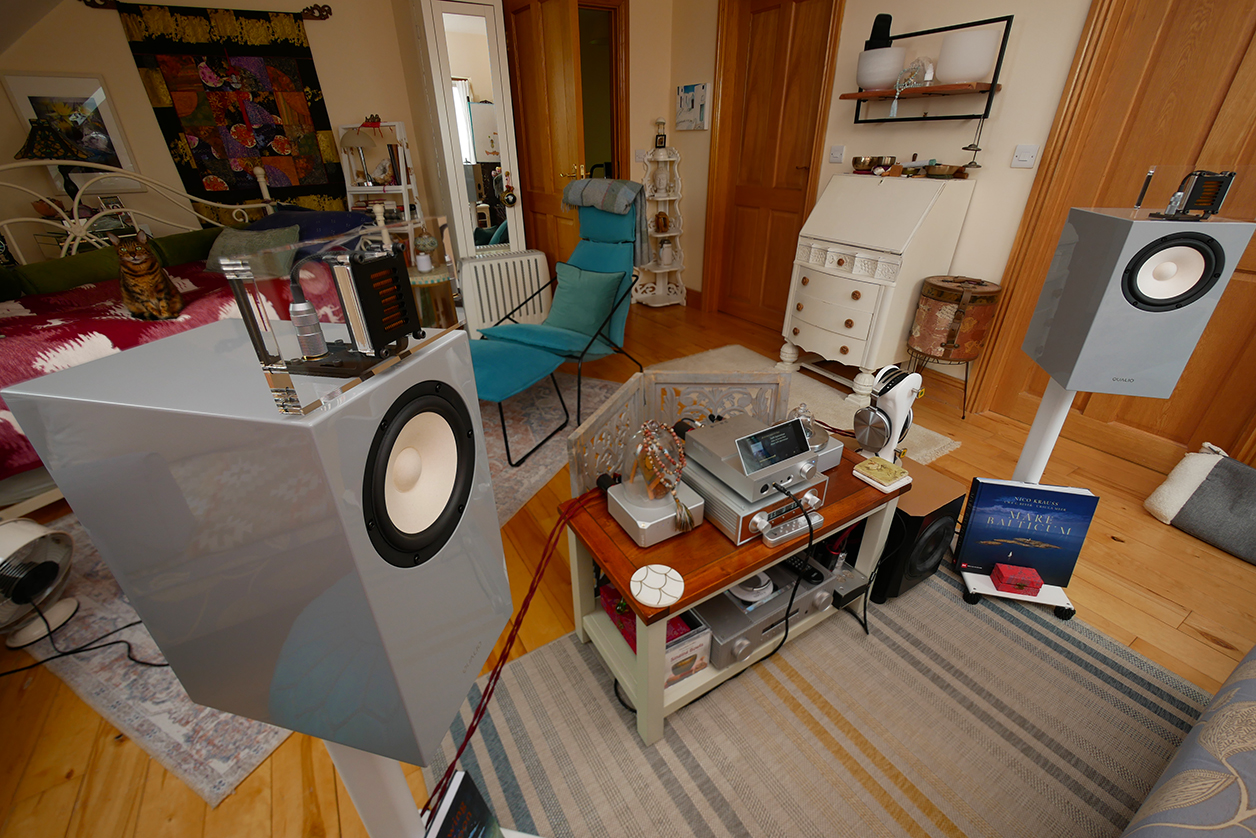 Chai on the bed following my every wannabe photographer's move.
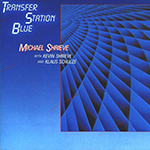 Long before the audiophile virus entered my bloodstream, I was exposed to and fell in love with 1984's Transfer Station Blue. Gemini dubs it "a cult-classic progressive electronic album by legendary Santana drummer Michael Shrieve in collaboration with his brother Kevin Shrieve and German electronic composer Klaus Schultze. Originally put out by Fortuna Records, it blends the hypnotic pulsing atmospheres of the Berlin School style with rich acoustic percussion and experimental guitar textures." We also learn that Schultze's synths were a Fairlight Musicomputer/GDS, an analog polyphonic Yamaha CS-80 and a wavetable PPG Wave 2.3. There I was revisiting this oldest of my album regulars whilst my feline, Chai Baba the Bengal, sat next to me on the couch. On a particular transient crack, my cinnamon-freckled lounge leopard did a spectacular high-power seat eject. Upon landing he animated the fully freaked impersonation, ears pinned back cowered to the ground, on high alert for the invisible enemy intruder. Beat fidelity aka transient suchness is a core widebander strength. Classic timing errors from energy absorption and phase shift are absent or sufficiently minimized to no longer interfere with our ear/brain's reality acceptance. A dropped keychain, shattered vase, slammed motor boot or exhaust misfire… noises with strong startle factor pepper our ordinary lives far away from any hifi. They may cause an instant adrenaline surge tied to our survival DNA which equated a cracking branch or dislodged rock with mortal danger. The closest music has to such danger triggers are our various percussive instruments. The more raw those render, the more alive, charged and exciting playback feels. Given the highly percussive nature of Transfer Station Blue's opener, Quanteen was fully in its element of pert timing. My cat reacted accordingly. True, I had SPL at happy hour for the nearfield and fronted them with highly damped class D with GaNFets switching at 750kHz and an SMPS at 85kHz. This clearly was a wicked combo; and super compact at that. So in parallel with exploded imaging, transient perspicuity is Quanteen's second job description. The whole proximity advantage of suppressed reflections and their time-domain blurring merely emphasized it.





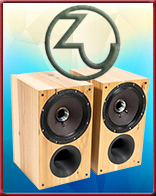


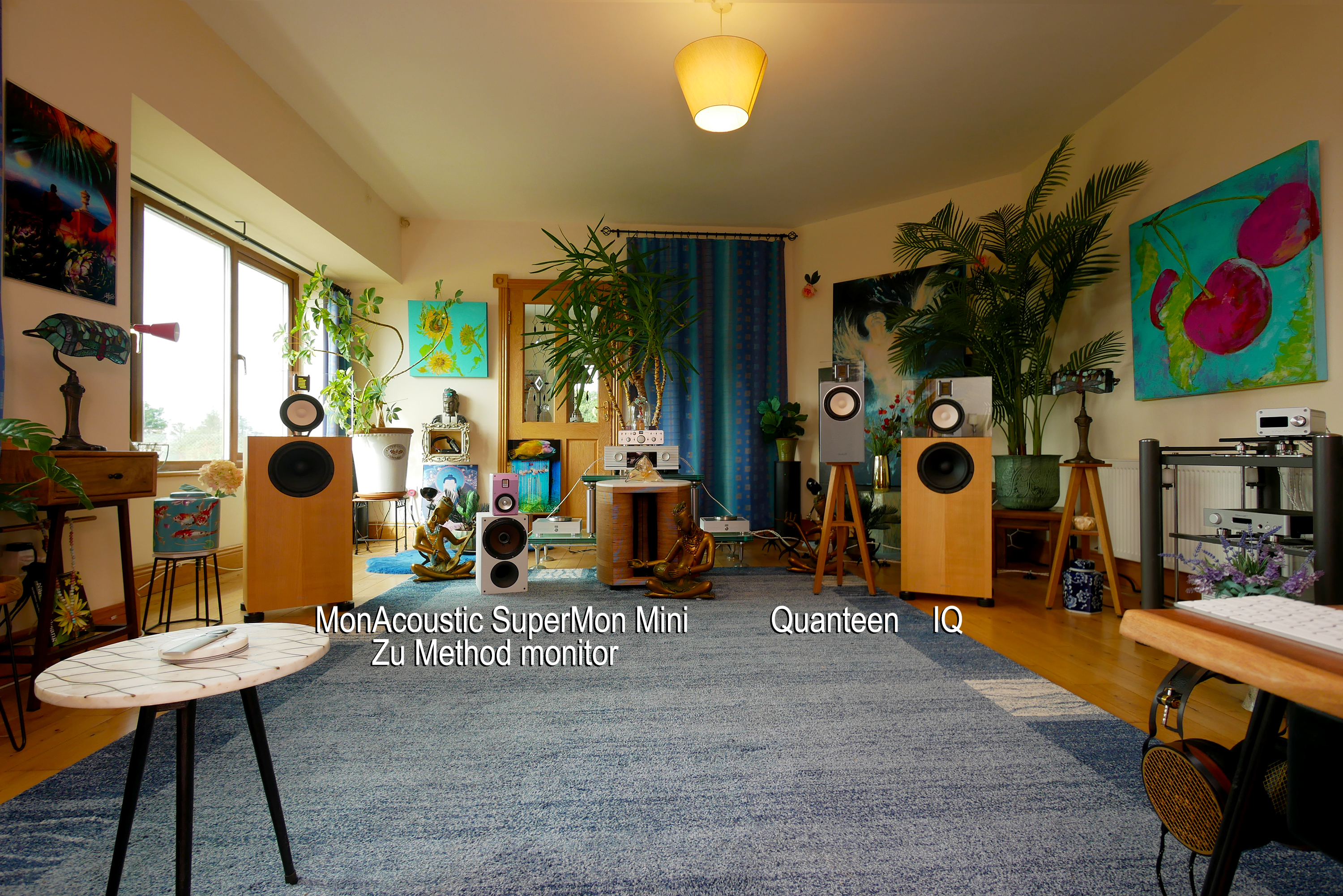
 Spatial transparency and transient speed could suggest lean tone. Avoiding it is the byline to Quanteen's dual job title. It's obviously not of Zu Method or Soul VI character as two coaxial widebanders in my inventory. Their tuning goes clearly more opaque in the 1-4kHz band but lays on extra mule kick in the 100-200Hz octave. That density and minor darkness isn't Quanteen's mix; not that a dipole Mundorf AMT would suggest so in the first place. It's simply not as forward as the isobaric 4-inch MarkAudio Alpair metal cones in my SuperMon Mini from MonAcoustic [right] which run wide open to 15kHz then hand over to a mini monopole AMT. Their tuning is friskier thus blatantly speedy. As such they favour different amps than LAiV's Crescendo monos over which they get too haggard. Quanteen's built-in tonefulness compliments of its Satori cellulose cone doesn't require thicker warmer ancillaries to express attractive tone textures. That differs from Lowther-era widebanders whose 1-4kHz amplitude rise and response squiggles mandated strategic taming often by transformer-coupled valve amps. Whilst one could certainly mate Quanteen to such amplifiers, on that score it's zero necessity. That segues back at more universal utility for no-maintenance joy with widebanders.
Given my thrills over what at first glance looked like one more Qualio repack—the original recipe revisited in a small form factor—yet which on first hearing impressed far beyond status, Quanteen shall grandfather into my Blue Moon award for the firstborn IQ handed out December 2022. From broad-shouldered 3-way to compact 2-way, the presentation remains squarely in the family. Now it simply installs in spaces which couldn't accommodate the bigger box. And to reiterate my running subtext, don't judge this box by its cover. It may look basic except for the now trademark openly baffled AMT yet performs anything but basic. Whilst I was a bit less over the moons about their #2 and #3 sons, to my ears with the fourth-born Marek Kostrzyński has reignited the fuse Qualio first lit with their maiden model. It's a very crafty follow-up across a four-year gap.
And then there is this…