Country of Origin

Reviewer: Srajan Ebaen
Financial interests: click here
 Main system: Sources: Retina 5K 27" iMac (i5, 256GB SSD, 40GB RAM, Sonoma 14), 4TB external SSD with Thunderbolt 3, Audirvana Studio, Qobuz Sublime, Singxer SU-6 USB bridge, LHY Audio SW-8 & SW-6 switch, Sonnet Pasithea, LAiV Audio Harmony; Active filter: spl Audio Crossover MkII; Power amplifiers: Vinshine/Kinki Dazzle & mono Ncore 500 Nord Acoustic amps on subwoofer; Headamp: Enleum AMP-23R; Phones: Raal 1995 Immanis; Loudspeakers: Qualio IQ [on loan] Cables: Exact Express Flame, Furutech; Power delivery: 2 x Kinki/Vinshine Tai Hang on amps and source stack, Furutech DPS-4.1 between wall and conditioners; Equipment rack: Artesanía Audio Exoteryc double-wide 3-tier with optional glass shelves, Exoteryc amp stands; Sundry accessories: Acoustic System resonators, AudioQuest FogLifters; Room: 6 x 8m with open door behind listening seat; Room treatment: 2 x PSI Audio AVAA C214 active bass traps
2nd system: Source: FiiO R7 into Soundaware D300Ref SD transport to Cen.Grand DSDAC 1.0 Deluxe with POW; Preamp/filter: Lifesaver Audio Gradient Box 2; Amplifier: Kinki Studio EX-B7 monos; Loudspeakers: ModalAkustik MusikBoxx; Subwoofer: Zu Method; Cable loom: Exact Express Earth; Power delivery: Vibex Granada/Alhambra, Akiko Audio Corelli Corundum & Castello Solo; Equipment rack: Hifistay Mythology Transform X-Frame [on extended loan]; Sundry accessories: Furutech cable lifts, Furutech NFC Clear Lines; Room: ~3.5 x 8m
2nd headfi system: DAC: Cen.Grand DSDAC 1.0 Deluxe with POW; Headamp: Cen.Grand Silver Fox; Headphones: Raal 1995 Magna, HifiMan Susvara
Desktop system: Source: HP Z2 workstation Win11/64; USB bridge: LHY UIP; Ethernet bridge: LHY EFI; Ethernet reclocker: Stack SmoothLAN; DACs: Audalytic DR701 & Gustard R26II; Headphone/preamp: FangSound Dionysus; Speaker amps: Topping B200 monos; Loudspeakers: Virtual Hifi Viper; Headphones: Final D-8000, aune SR7000, FiiO FT7
Upstairs headfi system: FiiO R7; Headphones: Meze 109 Pro, Fiio FT3
2nd upstairs speaker system: Source: FiiO R7; DAC/pre: COS D1; Amplifier: Kinki EX-M7; Loudspeakers: sound|kaos Vox3 with Dynaudio S18 subwoofer
2-channel video system: Source: Oppo BDP-105; All-in-One: Gold Note IS-1000 Deluxe; Loudspeakers: Zu Mission; Subwoofer: Zu Mission; Power delivery: Furutech eTP-8, Room: ~6x4m
Review component retail: €5.2K/pr
 |
 |
 |
 |
 |
 |
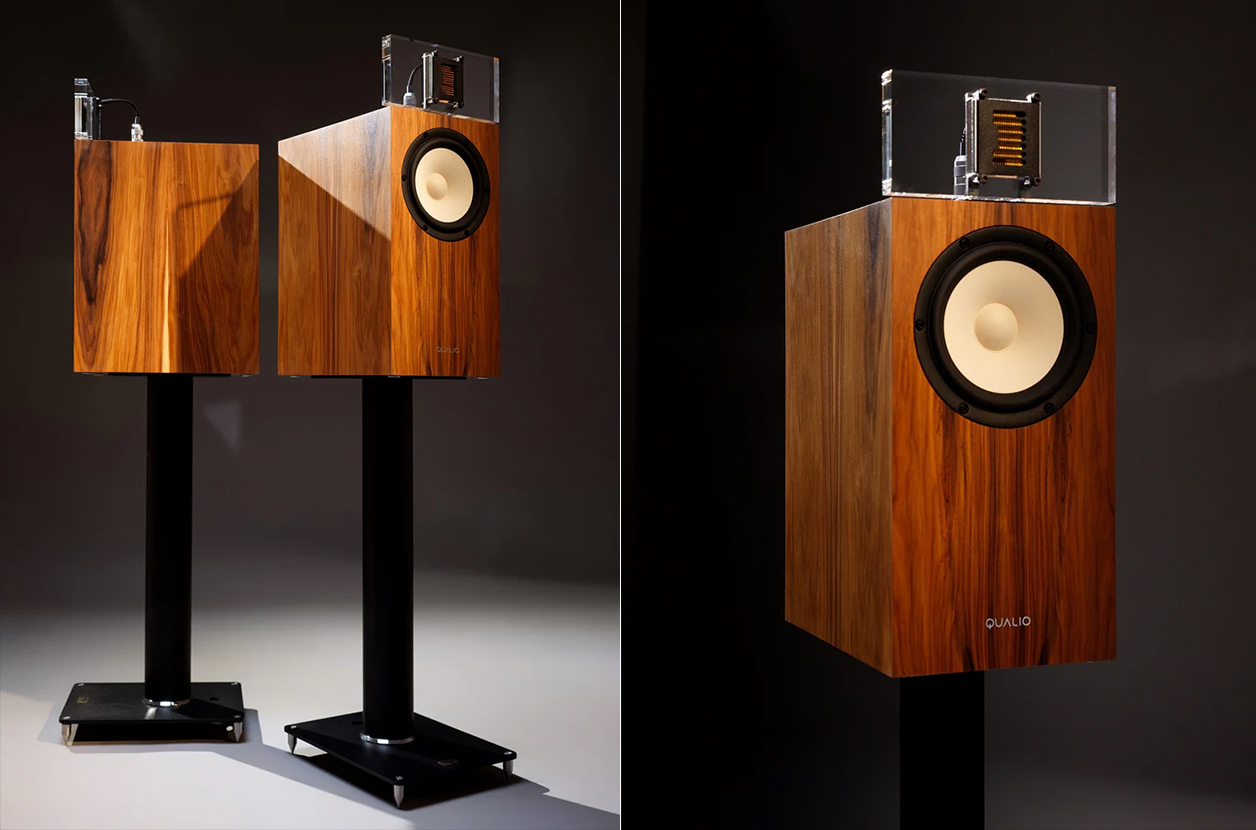

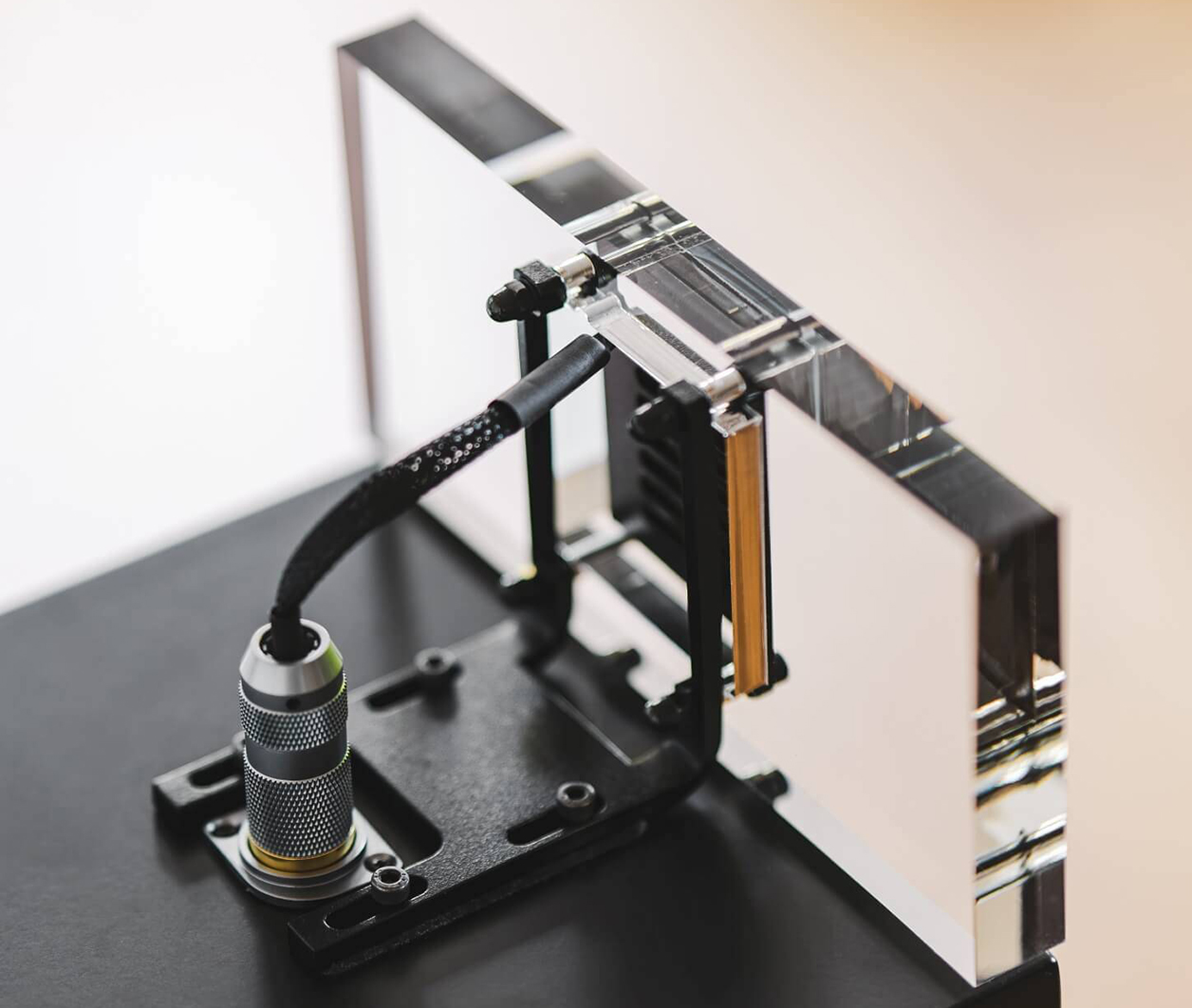
 From Quantum of Solace to Quanteen del Sol? One is the title of a James Bond movie with Daniel Craig. Does that make the other Qualio's teenager holidaying on Spain's famous coast? How else to explain a name¹ between canteen and quarantine? Regular Warsaw contributor Dawid Grzyb once told me that the first Qualio prototype he ever saw was a two-way monitor not unlike today's though with a far larger mid/woofer. It was not an obvious precursor for what became the brand's maiden model: the boxy 3-way IQ floorstander which still takes pride of place in my main system. Within this range, the latest Quanteen has become half the Quantum floorstander. It uses the familiar Mundorf dipole AMT on a translucent open baffle. That is allied to a single SB Acoustics 6" Satori papyrus cone in a rear-ported alignment tuned for 35Hz reach—just like Quantum. Should the next 007 incarnation be a woman like Sydney Sweeney or Lashana Lynch, she might well go for Quanteen's matching bandwidth inside a more petite form factor. For that she and us get lower 86dB sensitivity; an invoice from €5'200-€6'200 depending on finish; and dimensions of 48cm height on a svelte 20.2×29.5cm footprint.
For brief Qualio history, the original 9½" 3-way IQ led to the smaller 2 x 6" 2½-way Quantum. That was followed by the 12" 3-way IQ30 flagship now the Quanteen. It's the same rectilinear recipe with dipole parts scaled up/down to hit various price points and room sizes. By replacing Quantum's lower half with a stand we provide, Quanteen can go new places. On an unusually tall stand to compensate for a ram-rod seated position on my office's high table, it could park either side of my desktop to replace my Virtual Viper monitors. Without stand it could sit on a console. Tilted up, it could hog a lowboy. Plus, some people simply favour stand-mount looks over a slim floorstander taking up the same space. Now Qualio give us that choice either way. In that context it's immaterial that the added cost of a good stand could make Quanteen's ask identical to Quantum. That's about options to suit more installs, not coin.
_______________________________
¹ 'Quant' is shorthand for a quantitative analyst so a finance professional using advanced math, stats and computer programming to analyse financial markets, manage risk and develop automated trading strategies. Quants create algorithms to scout profitable trading ops, often working for hedge funds, investment banks and asset management firms. Does that make Quanteen a teenage code freak? Or perhaps it's simply a small quantity?
If you're new to Qualio the brand, it's an offshoot of Cube Audio, Poland's premier widebander house launched as a collaborative venture between Grzegorz Rulka and Marek Kostrzyński. Cube widebanders are designed and manufactured in-house. Qualio outsource from premium suppliers which reduces driver costs. Greg has since launched his solo brand Virtual Hifi whilst Marek continues to contribute design work at Pylon Audio, a large Polish hifi house with its own turnkey speaker catalogue plus OEM cabinet manufacture. As shown next, Qualio speakers come in a variety of finishes including paints and veneers in matte or gloss skins. The cabs are always standard MDF boxes with no pretensions at geometric fancy. Qualio speakers are available factory-direct from their web shop.
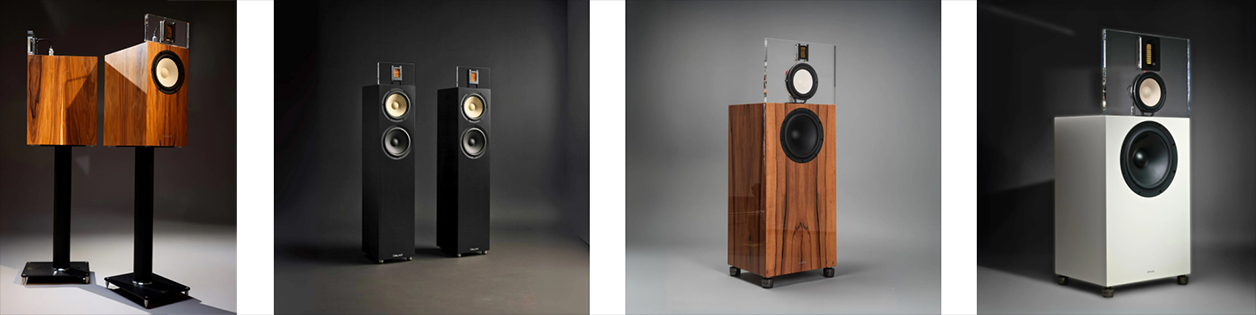 Quanteen | Quantum | IQ & IQ Ultra | IQ30








Ambient tweeter built in. Given our German dipole's fore/aft radiation, it's fair to view it so. With pleated construction based on an Oskar Heil patent expired in 2004 so now public domain, an AMT's operational surface area is disproportionally larger than a ubiquitous 1-inch dome tweeter. Unlike approximate pistonic behaviour, an air-motion transformer squeezes and sucks air like accordion bellows. That's said to give it a 4:1 even 5:1 input-to-output advantage over a dome tweeter. It should net expanded dynamic range in the high frequencies; and very fine resolution. Meanwhile the 6-inch dynamic cone mate's 35Hz spec with port assist reminds us. Breaching the first octave of 20-40Hz no longer requires large woofers. Just so, anyone who has compared a 15" sub to a 9½" variant knows the difference. It's not primarily or at all about raw extension. Bass is the sum of moving surface and stroke. Reduce surface and we must increase stroke to move the same air. That works a small woofer harder. A two-way hands it over to a tweeter, typically between 1-3kHz whilst simultaneously doing bass. Now a 12-18" driver would present clear challenges. With today's high-performance smaller mid/woofers, the most popular size for a 2-way tends to be 5¼-8". Quanteen's 6er falls right in the middle. But where does it hand over? In my IQ 3-way, the same 6" Satori midrange but now without woofer duties runs well past 8kHz, a bit like a Cube widebander. That limits the footprint of its AMT but puts the filter hinge way past the critical presence region. Like any other 2-way's, Quanteen's 6er double-tasks on bass to have us expect its upper reach to restrict for a standard crossover point. However, "the 18dB slope on either side of ~4kHz results from phase matching and the performance characteristics of the mid/woofer which we wanted to run across its widest possible range. We never stick to a one-size-fits-all filter topology but optimize values and slopes for each specific project. Due to customer inquiries, we're also working on a centre channel for home theatres." A 3rd-order low pass at 4kHz runs the ivory-coloured Satori across nearly 7 octaves and places the tweeter handover at nearly a piano's highest tone of C8 i.e. 4'168Hz. A violin's highest fundamental is A7 at 3'520Hz. That puts Quanteen's crossover right at the cusp of pure harmonics. It's practically halfway between a 1kHz 2-way and single-driver widebander. Considering the Cube DNA, that's consistent.
I first heard of today's attraction in January when Marek wrote that "at the end of last year, I had a really busy period. Besides managing Cube and Qualio, I designed the Monet, IQ30 and most recently the Monitor IQ plus another Qualio system whose production I'm still considering. If its premiere goes forward, it'll take place at the Hamburg Audio Show by the end of the month. I also had a lot of work between a large project for an outside company and ongoing projects for Pylon. But I treat Cube and Qualio as priorities so we're hiring a few people to support our growth."