Affirmative. That terse answer warrants a longer follow-up. None of my three systems need a preamplifier. My upstairs Sonnet Pasithea DAC exploits a variable reference voltage on its R2R ladders to set actual gain. The Enleum AMP-23R on the desktop makes the output resistor on its discrete current-mode opamp variable which sets the circuit's amplification factor. Neither approach is classic attenuation of fixed gain whose self noise becomes an ever-growing percentage of the signal as we invoke higher voltage trim. Rather, it's true no-loss variable gain. The Cen.Grand DSDAC 1.0 Deluxe in the main system uses a precision R2R ladder embedded on a Muses chip and outputs max 6.2Vrms. Whilst that drives 6m long XLR cables, the ~47kΩ amplifier input impedance which terminates it allows barely any current flow, just voltage transfer. In short, a DAC-direct connection done right is my favoured solution after coming off excellent autoformer-based passive preamps from Lifesaver Audio of icOn fame. In that context, doing nothing detrimental—to resolution, lucidity and jump factor in my hierarchy—is the best a preamp hoping for employment could say for itself. Far more likely, applicants at casa Ebaen will be found guilty of varying degrees of opacity; or greasing up my fresh stew which I love just as it is. That's not an ideal scenario for any preamp to justify its existence, you quip? Quite. It's why I don't use any. I've curated my systems without them. Where I run multiple sources, they're always digital. I simply switch those with a DAC's inputs.
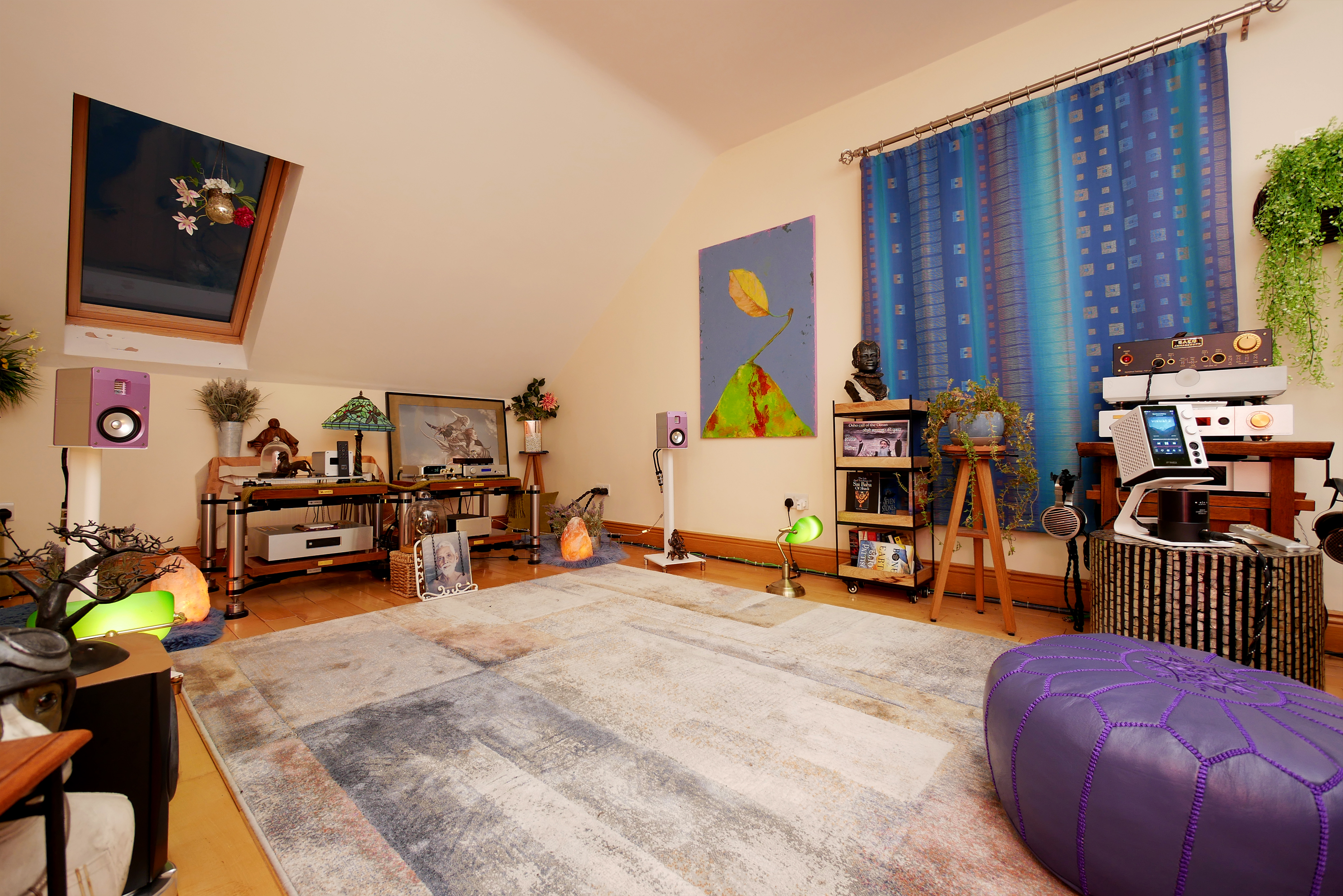
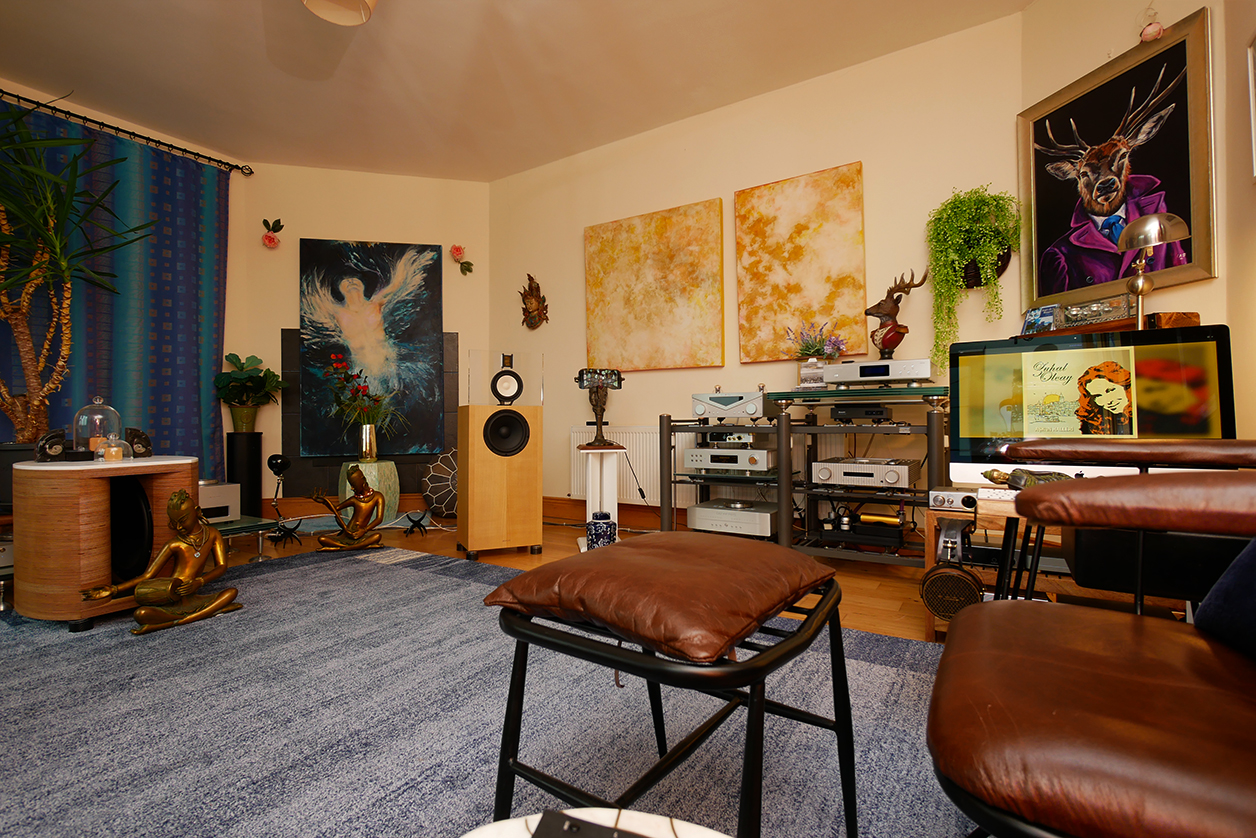
Inserting the HP²A into my upstairs mix whilst setting Pasithea's resistor ladders to max caused no overcast in the treble which here is a combination of small isobaric spiderless Alpair widebanders augmented in the top octave by small AMT. It inserted no energetic distance or caused any obscuration of fine detail resolution. Clearly the higher S/NR from eliminating HeadFi's extra gain block paid off. As usual, attenuation of my DAC's 4Vrms output hovered at ~30dB for my desired SPL. Driving a short 1m interconnect, I heard no advantages to adding the Laiv. Far more interesting to me was that I didn't hear any immediate disadvantages either. Whilst lengthier A/B could well net certain minutiae on that score, I know my systems far too well to not hear coarser qualitative subtractions or unwanted alterations very quickly. I heard nothing of the sort. The HeadFi tuning was MIA. To overwrite for effect, the HP²A is like an ice-cream machine that dispenses vanilla or lemon sorbet. Flick the headphone tab for vanilla, the speaker switch for citrus. And at 3.5m from the display, my 1962 eyes saw the volume figures just fine so the 15mm font proved perfectly adequate. Given my anti-preamp leanings, the HP²A acquitted itself well indeed. How would it do downstairs where the PCM-to-octa-DSD conversion of the DAC exudes a more billowy ambient-enhanced flavour than the Sonnet? Would the Laiv preamp kick in minor turbo mode?










Not in a system whose partially dipole speakers deliberately energize more of the room's ambient field. They do textures and decays extremely well even off 'accurate' rather than 'organic' ancillaries. DAC-direct mode had more élan and spunk. So my no-preamp faith didn't budge. For that to happen, I'd need to move in the Accuton-fitted Albedo Audio Aptica with their hard ceramic membranes. And, I must add that particularly in this system, I'm extremely critical of exactly where my needle hovers between speed and curves. After 22 years on the job, my tastes have sharply crystallized as I expect they have for anyone else this deeply involved. Though much to its credit the HP²A didn't broadly capsize my ideal balance, even the bits it did add on mass to steal from alacrity and insight were felt as too much already. Versus DAC-direct, Pál Nagy's icOn 4 autoformer passive makes its presence barely felt. It clearly passes more micro detail and dynamic fettle. I currently no longer use it since it would merely add a box and interconnect but not elevate the sonics. Given that my proclivities call Pál's AVC the best preamp I know, it wouldn't really serve to call the HP²A a buffered passive even though when defined as adding zero voltage gain, it technically is. Sonically meanwhile, it's more active than the best of the passives. And that's precisely why pro-preamp believers like John Darko generally don't opt for passives or DAC-direct. For them such hookups don't do enough. Instead they look at the meatpacking district to hang more flesh off the bone. They mean to crank Starship Enterprise's materializer beam to 11. Whilst today I couldn't promise you 11—for that you'd want a rather costlier Pass I think—the HP²A will move that needle. And once we recall its €2'700 ask and multi-tasking with headphones at a drive-all level, the law of relativity comes to a far more benign conclusion than a hyper-critical reviewer's pick of nits.
So in the end, what did I really think of the HP²A? Once I got over perceived misdirection—of voicing expectations from happy Harmony DAC ownership diverted—I saw it as an equally accomplished machine which for the same price does a lot more. And that's before we add the LExt options of more analog inputs or phono. The HP²A looks the bomb, comes in black or silver with a matching FMJ wand and is built very well. Modularity allows users to swap out boards should the need arise whilst the micro SD slot adds a firmware-update path to an all-analogue machine. There could be a small bit of misdirection between ultimate voltage-swing potential and just 12dB of built-in voltage gain. To exceed 20V out will require source voltages far in excess of the virtually industry-standard 4V over XLR. So keep that in mind when considering loads like Tungsten & Co. Back on voicing, Harmony auditioners who thought the DAC to err on the side of freshness and acuity to favour a warmer sunnier climate farther south will applaud the step change of the HP²A. That change is larger in HeadFi than preamp mode but factors regardless. Call it a course correction for Harmony detractors though given the DAC's long list of plaudits and awards, detractors seem rather sparse on the ground. But Laiv must see an even larger audience for a deck that's a bit more generous of body, weight and macrodynamic impact to have tuned the HP²A accordingly. Aesthetes of understatement could still find the gold trim too bling but Laiv's cosmetic course was set with their maiden product. Add the Vinshine connection which wasn't in place yet when the Harmony DAC dropped. It's hard for my curmudgeonly inner cynic not to be thoroughly impressed by the complete package. That I already own kit which equals or exceeds it isn't the point. That's just a function of timeline. Had I come across the HP²A before some of it, Sir Laiv the Second would most likely be one of my domestic references as its Harmony mate is on my desktop.
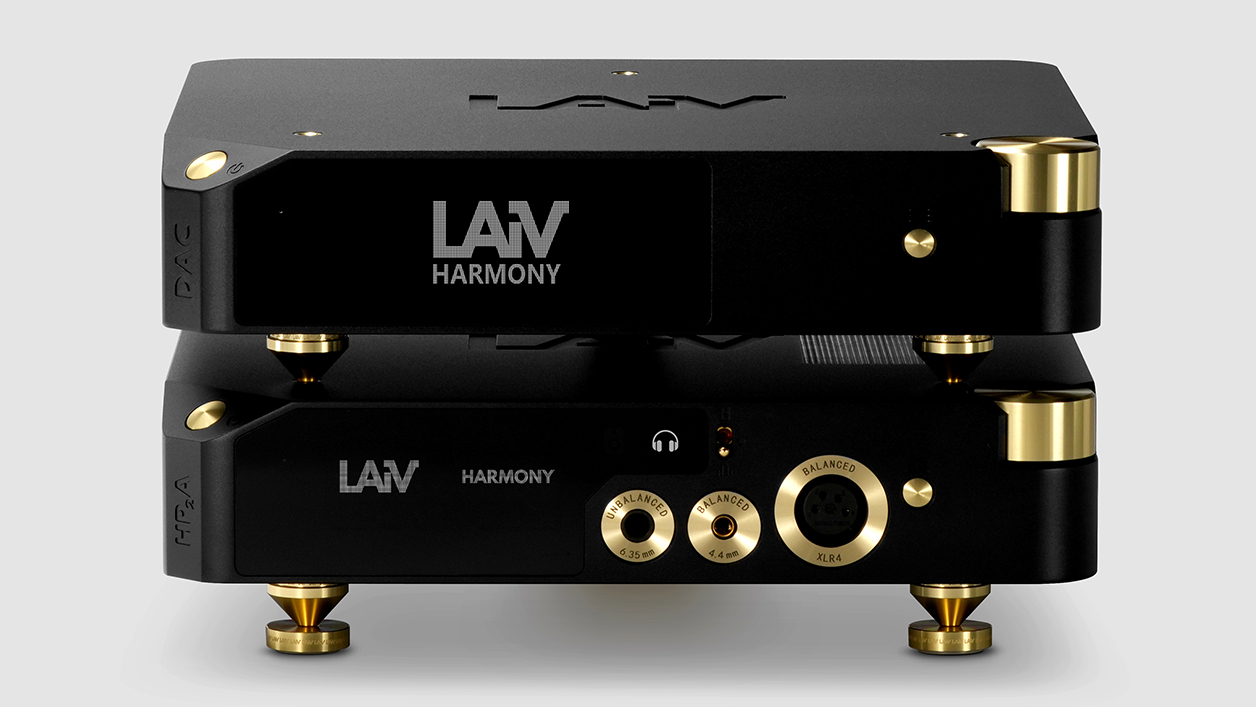
Frankly, Laiv the brand should give competitors the fantods. I already thought that after the Harmony DAC but the HP²A plus LExt really piles on. And there's still the monos and streamer with slanted display to follow. To wrap that thought with a bow, check out this video.
That must be the slickest AI-enhanced hifi product promo I've ever seen. Enough said!