By October 22nd, "I'm excited to let you know that a Harmony HP²A will ship out to you in two days. I'll include the LExt IN2 which adds an extra XLR and RCA input for expanded source options." Knowing that the HP²A circuit is fully balanced, I asked whether the LExt's RCA input undergoes balanced conversion with/out voltage doubling. With the HP²A's full specs published by then, we see that the frontal mode selector isn't a 2- but 3-pole affair. We can switch from preamp to headfi mode as expected or have both active simultaneously as shown next.

 We also see that the Z-out for headphones is a very low 0.007Ω on both balanced ports and half that on the 6.3mm. S/NR is 125dB on the XLR pre-outs, 110dB on the RCA and balanced headfi ports, 100dB on the ¼" tap. For our all-important noise figures, preamplitude clocks just 5/8µV on XLR/RCA respectively. Headfi goes to 200/400µV on 6.3 and 4.4mm/XLR4. We see how extra gain for headphone drive extracts a small noise toll. More gain also reflects a higher power draw so 23W on headphones, 8W on the pre-outs. Standby is a Brussels-approved 0.5W. Again, the circuit is fully DC-coupled with "no LCR in the signal path". With the previous page's black LExt render, I asked whether it also comes in silver to match a silver HP²A. "You're spot on. The RCA input of LExt IN2 converts to balanced before outputting to the HP²A via LE-Link, effectively doubling 2V to 4V. LExt Phono replaces the RCA/XLR high-level inputs with a single MC input on RCA. Either comes in black or silver."
Below we see how LExt IN2's XLR input will show up as '2' on the HP²A display, the RCA as '3'. Use mouse-over enlarger to see the details. The 19-pin LE-Link certainly packs a lot of parallel wiring to handle all signal flow, bidirectional control code and power for this extra functionality. At $350, our discretely buffered input adder really does not cost a lot and requires no extra power cord. It's a cleverly effective way to add socketry to a half-width component, even rope in a phono stage in the alternate version whose price remains TBA.
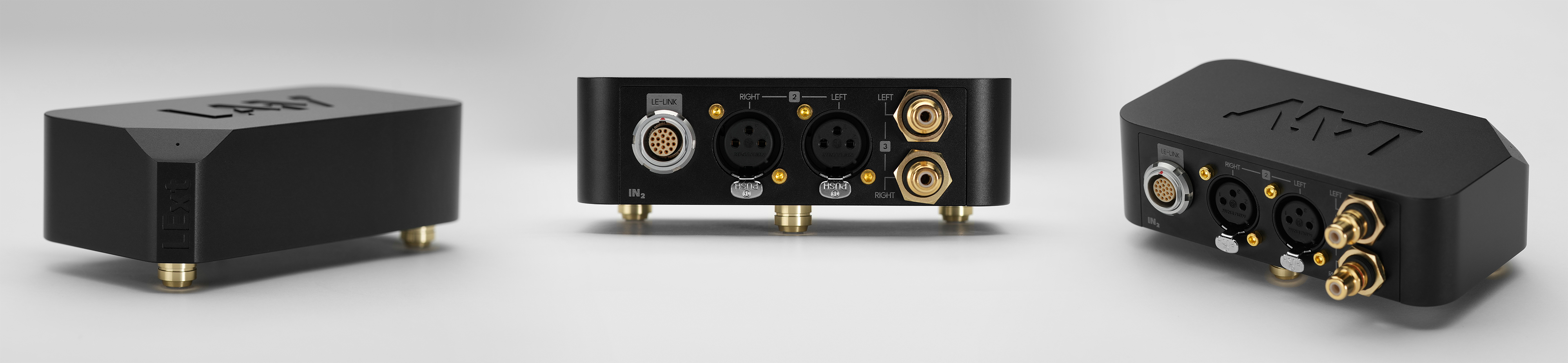











We can obviously only connect one LExt at a time. "Our listening tests and AP measurements show that the XLR input on LExt IN2 offers the same specs and sound quality as the XLR input on the HP²A. After conversion to balanced, the RCA input's specs are nearly identical to those of the balanced input." The designers assure us that the external sockets mirror the internal. Extremists playing in this ~3K sandbox will predictably hook up their most important XLR source to the HP²A's direct input "just in case". That's back at offering something for everyone as the leitmotif of Laiv's modular approach. The close spacing of its sockets tells us just how narrow and shallow LExt must be in the flesh.
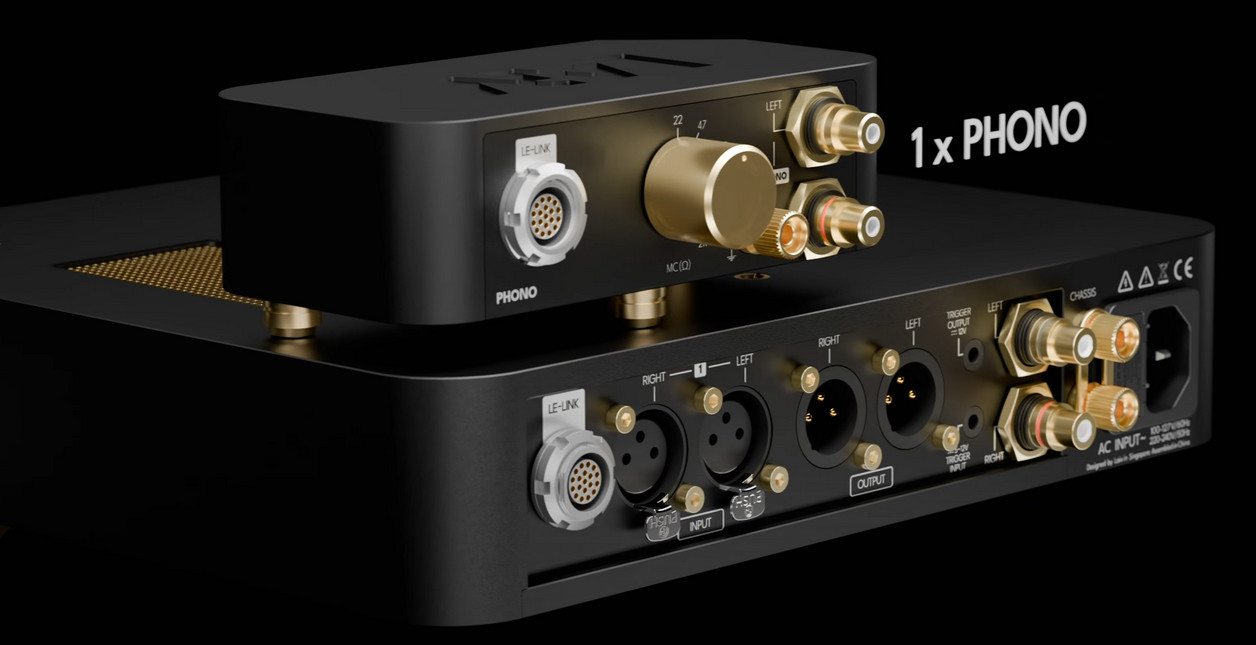
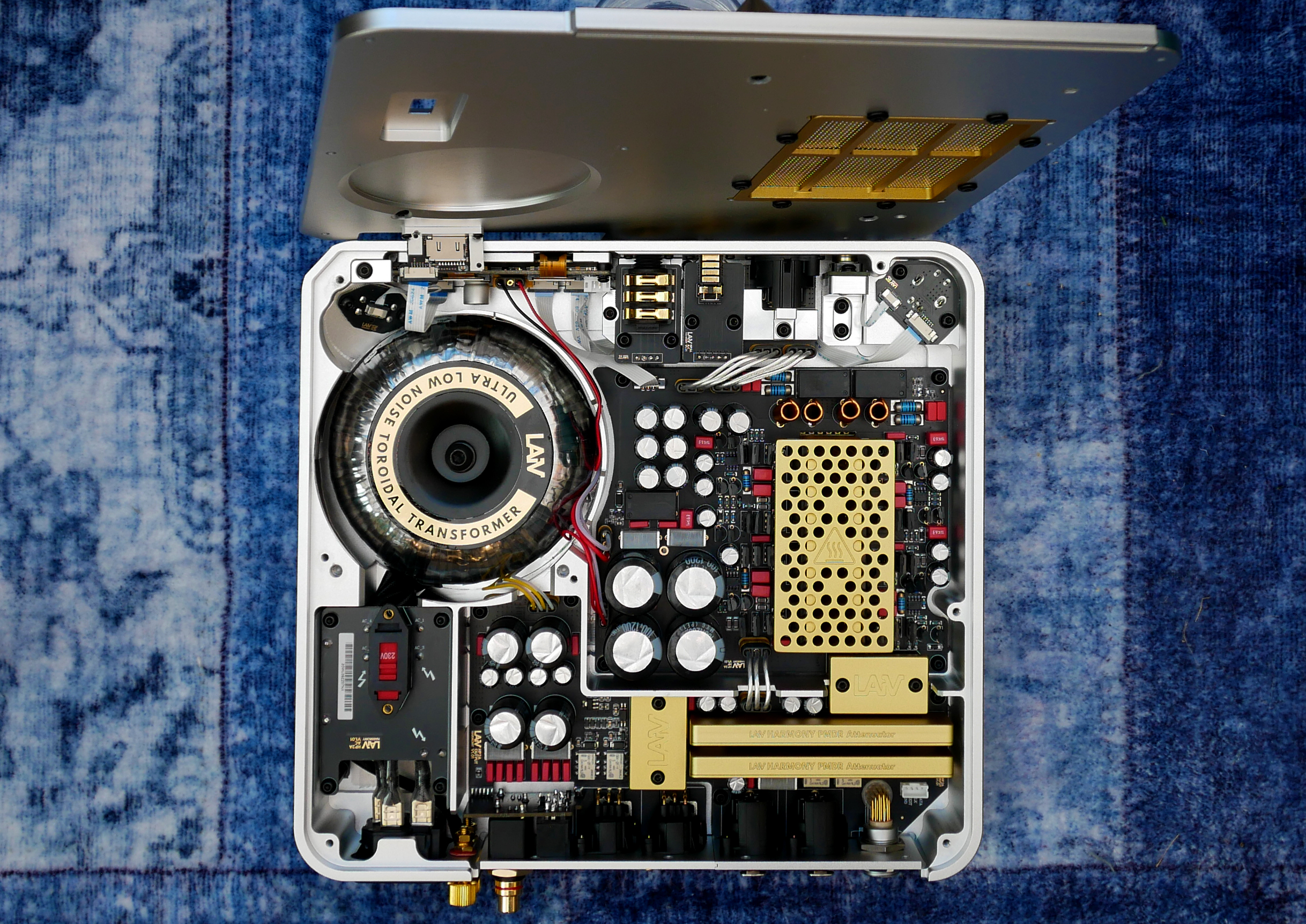
Of course there's nothing like a familiar size reference to really drive that point home. Since the minor FedEx deities decreed to deliver the HP²A by its lonesome, leaving LExt to fend for itself in the Shannon holding cell, we'll look under the former's kilt first to quietly think, what a well-hung beastie. Unexpected was the micro-SD slot on the belly lid which connects to the main chassis by short ribbon cable. "While firmware updates won't be a regular thing, this card port makes it easy to add new features or fix any bugs when needed."