 Vitamin A for answers. Let's start with anxiety. You acquired your new Laiv component through their Singapore webshop. Everything is peachy. A few months in there's a worm. What now? Activate your contingency plan. It's what I unwittingly did when my Harmony DAC no longer locked to incoming signal regardless of input, source or 'factory reset'. I asked Laiv's Weng Fai Hoh whether they could reflash my firmware through the USB input. Instead, "I'm sorry to hear that your Harmony DAC no longer detects any input signal. I suspect that the issue lies with the input or display board. Thanks to our modular design, replacing them is easy. Everyone can do it by themselves."
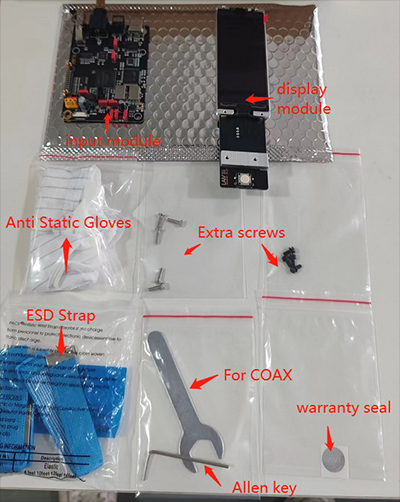
A day later I had a tracking #, this photo with the contents of my repair kit and a link to this how-to YouTube video. Why blemish this HP²A report with an embarrassing failure mention of the Harmony DAC? Failure isn't embarrassing. It's our human condition. Not having a solution sucks. Like Aqua Audio, Laiv's modular approach is a feature we won't properly appreciate until Tao tickles us. As Confucius say in the fortune cookie, shit happens. Does it have us at a loss or conscientiously catered to? Being customer serviceable is part of Laiv's design ethos. Forget costly two-way shipping to Asia. Forget associated time delays and the risk of damage or loss in transit. Simply send your email SOS. Help will be on its way shortly.
Watch the video to see the easy swap in action. It's part of any Laiv purchase. Now you see why I mentioned my mishap with their DAC. What happens when a honeymoon is over and the first major tiff at hand? With Laiv there's no endless couples therapy between two disillusioned parties, no looming divorce. Have yourself a little repair party instead. It's part of this deal; a double dose of vitamin A for ace asset. Or as reader Michael commented, "this ironically might make one more indebted to the brand than had it not happened".
Sterling customer service is a currency most reviews never trade in. Our kind's revolving doors tend not to host things long enough to act up. It's because I bought my Harmony DAC sample for personal use that I went well beyond the usual review mileage for Murphy to strike. Getting hands-on with the innards merely increased my appreciation for Harmony's modular build quality. Swapping the input board took about 10 minutes. Et voilà, fixed. But Weng also wanted me to swap the display board so he could pick up both my original modules by call tag. Apparently they'd made some improvements to the display. Again, we won't experience good customer service until we're in need. That moment might feel inconvenient and elicit a curse but being able to fix it with our own two hands is strangely satisfying.
Now back to the HP²A not to be confused with the HPA2 by Benchmark Media. As a Laiv it packs the same eventuality protection.









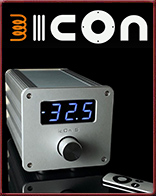

At a glance, this HP²A shows headphone mode, input XLR1 active, remote pairing in 'square' for the amp, in 'triangle' for the DAC; and volume at -38dB. "The HP²A uses a ladder of discrete matched resistors via silent optocoupler for volume control. The preamplifier stage is a discrete and buffered class A circuit. The true balanced headphone amplifier uses a quad of high-bandwidth lateral Exicon Mosfets per channel. [That's twice as many as my Kinki THR-1 – Ed.] Via LExt you can add inputs or a phonostage. The voltage gain of the preamp sits at unity, that of the headphone stage at 12dB. With a 4V input like from our Harmony DAC, the headphone drive figures are shown below."