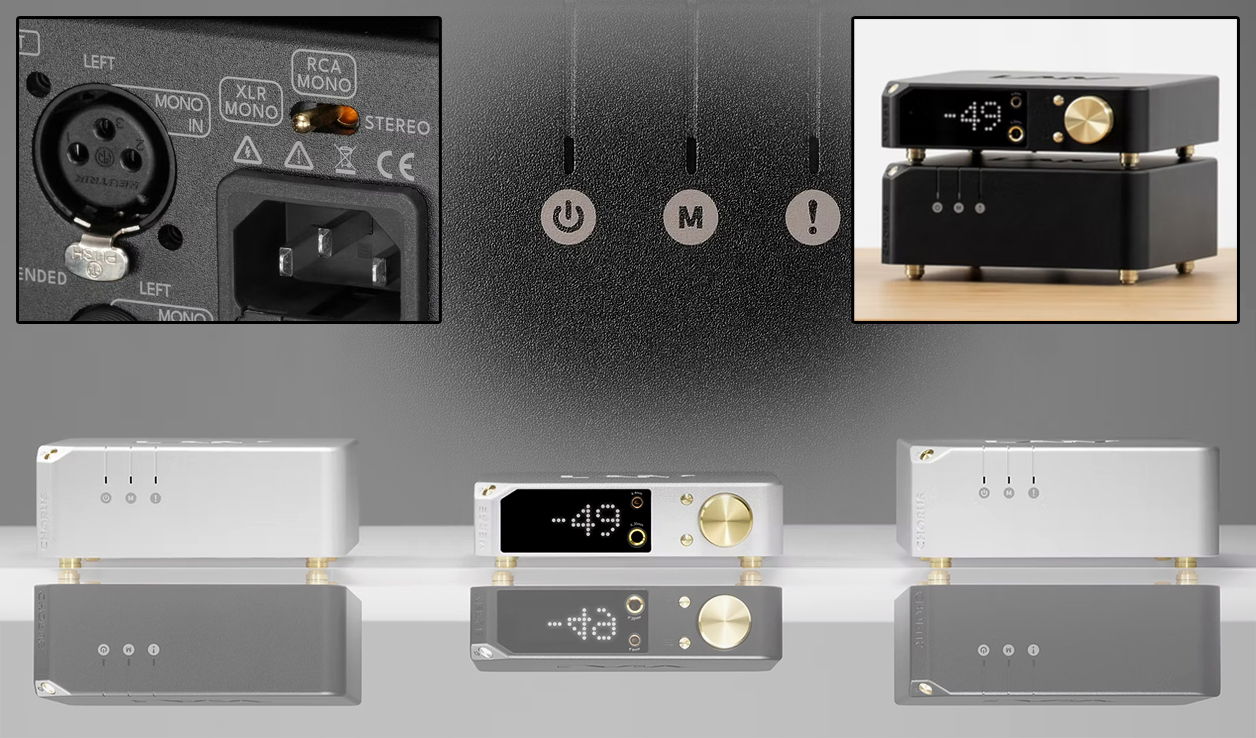
Today we look at Guangzhou where my FedEx shipment originated. It stopped over in Istanbul and Paris, Dublin and Shannon then spent four days in customs for "an inspection". When it finally showed as having escaped illegal-alien purgatory to hop onto the white FedEx van after the weekend, I knew to expect familiar customs tape on at least one carton. What contraband does Revenue suspect behind clear hifi branding? Xray requires no physical inspection. Do they use a screwdriver to peek inside a chassis to check for small bags of white powder? Do they stop once they see actual metal boxes ensconced in foam cradles? Sometimes my imagination goes to town. It sees big woofers which, once cut from their rubber surrounds and voice coils, can be dissolved in water then evaporated to extract hallucinogenic crystals. That imagination would make me a most inquisitive customs inspector. I rather hoped that mine in Shannon had been less creative and not tried to, say trigger the exclamation-mark LED with a deliberate short. As it turned out, no customs tape. Neither box had been opened. What 4-day inspection? On the exclamation mark, LAiV's micro processor constantly monitors excess current, DC and temperature to automatically disconnect the speakers or shut down in a trigger scenario. Indicating an issue turns the 3rd LED red and blinks once for a thermal incident, twice for over current and thrice for DC. The central LED remains off in stereo mode, turns white for RCA mono and blue for XLR mono. The 1st LED goes red in standby and white under power. A long press of the gold mains switch is off; a short press is on. It's quite comprehensive status feedback executed elegantly and smartly. This design team don't just know their electronics. They also sweat the user experience including the packaging and supplemental materials. For my first session, a single 1.5kg 16.8 x18x6cm WxDxH Chorus replaced my desktop's Audalytic DR70 DAC atop the monitor's footer to battle Topping B200 monos bracketing a Gustard R26II discrete R2R DAC. Versus 200wpc/8+4Ω high-feedback discrete class A/B at €600/ea., the LAiV was disadvantaged on power, privileged on costing less. The preamp was my FangSound Dionysus in low x 1 gain, source a Qobuz Sublime subscription embedded in Audirvana Studio. Its r8brain engine resamples all to DSD512. For reference, I favour my Topping bricks over a pair of GoldNote PA10 Evo monos based on Pascal class D. Those too are small enough to fit on my work desk but sit inactive in my hifi bookcase. Yet on amplifier minuscularity, Chorus undercut all of my options to be cutest in the land and nearly lifted its front footers under the weight of the attached designer power cord.
Not enough data to reproduce full-rez treble? Such musings might have accompanied early class D once contrasted with high-bandwidth linear amplifiers. The first ten seconds with stereo Chorus consigned such musings to antiquity. Jordi Bonell's Agua Madre had the blue upper harmonics rise off his guitar strings like a perfume of wild jasmine. When a fresh encounter directs aimless attention so promptly and unmistakably at a certain detail, it's a tell. Of all the possible suspects—bass, vocals, soundstaging, image density, dynamics, other—a fully lit-up treble was first to greet me. As my fondness for Mundorf's AMT proves by featuring in three or four of my five systems, I adore how an inquisitive treble tracks tone modulations and expands the scale of timbre variations. Warm, cuddly, rose-tinted and fireside romance aren't on that menu. Whilst copious negative feedback can work wonders on woofer control, to my ears it routinely overdamps the mid and high frequencies. It's why my GoldNote Pascal monos are out of a job; and far beefier nCore-500 specimens replaced them on dual-mono subwoofer duty in the main system. Multiple designers tell us that the greater linearity of 750kHz GaNFets makes corrective feedback virtually optional. Even compared to my Topping class A/B monos with complex multi-stage nested feedback loops, stereo Chorus marked clear wins in the column of treble elucidation and its neighbours, image specificity and soundstage mapping. In the absence of massive NFB, I wasn't greeted by overall dryness which could otherwise mar a lit-up top end with chalkiness. Not! Just so, rocking-chair listeners could still find Chorus too turned on 'n' up. For someone like me who favours full elucidation because I grew up in a musical household so close up and very personal with clarinets, French horns, guitar and piano, that's impossible to predict. I clearly remember that the Harmony GaNM monos had more class A warmth than I fancied for myself. Stereo Chorus now struck me as tuned closer to my 2.5MHz DC-coupled Kinki amps of which I have the stereo and mono version plus hi-spec Dazzle integrated run in preamp bypass.







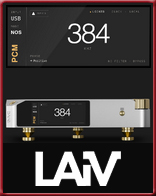


The next photo shows Chorus on its side, a CD jewel case attempting a governmental UFO cover-up but not quite succeeding. It was the most meaningful size comparator I could think of—for those who can still remember CD. For the 1-2 punch, the Topping monos exited the scene, mono Choruses took their spots and the Audalytic DR70 DAC reappeared to take up the slack of USB audio where the Gustard handles network streaming. As a twosome, the sound filled out, the subjective centre of gravity lowered. Bass swung harder, tone weight pressed extra on the scale. Whilst the treble took no hit per se, it balanced out differently. Where one Chorus played up exciting liveliness and nearfield vigour, two Choruses cast a more gravitational anchor to feel statelier. Lower mass tends to signal as quicker, even higher resolution. On that score, driving Chorus solo had more of that cabriolet effect. Driving two added a cylinder or two. It produced the slightly more sedate and calm but effortless authoritative sedan feel. That said, for how my ears calibrate, it didn't cross into warmth. That informative treble would never go there. This morph was about substance and attendant robustness; a slightly more relaxed listening posture far removed still from any overstuffed slouching armchair with footstool.
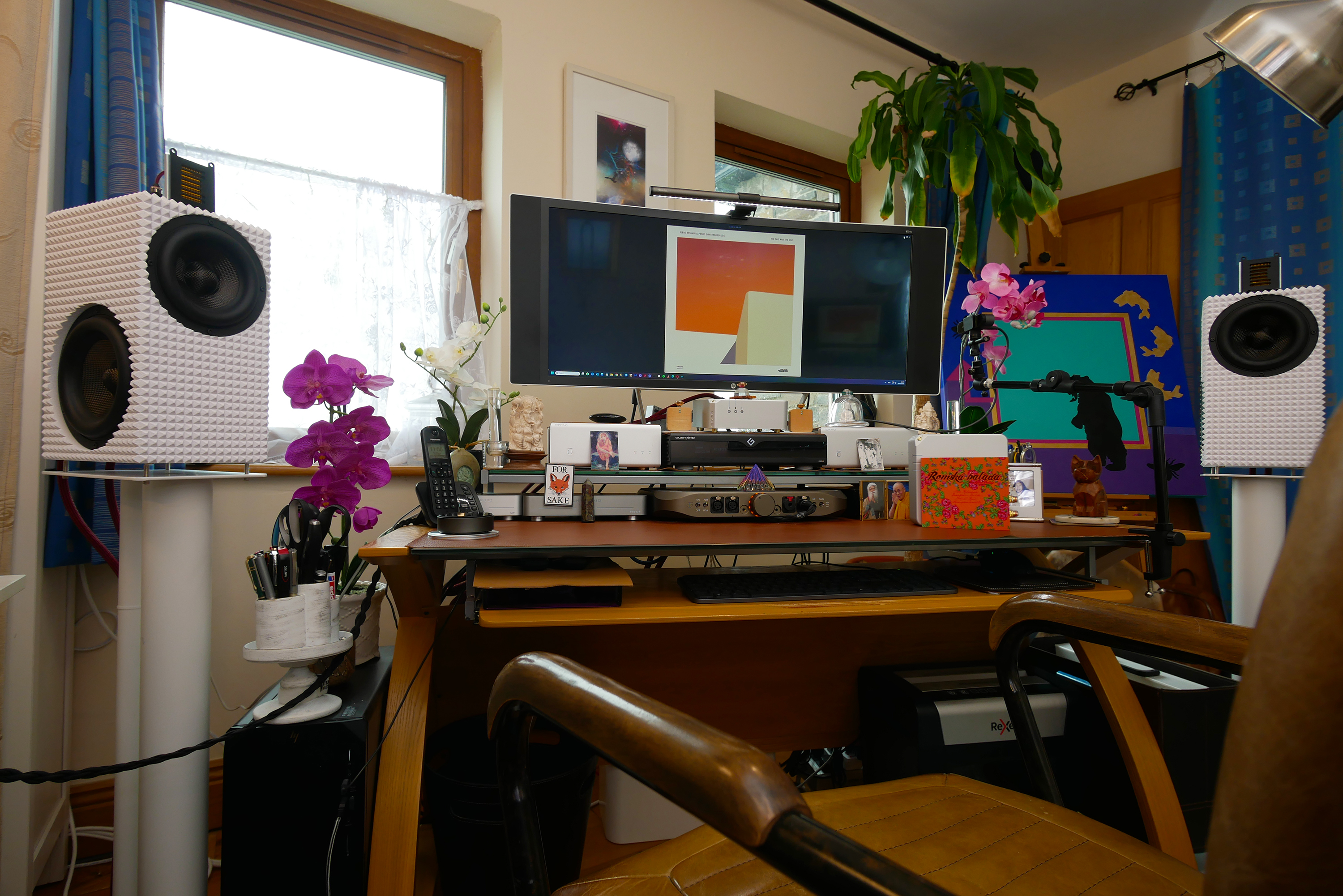
How one reacts obviously depends on the speakers. These highly textured white Virtual Viper with dual long-throw passive radiators are inherently chunky and counterintuitively bass capable. They do well already on overdamped ultra-feedback class D but adopt a sportier mien with my Topping B200; and rev even harder particularly on a single Chorus. As we'd expect from a well-executed fast-recovery switch-mode power supply of ultra-low noise, separation powers were high regardless of running single or double amps. This becomes noteworthy with front/back image overlays as they occur in big ensembles, orchestras and multi-row choral forces. Where systems can maintain law and order to have everyone stay in their own lane, the quasi-holographic sensation grows stronger. When a concert harp like Kirsten Agresta Copely's leaves arpeggios hanging to let us follow their trails through a large acoustic, our brain instantly registers those venue cues which populate the silences. It's easiest to hear with simple music. As complexity piles on to have more stuff take up the same space and compete for attention, wall-of-sound effects become more common. How well a system resists is one measure of its separation powers. Here LAiV's minis performed well past their standing as dictated by perception. Operated dual-differential/mono or single-ended/stereo, they conform to modern expectations of high resolution.