
Country of Origin

Reviewer: Srajan Ebaen
Financial interests: click here
Main system: Sources: Retina 5K 27" iMac (i5, 256GB SSD, 40GB RAM, Sonoma 14), 4TB external SSD with Thunderbolt 3, Audirvana Studio, Qobuz Sublime, Singxer SU-6 USB bridge, LHY Audio SW-8 & SW-6 switch, Sonnet Pasithea, Laiv Audio Harmony; Active filter: Lifesaver Audio Gradient Box 2; Power amplifiers: Vinshine Audio x Kinki Studio Dazzle & Gold Note PA-10 Evo in mono on subwoofer; Headamp: Enleum AMP-23R; Phones: Raal 1995 Immanis; Loudspeakers: Qualio IQ [on loan] Cables: Exact Express Flame, Furutech; Power delivery: 2 x Kinki/Vinshine Tai Hang on amps and source stack, Furutech DPS-4.1 between wall and conditioners; Equipment rack: Artesanía Audio Exoteryc double-wide 3-tier with optional glass shelves, Exoteryc amp stands; Sundry accessories: Acoustic System resonators, AudioQuest FogLifters; Room: 6 x 8m with open door behind listening seat; Room treatment: 2 x PSI Audio AVAA C214 active bass traps
2nd system: Source: FiiO R7 into Soundaware D300Ref SD transport to Cen.Grand DSDAC 1.0 Deluxe with POW; Preamp: Hattor ARP-S; Active analog xover: Lifesaver Audio Gradient Box II; Amplifier: Kinki Studio EX-B7 monos; Loudspeakers: ModalAkustik MusibBoxx; Subwoofer: Zu Method; Cable loom: Exact Express Earth; Power delivery: Vibex Granada/Alhambra, Akiko Audio Corelli Corundum & Castello Solo; Equipment rack: Hifistay Mythology Transform X-Frame [on extended loan]; Sundry accessories: Furutech cable lifts, Furutech NFC Clear Lines; Room: ~3.5 x 8m
2nd headfi system: DAC: Cen.Grand DSDAC 1.0 Deluxe with POW; Headamp: Cen.Grand Silver Fox; Headphones: Raal 1995 Magna, HifiMan Susvara
Desktop system: Source: HP Z2 work station Win11/64; USB bridge: LHY UIP; DAC + Head/preamp: Audalytic DR70 + HP70 both on LHY LPS-80 Dual; Speaker amps: Topping B200 monos; Loudspeakers: Virtual Hifi Viper; Headphones: Final D-8000, aune SR7000, FiiO FT7
Upstairs headfi system: FiiO R7; Headphones: Meze 109 Pro, Fiio FT3
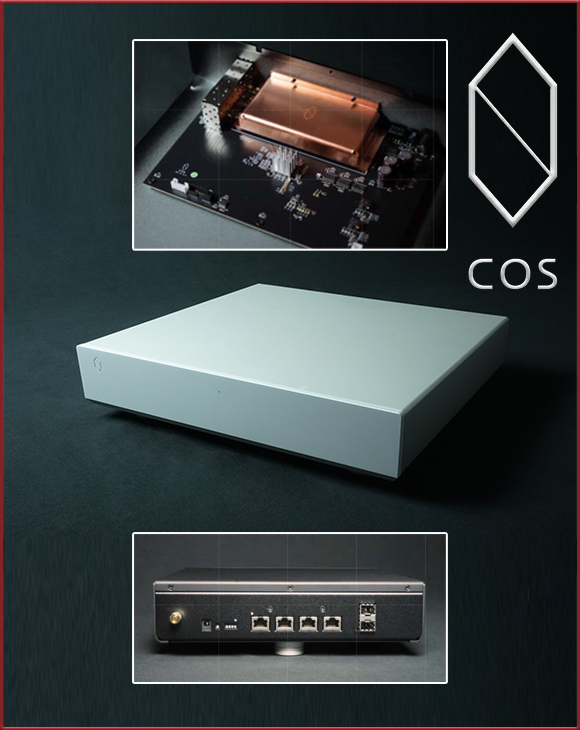
2nd upstairs speaker system: Source: FiiO R7; DAC/pre: COS D1; Amplifier: Kinki Studio EX-M7; Loudspeakers: Virtual Hifi Cobra [on loan]
2-channel video system: Source: Oppo BDP-105; All-in-One: Gold Note IS-1000 Deluxe; Loudspeakers: Zu Soul VI; Subwoofer: Dynaudio 18S; Power delivery: Furutech eTP-8, Room: ~6x4m
Review component retail: €2'799 amp, €2'499 DAC
 |
 |
 |
|
 |
|
 Synchronicity. "Hello Ivan, your review has published and the amplifier repacked for pickup. When you made the arrangements, please email me the shipping docs. Thanks for the opportunity to review your Virtus S1S. I really enjoyed it and already also posted an announcement for your new A3." So far so boilerplate. But the reply contained the unexpected.
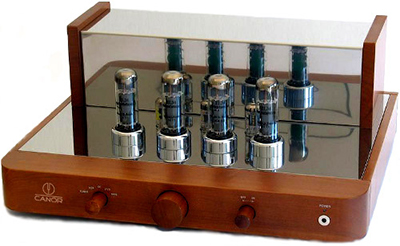
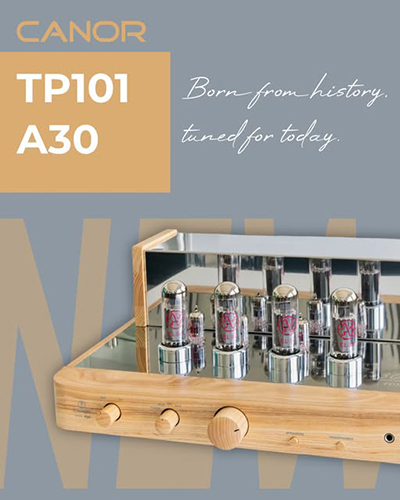
"Hello Srajan, thanks for the information. I think the review is really great and we were all pleased by how much attention and effort you put into this. I also appreciate you announcing the A3. The first units will be available in the second half of May. We expect it will be something really outstanding. In Munich we'll launch the Virtus A30, a redesign of our brand's first TP101 amp from 30 years ago [right] so a classic class AB valve amp.
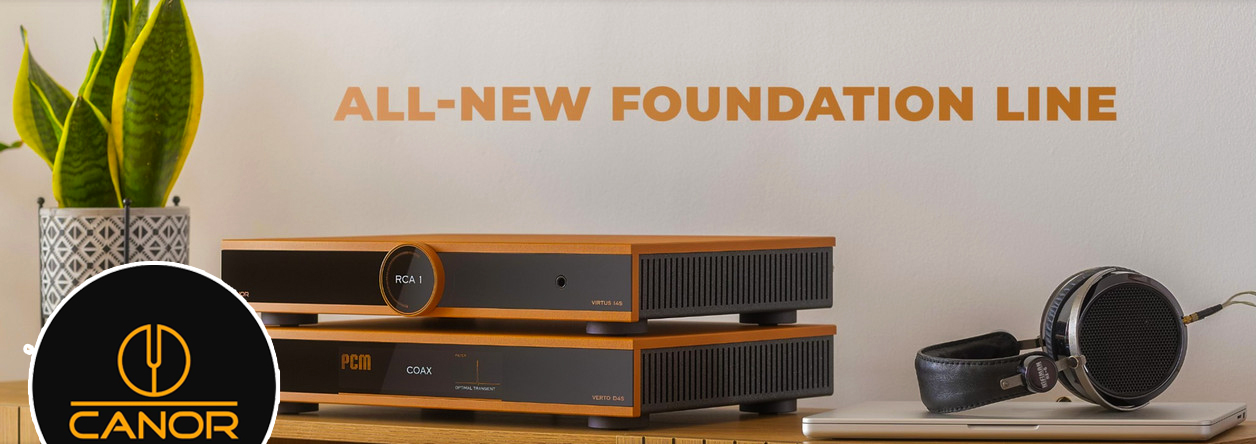
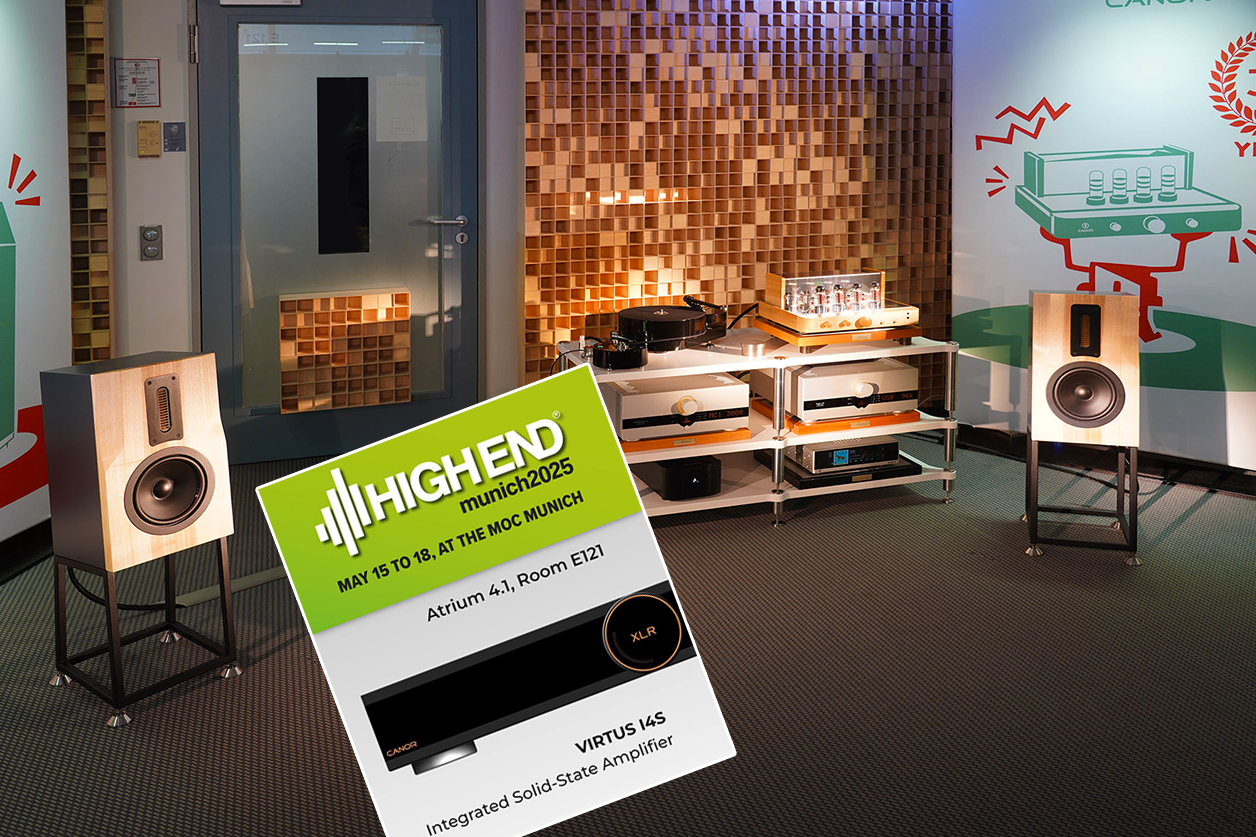
"Anyway, I noticed that you like Mosfets We're planning to introduce a completely new series of Canor products at Munich, the Virtus I4S solid-state integrated amp and matching Verto D4S D/A converter. The amplifier will run a pair of 500-watt Mosfets. Again, this is going to be something special. Should you be interested, we can talk about reviewing this new amp whose launch is scheduled for September 2025." In some quarters, a push/pull gain circuit made up of a single pair of high-power transistors is referred to as single-ended push/pull. Whilst that's a technical misnomer, it does point at minimalism and from it, higher purity. Output devices don't parallel which never matches ideally. There's just one per half phase. Reimyo had a powerful 200wpc amp like it. So did GamuT. Gato still do. The obvious rationale to (mass) parallel output transistors has always been power scaling. The new 160wpc pure class A Gryphon Antileon Revelation for example uses twenty bipolar transistors per channel.
If one starts with 'industrial' over-spec'd parts like Canor seem to do then opts for more energy-efficient class AB, power and simplicity can go hand in hand. The lure of 'single' high-power push/pull gain had my attention. "Count me in."
So a Mosfête was coming. That's all I knew in April 2025 but was very curious to learn more about.











Once I saw first photos, I wondered. Do Canor combine a classic linear output stage with a switch-mode power supply to shrink size requirements and fit the lot into such a low-rider case?
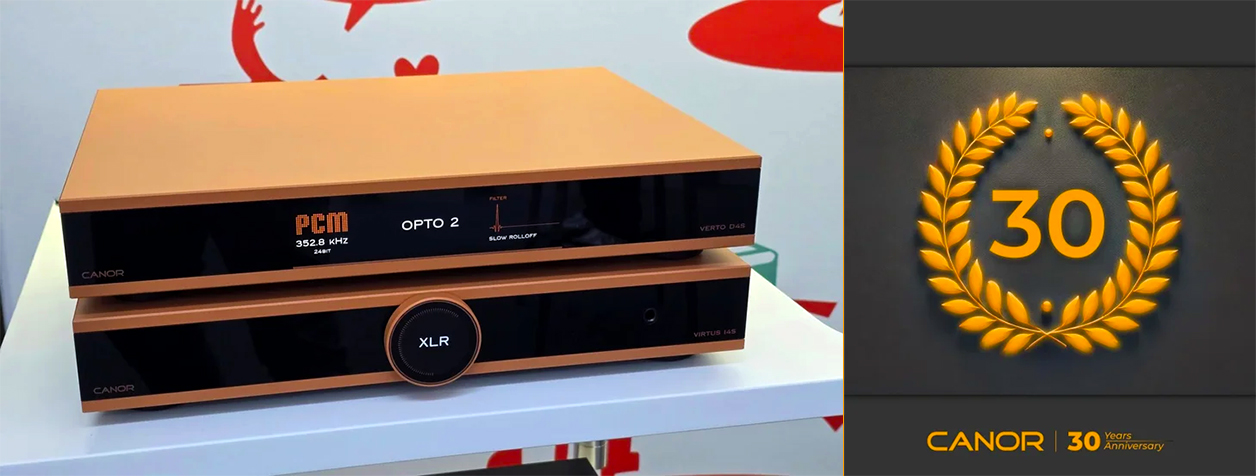
Of course with the precedent of Enleum as bonsai masters of shrunk linear power supplies via super-flat toroidal iron, perhaps the I4S follows a similar path? Or perhaps it's class D, period, using two Mosfets plus an Infineon driver chip and PWM modulator?
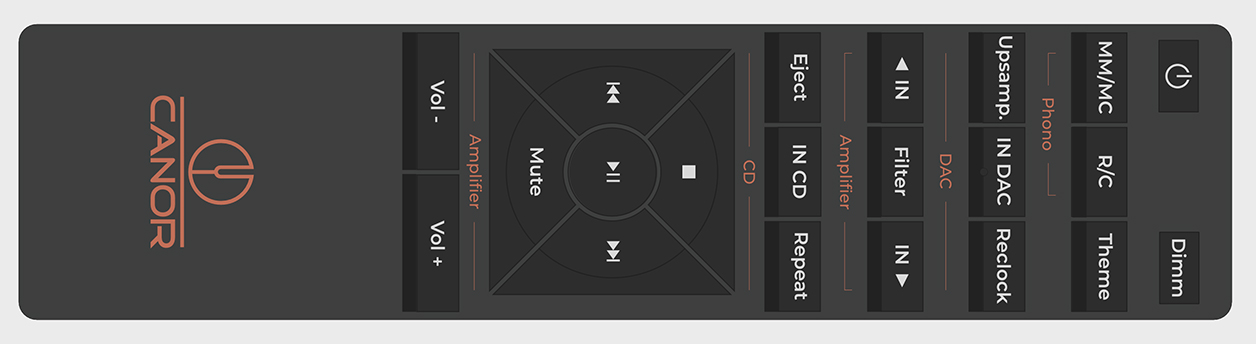 For the Virtus A3, AI 2.10 and Virtus I4S, control input selection, filter characteristics, MM/MC, pickup adjustments, display color and brightness plus volume. For the Gaia C2 and CD 2.10, control load/eject the CD tray, play, pause, stop, next and repeat modes. For the DAC 2.10 and Verto D4S, select inputs and set upsampling target frequencies.
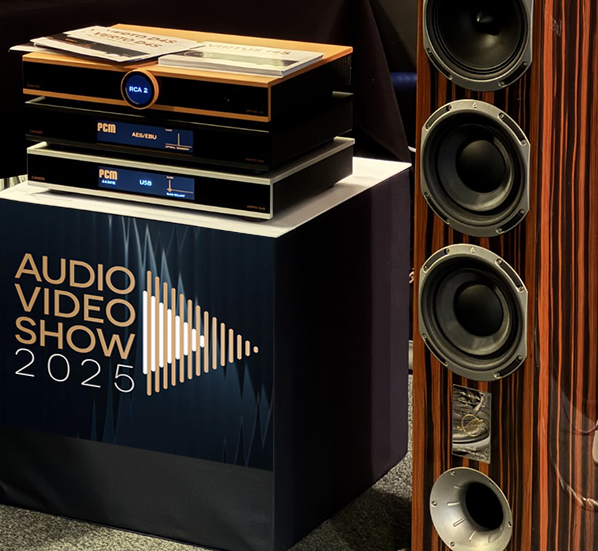 When we don't know, guesswork is the sole game in town. It can be fun to count just how many ways we can err. Let's wait to hear from the designers before I break any records. That just wouldn't do. How 'bout the ¼" headphone port? Surely that's a safe bet? How 'bout the earlier DAC showing 352.8kHz on the 'opto 2' input? With Toslink's 96kHz limit, does the Verto D4S DAC support network fibre-optics? And there I was just getting out of the guessing game. Actually, the DAC sports USB-C, AES/EBU, coax, HDMI/ARC and dual Toslink digital inputs and RCA and XLR analog outs. Conversion is by ES9038 in dual-mono allocation, data density is up to PCM768 and native DSD512. The power supply is linear.
The show orange popping back up in Warsaw sure looked the peach without any fuzz. This was the brand's new entry-level kit. It seemed pretty slick from where I sat. Good thing I'd get to test-drive the amp to progress past pretty pictures and presumptive pondering into hard objective facts then soft subjective sound impressions.
By September, I found this basic I4S description on a Polish seller's website: fully discrete so zero op-amp 31dB-gain class AB of 72wpc/8Ω, 120wpc/4Ω; 2 x RCA line-level, 1 x XLR, 1 x MM/MC RCA of 40/46dB and 60/66dB gain respectively; 1 x RCA pre-out; 200kΩ input impedance XLR, 50kΩ RCA; aluminium, steel and glass housing; dimensions of 7.5 x 43 x 31cm HxWxD, weight 11kg. For power supply Google Translator had 'network'. Was that civilian for switch-mode or linear? I couldn't tell.
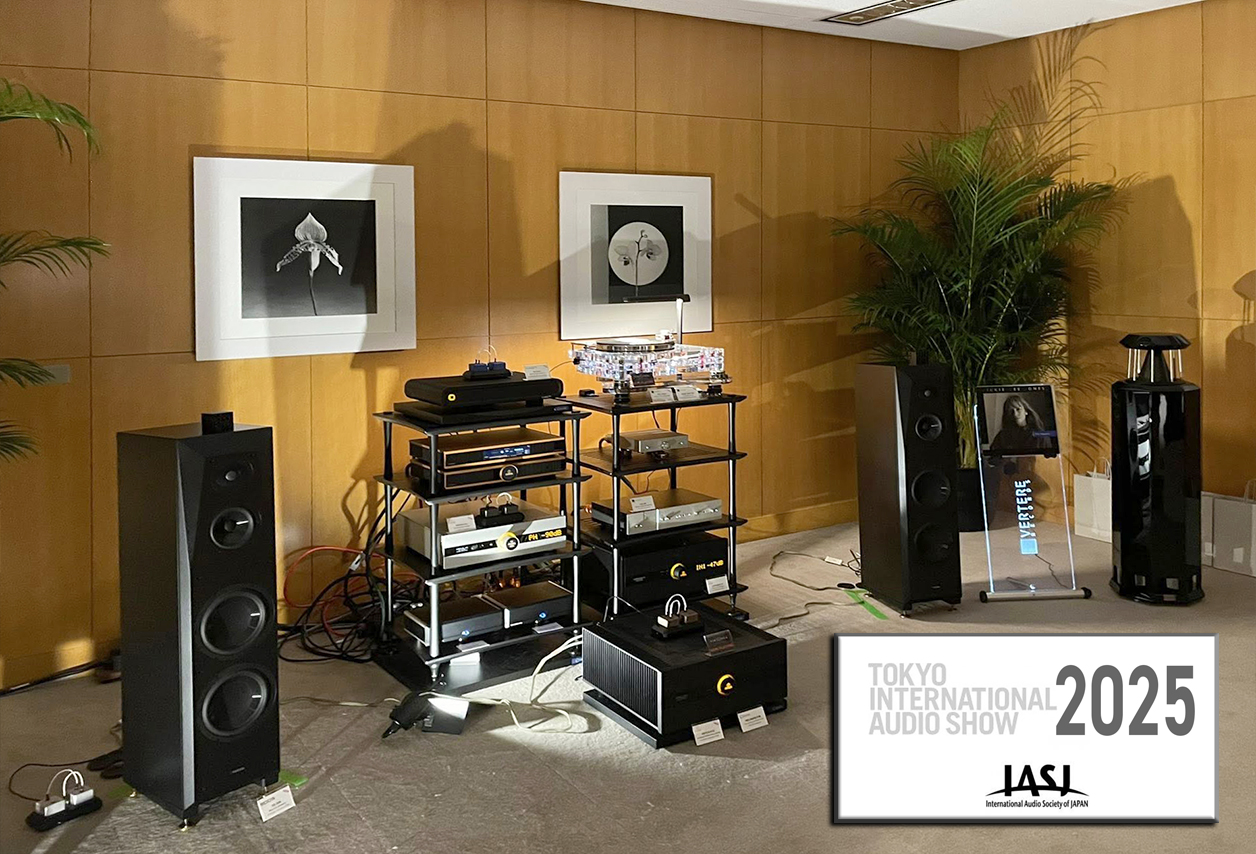
Canor's own website just then still played coy but did show a new system remote which also works the Verto/Virtus models. Our Mosfête was hotting up. Would it become a rave? Should I be stocking up on E? The 1.8" display integrated into the controller knob certainly is a stylish bit of E for entertainment. If this was E for entry level, Canor sure were laying it on thick. To peel off the surface anodize for a deeper look had me check with my Canor contact Ivan Boscovic. "The design of the new Virtus I4S and Verto D4S goes as planned and we'll have first pre-production units by the end of September. I will provide you with full specs and white papers then. A sample for testing will be available by the end of October at the earliest. The first pre-production units will be presented in Tokyo (TIAS 2025) and in Darmstadt (Deutsche Hifi Tage). I can pass you one of the first units for review afterwards."