A DAC is a DAC is a DAC. Gertrude Stein's famously rosy threesome predates contemporary 'it is what it is' Street Zen. Many digital threads on bit-perfect equality worship both expressions. Ones and zeroes. All the same. With cognoscenti though, Mrs. Stein forgot to specify her rose. Surely black, red, lavender, apricot, green, white and multi-coloured roses aren't the same thing, never mind size and scent. Meanwhile unwritten but popular consensus about Sabre DACs finds all of them glary, bright and harsh. Love to hate overstates but diss remains a common hiss. All ESS DACs are identical. Implementation matters naught. It's a memo Verto missed. Canor's 'Optimal Transient' filter bypassing Sabre's stock filters could be one of a number of contributors. Others will be their I/V conversion, discrete output stage, linear power supply and how the lot interacts. Compared to my below Cen.Grand which treats all incoming PCM as DSD1'024, I heard no sabre teeth of overcooked attacks, no neon-dead treble, no textural hardness. That said, Verto did treat its treble with more shine than Gustard's R26II discrete R2R DAC just then on my desktop. It thus felt even more specific on image lock and localization. But glary, bright and harsh? Not on my watch¹. Whilst the DSDAC 1.0 Deluxe was texturally a bit softer or willow-in-the-wind elastic, the Slovakian deck caused no rigidity. In fact, its tonality was a bit fuller so blacker if also firmer around the edges. At this level of the game, DAC deltas are narrow. To be sure, level is about quality, not necessarily coin. At €2'500, I heard Canor's DAC on the same level as my €6K resident. As a holy man once said, "my Father's house has many rooms". He didn't mention stairs or escalators to higher or lower floors; 1st, 2nd or 3rd class lodgings. In a similar sense, my upstairs A/B felt egalitarian. There were minor presentational changes, just none sufficient to call out tiers. In my office meanwhile, I would. Here Verto overshadowed the €1'600 Gustard. There spending more still netted sufficient sonic extra to feel noteworthy.
__________________________
¹ China's Gustard brand has models built around Asahi Kasei, ESS and discrete R2R converters which are otherwise very equivalent. Review and user feedback comparing them side by side seems to agree that the Sabre-based models offer the highest resolution over the AKM and ladder versions. What's more, Gustard bypass the stock ESS filters in favour of three which they wrote themselves. Doesn't that shake hands with Canor's 'Optimal Transient' math?
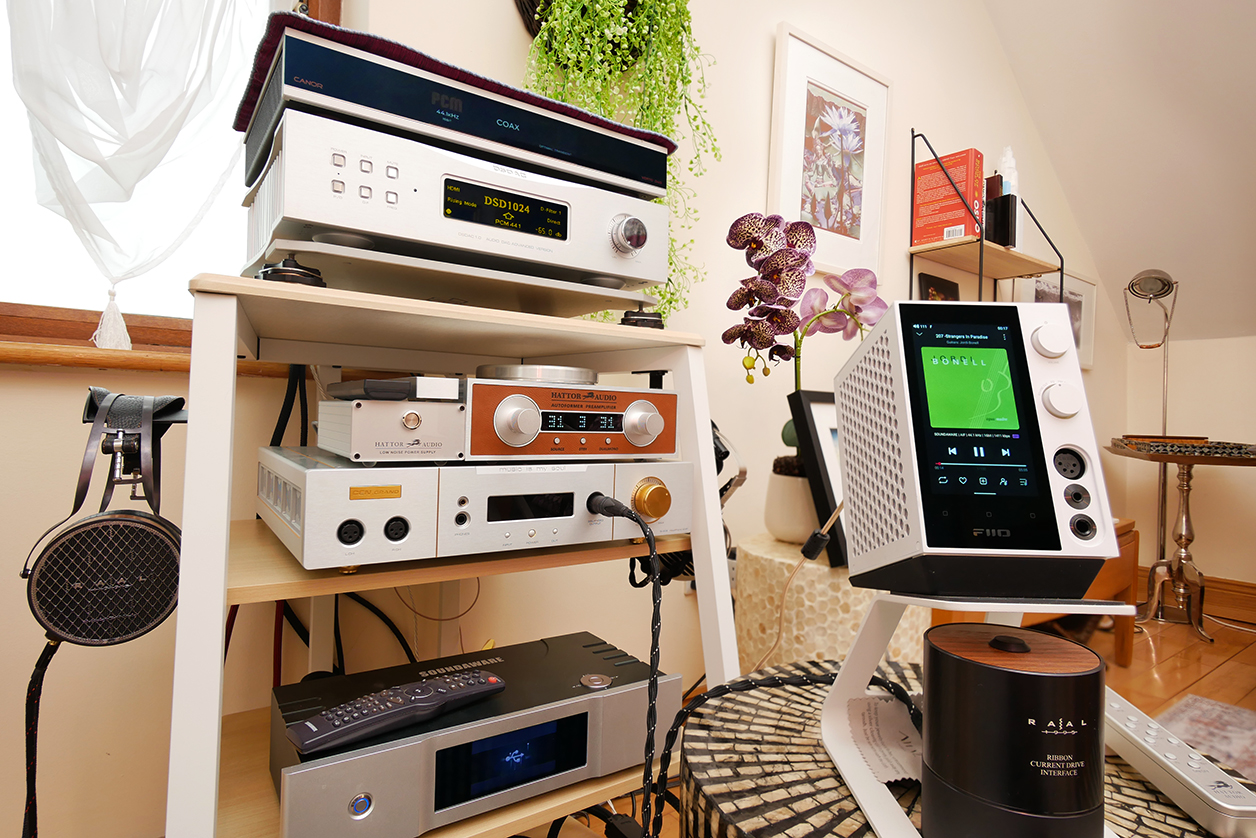
Where Cen.Grand out-edge Canor is with their ladder-on-a-chip analog volume control. Their DAC switches between fixed/variable mode. Hello direct-to-amp happiness for us in the less-is-more crowd. Whilst my upstairs system does host a linestage for review scenarios like today's, it's an exotic passive-magnetic solution to eliminate additive colourations. It's why Verto ended up here and not in my main system. That's DAC-direct. Had I been on Canor's feature-builder team, I'd have pressed for a Muses programmable gain chip; or at least user-settable access to Sabre's on-chip digital 32-bit attenuator. Preamp proponents needn't tap said feature but direct-to-amp acolytes can find it ultra useful. In my little red book then, settling for fixed mode exclusively was a small miss in this Foundation concept.
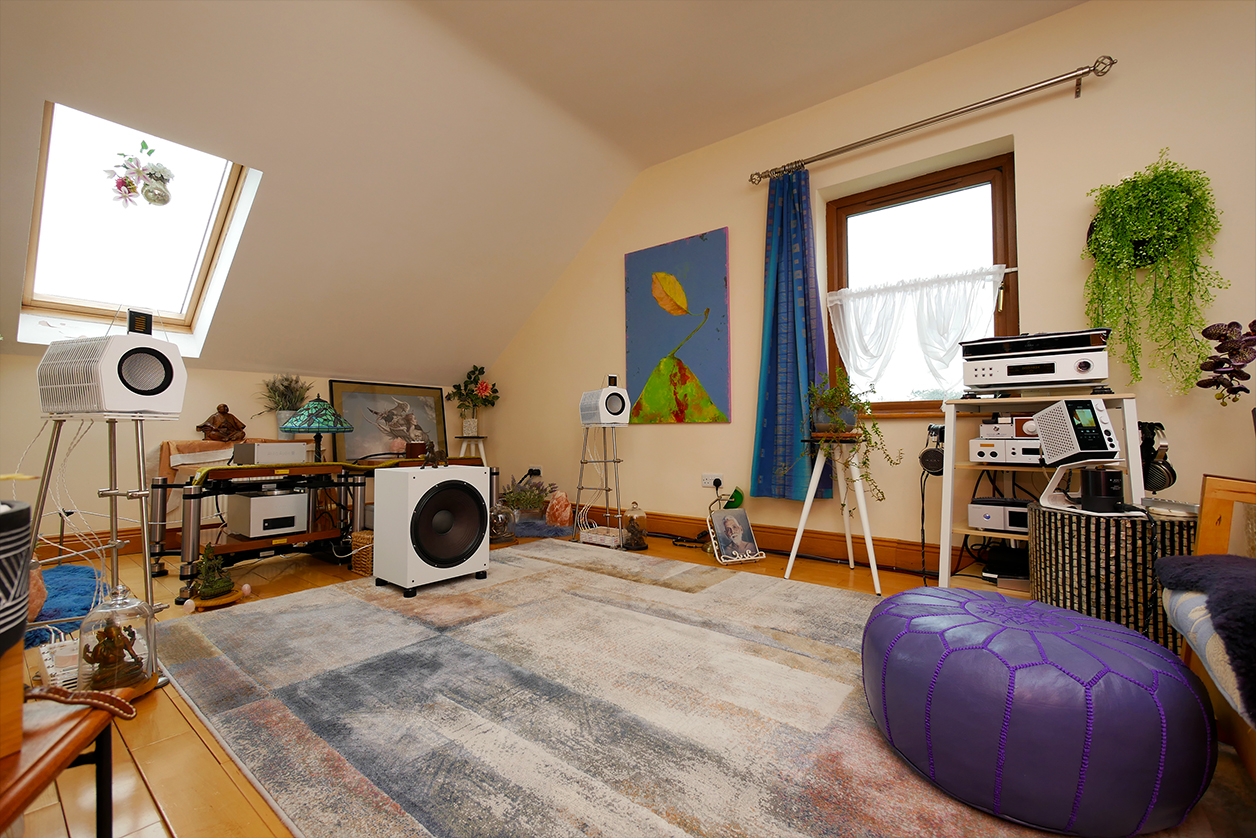
How would Virtus fare in my main system whilst replacing the usual Kinki/Vinshine 300wpc lateral Mosfet Dazzle tapped in power-amp mode? For that exercise I set the Canor to HT mode at -9dB on its attenuator to generate generic 26dB fixed voltage gain. Would it match Dazzle just with a small 'd' for less than 1/3rd the power at 2½ times less liquidity loss? To set that table, 'bypass' circumvents big Dazzle's active linestage thus its extra fat, top-down warmth and slower cozier energetics. Using Kinki Studio's amp-direct inputs behaves like an adrenaline shot or blood thinner. Think energizer or accelerant. The sonic gestalt gets keener, quicker, leaner and opens up on top. Anyone running Dazzle as an integrated won't know of its alternate persona which had me buy it. I obviously didn't expect Virtus I4S to be its equal. But could it conjure up a similar feel just at lesser potency? If so, what would lesser potency actually mean? This signal path was made up of iMac/Audirvana Studio for upsampled local/cloud files ⇒ Singxer SU-6 USB bridge ⇒ Sonnet Pasithea DAC with lossless volume control ⇒ spl Crossover MkII ⇒ 4th-order 100Hz high-pass ⇒ Canor ⇒ Qualio IQ ⇒ 4th-order 100Hz low-pass ⇒ two Nord Acoustics 700w/4Ω Ncore monos ⇒ sound|kaos dual 15-inch subwoofer driven dual mono. Another point of reference. Two other systems in my crib run lateral Exicon Mosfets with Kinki's EX-B7 monos and EX-M7 stereo amp. So did my prior LinnenberG Liszt monos, a budget Goldmund/Job integrated and a Nagra I reviewed and admired. I clearly have a soft spot for this part in high-bandwidth circuits. Canor don't specify their vendor. In the photos, the Mosfet markings are defaced. We don't know who makes them. They're simply not the oversized industrial sort of Nelson Pass' static-induction pucks in his FirstWatt SIT5 but look like standard TO264 issue so 125W or 250W types.












Basil. It sounds like bazzle, my made-up word for baby Dazzle. And basil was indeed on my mind. The longer any of us play at aural chef, the more clearly this defines our ideal sound. We identify what we like. Vagueness becomes laser focus. It quickly pegs close variations on our blueprint; judges deviations. Some are minor enough to not deform our shape. Others are too severe. They become 'other'. Swapping Dazzle with Virtus still heard my sound. Baby Dazzle indeed. Recognition required no A/B. Working out the divergence delta did. Both amps were live, cable swaps easy. Speaker cables out first followed by interconnects, then interconnects in followed by speaker cables to avoid switching noises. Hello lower res. More shadows between images injected minor darkness which the 3+ times bigger amp with its dual 800VA toroids evaporated like morning sun burns off river fog. This created more inside-out illumination so greater reveal or resolution. Yet the overall gestalt of tonal balance, texture and upper bandwidth which contained this lighting change stayed put. In terms of stepping down intensity from greater clarity and deeper relief, think Dazzle Lite. To cheat, we'd play Virtus a click or three louder to compensate the intensity gap, just not the resolution offset.
'Mosfet warmth is as close as transistors get to tubes'. It's how Critically Investigative Auditors or CIA for short profile the species. Yet no LTA valve amp I've reviewed ever sounded warm so I'd back out the tube reference. To me, warmth can be a sloppy euphemism for fuzz, haze and lazy enunciation. None of that applied to Virtus. If we want to call it warm—and relative to my GoldNote bipolars, some did apply—we must specify a different kind of warmth. I've done tubes from low-power SET to high-power push/pull pentode. I moved away from glow glass because I disliked its cloying version of warmth. Overwritten for emphasis, I thought that it walked through dry sand or shallow water. It was slower energetically, more reluctant. Often it meant rolled-off frequency extremes, bloomy bass and low sonic damping so humidity. Virtually always it meant softer focus. The warmer aspects of Virtus were primarily embedded darkness toning down explicitness; and slightly thicker-drawn transients. Together they summed to minor softness not as a function of subdued treble or portly undercarriage but slightly diffuse lighting. As such I'd call out the onset of dusk as the primary enabler of Canor's take on the Mosfet/tube thing. It's when the sun sits just low enough to already alter a landscape's overall mood with longer shadows but doesn't yet obscure vital detail.