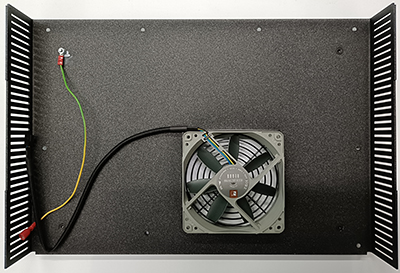
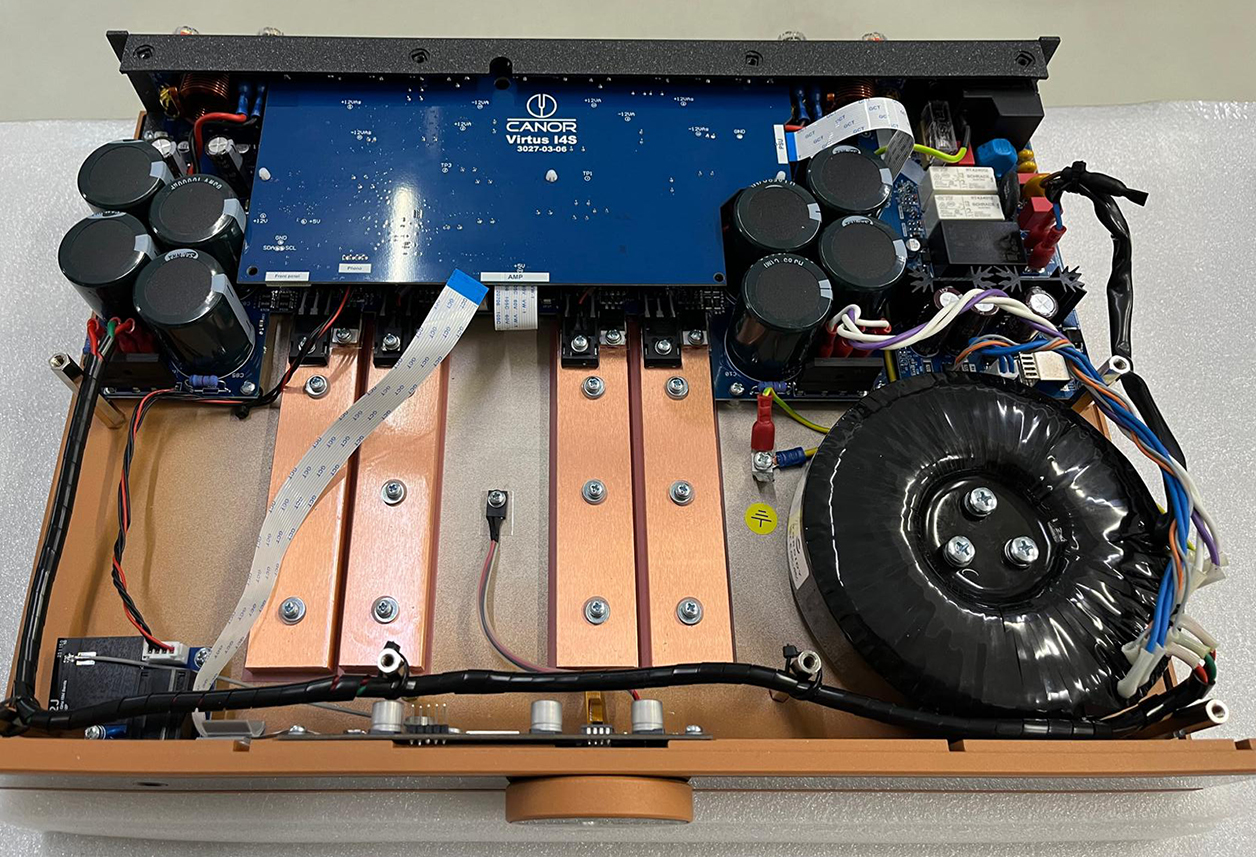
 Are we still talking single transistors per phase for the amp I had asked? "Yes, a complimentary pair of P and N-channel power Mosfets of about 500W/ea. per channel. This achieved enormous power reserves and works a very safe operating area with ideal heat dissipation from being mounted to solid copper bars coupled to 8mm aluminium. It also avoided the need for source degeneration resistors¹ which greatly improved the amp's dynamic behaviour and is unique in this product category." I can't see any fan in your photos. "The super-silent fan mounts on the bottom steel part so you can't see it after you dismantle the bottom and open the I4S."
What does the headphone circuit consist of? Main circuit plus load resistors? Its own circuit? If so, discrete or op-amp? "The headphone circuit is a separate discrete amp with an input differential amplifier formed by a dual JFET transistor."
Anything different or special about the DAC? "Symmetrical discrete circuits for largest possible bandwidth maintain stability so that together with our custom Optimal Transient filter we achieve the best possible time-domain behaviour for excellent dynamics and purity. Galvanic separation of USB, AES/EBU and coax together with precise HF filtering of the supply voltage make this DAC very resistant to external voltage interference to ensure constant jitter.
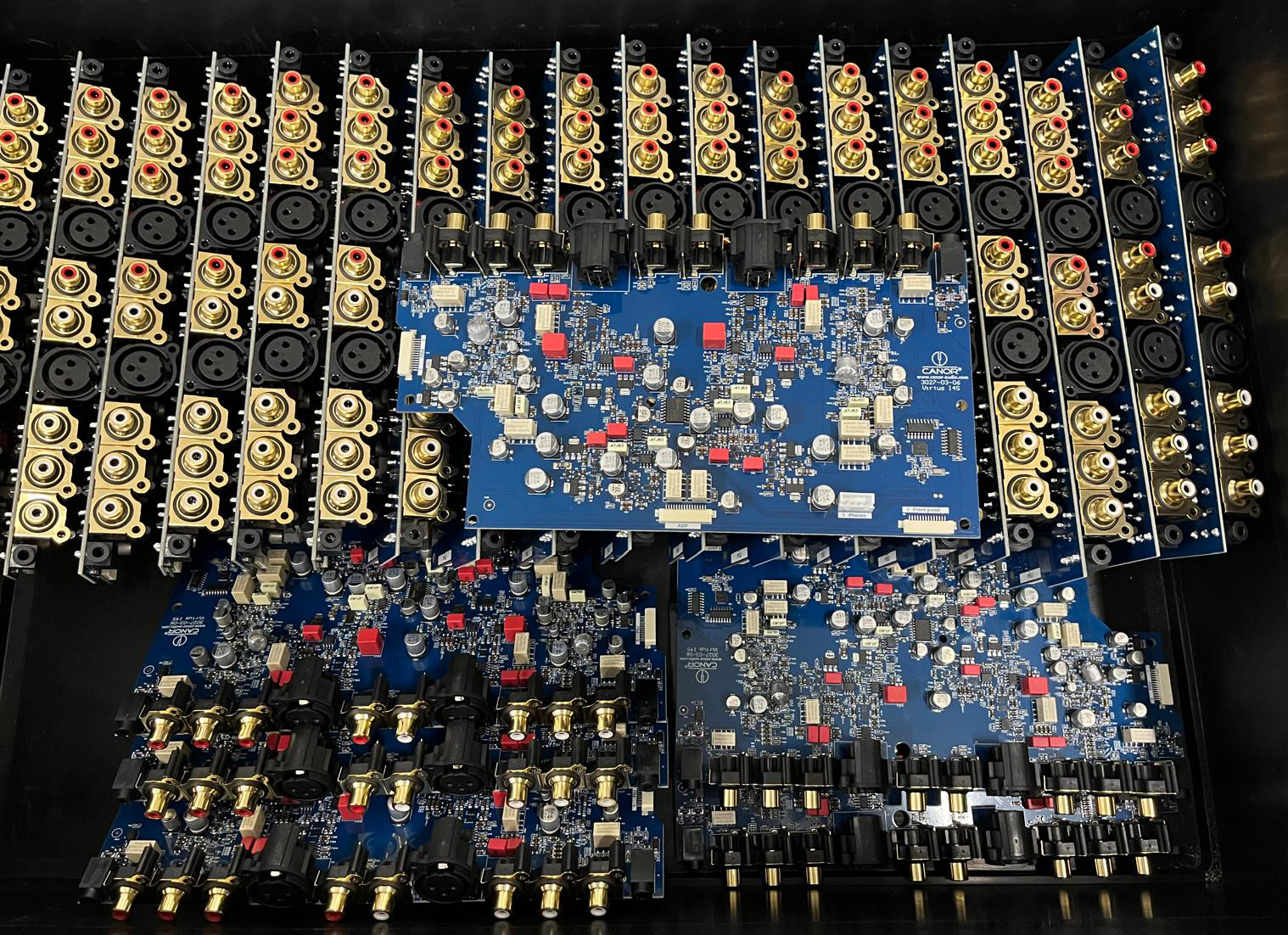
"I attach two photos. The separate board is the I4S's input PCB where the headphone and phono preamp locate, both of them fully discrete."
¹ "Degeneration resistors place between the source terminal of a Mosfet (or emitter in a bipolar) and ground. This introduces negative feedback to increase linearity and lower output Ω at the expense of lower gain. They reduce distortion by lowering effective transconductance and stabilize the operating point against temperature or manufacturing variations."










In 24 years on this beat, I've come across degeneration mentions just twice: with FirstWatt and now Canor. It opens the mind to an interesting question. If more companies omit this form of feedback, wouldn't they say so? And if they do use degeneration just let it go unmentioned, does it imply that amplifiers proudly called zero feedback do in fact still use this form of it and tell 'n' sell porkies? I don't have the answer. Nor does it matter. If you like an amplifier's sound, do you care about why and how?
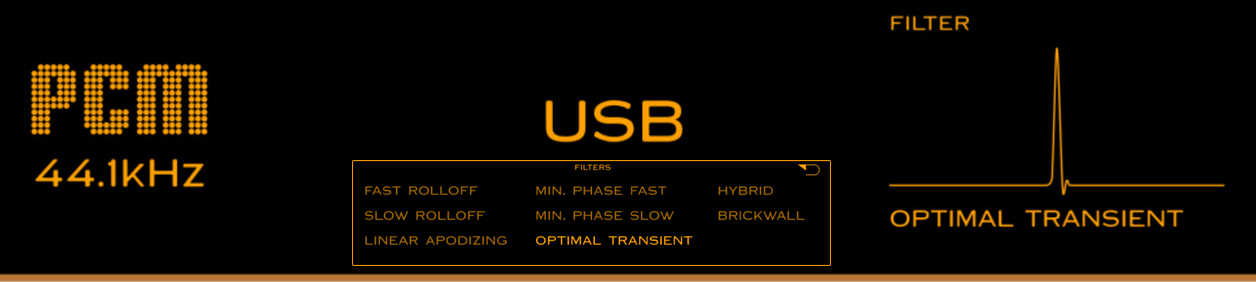
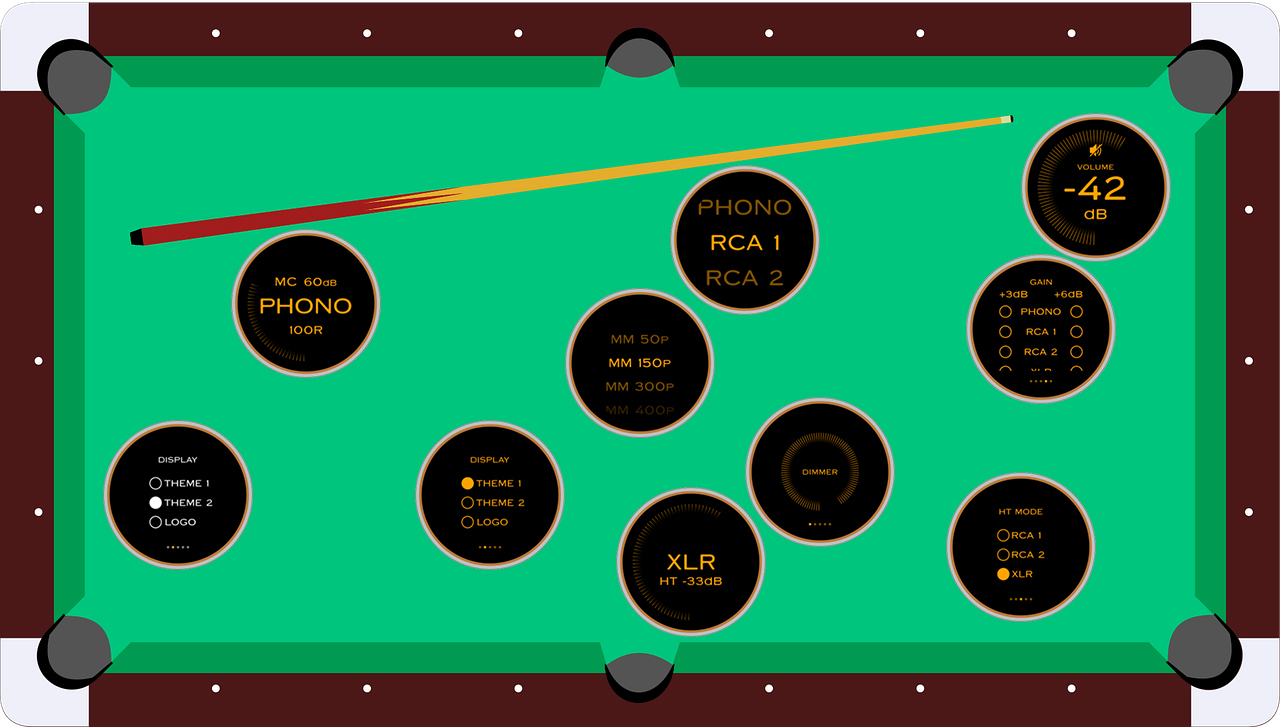
Here we see some of the amp's display modes and touch-screen selections. It still gets ballsier though. There are screens for error messages, firmware updates, fan speed and more. Menu navigation involves up/down and left/right swipes on the glass plus rotating the control knob. When sensing a load, the 6.3mm headphone port auto-mutes the speaker outputs and upon unplugging our headphones, the main volume automatically lowers by a significant amount to protect the speakers.
The DAC's bigger display shows the actual shape of the waveform for our chosen digital filter. That's far more practical and informative than having to look up each filter's behaviour in an online PDF.