No fog despite living on Ireland's largest estuary where the Shannon expands into a delta before pooling into the Atlantic between Loop Head and Kerry Head. But first more tech detail on what differentiated the MusikBoxx from my Mon Mini.
♦ Its dipole AMT works as a typical tweeter so across ~3.5 octaves. Mon's works as a 'super' tweeter across just the top octave to augment the isobaric Mark Audio widebanders.
♦ The German box is sealed, the Korean ported.
♦ The latter's crossover lives inside the box, the former's does not.
I broke this out into bullet points to illustrate how my mind tried to explain what might have caused what I heard. I obviously had no means to isolate these functional differences. Hence what follows includes sheer assumptions even if they're based on 20+ years of experience and good common sense.
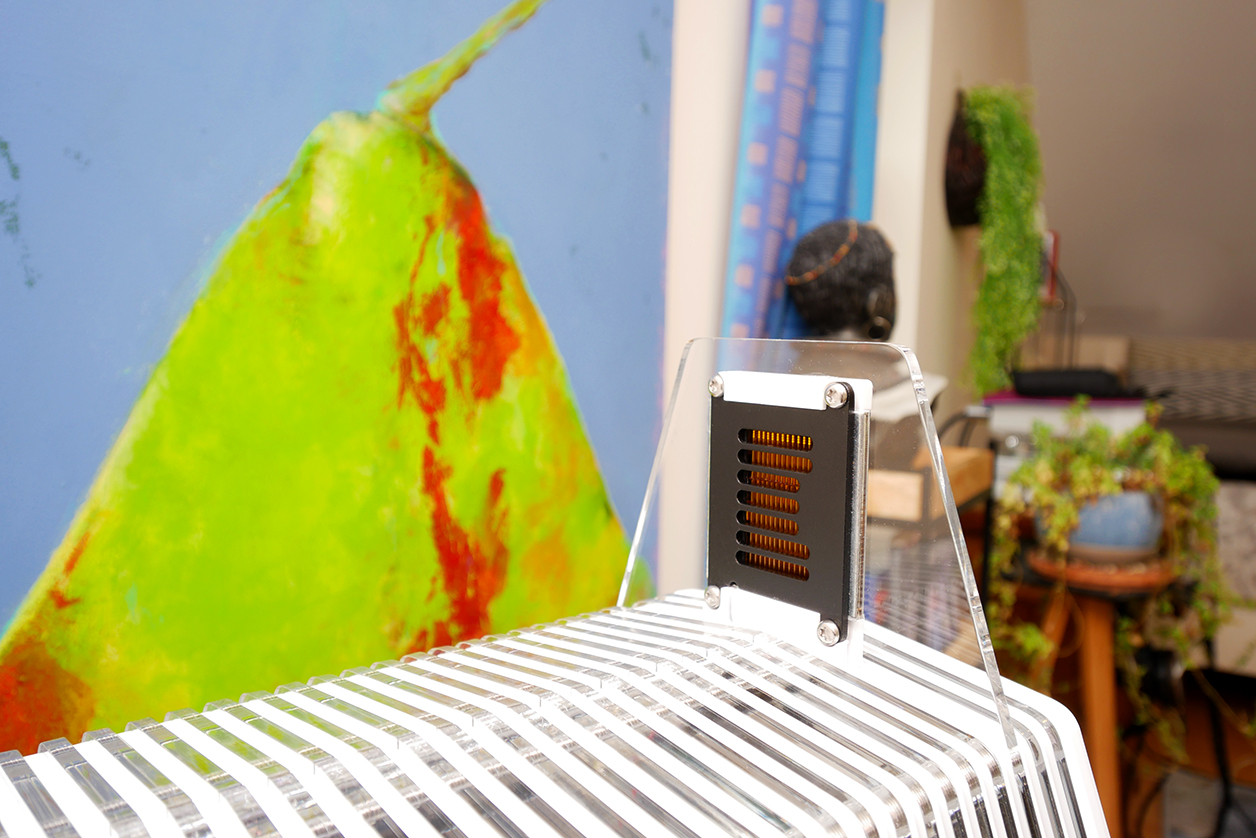
The upper bass of the Boxx was drier and more articulate. This had a follow-on impact on perceived midrange clarity. The entire treble range was more sophisticated on brilliance, air and gush. Overall resolution and from it, the illusion of in-room presence, scale and dynamic emphasis all were higher. Following the reviewer's curse of attempting explanatory connections, the stoppage gains in the power region suggested the well-publicized advantage of sealed loading with its improved time fidelity. Though to my ears and in my hookup Mon's rear ports don't telegraph per se, in this juxtaposition they probably did leave a mark of subliminal blur which the Boxx eliminated. Hence its more adroitly enunciated 3rd octave from the bottom. The HF gains suggested a superior transducer used across broader bandwidth whilst adding dipole dispersion. This overshadowed widerbander coverage of the low/mid treble and a lesser AMT's monopole completion in the high treble. Overall detail and impact gains pointed at the Accuton's more elite pedigree, Michael's fancier crossover components and his decision to space those widely then move them offboard.











I clearly was in no position to assign percentages on which point did what and by how much that contributed to the overall picture. Suffice it to say that spending 4 x more on small transducers moved this system's performance to the next level. No ambiguity or hedging about it. Of course I couldn't help but wonder. How much of that tied to the external xovers? I have very little experience with the breed. It simply makes sense that getting microphonic parts out of a high-pressure speaker cab into their own spacious accommodations must be a good thing. How much of a good thing remains unanswered. I simply suspect it to me more rather than less.
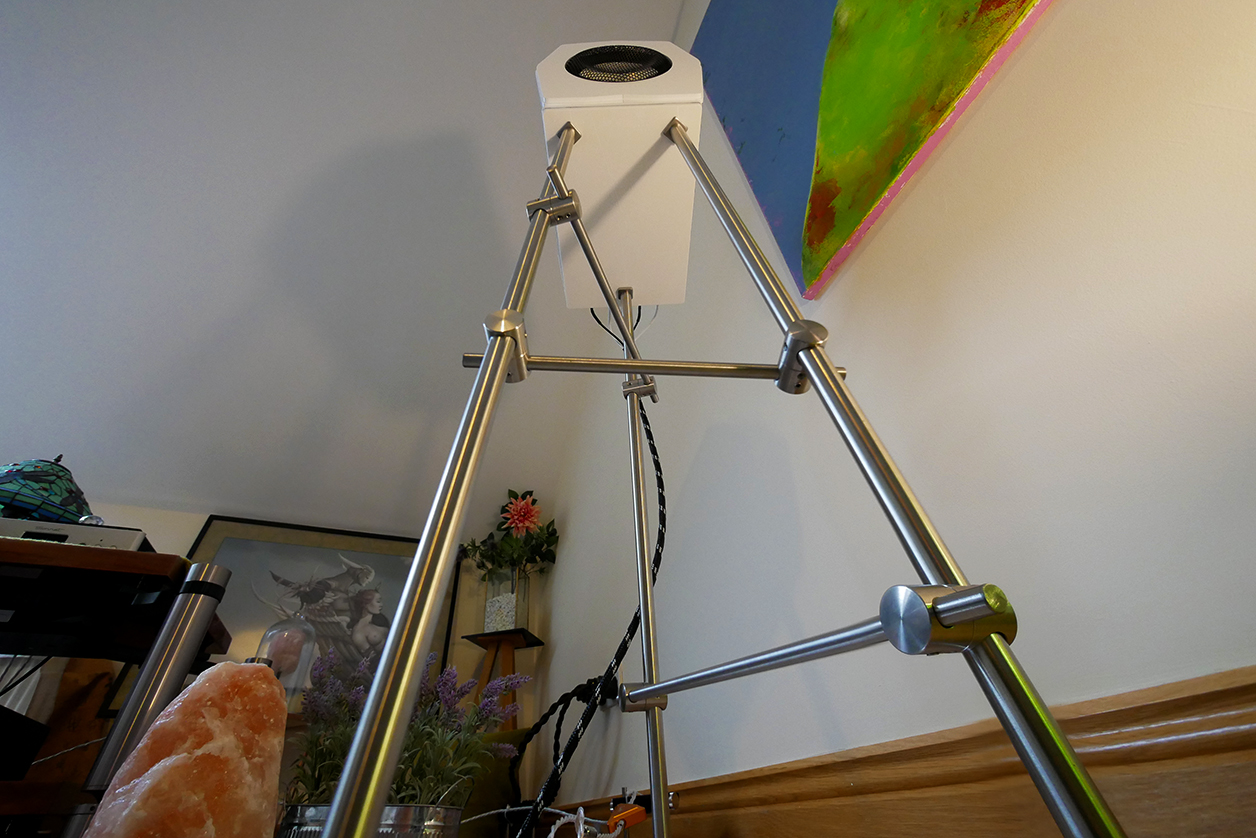
Accuton's hard ceramic diaphragms and their kin from Børresen to Monitor, Canton to Raidho all share a reputation for high accuracy and low distortion. To listeners preferring classic cellulose membranes à la ScanSpeak or Audio Technology, the metallic/oxide-based sorts can arguably seem a bit monochromatic and texturally overdamped. Tomahto & tomaito. Given my DAC-direct 2.5MHz DC-coupled drive of Kinki Studio's stereo amp, I heard what generally goes for high accuracy and low distortion. But I also heard minor transient softness which didn't play to grey or crisp preconceptions. Hence exactitude of image lock and steady clarity didn't rely on edgy transients. Those can give music's movement through time a somewhat clipped soldier-esque demeanour. Granted, I didn't hear voluptuous texturizing but instead, fine illumination of recorded ambiance for a spatially most informed reading. Just as I fancy it, playback scored extra high on the pseudo-visual aspects of soundstage mapping, layering, image lock and mental walkaboutery. In that sense, well-recorded fare in particular sounded bigger than usual. Without really moving any stage coordinates, dynamics scaled more grandly. As they did, things expanded like lungs filled to bursting are bigger than collapsed and fully exhaled. That dynamic expansion and contraction mirrored by scale fluctuations segued right back at a bigger more ambitious mid/woofer. Et voilà, impressions straight from my 1st date. They didn't think that Michael's implementation completely overwrote popular Accuton notions. But they did hear a finely evolved wrinkle—plus a far newer Accuton driver than what's in my older Albedo Aptica—which morphs the detailed-but-crisp ceramic archetype into an airier more elastic version. It's still a resolution-first sound that aims at visual listeners but now moves more fluidly. And even Ivette who tends not to comment on hifi other than raise an eyebrow volunteered just seeing it that the MusikBoxx looks very attractive and different in either colour.