Here are the full performance specs: -3dB bass extension of 78Hz, -8dB of 55Hz. A sub thus becomes nearly mandatory. Efficiency is a very low 82dB/1W/1m to want sufficient voltage gain in the chain. "The frequency response is balanced with a slight downward tendency towards the treble. There are no pronounced accentuations or dips and the speaker exhibits uniform directivity. Below 45° there is a drop in the midrange which minimizes reflections from the side walls, desirable in living rooms in terms of room acoustics. Optimum toe-in angle is between 15 and 30°, optimum measurement angle is 22°." The filter transition sits at 2'300Hz, minimum impedance at 6.4Ω/153Hz. A single impedance spike at ~65Hz peaks at 78Ω but is virtually out of band. To cap off our intro stuff, it seems fair to call the MusikBoxx a smart attempt at shrinking top-quality mains wherever stereo 2.1 or 2.2 plays. After all, if you're a practitioner of outboard active bass, there's zero reason for speakers of the usual dimensions. Crossing them out actively, you'd merely knee-cap them to dismiss all their costly passive bass whilst still looking at towers far bigger than necessary. It's altogether more sensible to buy the best small speaker you can afford. As long as it's good to ~80Hz, you're in clover; possibly even the foursome Irish sort which I'm told is really lucky.
To find a subwoofer shamrock, a few basics. Augmentation mode tacks on a sub where the mains naturally fall off. If speakers port, their passive rollout drops as a 4th-order function. If they are sealed, that's 2nd-order. For smoothest sat/sub dovetailing, we want the sub to come in at the same slope as the speakers fade out. Augmentation mode simply doesn't relieve a monitor of LF. Our 2-way's mid/woofer voice coil still sees low bass and tries to respond to its stroke demands. Higher excursions increase distortion, growing voice-coil heat acts as resistive compression on dynamic linearity. Since a typical 2-way mid/woofer works up to its ~2kHz tweeter, easing stroke and voice-coil stress benefits its entire bandwidth. A better way to split our sat/sub labour is an active hi/lo-pass crossover for mirror-imaged filter mode. Not only do we get to cross out our monitors above their natural roll-off to apply bigger beefier active artillery to our bass and avoid their port-bloat region or in today's case, the weak damping spot of their Ω spike. We also eliminate LF signal from ever presenting at their voice coils. Now they cruise not bruise. The easier way of accomplishing this is DSP-based bass management embedded in integrated FutureFi amps from Lyngdorf or NAD. The 'purist' fully discrete analogue way relies on an external xover with separate hi/lo-pass outputs. Most of those¹ use 4th-order Linkwitz-Riley filters for their smooth phase summing. Some add a 2nd-order option. Besides ideal filtering, subwoofers also want to park properly. Whilst common advice recommends corner placement to exploit free room gain, that puts a sub farther from the seat than the speakers. Hello time delay. If the sub is active and contains a DSP crossover, it invariably adds digital latency for extra delay. If you call late arrivals slow and want to avoid slow bass, park your sub equidistant from the seat if it suffers no digital latency; and closer to the seat if it does. Use the generic 1m/3ms speed-of-sound formula to calculate the offset. In the above system, Dynaudio's nicely low 2.5ms latency offsets by positioning their sub 86cm closer to the seat for perfect time alignment with the tiny monitors. Once you think about it, it's all quite basic. It includes realizing that adjustable active bass beats fixed passive bass by design; and that properly integrated subwoofers for music aren't an oxymoron but a perfectly legit audiophile solution for uncompromised full-range sound. Just because the vast majority of stereo listeners hasn't (cough) caught on yet doesn't make it any less true.
________________________________________
¹ Active external crossovers are available from Lifesaver Audio, Marchand, spl, Sublime Acoustics and Wilson Audio.












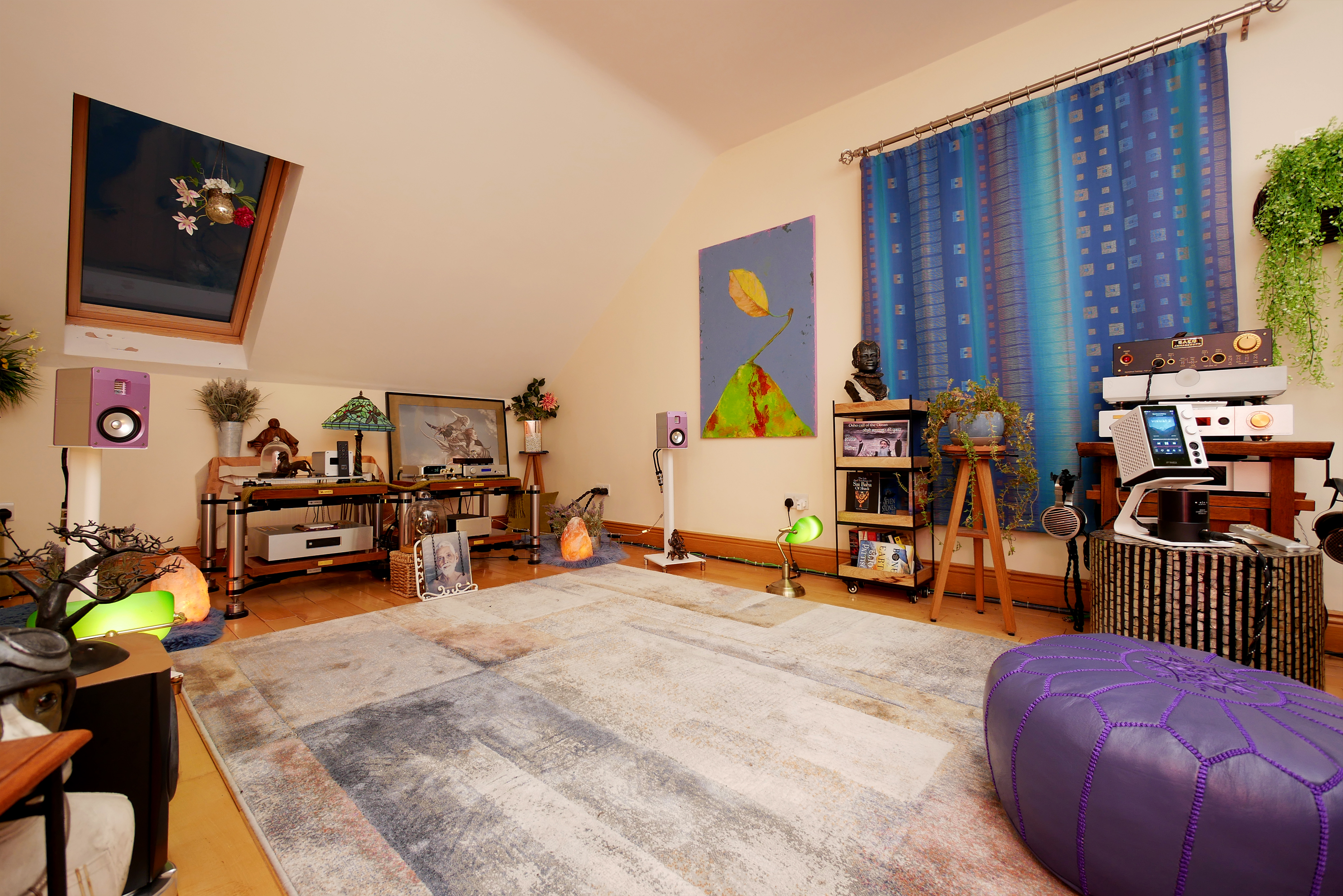
Given my unpopular sentiments and systems built upon them, you'll appreciate how the MusikBoxx concept hits a personal bull's eye. It's enough speaker but no more to tango ideally with my/any subs; uses top-quality drivers and filter parts; and embraces sealed loading for superior time fidelity. At €8'097 all in so monitors, crossovers and stands, it's an indecent proposal if we're on a beer budget. Meanwhile given the ingredients, their ambitions and overall execution, it's far from indecent when we consider present market realities and what top-end monitors from Børresen to Raidho command. Unlike them, the Boxx's deliberate lower bandwidth limits will want subwoofer completion in most setups. That returns complexity and cost to its ticket. In the end, the most important decider of whether to consider our German monitor should be whether we're into stereo 2.1/2.2 or not. This speaker looks primarily at those who prefer to offboard bass coverage to dedicated active artillery. If that's us, the question could be how small we can make our mains without sacrificing tone, dynamics or low-distortion SPL. For my smaller upstairs room, the above lilac Mon Mini are significantly tidier still than the Boxx but ideal. In our larger downstairs room however, I want bigger drivers for proper midrange fleshiness. On pixel paper, the MusikBoxx read big enough for that exact purpose but no bigger than necessary. It's what had my undivided attention when two years ago, Raidho's TD1.2 in for review really roused lust bumps. What eventually voted against it was its €23K ask with matching stands. That tally was too stiff only to phase out at 100Hz to rope in my sub. For well less than half, the MusikBoxx proposed an alternative I thought equally ambitious if not more so given the external crossovers and their elite ingredients.
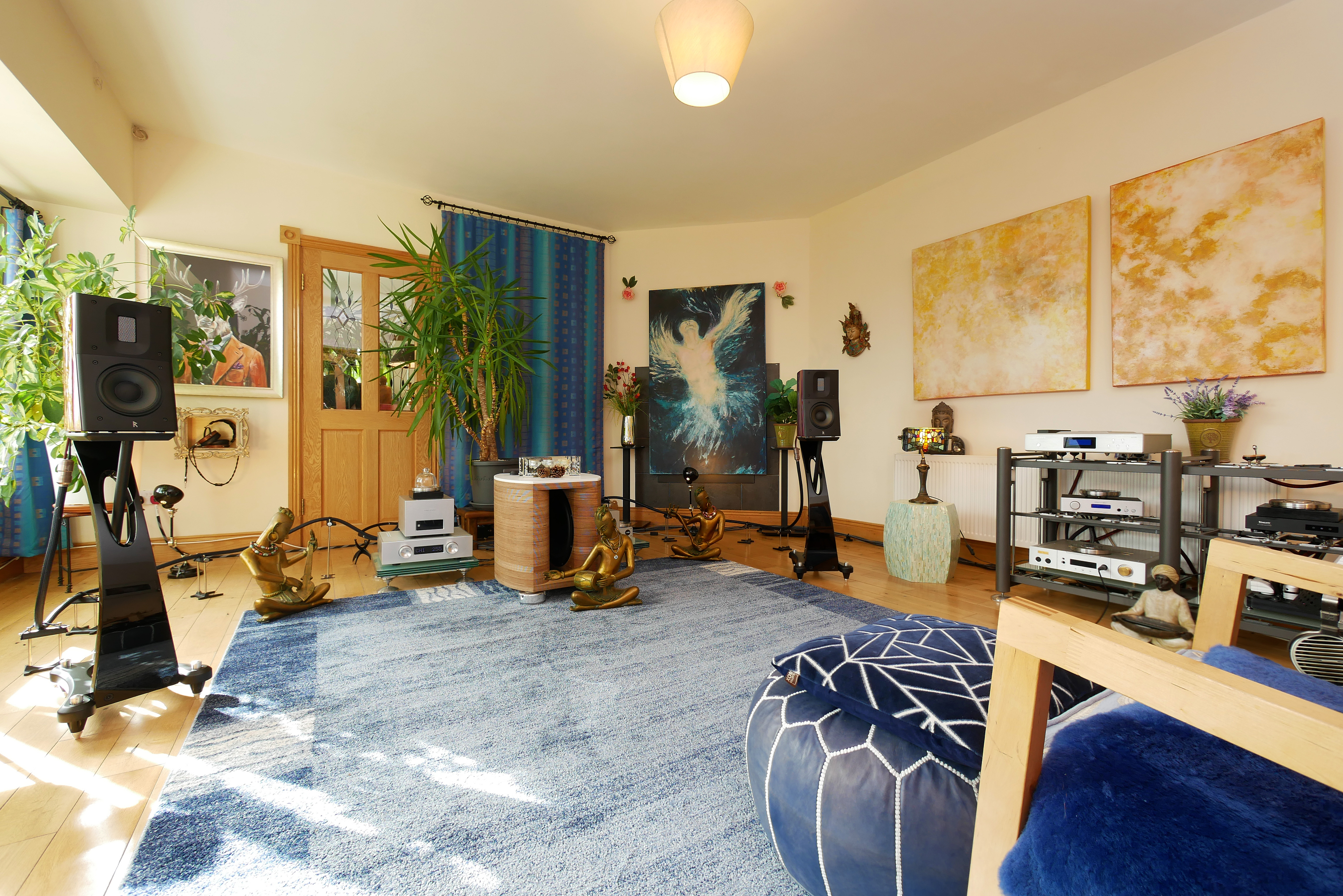
Headspace. We all have our own. When you read reviews, it's important to know the writer's. Now you know mine. A day later, an SVS press release dropped about their 2 x 8" 3000 Micro sub having been named Reel Sound Distribution's official mate for the new Metaxas Prinz, an entry-level full-range €22K/pr electrostat. It serves as anecdotal endorsement. Even quick panels with film membranes happily coexist with active dynamic woofers done right. Would a distributor charged with selling such a combo hoodwink their dealers? Not if they want to build long relationships. The small print lives in the two words 'done right'. That we already unpacked in my earlier paragraph. To kick off, let's take the Boxx upstairs to find out what a bigger more pedigreed driver and a dipole not monopole AMT add to the picture. "The package with the stands contains a small box glued to the bottom. Just open it. It contains cables and feet for the stands. You have a choice between spikes and absorber feet. The absorber feet use a combination of felt and anti-slip foam to dampen vibrations. I recommend them for any floor except thick carpet. But of course visuals matter too and are subjective."