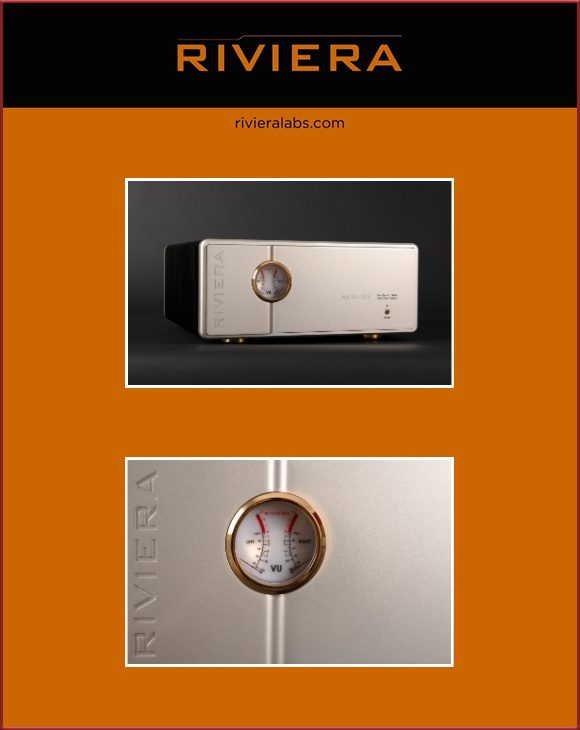
 Speaking of immaculate recordings, I played La Tarantella, a collection of arrangements of southern-Italian folk songs where singers Lucilla Galeazzi and Marco Beasley take turns accompanied by Christina Pluhar's L'Arpeggiata ensemble. This material is like a black hole for the midrange. All musical objects having finite mass are attracted to it. This plus a purely acoustic instrumental and vocal soundscape makes midrange purity of paramount importance. The Tunes' ability to make the midrange tactile and incarnated delivered an eloquent emotional charge from wailing to wild registers and by texturally discerning the colours of the instrumental and sung parts, supported the spontaneity of the improvisational dialogue between singers and players. Driving Tune 3+4 is the native ecosystem approach. It is a rational choice for listeners who want the hARt system to behave as a system rather than a single power amplifier fed by whatever sits nearby. In an attempt to better delineate the individual contributions as separates, I had Tune 4 drive my Riviera AIC-10 integrated whilst Tune 3 was controlled directly by my LampizatOr Horizon 360. The former experiment was the most instructive. This time the more straightforward sonic persona of the Tune 4's buffered output provided the superior outcome. The tube-coupled output made the rich, texturally dense and slightly dark AIC-10 overly smooth, bordering on the romantic like a typical too-much-of-a-good-thing scenario. The solid-state buffer restored agility, grunt, incisiveness, rhythmic propulsion and even expanded on the sense of macrodynamic scale, clarity and soundstage panorama. The Horizon 360 signal voltage above Tune 3's 3.4Vrms sensitivity allowed the hARt to flex its muscle both on my relatively easy Diesis Audio Aura SE and much harder Spendor LS 3/5A loads. The shoebox English classics behaved like a supercharged version of themselves to a degree I had not experienced before. Helped by tailored subwoofer assist—as heretical as it may read to hardcore BBC bookshelf aficionados—I obtained room-filling full-range projection which pushed the comfort zone I associate with the LS3/5A to genres and loudness levels I rarely dare to feed them. While the openness, dynamic ease and punch of the bigger Aura remained out of reach, I could thoroughly enjoy the trademark midrange purity and near-mystical disappearance act of the Spendor on full-sized orchestral compositions, live rock or blues.
The Tune 3's personality came across almost intact when driven by the LampizatOr DAC, possibly even more direct and spatially expansive than with the Tune 4 via the hybrid connection but still keeping its corporeal, generous and muscular nature. This was perhaps even more spectacular in the way space unwrapped from the loudspeakers. The trade-off for more immediacy and perceived transparency was a slightly diminished sense of authority, heft and tonal saturation. The interesting question is not which is better but which hierarchy one favours. Tune 4⇒3 declares the preamp the system's musical governor. Horizon 360⇒Tune 3 says the DAC is the sovereign, the power amp its executor. For vinyl, headphones, multiple inputs and unified ergonomics, the Tune 4 wins before sound ever begins. For a digital-only listener with a flagship LampizatOr and short cables, direct drive could be intoxicating. In a final verdict, I would not treat the Tune 4 as optional unless the system were deliberately built with the Horizon 360 as preamp replacement. To make things more interesting still, I tried Tune 4 as digital source to replace my entire +€100K Taiko/LampizatOr front end with the €1.5k optional DAC board and streaming modules internally slaved via I²S. To make things fairer, I left the Taiko Audio switch and router in play. On one hand, what I heard did not surprise in that the sunny personality of the Tune 4 further reinforced. On the other hand I was indeed surprised by the Tune 4's ability to hold its own against the über-expensive arsenal I had used just minutes earlier. I can't go as far as say that the performance was on par with the Olympus/Horizon combo but listening to the above tracks over Qobuz Connect clearly indicated that I was still in the presence of a bona fide high-end sound ticking all the usual technical audiophile boxes. Fullness of the midbass, a hint of treble roll-off and a certain buoyancy of the low bass shifted the sonic presentation a bit further towards seductive complicity. After I became accustomed to the Tune 4 as all-in-one source over the next few days, I appreciated it even more. It got to the point where I felt no insistent urge to return to my reference gear. At €28.5K as reviewed, this couldn't help but elevate my value assessment most significantly. That is particularly meaningful for discerning audiophiles who already own an analogue front-end and now want to experience the convenience of digital without the logistic and financial implications of assembling a parallel dedicated source.













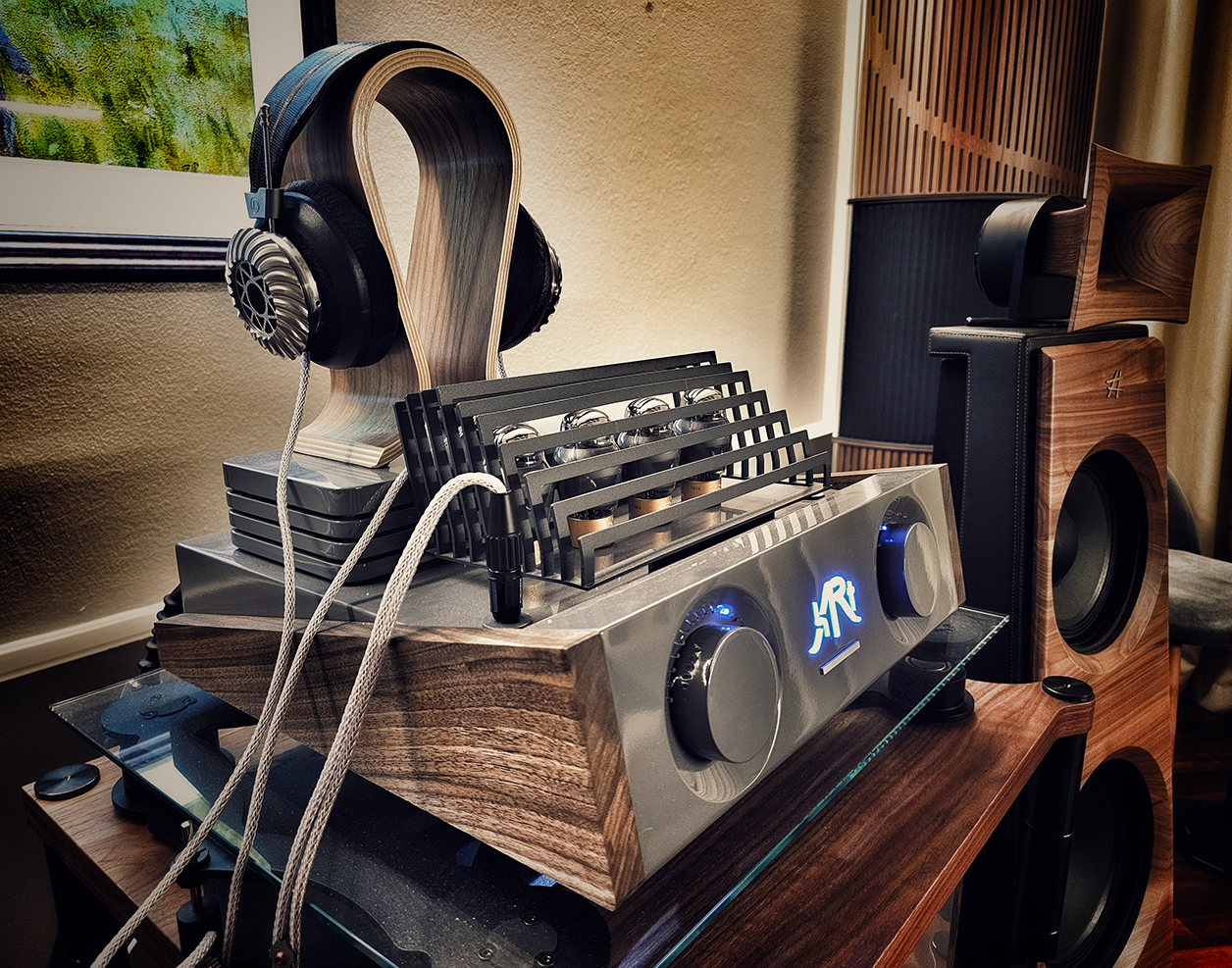
As I was well on my way to squeeze more Tune 4 juice, the time was right to try its headphone port included standard to form a high-power hybrid with class A tube inputs coupled to discrete Mosfet outputs. Given potential issues with Raal 1995's Immanis and my 8/16Ω adapter options falling below hARt's 22Ω, I played the 64Ω Spirit Torino Valkyria and a 48Ω Nur Harmonia loaner. The Tune 4 drove both with authority, having nothing of that asphyxiated delivery some casual headphone jacks can cause. The sound could breathe with good instrumental separation and soundstage width, emerging from a pitch-black noise floor. Punch and dynamics were satisfying if not explosive and most importantly very clean, undistorted and stable even at high volume. I could not identify obvious colorations. This neutral personality allowed the two Italian flagships to fully express their quite different natures without impediment. The Harmonia enjoyed the Tune 4's high-contrast portrayal with agility and resolution as an elegant base to their inherent rich, warm and enveloping presentation. The Valkyria were able to unleash their raw and brutal side combined with a layer of expressive refinement. Although I could not create a stress test with Susvara and its ilk, the Tune 4 proved to be so competent a headphone amplifier with the pairs I had that it could credibly replace a dedicated external unit. Although it could predictably not reach the scale or musical and technical performance envelope of the €21k Riviera Labs AIC-10 as my daily driver, the Tune 4 went well beyond the needs and expectations of an occasional headfi listener. That makes the convenience of removing a box from the rack even more compelling.
Over roughly the last year I had opportunity to review several amplifiers of a similar financial and sonic calibre. The Riviera APL-1+AFS-32 system is the most philosophically adjacent. Riviera's design principles include zero global feedback, minimal local feedback, triodes for voltage gain, solid state for current gain and class A operation. The AFS-32 specifically uses ECC82 or 12AU7 triodes and rates at 32wpc/8Ω, twice that into 4Ω. Aside from the obvious difference in power, the Italian and Greek systems share a similar take. Density and authority balance against refinement and liquidity. The sound reaches you as a physical almost carnal experience of scale and substance. It can range from intimidating to intimate with a fascinating spell. Both machines are for hedonistic abandonment not analysis. Differences split hairs. hARt are a touch more forgiving than Riviera, with a rounder response and slightly less firm bass control over my favourite Tune 4's direct tube out. In terms of versatility especially when equipped with digital and phono cards, the Tune 4 easily outpaces the APL-1. The Tune 3 power reserves expand speaker pairing options over the AFS-32.