
Country of Origin

Reviewer: Simone Ragionieri
Source: Generic 5G router into Taiko Audio network switch both powered by a Zayin Audio Suprareg; Taiko Olympus XDMI Server; LampizatOr Horizon 360 DAC
Headphone amplifier: Riviera Audio Labs AIC-10
Headphones: Spirit Torino Valkyria, Raal 1995 Immanis
Loudspeakers: Diesis Audio Aura SE
Cables: complete Faber's Cables La Potenza loom
Power delivery: Faber's Cables La Potenza power distributor and ground box, Furutech NCF AC wall plugs on a dedicated spur
Room size: 5 x 4.5 x 2.7m
Room treatments: Eight ceiling diffusers, floor-to-ceiling acoustic curtains on sidewalls, Vicoustic VicTotem Ultra VMT in front corners
Review component retail: €27K preamp, €30K amp
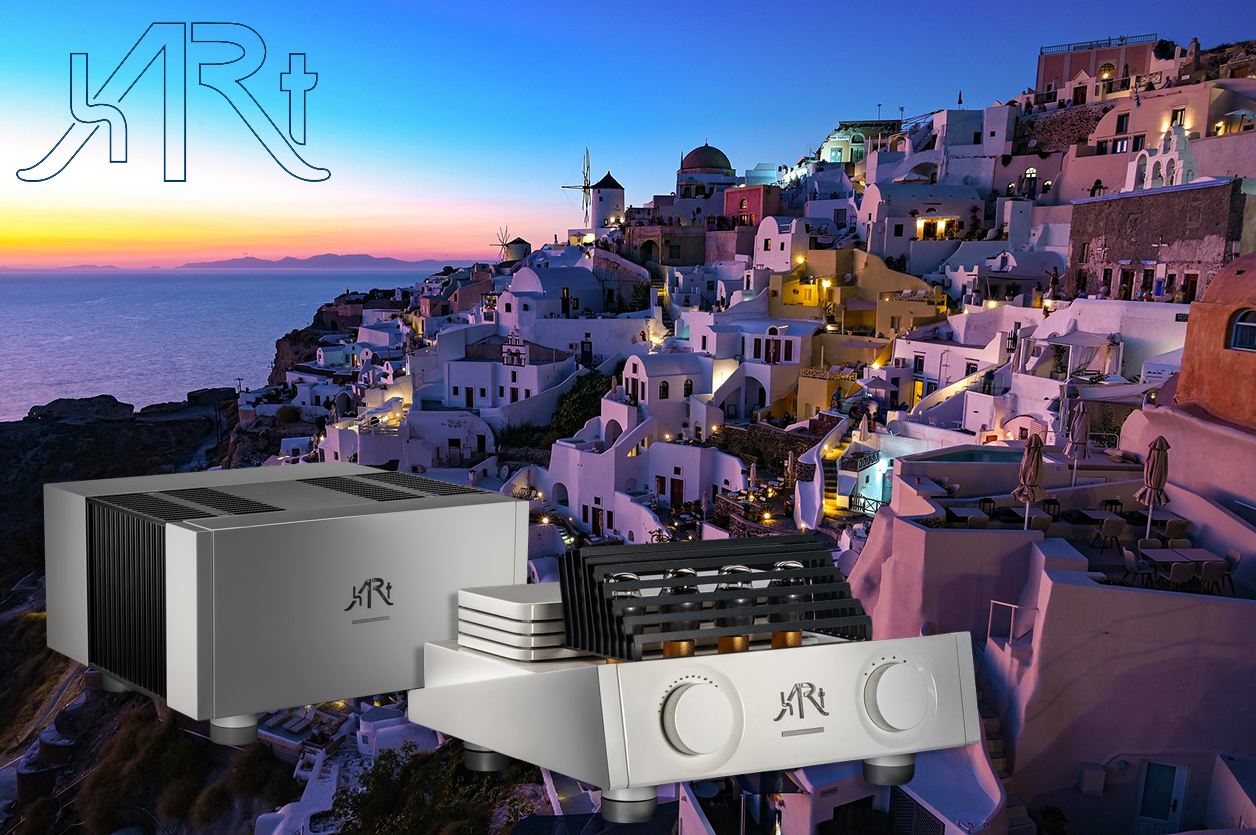
 "Dear Simone, thank you for communicating with us. The sonic character of our electronics is determined by their circuit simplicity of a pure single-stage class A tube preamp with headphone output, streaming function and optionally embedded high-performance DAC and MM/MC phono modules; and a unique two-stage hybrid power-amp design which combines the warmth of class A tube voltage gain with the precision of a Mosfet transimpedance current stage. No feedback, no interstage transformers, no cathode follower, just pure signal amplification that dives deep into class A…" – Epaminondas Gaveras
"Dear Epaminondas, thank you for the information you shared. I'm intrigued by hybrid designs, a type of amplifier I have used in my own system for many years which I have also focused on in my recent reviews. Among your product portfolio my first choice for a potential review would be the combination of Tune 3 and Tune 4. The Tune 6 could also interest me assuming it can drive an active sub via line-level out in parallel to my speakers…" – Simone
"Dear Simone, thank you very much for your kind message and for the time spent exploring our work. I truly appreciate your interest and thoughtful comments, especially from someone with long-standing experience with hybrid designs. We would be happy to move forward with a review of the Tune 3 + Tune 4 pre/power combination. At the moment no review samples are available so a dedicated set would need to be produced. The estimated lead time is approximately three months after which we can allocate the units for the review duration you require. Something that might be relevant to your setup: the Tune 3 preamplifier has two distinct pre-outs. One directly taps into the tube circuit while the other is a hybrid output designed to drive long cable runs, active speakers or subwoofers…" – Epaminondas
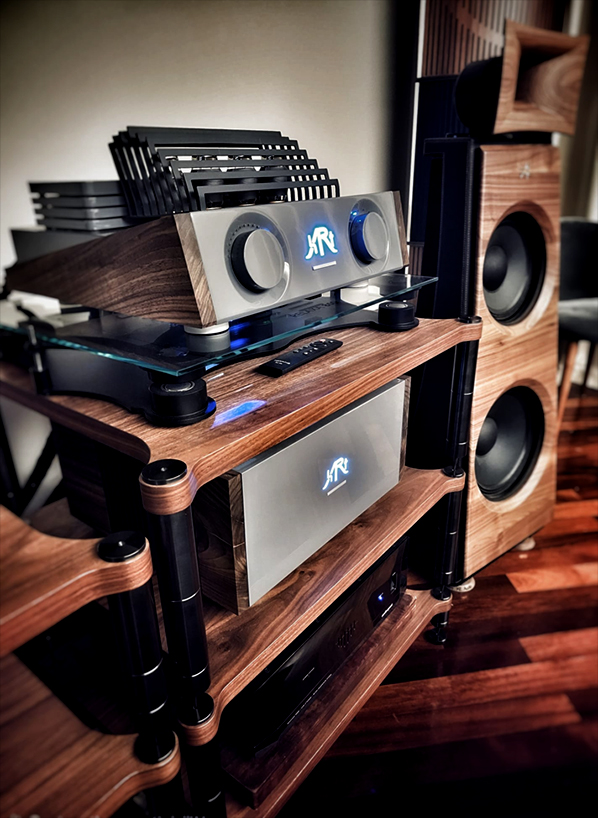
By June 27th so four months past these initial exchanges, Simone's email header read "hARt in the house" whilst his attachment was this photo at left. The timing proved perfect. Simone's prior commitments of SPEC RSA-EX1000 and Acustica Applicata Ferrero L9 had just published a week ago. There would be no downtime waiting for his next assignment to commence. Or as he put it, "absolutely perfect and a different proposition altogether which keep things fresh and interesting". As his photo shows, hARt even considered his décor by closely matching his favoured wood species with their own hot-swappable cheeks in solid wood. Anyone who thinks such niceties irrelevant probably still lives in the man-cave era of hifi. Then real attempts at cosmetic style were frowned upon as sell-outs to lifestyle whilst real audiophiles soldiered on with ugly kit and were irrationally proud of it. hARt even give us control over the logo colour in 15 different tints so they better harmonize with other displays we already own. As to Greece being a real audiophile destination, extend from hARt Labs to Ideon, Lab12, Matter Audio, Metaxas & Sins, Pilium, TruLife Audio, Tsakiridis Devices, Tune Audio and Ypsilon for more scenic highlights. From tube gear to massive solid state, from electrostatic to dynamic to horn speakers, this country has a bit of everything for the globe-trotting golden-eared connoisseur. Here the publisher's foreword ends and Simone takes over the actual review. – Ed.














hARt Lab are the audio division of Convin SA based in Chalandri/Greece. The company identify as audiophile engineers whose team name unpacks as harmonic Audio Reference tunes. Key personnel gives them an unusual mix of engineering, manufacturing and industrial design expertise. Epaminondas 'Nondas' Gaveras studied process engineering at the University of Stuttgart, worked in renewable energy technologies, founded Convin SA in 2007 and co-created hARt Lab in 2018. He contributes to the external appearances, material choices and acoustic properties of their products. Kostas Trovas is an electronics engineer with long experience in repair, upgrades and manufacture of high-end audio equipment. He brought with him circuit knowledge reportedly developed and tested over many years. Nikos Fanakis joined in 2018 with engineering degrees from Sussex and Heriot-Watt and background spanning applied research, non-destructive testing, robotics and electronics for demanding environments. He now contributes innovation and user-experience development. After its 2017 formation, the first public appearance of the company was at the 2019 Munich High-End show. There they showed the Tune One EL34 integrated hybrid amplifier and Tune Two tube preamplifier on static display. By 2022 most the current lineup had established across the Reference and Superior ranges each with a preamplifier (Tune Two and Tune Four respectively), power amplifier (the dual-mono Tune Three and Tune Five monos) which were recently joined by the Tune Six 'Super Integrated'. The company philosophy is consistent from end to end, relying on a strong engineering, visual and functional credo:
That philosophy places hARt Lab in a small but fascinating corner of modern audio. It is not nostalgic tube audio. The hard work of reactive loudspeaker drive goes to semiconductors. It is not conventional solid state. The voltage domain is shaped by tubes. It is not lifestyle audio. These circuits are ambitious, their power supplies serious. It is not purist hair-shirt audio. The Tune 2 and 4 include streaming, digital conversion, phono and headfi. This brand aims at a complete ownership experience across its visual, mechanical, functional and sonic elements. By browsing the portfolio and features, I was impressed by how a relatively small team can handle such broad multi-disciplinary design from proprietary software development to industrial design, non-conventional material and manufacturing technologies plus digital and analogue circuitry. More importantly, form-follows-function motivation inspires each feature and design choice rather than being tacked on for the sake of difference or to balloon a checklist to chase more 'like and subscribe' users.

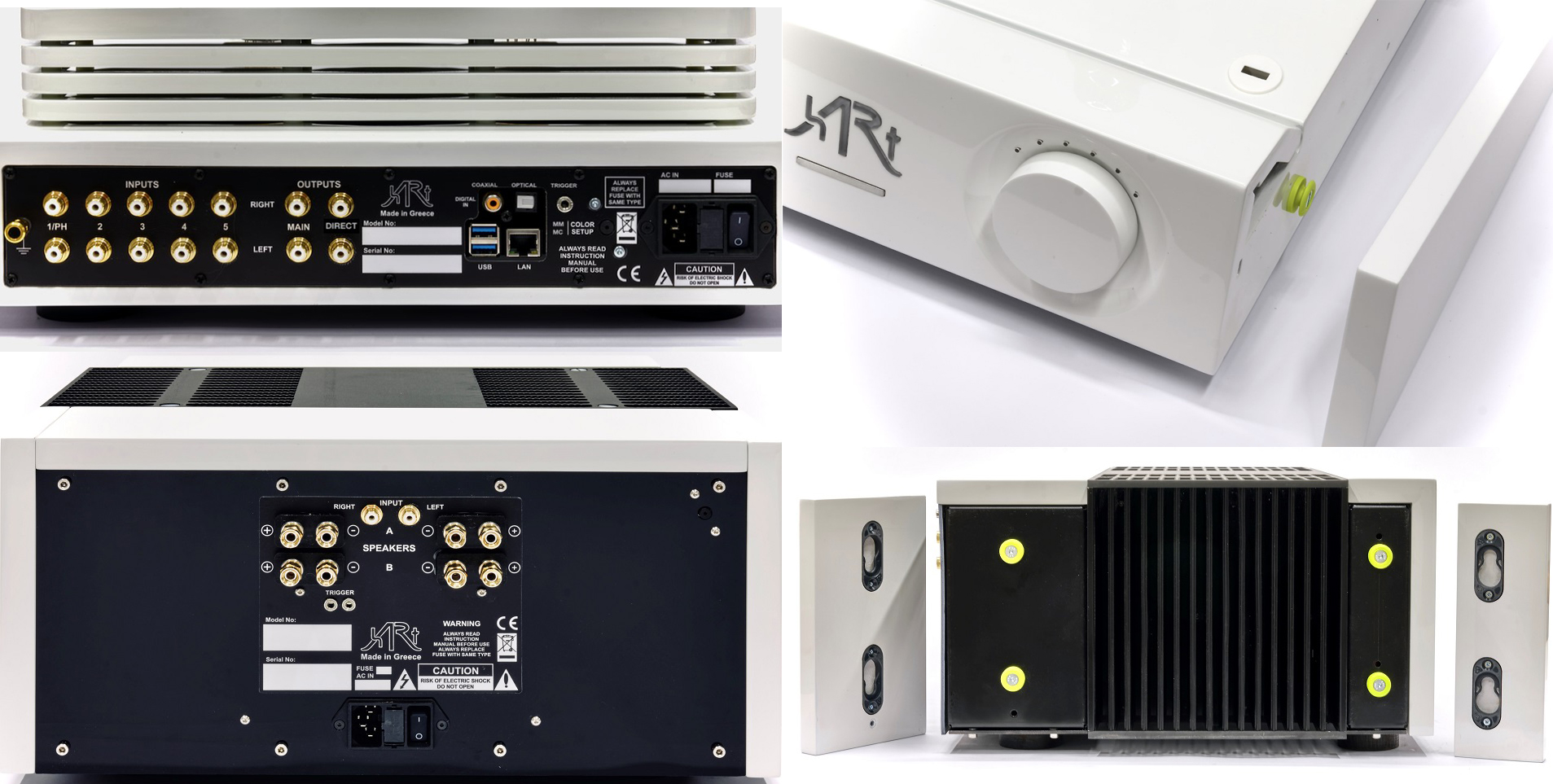
As a mechanical engineer, the unusual material choices and construction methods which hARt adopt for their enclosures tickled my attention. Usually top-echelon hifi gear relies on monolithic CNC-machined aluminium. hARt chose a different path. Aside from keeping components in place, their housings provide sonically added value from mechanical vibration damping or isolation, EMI reduction and segregation plus isolation from spurious electrical paths such as stray currents. hARt tackle this complex task by means of material combinations including wood, metal, plastic and rubber to production methods like additive manufacturing aka 3D printing. This doesn't follow the usual audiophile assumption that mass alone equals virtue. It is closer to instrument thinking where materials, resonance and damping all trade in tandem. Amorphous high-density fibreboard aka HDF on a metallic structural frame offers a good balance of stiffness, density and damping across the bandwidth helped by suspended power-supplies attachments for decoupled power transformers. The 'FloatO' isolation feet are a proprietary design whose stiffness and damping tailor not only to each model but their precise location. The four feet under the Tune 3 amp thus have different characteristics. Materials and processes have a strong impact on hARt's visuals which to my eyes are simply gorgeous especially on their preamps. The chassis can be ordered in white or grey multiple-layer MICoat paint for a smooth scratch-resistant surface. Detachable side panels of various colours are selected at order time or purchased later to change looks. My review units came in Nardò grey with wooden side panels for stunning aesthetics. The cherry on this Greek cake are back-lit colour adjustments across 15 hues. I picked blue. This includes the power button, a touch-sensitive trigger to activate a soft-start protocol during which the colour changes from red to green until it stops flashing and takes on the selected hue and brightness. During my time with the Tune 3+4, I felt that both needed time to sonically stabilize. Epaminondas confirmed it. "Within 60 minutes you achieve ~95% performance, 100% from 2 hours onwards. Throughout the amps maintain full performance which is why during shows we let them run during the night. The tubes run lukewarm and have a long lifespan so deterioration is no immediate problem."