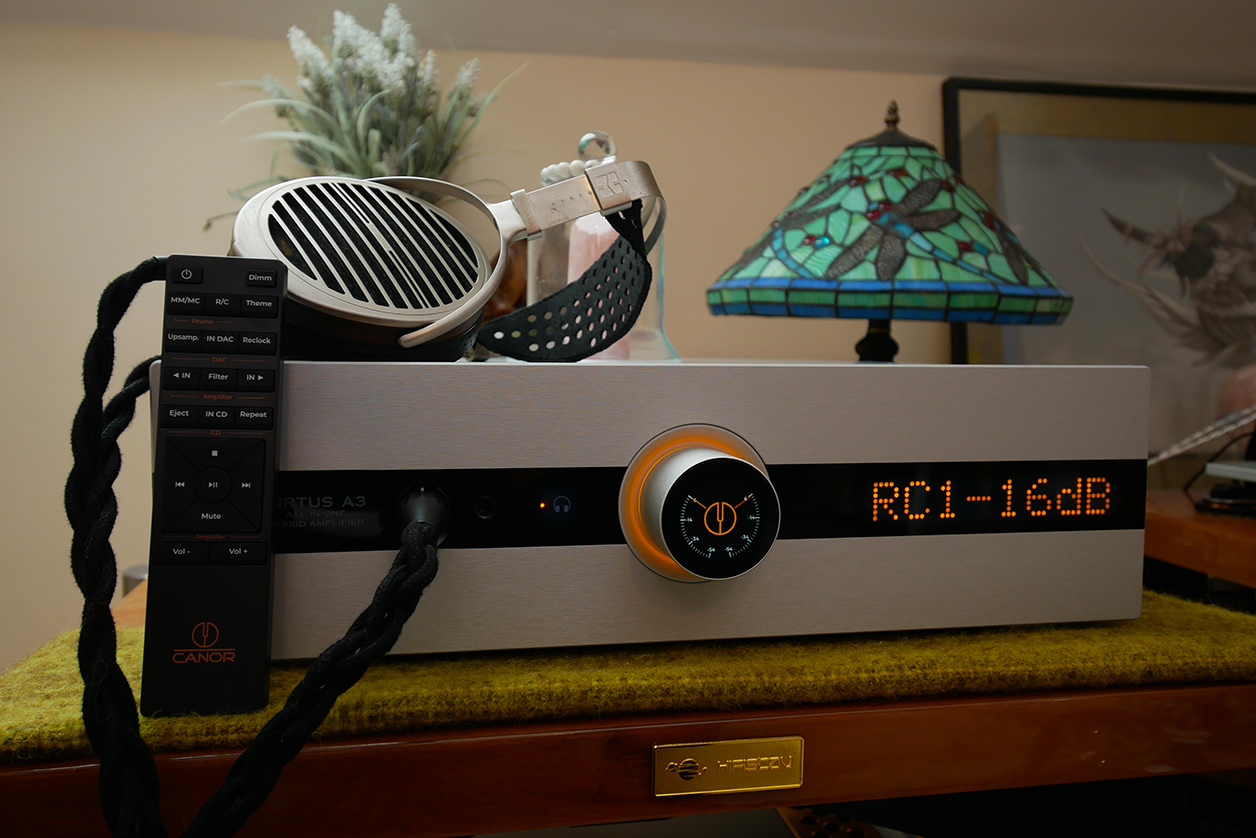
The dog's dongles? With my sword to fall on at the pawnshop, I couldn't tell you proper species and body part. I can tell you that at ~15dB on the throttle, SPL were soaring as were sonics. I didn't spend too much time kneeling at this Susvara altar though. One, I doubt its users wouldn't already own a dedicated come-what-may driver like Enleum's AMP-23R or Cen.Grand's Silver Fox. Two, I'd never propose pursuing A3 for notorious loads. My little exercise simply demoed that preceded by sufficiently stout front-end signal whilst using the XLR4 port, loudness really shouldn't be an issue with most conceivable cans. Final's D-8000 on 6.3mm, aune's SR7000 on XLR4 and Meze's 109 Pro on 6.3mm all hit full cruising altitude at minus 30 or sooner. A standard 2Vrms DAC would see rather less attenuation. Despite being mad, Canor's balanced port clearly portrayed Susvara as the highest-rez performer of my bunch to really impress. By contrast the budget Meze felt rather dark and shut in. The aune and Final were ideally suited to A3's slightly romantic tuning. The aune in particular is a real overachiever at its sticker. Clearly these headfi ports aren't mere convenience appendages. They don't pad out a feature list for bragging rights and impulse purchases. They've been treated with due seriousness. In most cases they'll decommission need and desire for a separate head amp. Incidentally, another creak: the remote's 'mute' command doesn't work on headphones. If you're invested in a 3-metre can cable to sit well out of manual range and work everything by infrared, having a mute function for headfi would be nice. Nobody will buy A3 as just DAC/headfi amp. Its main appeal is to drive speakers. That should park it out of most listeners' reach when it's time for headphones. To conclude, if A3 stuck around in this spot, I actually would have Susvara on it. With my DAC, music and SPL, the combination really worked. That I hadn't seen coming.
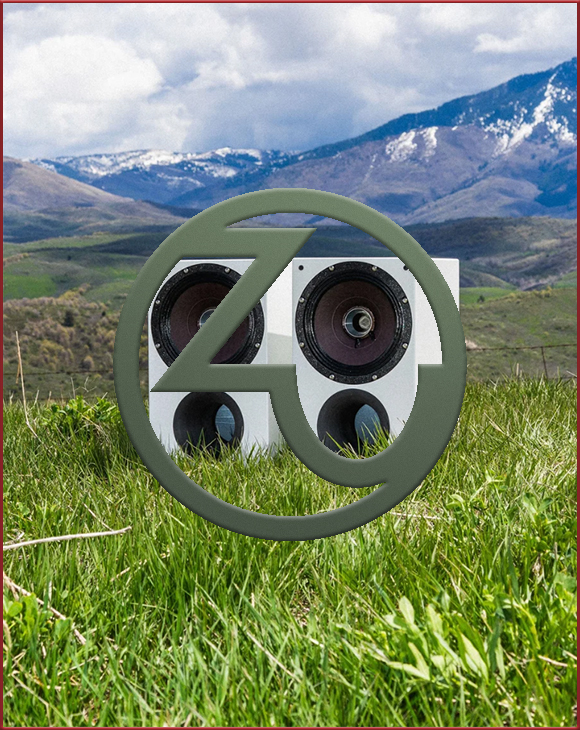
At this juncture reader Louis wrote in. "I'm following your developing review on the new Canor integrated. Given how uncommon it seems to be to come across a hybrid circuit that remains direct coupled, do you think this one lends itself to being bridged into a higher-power mono amplifier by stripping away all the integrated functionality? I'm just thinking out loud realizing that you currently have the ear of your contact at the factory and might be able to ask him directly." It was a good question which I passed on. "Bridge mode is no option with this special circuit though we would certainly like to take advantage of this output stage. There are a few ideas but we haven't decided yet which way to go." My next sessions took place in a small video system then anchored by Zu's Method, a 1½-way 8-inch widebander with coaxial throat-tweeter assist. A3 replaced my usual Gold Note IS-1000 Deluxe.








Canor's speech intelligibility was somewhat higher than with the Gold Note. So was its tone-colour intensity. Likewise for the acuity of the foley team's location-din layers as the atmosphere in which action and dialogue occur. Given a widebander's propensity for a bit of upper-mid forwardness, A3 triggered this more than the drier Italian amp had on massed strings by a youth ensemble in a secondary London musical society on an episode of Chelsea Detective. Whilst the musical actors merely pretend, the soundtrack's actual musicians are obvious professionals. The Canor amp honed in more on the American coaxial's minorly elevated response in the 2nd octave above middle C. This confirmed prior observations. Despite triodes and associated preconceptions, this circuit doesn't go polite to round off intensity, be that recorded or baked into a transducer. Again, the lusher aspects were accompanied by vitality and freshness; a very attractive combo in my book. But of course this is a stereo not video channel. Let's return to our regular content.
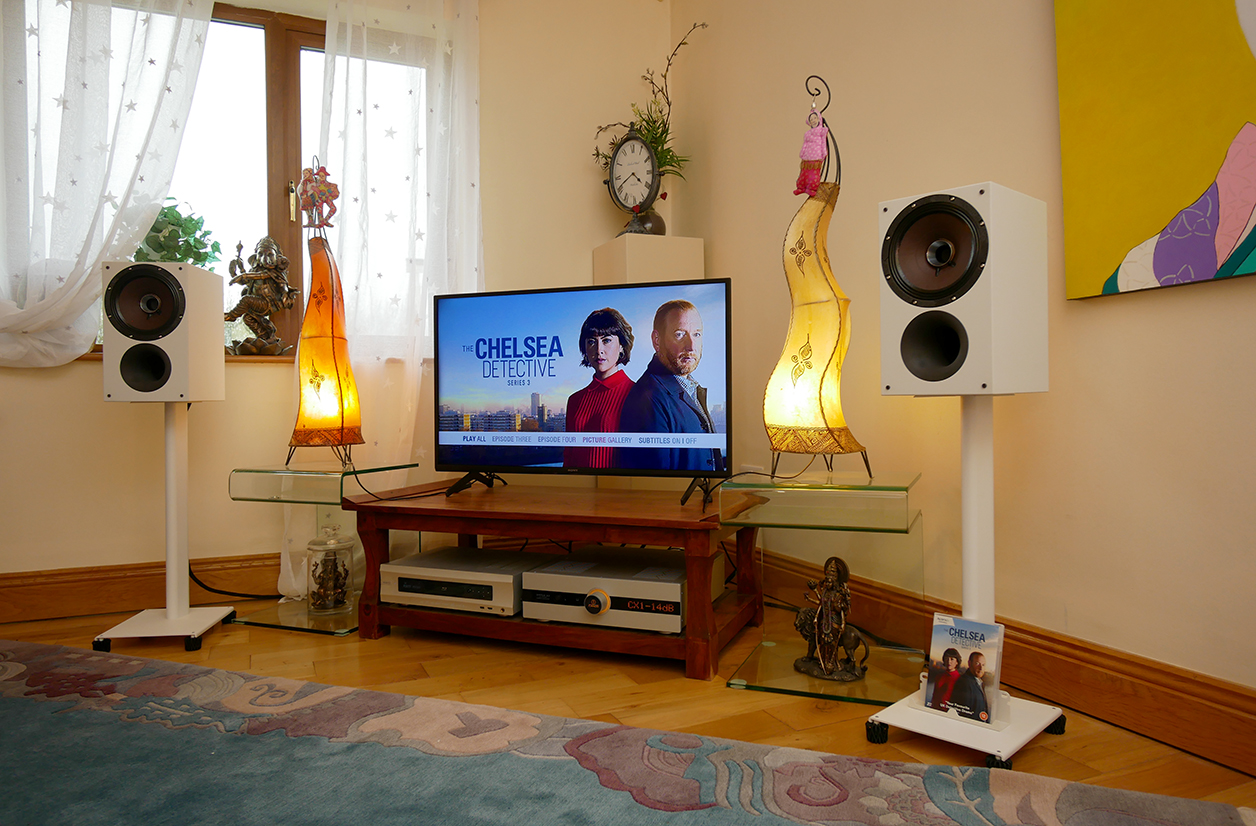 I'm old-school. No social media, no Netflix. Land-line phone, physical DVD. But I've got limits so the 4'000+ CD collection was donated 4 years ago and I now stream local and cloud files exclusively.
Before we do, a brief commercial break for ball bearings. It'd be convenient to call A3's nose job a Pinocchio excess. Yet executed this flawlessly and turning like frictionless first love, such disrespect quickly morphs to, why the hell not. For less money than the industrious non-dimmable static display on my Cen.Grand DAC, Canor throw in a multi controller in a far higher league; just because they can. Is it necessary? Not if you're an app worshipper who does everything by phone. Should your eyes squint, remember that the smaller intel on the knob isn't meant to be legible from the seat. We make those menu adjustments manually. For the distance, Canor give us the logo or VU meter views. Those telegraph well at 4 metres. Ditto the large input/volume dot-matrix display all with six stages of illumination including off. Admittedly that functional design element is a bit over the top. Like Eversolo's, it's simply emblematic of a modern manufacturer's fabrication chops. It ain't bragging if you can; and lovely to interact with when materialized at this level. So much for precision ball bearings, amazing mechanical tolerances and a responsive crisp small touch screen which, in the absence of a hard standby switch, also functions as an easy on/off prompt. A misplaced remote or run-down battery won't crimp our style. Now back to music using A3 as a dedicated power amp via its HT bypass option.