Geek arrival. Securely strapped and weather wrapped to a mini pallet. Stoutly double boxed. Complexly shaped inner foam cradles. Off-centred hand recesses exactly where the loot to be lifted balanced just so. Thick black draw-string protective cover. Spiral-bound full-colour glossy owner's manual. Two AA batteries for the remote included. Ditto UK power cord specific to my location. Swag by way of branded pen, shopping bag and black T-shirt. If I were an unboxing YouTuber, I'd have milked this for the cream. Since I'm not, I'll simply hand out five gold stars. When luxury lands, this is how to make a grand entrance. Bravo. Even the remote was a few cuts above though John Darko's recent feature on the subject would likely prefer metal to plastic. I enjoyed the lighter hand weight and useful finger recess on the underside. To establish proper air intake for the cooling fans, the perforated slots of the top cover see mirroring round belly openings protected behind metal grills. Cold air inbound from the bottom, hot air outbound at the top. Having successfully parachuted into Ireland, the first outpost to collect intel was planned to be the top shelf of my upstairs source stack to replace the combined DAC/headfi functionality of a Cen.Grand DSDAC 1.0 Deluxe and Silver Fox amplifier. But with A3's depth far exceeding my DAC's to run out of shelf space, I relocated the show into the main system. Unlike the one upstairs, that Artesanía rack anticipates kit as deep as it is wide. Given wall clearance, it could sprawl still farther; not that A3 is that porky. In this sidewall spot the Canor could play fixed-gain DAC for the 2.1 speaker system; or DAC/headfi deck as shown here.
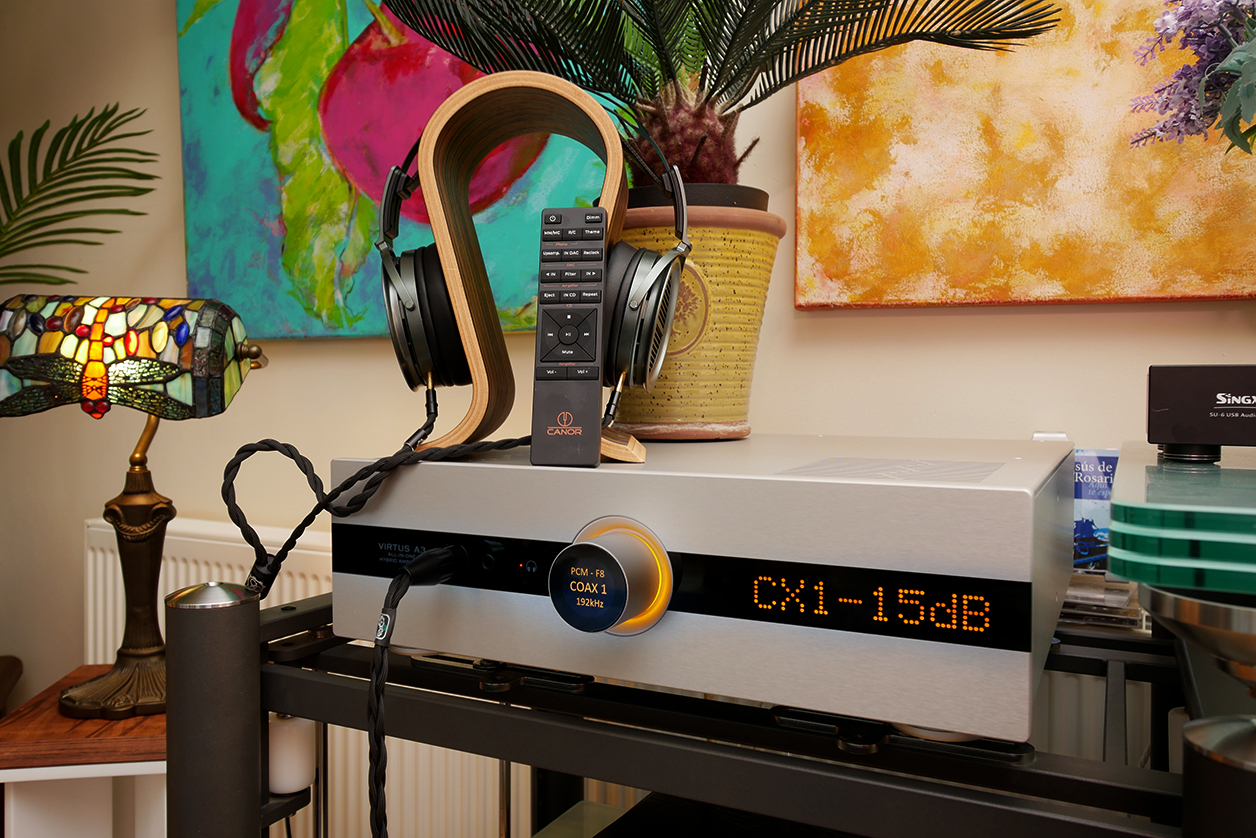 Headfi switches on/off by simply touching the headphone symbol as confirmed by the adjacent small red LED.
Now a minor creak showed in the big entrance's digital hinges. Because USB executes on C for which I don't possess the necessary 3m cable to reach, I opted for AES/EBU instead. As per usual, Audirvana Studio's SoX upsampler engine dispatched 176.4/192kHz or native DSD64. A3 stuttered and spurted like a car refusing to fire. 88.2/96kHz launched just fine. Switching to coax had no issue with 4 x upsampling or DSD64. My AES/EBU cable wasn't the culprit since it works fine into my Sonnet Pasithea DAC. An even smaller creak arose noticing how whilst boot-up remembers our last-used main volume, switching between pre-out and headfi doesn't independently remember our XLR4/6.3mm setting. Instead A3 applies the setting of the rear outputs. It would be nice if we had two memories to remember headphones and speakers discretely. Like the AES/EBU hiccup, I'm certain that Canor's tech support will quickly inject a few drops of WD-40 and get the squeak out of those hinges pronto. Regardless, once Øystein Sevåg's gloriously neoclassical Lacrimosa started, the gates to a semi-tropical paradise were widen open already. With a quick note to my factory contact Ivan to check another unit for the AES stutter—was it a coding bug or peculiar to my sample—I asked whether A3's tube voltage gain also applies to headphones just followed by a dedicated current buffer not the neo-Quad speaker output stage.








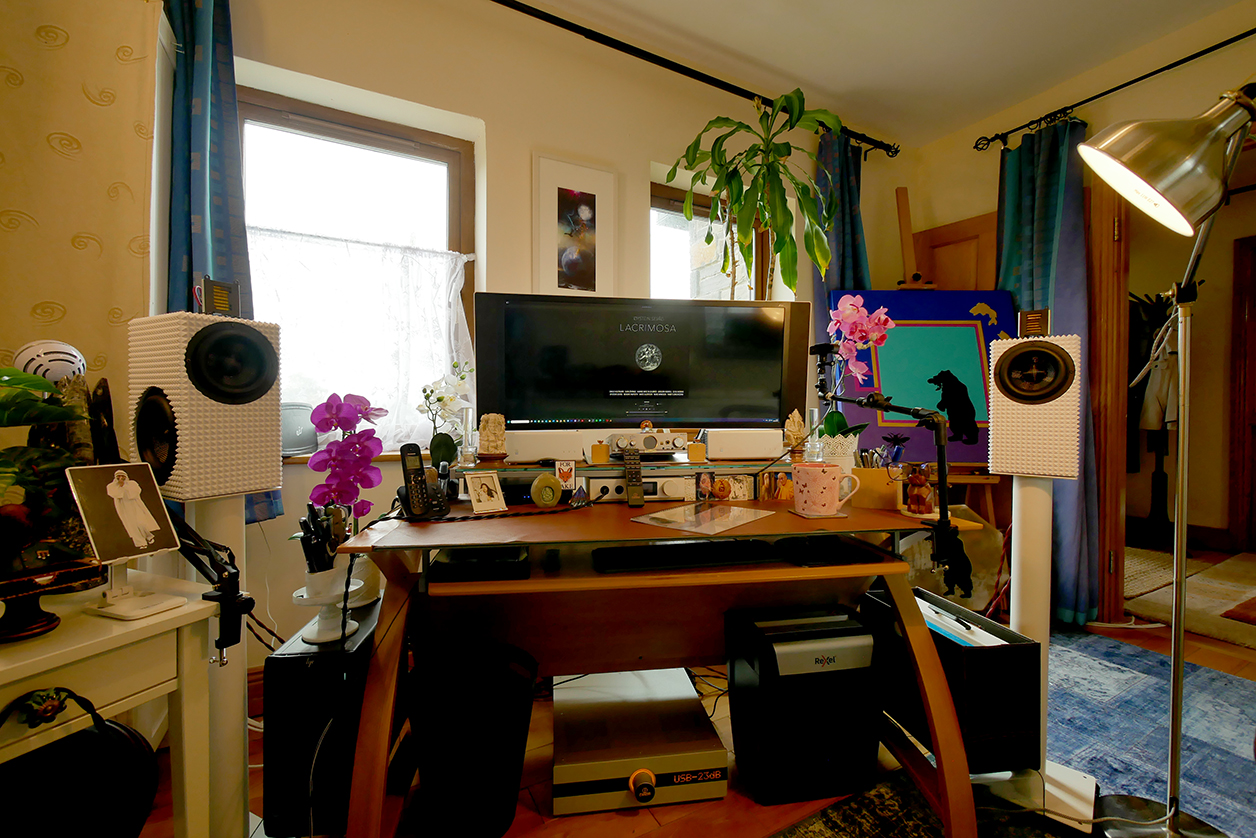
On my desktop, A3's rug-rat billing enforced by fitting nowhere else was offset by my shorter USB-C cable reaching. This allowed Audirvana to upsample¹ to 705.6/768kHz or DSD256. Either worked flawlessly. Whilst Virtual Hifi's Viper monitors retaliate for their well-past 40Hz bandwidth and SPL fortitude with 83dB (in)efficiency, I had ~18dB left in the tank whilst lifting my toupee. Do try Lacrimosa's title track at orchestral levels. See how quickly you identify the instrument which follows the soaring solo sax. It's a bassoon, the oboe's big daddy very rarely ever spotted outside a classical orchestra. What a splendid transplant!
__________________
¹ On or off chip is that question. A PC/Mac's far greater processing power over an SRC chip or FPGA coded to perform that function can run more sophisticated real-time math. The designer of my DSD DAC which can resample on the fly up to 1'024 confirms it. If you're a PCfi user, it makes sense to investigate where to perform up/resampling for best results. Audirvana offers two different upsampling engines and they do not sound alike. Roon & Co. will have their own so experiment away.
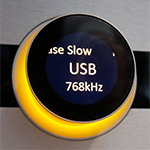
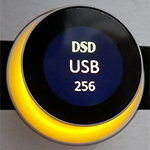 This hardware/music combo was fantastically cinematic, plumptious yet dynamic, dense yet expansive. High-rate DSD resampling booked none of the treble hazing that has me unhappy with DSD64 but added its usual more billowy connective tissue of spatial atmospherics to make for a valid alternative to steep PCM. Where SACD fans 'remaster' their entire Redbook library for the small price of an annual software player subscription to leverage an ace sample-rate converter, A3 is a willing participant.
I had fruity tone, taut bass, generous voltage swings. Roundness dominated but particularly the sax's and piano's upper registers retained brilliance to not cloud over and dull their upper harmonics. Call it a slice of the lush life served up with a sparkling spritzer and slice of lime on its rim. How you'd get any work done with such majestic office sound is another question but whilst the catty boss is away, the merry mice come out to play. Being self-employed helps on that score. Having crossed off the functionalities I would test, it was time to get granular.
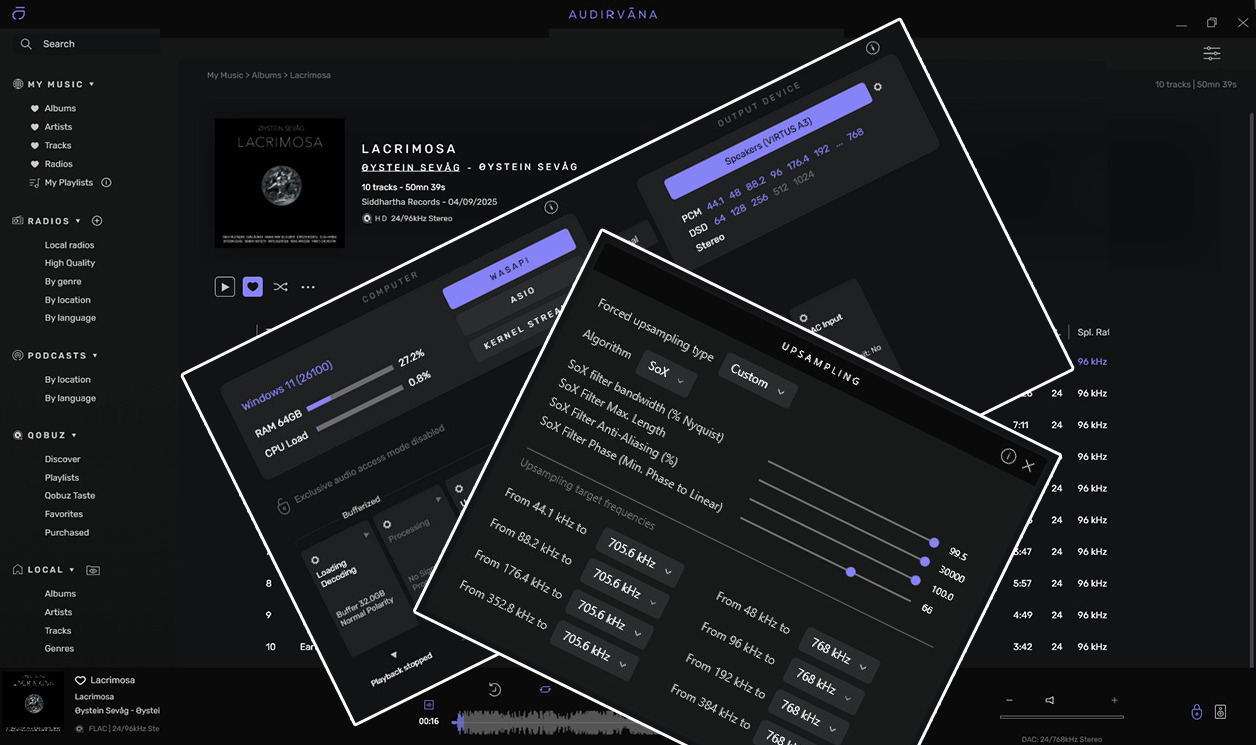 Though Audirvana's resampler saw A3 as DSD512 ready, the internal processing limits at 256.