 John Westlake who shepherded A3 through 24 months of R&D isn't exactly a midget himself, having worked on the discrete 1-bit Da Capo DAC and Ordinal at Pink Triangle, the DACMagic and CD4 SE at Cambridge Audio, the M-DAC and 8200 CDP at Audiolab, the Alto CD player at Audio Innovations and the Elite FM at Quad. Other work at semiconductor companies led to patents on a PWM feedback controller and DSP circuit, giving John expert knowledge on class D. He also authored Peachtree Audio's Nova, Decco² and iDAC and Pro-Ject's PreBox S2, DAC Box S+ and StreamBox S2 Ultra.
The latest project to carry his autodidact signature is today's Canor hybrid amp. It's an in-house affair of sorts since Canor do large OEM production for brands like Musical Fidelity and Pro-Ject whilst John had already worked with Quad and closely with ESS Labs to possess special insight into their converter silicon.
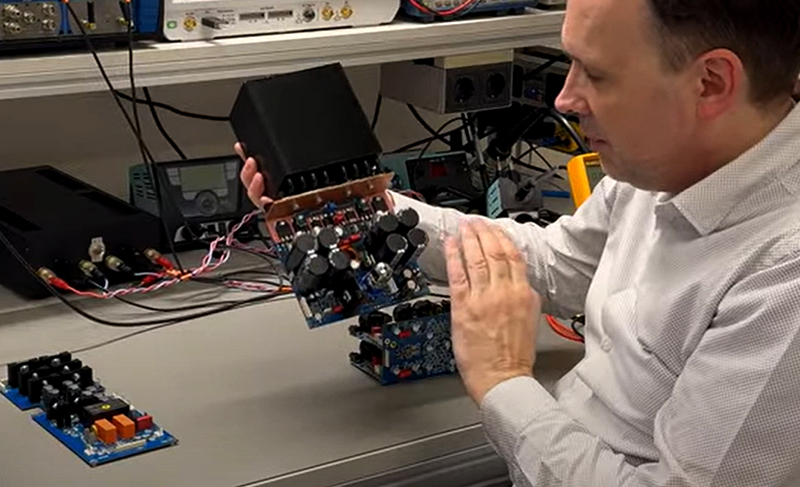
Whilst born in the UK, Mr. Westlake now lives in Czechia. Here we see him with one A3 power module. Some of his past hifi tenures interfaced directly with Chinese manufacture. With Canor all of that's back in Europe; Presov in Slovakia. JJ tubes are made in Cadca 250km west, giving Canor another home-base advantage when valves play a big role in their lineup. We already established how A3 is a genuine hybrid whose tube voltage gain was deliberately engineered to dominate and steer the output current buffer which drives our speakers.
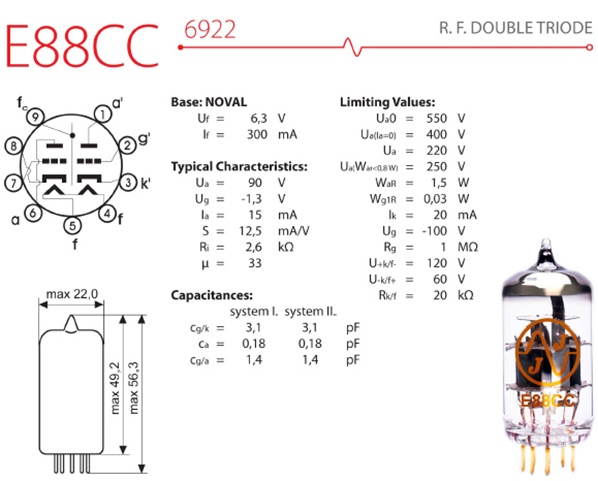 In that context it's fair to say that how it styles and featurizes, much modern valve kit goes retro in its design language and attendant nostalgia. The A3 differs. Without 20-second tube stabilization tracked by the on-the-nose display where ticking time markers close a circle around a valve logo, onlookers would be none the wiser about thermionic theory working inside. A novel circuit, digital amenities and the miniature capacitive touch screen augmented by IR remote look far more Eversolo FutureFi than Audio Research Retro. With a standard JJ 6922 netting €22/ea. from an Irish musicians' webstore just then, maintaining A3 despite its luxury nose also won't turn into a costly white-powder habit like replacing boutique 300B. Meanwhile tube fanciers keen to skate can roll these miniature bottles to potentially shift the amp's sonic profile for better or worse. Having been carefully voiced around the stock glass, many could prefer to leave it alone. For my review I certainly would.
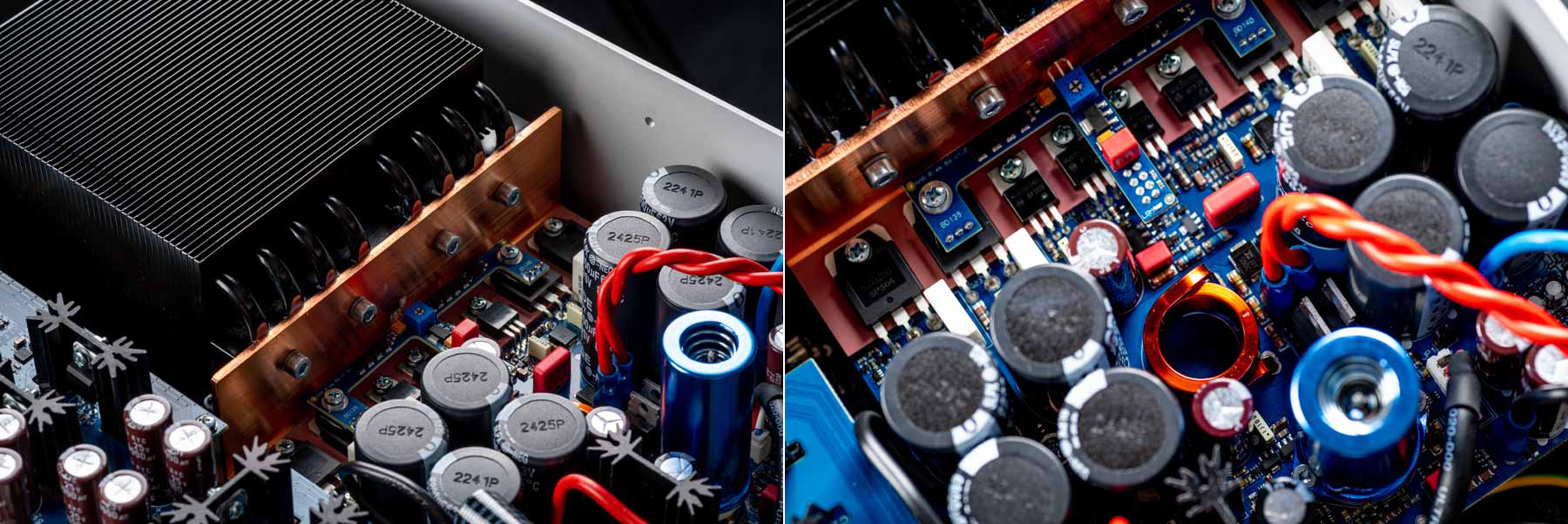
About which, I'm homo digitalis born without the vinyl gene. Whilst my dad spun liquid-cleaned records on a Dual and open-reel tape on a big Revox, by the time I had my first system, it only did CD later PCfiles. I never embraced pops, clicks and turning over sides every 20 minutes. I thus can't comment on the A3's phono stage. But I could test its headfi, DAC and amp functions. Anything less and I shouldn't be on this gig. Whilst some of my headphones are power hungry to want about 3wpc into 32Ω—Raal 1995 Immanis & Magna, HifiMan Susvara—my aune SR7000, Final D8000 and Meze 109 Pro promised to be appropriate for the A3. Loudspeakers would be Qualio IQ 3-ways, ModalAkustik MusikBoxx and Virtual Hifi Viper 2-ways. With John Westlake on record calling DSD less problematic than PCM's digital filters whilst these Sabre chips are good for native DSD512, I'd experiment with Audirvana Studio resampling PCM to DSD before sending it to A3. With my systems running subs, I even had use for A3's variable pre-outs. Before we close the book on tech to get purely ears on, the photos of the previous page settled conclusively that unlike hifi hardware that's more empty than not, Canor have packed A3 to the proverbial gills. There's a most definitive trade of shekels for substance when this integrated clearly doesn't drive on hot air.




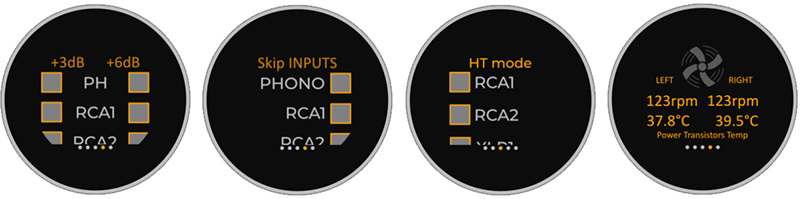
Interface smarts of the control knob include gain trim per input; input skip so we only switch between inputs we use; designating an input to fixed gain aka HT mode; fan speed and output transistor temperature; display brightness; Canor logo or VU meter as screen saver; error messages like fan stoppage, signal overload, DC error, thermal protection; and factory reset. There's even an automated relay contact cleaning. It triggers multiple HF signals sequentially through all relays in the device. The function runs every 20th time the device is turned off. Its progress shows as the 'CLEANER' inscription on the dot matrix display.
In short, Canor's Virtus A3 is very much a 21st-century concept despite including two small vacuum tubes aboard. The factory warranty is 24 months. Simply add speakers and streamer; or a CD/vinyl spinner. Because more classic/purist users won't digitize their analog inputs, A3 includes no DSP bass management or app-driven room/speaker correction. For that one goes elsewhere; and often Ncore/Purifi class D. Pick your battles, collect the desired spoils. In my case, A3's blessed lack of WiFi wouldn't trigger my radiation sensitivity so not spoil my desires. Battle avoided. Hurray.