 To wrap the passive-preamp angle: Like the triode/pentode debate, feedback-or-none discussion or the class D x A debacle for just some sects under the big tent of audiophila, preamp beliefs and preferences bifurcate into active and passive camps. Whilst the third kind as the source-direct brigade would cancel all preamps, there is a faction which champions proper preamps as being absolutely indispensable for advanced sound. Riviera Lab's Luca Chiomenti is such a self-professed acolyte. And no surprise, he doesn't mean passives but tubes.
Yet others call a passive preamp of the magnetic persuasion the ultimate. Whilst many will actually agree on the relative sonic merits between active and passive linestages, there is little consensus about which of those are additive, which subtractive. In broad strokes, active circuits are claimed to add (lay bare as being already in the signal?) drive, substance, body, textures and dynamics. Passive-magnetic variants tend to trump micro resolution, speed, clarity and directness. Does our sound need more yin or yang?
True regardless is that the vast majority of present-day digital sources outputs from 2-8V, sometimes more to drive mating amplifiers to full power often many times over. The vintage preamp mandate of adding voltage gain is no longer valid. If a direct connection between our DAC and amp plays far too loud to typically require from 15-30dB of signal cut, adding yet more voltage with an active preamp only to enforce even deeper attenuation right afterwards seems a bit Quixotic.
Of course if we like the effect, we're the one paying for it. We should get exactly what we want. With Lumen CL, that's not gain though 6dB of step-up are there just in case. With Lumen CL, magnetic lore promises an absentee noise floor, superior low-level behaviour and from it, higher resolution, immediacy and possibly some mild transformer-induced texturization like a micro infusion of atomized oil in water. So damn the torpedoes. If we've got Dakkar¹ Nemo on our side, beware all opposition.
__________________________
¹ In Jules Verne's novel The Mysterious Island, we learn that Captain Nemo reinvented himself from being born prince Dakkar, son of an Indian raj. He adopts the name Nemo, Latin for "no one", after losing his family and kingdom to 1857's Indian Rebellion.
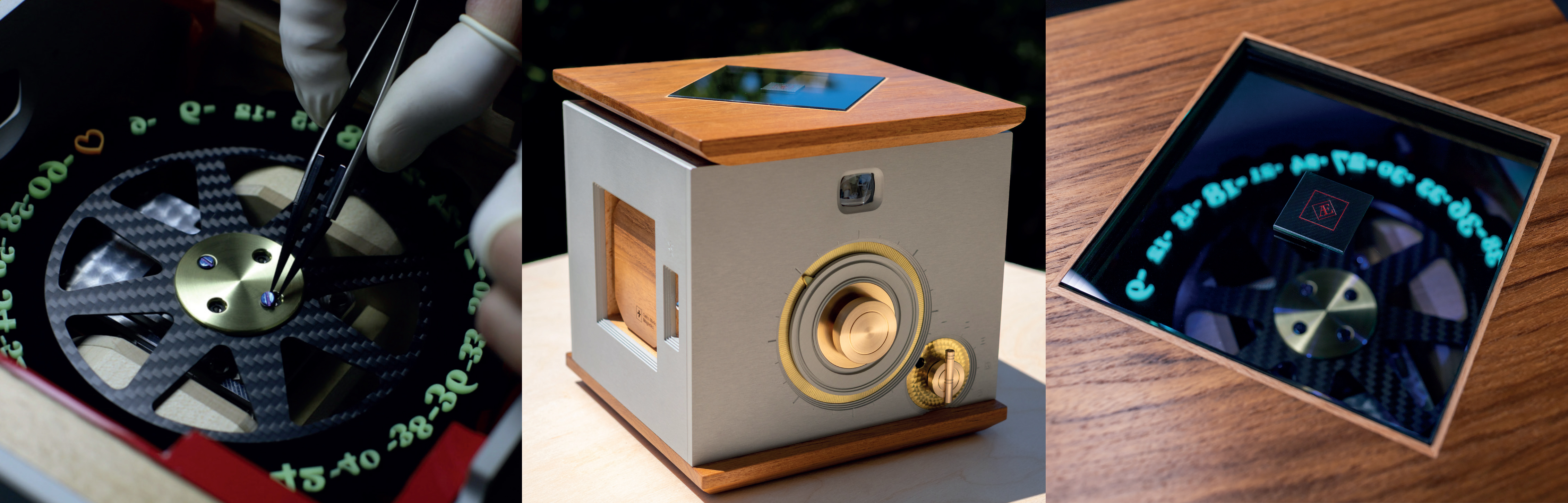 Heat-tempered blued screws, carbon-fibre numerical disc, tempered glass lightwell, wood and different metals. The wooden lid treatment reflects the 'pagoda swoop', the orientation of the spy glass the company logo. This is a careful study of shapes and materials.









Wikipedia tells us that Alexander 'Sasha' Slobodyanik was a Ukrainian concert pianist who lived from 1941 to 2008. Since I'd just exchanged emails with a man in the here/now, our Stas is clearly someone else though perhaps a direct descendent with music in his genes? Who are he and his partner on another continent? What professional backgrounds pool into their collaborative brand; what prompted that venture in the first place; and how did they arrive at a passive-magnetic fully balanced preamp which in 2025 makes for quite an obscure choice? Though CL being aimed at the Asian market already told us that this company must enjoy a following there. This would make sense particularly for Japan where appreciation for craftsmanship embodied in the ideal of the eternal apprentice runs deep. It's one of the qualities the late cable wrangler Chris Sommovigo told me he most enjoyed during his Japanese residency.
Whether it was pottery or micro-brewed sake, cutlery or furnishings, if their producers had applied obviously high standards of craftsmanship, there automatically was an appreciative audience. Inbuilt obsolescence is a by-product of the same mentality which birthed fast food. Having experienced the plastic culture, some people are ready to return to bygone values of greater permanence where true value is factored not by how cheap something was to buy but by how long it will do its intended job because it was engineered and executed to a very considered and careful extent. In other words, will it age well and get passed on or end up unloved and discarded in a landfill? The second half of today's brand name rather spells out how Æ think about that. And to be sure, whilst today's volume is creature-feature remote controlled, source selection is not. For that we need to go caveman, get up and stretch our legs. Quelle horreur. Did I mention the toggle switch for the high-intensity light show? Or the $215'000 300lbs Lucet SET with AD1 outputs, 866A rectifiers and 801A drivers? Today's linestage is just the tip of the Æ spear.
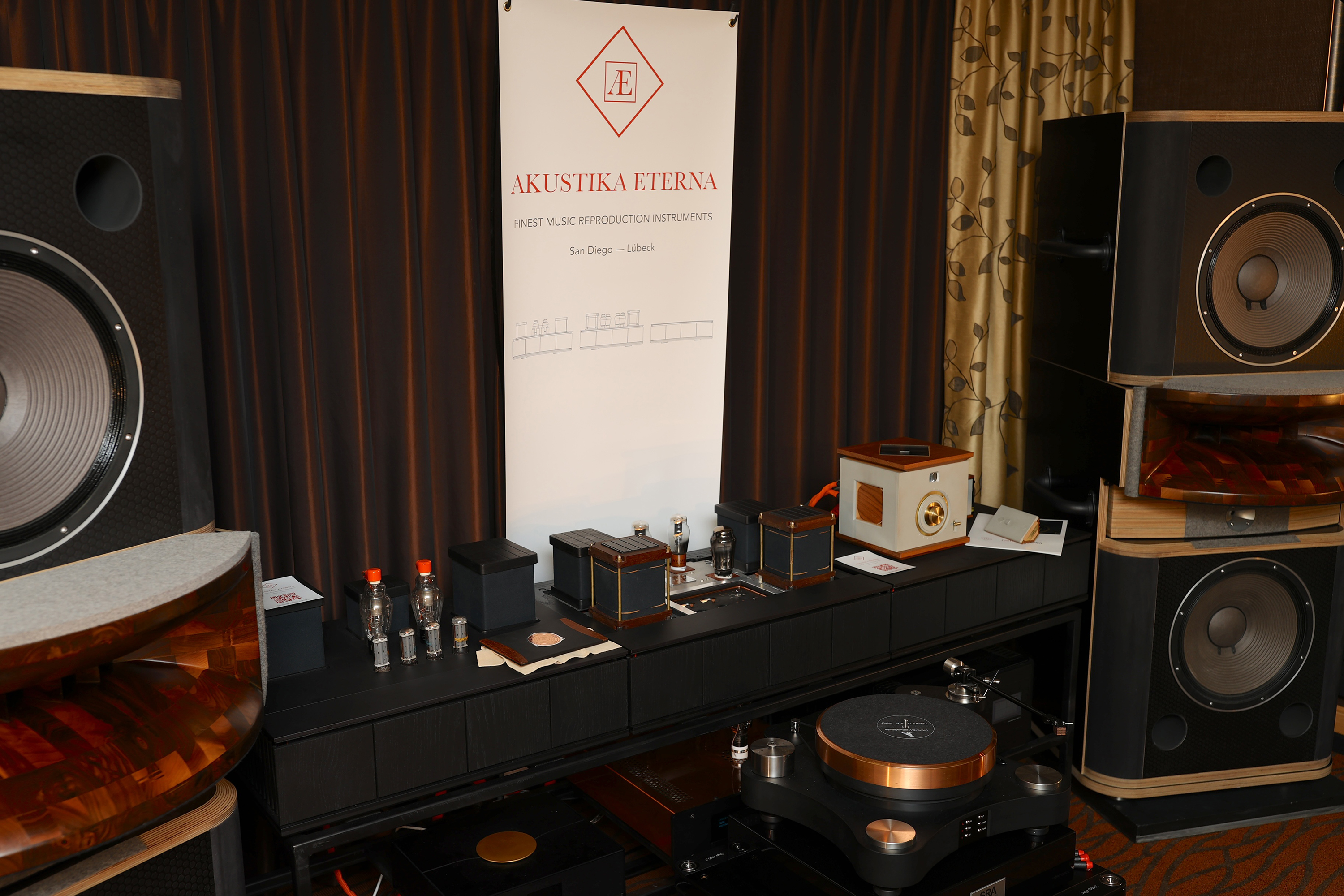
So let's inspect that spear via Æ's10-point credo as assembled for T.H.E. Show earlier this year:
1. Human-centred not machine-led. In a world increasingly driven by algorithmic precision and fleeting trends, Æ offers a counterpoint: a human-centred approach to music. Our work is not guided by market analytics or focus groups but instinct, emotion and a deep respect for artistry. We believe that music reproduction should be an intimate soul-nurturing experience, not a sterile technical exercise. Like the finest instruments or timepieces, our components are not built to impress specifications but to move listeners.
2. Craftsmanship and intentionality. Æ is not mass-produced. Every piece is handcrafted with devotion, shaped by skilled artisans who understand that true quality lies in the smallest details, even those that may never be seen. We treat every component as a work of art: assembled by hand, finished with care and engineered for long-term relevance. This is audio that carries the mark of the maker, the intention of the designer and the story of the listener.
3. Timelessness in a disposable world. Where most technology becomes obsolete within years, Æ is built for decades or generations. Our creations are designed to be heirloom objects: meaningful, enduring and emotionally resonant. Much like a fine mechanical watch or vintage musical instrument, an Æ component is not defined by momentary relevance but by the lasting joy and cultural weight it carries. We see music systems not as gadgets but vessels of memory, imagination and tradition.

4. Personal expression over performance metrics. We reject the notion that sonic quality is a numbers game. Instead of chasing distortion figures or industry 'Best Of' lists, we pursue beauty, coherence and authenticity in sound. Our clients aren't looking to impress others. They're looking to express themselves. Æ components are chosen by those who value subtlety over spectacle, nuance over novelty. In our world, good design is not loud; it's lasting.
5. Aesthetic understatement, sonic excellence. Æ's design language is deliberately restrained. We embrace a rich minimalism where every curve, texture and material speaks to intention rather than ornamentation. The understated exterior belies the deeply expressive soul within. This aesthetic discipline ensures that our pieces blend seamlessly into thoughtful interiors while always inviting closer examination. Beauty here is not shouted but whispered – and all the more powerful for it.