
Country of Origin

Reviewer: Srajan Ebaen
Financial interests: click here
Main system: Sources: Retina 5K 27" iMac (i5, 256GB SSD, 40GB RAM, Sonoma 14), 4TB external SSD with Thunderbolt 3, Audirvana Studio, Qobuz Sublime, Singxer SU-6 USB bridge, LHY Audio SW-8 & SW-6 switch, Sonnet Pasithea, COS Engineering D1, Laiv Audio Harmony; Active filter: Lifesaver Audio Gradient Box 2; Power amplifiers: Kinki Studio EX-B7 monos & Gold Note monos on subwoofer; Headamp: Enleum AMP-23R; Phones: Raal 1995 Immanis; Loudspeakers: Qualio IQ [on loan] Cables: Exact Express Flame, Furutech; Power delivery: 2 x Kinki/Vinshine Tai Hang on amps and source stack, Furutech DPS-4.1 between wall and conditioners; Equipment rack: Artesanía Audio Exoteryc double-wide 3-tier with optional glass shelves, Exoteryc amp stands; Sundry accessories: Acoustic System resonators, AudioQuest FogLifters; Room: 6 x 8m with open door behind listening seat; Room treatment: 2 x PSI Audio AVAA C214 active bass traps
2nd system: Source: FiiO R7 into Soundaware D300Ref SD transport to Cen.GRand DSDAC 1.0 Deluxe with POW; Preamp/filter: Lifesaver Audio Gradient Box 2; Amplifier: Kinki Studio EX-M7; Loudspeakers: ModalAkustika MusikBoxx + Dynaudio S18 sub; Cable loom: Exact Express Earth; Power delivery: Vibex Granada/Alhambra, Akiko Audio Corelli Corundum & Castello Solo; Equipment rack: Hifistay Mythology Transform X-Frame [on extended loan]; Sundry accessories: Furutech cable lifts, Furutech NFC Clear Lines; Room: ~3.5 x 8m
2nd headfi system: DAC: Cen.Grand DSDAC 1.0 Deluxe with POW; Headamp: Cen.Grand Silver Fox; Headphones: Raal 1995 Magna, HifiMan Susvara
Desktop system: Source: HP Z2 work station Win11/64; USB bridge: Singxer SU-2; DAC/headamp: iFi iDSD Pro Signature; Speakers: DMAX P61 Headphones: Final D-8000, aune SR7000
Upstairs headfi system: FiiO R7; Headphones: Meze 109 Pro, Fiio FT3
2-channel video system: Source: Oppo BDP-105; All-in-One: Gold Note IS-1000 Deluxe; Loudspeakers: Zu Soul VI; Subwoofer: Zu Submission; Power delivery: Furutech eTP-8, Room: ~6x4m
Review component retail: $60'500

 Lübeck. San Diego. I grew up in Kiel north of Lübeck with its famous Niederegger marzipan factory. Ivette and I later lived in San Diego County's Leucadia close to Yogananda's famed cliff-top hermitage in Encinitas. When I came across Akustika Eterna listing both cities as their places of origin, I saw a sign in the moons. Resistance proved futile. Stas Slobodyanik had read some of my prior work and was amenable to a review. Just one glance at their magnetic volume control—here in CL guise for Asian markets as hinted at with the source selector markers—groks an old-timey concept where noble materials and manual labour tango on the tiled dancefloor of tech and craftsmanship. Tech covers 24 attenuation steps from -58 to 0dB plus 6dB of step-up gain by rear switch. Channel matching is a rigorous 0.15dB. There's remote control, hence an outboard power supply. The signal path is fully balanced. That reflects in 5:2 XLR i/o. The multi-tapped transformers performing passive voltage-to-current conversion are custom. Artisanal craftsmanship continues with chassis in teak, maple or beech finished in natural oils, resins and waxes. There are parts in smoked glass, brass, bronze alloys, stainless steel, copper, carbon fibre, silver, titanium, silk, cork and suede. There's a fully analogue display with a lightwell charging luminescent numerals against a backdrop that's been hand-painted with a 99% light-absorbent compound for enhanced contrast. One might flash on aquatic bioluminescence whereby creatures of the eternal dark emit their own glow.

 In the tiny sector of passive-magnetic line stages—my exposure came by way of micro brands like Music First Audio, StereoKnight, Khozmo/Hattor, Warpspeed, Bent Audio, Lifesaver Audio—the customization potential baked into Akustika Eterna's concept goes beyond even the UK's Bespoke Audio atelier. A well-travelled observer appreciates how Lumen CL reflects cosmetic inspiration from architecture and haute horlogerie. Native to it is being an object d'art not mere appliance. A man without proverbial pot to piss in doesn't need art. He needs food and a safe place to rest his head. A music lover of limited means wants high-value sound appliances to often start with a smartphone and earbuds. For most of us, the coin to purs(u)e more artistic aspirations in our entertainment gear tends to come later in life; if it manifests at all.
Priorities factor, too. Some spend their discretionary funds on travels, swanky meals, designer fashion, flash wheels or any number of other status symbols. Personal values placed on various possessions or activities vary broadly. A woman might treasure a diamond ring or spa treatment as an expression of her beloved's affections. A man could adore machinery, be it a mechanical watch, motorcycle or hifi. My wife treasured jewellery, coats, online courses, books and supplies to do her art, be it software, paints, fabrics, fancy photography paper or replacement ink cartridges for her printer. As far as a tie-in with luxury watches goes, post Krell Dan d'Agostino too openly borrows from their dials and hands in the opulent displays of his current kit. Akustika Eterna's volume pointer recalls this classic Cartier Rotonde jump-hour minute hand.









Today's preamp in detailing that's customized to order can become a treasured possession for someone not just deeply in love with playback and sound but a strong desire to look at and interface with beautifully crafted objects of heirloom quality. That intro set the stage. Who are the instigators behind it? Who are Akustika Eterna as the impresarios of today's play? Before we find out, a mini primer on VC which here doesn't abbreviate Viet Cong or voice coil but volume control. It makes an AVC an autoformer volume control, a TVC a transformer equivalent. Attenuation can happen in the digital domain where it used to mean bit stripping. The advent of 32-bit even 64-bit algorithms has mostly made that a non-issue. The French Leedh algorithm championed by Lumin and Soulution exploits a more precise way to deal with rounding errors from fractions to be considered 'lossless'. In the analog domain, volume executes resistively. Unwanted gain is literally burnt off like a disc brake on a car converts brake pads into friction and heat. This applies to wipers as well as resistor networks triggered by relays or optocouplers. Magnetic volume controls using multi-tapped transformers or autoformers instead downshift gears to remain with the automotive example. The more signal voltage they cut, the more current they generate. It's likely why magnetic attenuators tend not to suffer typical resistive signal-cut effects whereby the sound progressively bleaches and thins out as we cut back SPL.
 The materials palette of the Lumen CL.
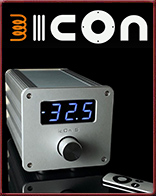
 Practical challenges with multi-tapped magnetics are their step size/number and switching noise. Unless they run a micro processor and cunningly sized attenuation increments to combine into far more steps than taps à la Pál Nagy—his icOn 5 AVC has 136 steps across 83dB—a TVC tends to have a very limited number of stops. Today we get 24. What terminates each tap to act as switch determines whether there are switching transients; and how loud. Popular switches are rotaries, reed relays and FETs. Just as with interstage, input or output transformers, the quality of a TVC's magnetics influences its performance. Windings can be copper or silver, cores may go exotic like amorphous or FineMet. Beyond raw ingredients, there's the manual skill of the person winding such parts which influences their ultimate precision. It's another facet of the intersection between science and art, measurements and craftsmanship. Source-direct fanciers with digital attenuators which are believed, or hoped to be, lossless look at Akustika Eterna's creation as an anachronism of times gone by.
That's precisely part of Lumen CL's contrarious charm. Direct-heated low-power triode amps and horn speakers replicating Altec Lansing or Western Electric designs are further such examples. Japan hosts a large underground culture of them. Ever since Jean Hiraga became its French ambassador when he took the reins of L'Audiophile in 1977, hifi's retro gospel spread across Europe then America. Don Garber and Noriyasu Komuro were two premier members of NYC's Triode Mafia. The latter's circuits are presently shepherded by John DeVore. Nowadays this aesthetic has practitioners everywhere. The Treehaus Audiolab The Preamplifier from Connecticut makes for another contemporary US-based example very recently reviewed in Stereophile. Without any apologies or explanations—those in the know don't need the latter, those without need to know wouldn't understand them—today's 3-piece proposal of head unit, PSU and remote control is as retro as Steampunk. That also makes it just a bit avantgarde. Jules Verne's Cap'n Nemo would have had one. So can you. In 2025, his Nautilus roams again beneath the waves of public perception, stealthily exploring the hidden depths where bioluminescent creatures look as alien as SciFi's most outré intergalactic visitors.