September 1. "Quick update on Cobra. I'm still deep in the build. Since I want this to be a true cost-no-object ultimate monitor, I decided to go all in with Mundorf, ClarityCap PUP, Jantzen Amber Copper caps and Path Audio resistors. Right now I'm finalizing the best crossover configuration with all of them. Once I have the voicing exactly where I want it, I'll know the exact space requirement for the crossover. After that, my current print speed will need about two weeks to build a demo pair. Add in a week for my upcoming holiday at the end of September and that's the realistic timeline. I want to squeeze as much performance as possible and learn a lot by doing that because it allows me to discover even more niche parts and new options to push boundaries beyond what I've known to even bolder better places. I've also finalized my Vermillion XLR and RCA interconnects which I developed over the past two years. Unlike the industry standard ~0.4–0.6mm conductor Ø, these use a 1mm solid Mundorf alloy of 99% silver with 1% gold. I tested them against far more expensive competition many times over and they consistently deliver exceptional results. The sound character is exactly what you'd expect from me: dynamic, holographic, with stunning midrange and excellent bass. RCA are WBT NextGen silver, XLR Viborg silver."
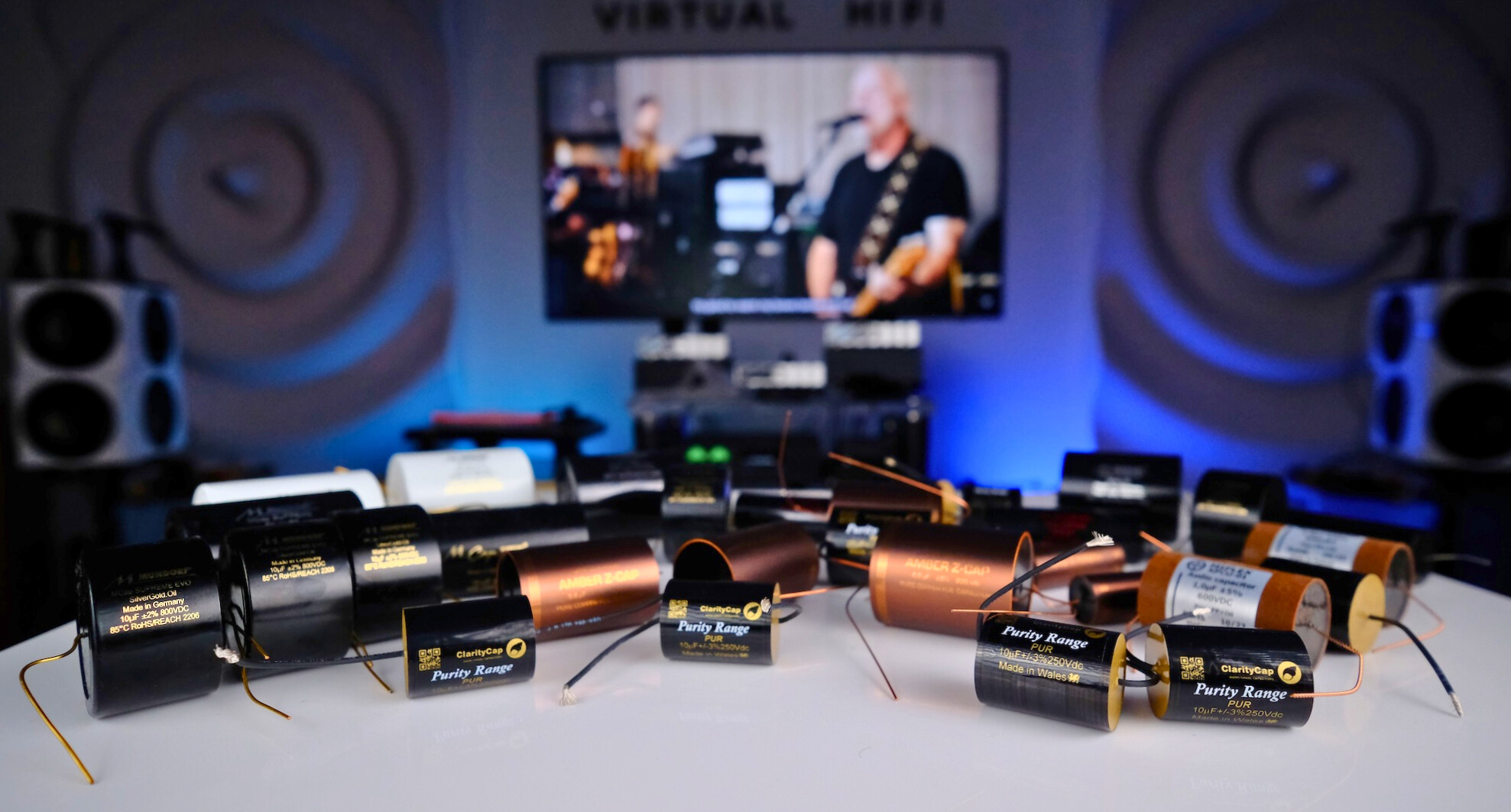
September 2. "I finally received all my audiophile toys of capacitors and resistors I'd waited for. I'm now in the final stages of fine-tuning. Interestingly, I managed to control the AMT/midrange interaction such that what initially seemed like an exciting experiment quickly had me return to the AMT on top. With the d'Appolito arrangement I got more midrange richness but since the new caps and resistors already manage a wonderfully juicy midband by different means, the AMT on top now adds exactly what I also really fancy: micro detail and room-filling holography. The overall balance just makes much more sense this way. I'm pleased that Cobra looks significantly smaller now which is a great benefit. I still plan to implement some trickery with the AMT." Looking at Greg's capacitor crowd, we're reminded of a core high-end tenet: once a design's electrical values are set, swapping parts which all meet them shapes the sound. Without budgetary concessions, a designer can compare the most elite parts then pick those which lock in his ideal sound. It's voicing 101. Without it, a pure testbench design should pick the cheapest parts which safely meet the target specs. On that path, what measures the same sounds the same. On Grzegorz's path, it does not. How to decide what sounds best? With the bio computer of the human brain; with trained listening abilities; with sharply honed personal preferences. We see how Greg's annual recordings at the European high-end shows of Munich and Warsaw must have honed his preferences. He collected many different flavours. He must have heard a few happy examples of blown budgets in the Munich MOC's upper floors. With Cobra the very best he can conceive of within his size constraints, we appreciate that his extensive exposure and experiences informed its final state. To check overlap between his taste and ours, his various YouTube videos from his studio demonstrate his music picks. Those are more useful data points than generic speaker specs on bandwidth, nominal impedance and sensitivity.










"Regarding fine-tuning, at the end-game level one can't simply voice speakers with random coils, resistors and capacitors just because they measure correctly. In my experience each type, brand and even model of part can dramatically shift the sound. That's why many so-called upgrade modifiers fall short. The logic often is that because a certain capacitor is more expensive, it must sound better. But one cap might sound ultra-detailed, another rich and smoky even if they share the same value. In turn a tweeter resistor must be chosen differently to balance those changes. The only correct approach designs and finalizes with the exact parts intended: cables, capacitors, coils, resistors, even terminals. That may sound extreme but is very real. For example, after installing Viper's crossover into its cab, I added neutral-sounding WBT Nextgen silver terminals. That one change shifted the balance enough that I had to adjust the AMT resistor by about 10% to restore the intended voicing. To me this is the real advantage which small brands can leverage against the giants. We can select every part for its sonic character rather than cost engineering. Meanwhile many big names still sell 'high-end' speakers with electrolytic caps, brass terminals and iron-core coils. Such parts don't belong in serious designs, especially at the prices they demand." Grzegorz isn't shy of calling it as he sees it.
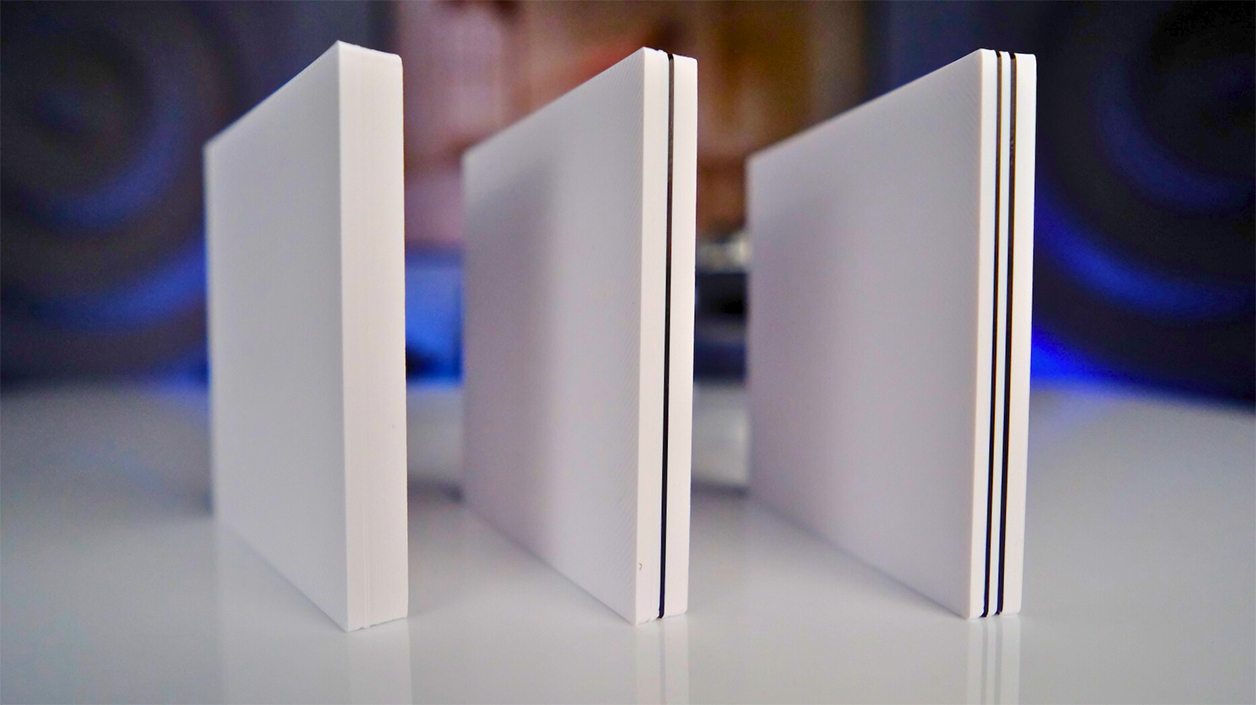
 September 5. "I'm exploring giving Viper and Cobra a classic look with smooth painted surfaces. I've experimented more with 3D printing, specifically focusing on damping the walls for plain external surfaces. While I can still use internal trickery with textured surfaces and passive radiator frames for extra stiffening for amazing bass from a small enclosure, damping remains crucial to overall performance. Since multi-material 3D printing is very efficient with my twin-nozzle printers, I've explored imprinting layers of TPU—the elastomer I use for the Vibron isolators—between PET-G. I printed samples of pure PET-G, a 5mm, 1mm and 5mm PET-G/TPU tri-layer sandwich and a 4mm, 1mm, 2mm, 1mm and 3mm 5-layer version. The results are great so I will move forward with this composite approach. The prototype samples are already at the paint shop to work on achieving a perfect finish."
As someone loving the textured look, this development suggested that my taste was diametrically opposed to the wider buying public. Why otherwise embrace the hassle and extra expense of outsourcing paint finishes? "While I personally like the aesthetic which definitely improves the sound, my main concern is broader appeal and a high 'wife acceptance factor'. I recall a Bristol Hi-Fi show where a black Qualio IQ pair garnered comments for great sound but unappealing finish. Many wished for Walnut or Oak veneers. Offering a flat paint option will incur slightly higher costs but is something I can deliver if a user prefers. We have a long-standing relationship with a local paint shop which consistently delivers excellent results. The significant hurdles of carpentry, CNC machinery and storing large MDF boards all remain absent, a huge advantage for me. For now I plan to introduce the paint finish as an alternate option. Then I can observe which aesthetic resonates more with my buyers."
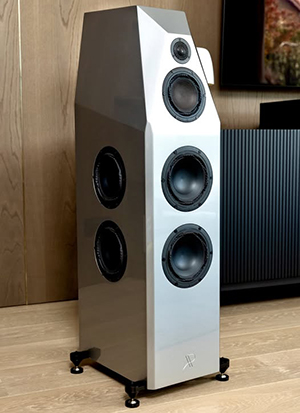
If we want to walk like an Egyptian—in pyramids—we still can. Should paint orders win, the code to run off textured cabs can likely always be fired up on order. "I believe the biggest challenge with both Viper and Cobra will be how to properly manage customer expectations about size versus performance. There's a lot of work to be done to convey just how unexpectedly powerful and capable they are given their compact dimensions. I will prepare Fusion 360 renders of Viper and Cobra relative to their combined cone surface to visualize the difference and what to expect. That's also why I want all my accessories like the opamps, Vibron footers and Vermillion cables to be amazing value to become gateway drugs for the bigger things." At left, the new Audiophase Stealth One shows what Cobra with Purifi drivers would become in a conventionally styled and sized cabinet: a classic 3-way floorstander.