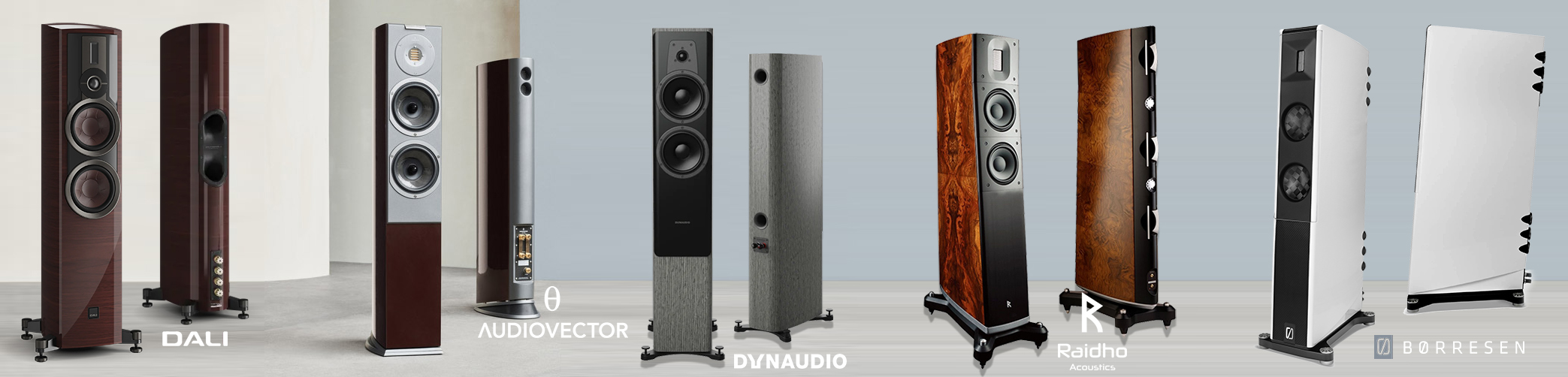
First, a backdrop of five domestic competitors of similar driver arrays to cross off final cosmetic points. All use rear ports. Those range from two to six. Except for Dali's 4-driver 3½-way on the far left, all are 2½-ways. In their company only Gro is a pure 2-way. On price our lot spans €8K to €40K/pr. On size my collage didn't account for height offsets. I scaled all to fit but reality should differ just a bit. Those wanting those details will reference actual centimetre specs. Just then Laerke had bad news. A week after pickup when delivery was supposedly imminent, FedEx admitted that her pallet had never even left Denmark; and that they had no idea where it was. A week later, "only 14 days late but they finally located it and will ship tonight. Due to our location they work with a third party and do not have a proper procedure in place before the shipment lands in their mainland storage. I've already created my own procedure to prevent this going forward." The lost son, returned. A week later he arrived at my local FedEx depot of Shannon airport. Time to get hands on. Nomen est omen. What's in the name Gro?
Grooming with Gro? We knew so going in. Ridley Scott's replicants in the classic Bladerunner were called skin jobs. Gro's virtually endless skins dress it on demand; in high style like the movie. With fine finishing, a svelte stature and dextrous detailing from baffle to terminal plate to floor interface, it's all a serious buyer adamant about audiophile aspirations could demand. Yet it applies attractive sensitivity, not laboratory, robotic or geeky airs. It works in décor-conscious domestic destinations which aren't sound-first places of worship. It makes Gro looker and doer. No stepping over dead bodies involved; no moments lost in time like tears in rain. It starts with secure packaging conceived for when FedEx and UPS morph into FedUp and Oops. What unpeeled from the heavily foam-lined crate was the complete package. We get what we pay for then get that we got that. Validation & vindication. VV-Audio? It'd be a very dry brand name. On a psych basis however, it hits like Thor's hammer. We'll revisit that in a later 'G' paragraph.
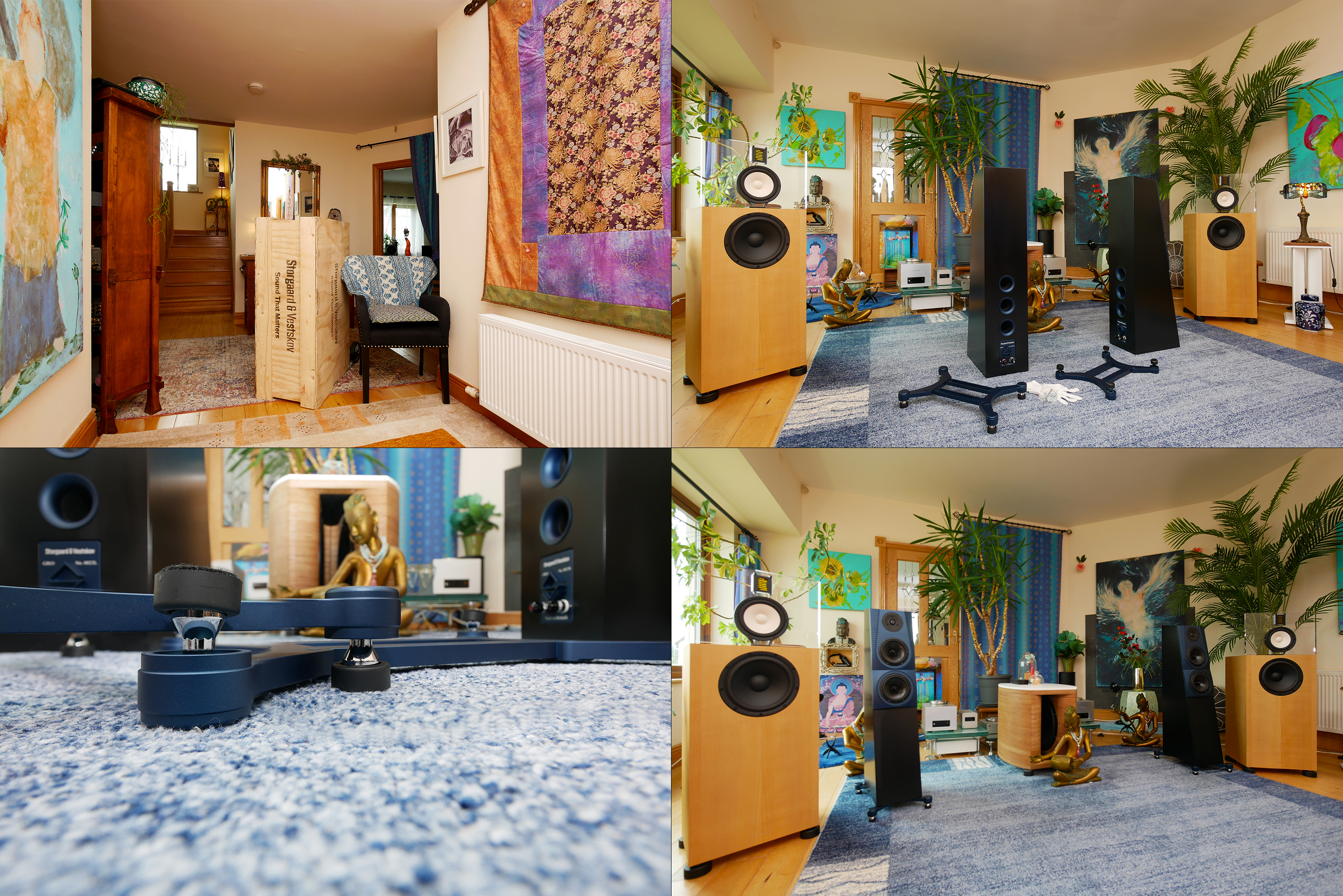
Not being gross on weight or size, Gro's lack of levelling provision from the top isn't a backbreaker. Just tilt the speaker so the footer whose leg you mean to pull is in the clear. Adjust. Set down until rock steady. With the metal work of my samples in a royal blue befitting my (cough) blood, Gro and grooming my grove worked like an absolute charm. This colour consistency included the outer port flares. Compared to my broad-shouldered Qualio IQ bass bins which generously exceed their 9½" woofers' width, Gro looked extra trim as though recently returned from a lengthy fast. My only nits were procedural¹. The speakers had shipped without shrink wrap or cloth protection. Instead they sat in the nude inside the crate's foam panels. It meant a good wipe-down to rid them of dust and wood shavings. Whilst their black paint buffs out flawlessly, it is the kind which attracts finger fat like honey will trap careless flies.
_________________________
¹ "Regarding the packaging, we are in the process of designing a whole new concept. We are currently speaking with three different suppliers so what we used for you is just temporary. New solutions simply take time but you're most definitely correct, it's an area we can and will improve."











Because Gro's top tilts up as it recedes from the baffle, we see some chrome dome from the chair. Even perfectly face on to spy no sidewalls, we do see that element above the tweeter. It gives Gro a slightly rakish aspect even without viewing things laterally to reveal the sloping baffle in full side profile. Once we occupy not Wall Street just our listening seat or couch, it's time to inspect our mental investment in plastic cones and textile domes. What are our beliefs and expectations about them? On at least half that score, we could be in for quite an awakening. First a quick closer look at the two-part baffle trim whose side profile flashes some curves. Even though subtle, those undermine strict angularity and cause the light to reflect differently depending on incident angle. It's clever detailing that triple-tasks at wave-launch inertia, diffraction control and cosmetic interest.
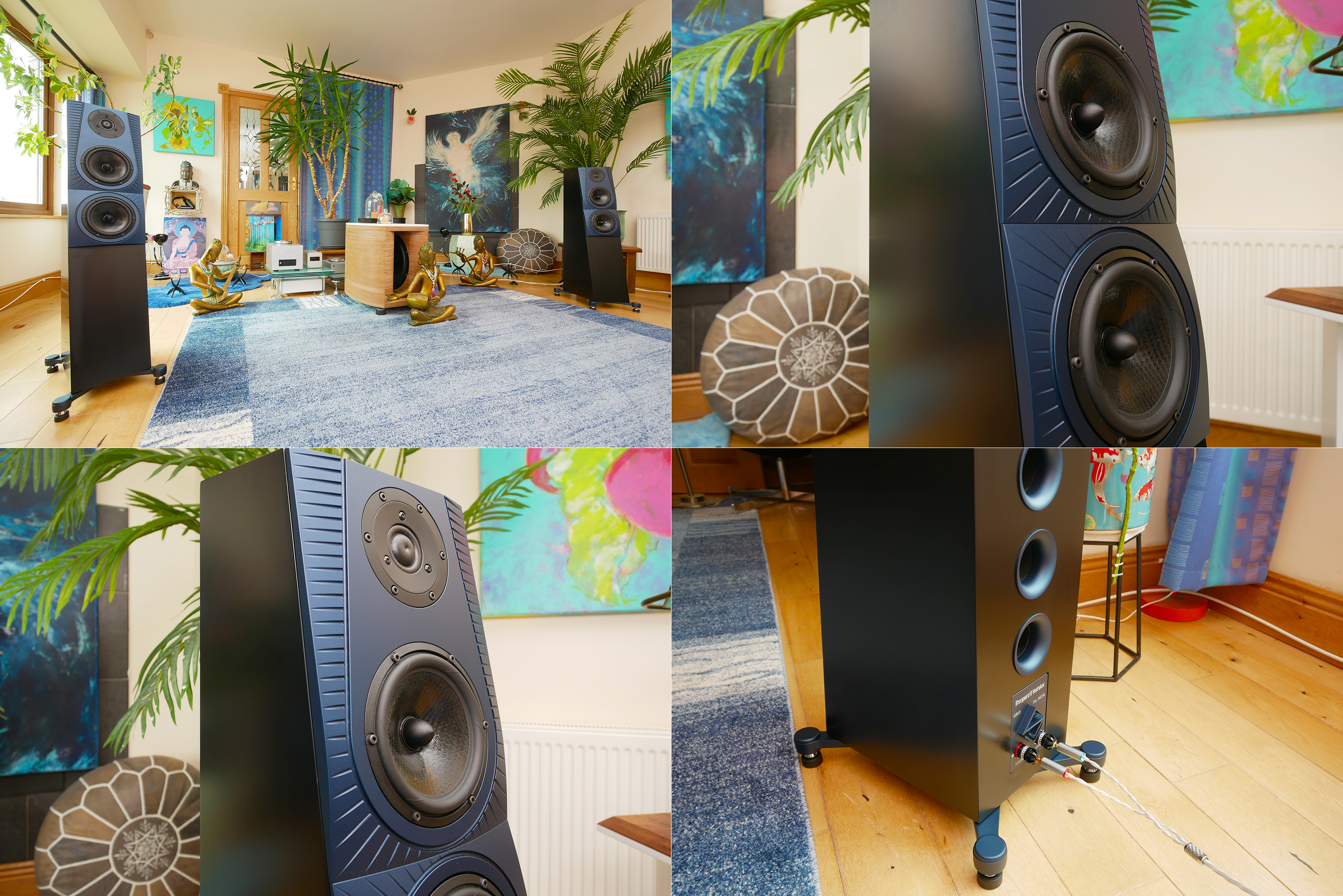
The footers on their integral knuckle joints have some lateral play which together with their threaded height adjustment will account for uneven flooring like rough tiles or bricks. The hard rubber ends will also protect those, parquet and stone. Anyone wishing to upgrade to more highly engineered isolators has standard ¼" threads to get busy. The single-wire terminals should be sufficiently far off the floor to accommodate even stiff spade-terminated audiophile anacondas. Bananas of course don't angle at 90° and at least one designer told me that electronics don't like to travel across right angles. Whilst this could prompt nervous chuckles, look at UHF circuits whose traces curve organically to never follow right angles. Engineers specializing in radio-frequency and higher circuity may just know something we ridicule?