The Master 300b is rather imposing to require a dedicated shelf preferably on top of your rack to allow the tubes to freely dissipate. And who does not like a pack of big bottles on full display glow in the dark? As covered in the intro, a 5U4G rectifier sends signal to a 6SN7 double triode acting as stereo voltage amplifier which then splits into mono feeds of a 300B driving a 300B per channel. The build of the amplifier is rather minimalist and almost austere were it not for the glorious exposure of the glowing glass. A brushed aluminium fascia uses the black/red knobs of all Solaja headphones amps as the only evidence of a certain design attention. The rest of the housing assembles in rather frugal fashion with an untreated top plate with protruding screw heads, bland cheeks and cheap low rubber feet. At this price I would have hoped for a higher level of finish and more investment in structural elements. The front houses the nice and satisfying 23-click resistor ladder volume knob, a speaker/headfi selector, 6.35mm and XLR4 jacks—their integration with the front panel is another area for future improvement—and the RCA input selector. On the back are 1:2 XLR:RCA inputs, speaker terminals, an RCA/XLR selector and the power mains switch. As already shown, the not particularly tidy point-to-point innards show a selection of quality parts like Kiwame and Wima resistors, Mundorf silver/oil film and Rike capacitors and four separate power supplies. With no remote control, I used that of my LampizatOr Horizon 360 DAC for the most part whilst the Master 300b's knob was fixed between 12-17 depending on what it drove.
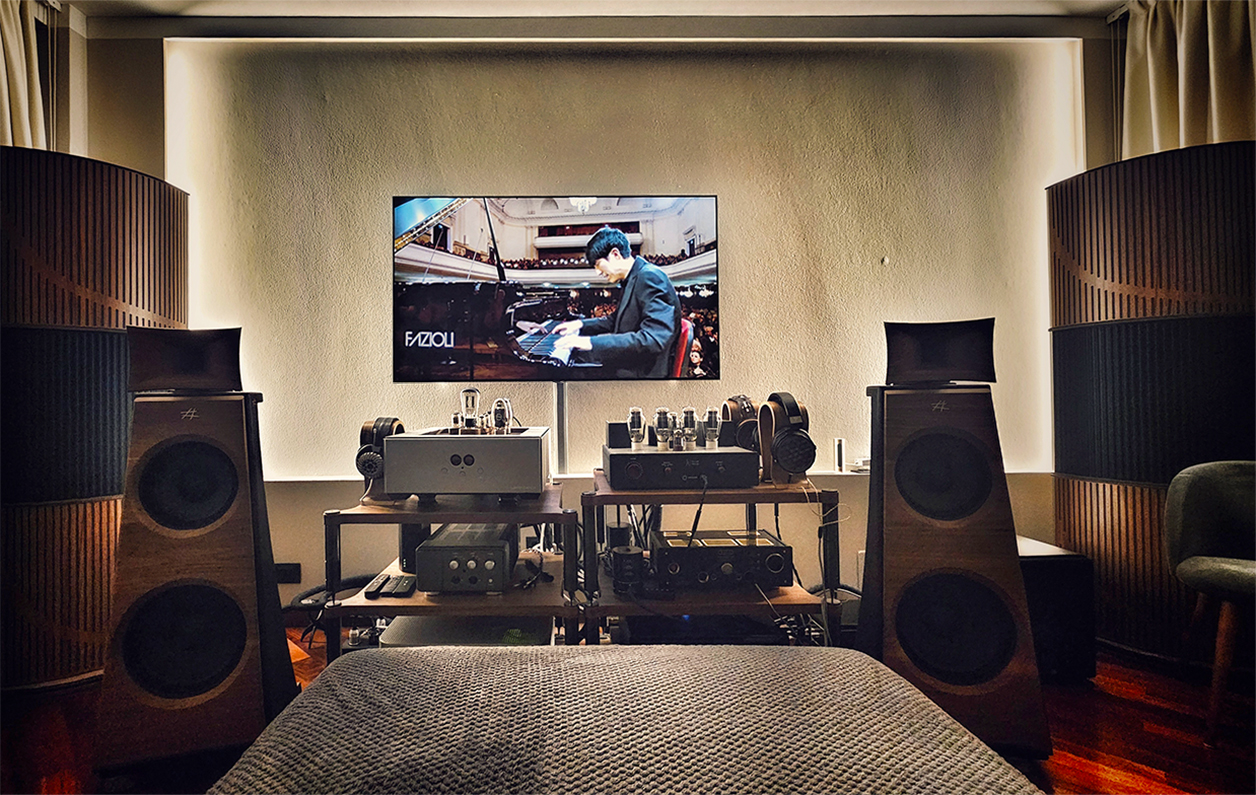
Dragan recommends a ~1-hour warm-up to get the best from his amp so I started my date playing some background music at fairly low volumes through my Aura speakers while working on non-audio stuff on my laptop. While trying to surf through a list of work e-mails, I kept being distracted by the music. At times there was a specific detail that grabbed my attention like the fullness of a cello in that Schubert Quartet here or the sharp projection of Chet Baker's trumpet solo there. But the most captivating part was the suspended sonic atmosphere the speakers were creating in the room even at that relatively low ~60dB SPL. It seemed like a loudness control was active, making the music feel more vivid and fulfilling. I can't really put my finger on why. The best I can say is that the Master 300b put in relief those parts of the music which are important to my emotional participation. Needless to say, my light work session ended prematurely and I let myself soak in the music for the next few hours. Being already relatively late at night, I had to keep the volume very low and was surprised by how much I enjoyed listening to dozens of decibels below what I'm used to. My speakers probably drew mere milliwatts yet contrast and resolution were intact and both a sense of sublimated sonic purity and its relative weight within my microdynamic reference frame offered the utmost naturalness. Without entering a technical analysis beyond my ken, the combination of decent speaker efficiency and single-ended hence class-A-by-definition operation without the zero-crossing distortion of push/pull sanctified my quiet listening. I am not a subdued listener though and tend to set my normal volume just a tad above live concert loudness. Luckily for my neighbours I listen almost exclusively to acoustic music and always have my headphones if I really want a late-night party. So the next day I grabbed Immanis, picked the outstanding Harmonia Mundi recording of Mahler's 9th Symphony with the Swedish Radio Symphony Orchestra under Daniel Harding and went full steam. This recording has wide dynamic range, hence both low-level resolution of the equipment and its capability to dominate the colossal climaxes are seriously challenged.


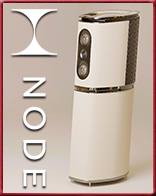









Immanis is the speaker equivalent of a big floorstander with 15" woofers. It was designed to sound big, spacious, visceral and delivers precisely that type experience combined with detail retrieval, imaging focus and general refinement that ribbons are renowned for. Driven by the Master 300b gave the Mahler scale, weight and a spatially enveloping character that made its emotional impact especially captivating, starting with the first ominous sounds. Aleksandar had sent me an upgraded version of the impedance adapter soon to be formally reviewed wired with stranded silver not copper and most importantly terminated at 8Ω for the Master 300b unlike my existing 16Ω unit tailored to my Riviera Labs AIC-10's speaker outputs. The new Star-12 headphone cable and Star-8 adapter-to-amp interconnect now formed a complete silver conduit between Serbian amp and headphones. This further elevated the performance with a combination of body, liquidity, separation and speed that gave large orchestral compositions an almost hallucinatory trait. When I plugged into the Master 300b more sensitive headphones like my Spirit Torino Valkyria and especially the Nur Harmonia in for review, I heard slight background noise which fortunately faded to almost inaudible once music started. Moving from Immanis to Harmonia then Valkyria caused a progressive densification of midrange textures along with an increasingly darker hue. Think Pinot Noir turning into Australian Shiraz passing through a blended Bordeaux. The Master 300b felt at ease in all cases, allowing the various expressive talents of these headphones to flourish. This would usually suggest a neutral piece of electronics but there was more at play as though the Master 300b understood the loads and generously gave them just what they needed to shine. The Harmonia's already inviting penchant was enhanced by a tastefully nuanced saturation of the vocal range where rich 2nd-order overtones increased presence in "Texas Rangers" from Rebecca Pidgeon's Retrospective album where her voice is slightly overexposed in an entrancing way. The details were there as was contrast and space but the most crucial parts for driving the emotional message home wasn't a static picture from a distance however beautiful but active physical participation in the musical narrative. With Valkyria the sound grew drier and darker with an increase of resolution and depth of field. Also, leading edges had the rather unique feature of being fast, crisp but hefty and forceful at the same time which highlighted a previously unheard urgency in the music. This is a very special characteristic of this headphone, making it my personal reference for piano where the percussive initiation of the sonic machinery presents in startingly realistic fashion.
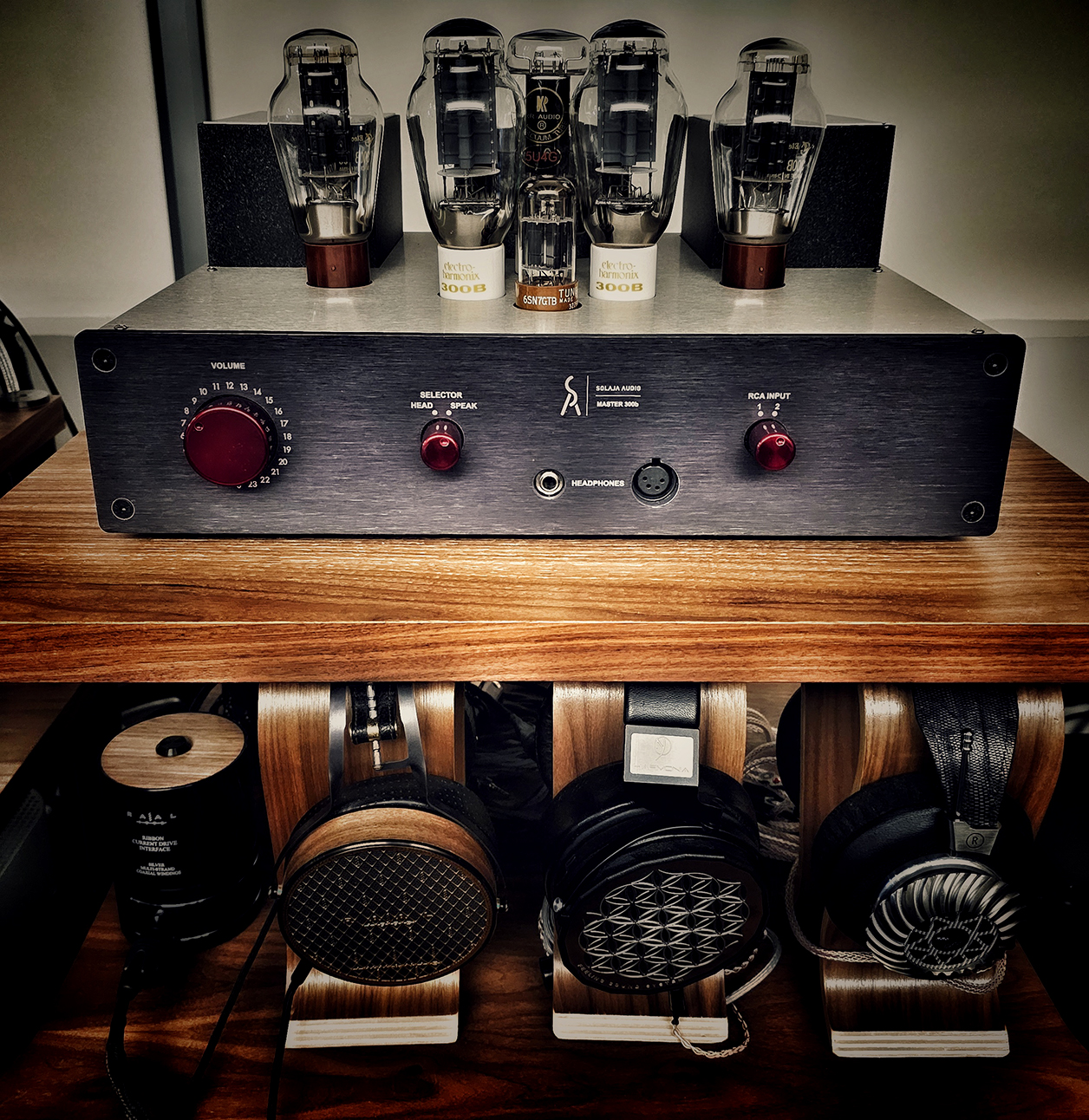
Bass response notably differed between the three headphones. Harmonia was a faithful sample of well-done planar bass (extended, plush but equipped with satisfying slam), Valkyria relied on punch and sustain while not being able to plunge to the very bottom of the first octave, Immanis excelled at extension, articulation and scale. The Master 300b did not editorialize but faithfully amplified the loads' familiar qualities to an even more obvious level, perhaps injecting a hint of bloom and buoyancy which I enjoy. High-frequency energy was handled equally well. Again I heard three very different personalities presented very straightforward. There was plenty of extension and zing when called for and features that strongly rely on distortion-free HF like perceived airiness, separation and illuminating sparkle presented effectively, seemingly unaffected by roll-off or smearing. For instance, the glitches in the Dictaphone Vertigo II album depicted as scintillating objects nailed to precise localizations on a vast cloudless 3D canvas.