Country of Origin

Reviewer: Simone Ragionieri
Source: Generic 5G router into Taiko Audio network switch both powered by a Zayin Audio Suprareg; Taiko Olympus XDMI Server; LampizatOr Horizon 360 DAC
Headphone amplifier: SAEQ Astraeus [on review], Riviera Audio Labs AIC-10
Headphones: Nur Harmonia [on review], Spirit Torino Valkyria, Raal 1995 Immanis
Loudspeakers: Diesis Audio Aura SE
Cables: complete Faber's Cables La Potenza loom
Power delivery: Faber's Cables La Potenza power distributor and ground box, Furutech NCF AC wall plugs on a dedicated spur
Room size: 5 x 4.5 x 2.7m
Room treatments: Eight ceiling diffusers, floor-to-ceiling acoustic curtains on sidewalls, Vicoustic VicTotem Ultra VMT in front corners
Review component retail ex VAT: €13'970

 300B. From East to West there's current production in Japan (Takatsuki), Korea (Strad), China (Linlai, Psvane, TJ), Slovakia (JJ), Czechia (EAT, EML), Germany (Elrog) and the US of A (Western Electric). Right in the midst of that Axis of Tubular Goodies sits Serbia completely surrounded by the EU like the lone Gallic holdout of the Asterix and Obelix comics was by the Roman Empire. We skip Russia as tube purveyor as it belongs on another axis.
 In Serbia Dragan Solaja plies his trade like countrymen Sasa Cokic, Milomir Trosik and Dragan Domanovic do at Trafomatic, Auris and SAEQ respectively. When Aleksandar Radisavljevic of Raal Ribbon looked for a domestic valve-audio engineer to design proper power for his ribbon headphones, Dragan became the project's designated driver.
His new Vortex amp continues rare direct drive of ribbon headphones without interceding transformer-based impedance converter. At Munich HighEnd 2024 teaser previews showed wood-clad EL34 and 300B Solaja amplifiers with the proviso that formal production would likely look different. Below we see the actual Vortex clad in boxy black metal not curvaceous wood. How would the finalized 300B version go to market? To find out, our man in Italy signed up for this gig. He has Raal 1995 Immanis, Spirit Torino Valkyrie and Nur Harmonia cans to test as well as the smaller open-baffle Aura speakers from Diesis Audio.

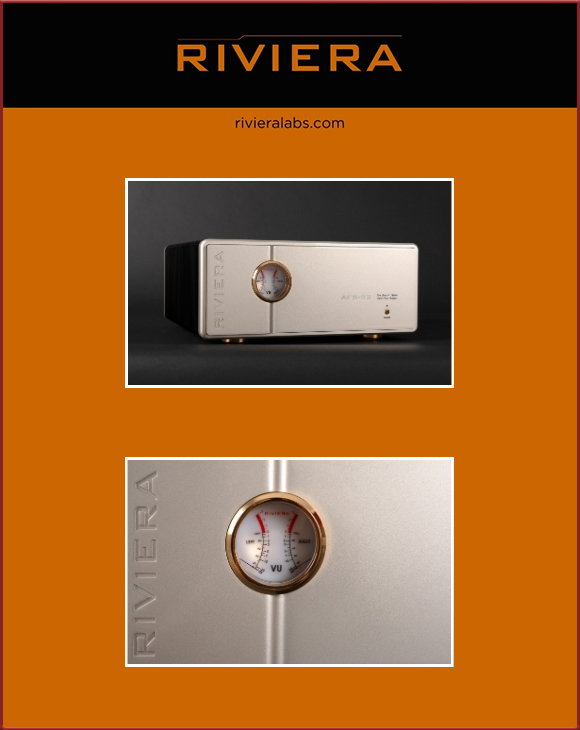
 In early October, Simone checked in. "The RCD I purchased for driving Immanis headphones off my Riviera AIC-10 amp was a custom 16Ω which Alex recommended at the time as the best choice since I use the amp's speaker posts. For low-power SET amps specifically, Alex recommends the 8Ω version. In anticipation of my review of Solaja's Master 300b, I asked Alex what he thought of my 16Ω RCD. He replied that it'd work but not be best on the Solaja though—and confirmed by SAEQ— the Astraeus also in for review is perfectly happy at 16Ω.
"I thus asked Alex whether he could loan me an 8Ω version for the Solaja review. He's happy to and could include his new silver harness if I can review it."
To refresh collective memories, Immanis runs thrice-paralleled true ribbons whose native impedance would present a virtual dead short to the amplifier. It's why true ribbon tweeters—not planarmagnetics mislabelled as ribbons—are backed by an impedance-matching transformer. Wearing two on our noggin would simply be an uncouth neck dumbbell.
Hence Raal relocate that iron into a separate barrel. A length of special cable connects our headphone amp to this RCD, another cable goes from the RCD to the headphone proper. Since most headfi amps designed for harder loads will muster the ~3wpc into 32Ω which Immanis pulling ~3A of current wants to see, the standard transformer interface presents our amp with 32Ω. Custom values are available. Solaja's Master 300b prefers to see 8Ω to develop full power into these current-hungry triple ribbons because into 50Ω it's already down to just making 1wpc. [Photo by Solaja.]










 "The Master 300b is a 7-8wpc single-ended amplifier where a 300B drives a 300B, making it neither push/pull nor parallel single-ended."
Susumu Sakuma [right] who published Japanese audio articles in MJ Audio Technology from 1978 – 2018 was possibly the very first proponent of "like drives like" whereby a DHT power triode like a 300B, 845 or 211 drives another DHT power triode of the same type biased different to create some THD cancellation whilst an interstage transformer provides the necessary step-up voltage gain in lieu of a normal hi-gain driver tube. [His 50:50 amp schematic at left shows a bevy of Tamura transformers and chokes.]
As Nelson Pass explored at FirstWatt, passive voltage gain by transformer as traditionally used for low-output cartridges can be exceptionally quiet. And as attentive users know, the first signal-path tube so the input or driver flavours the output tube. In Sakuma's scheme, to actually hear a 300B fully, we should drive it with another 300B, not the usual 6SN7, 6V6, 71A or Yamamoto's C3m which then overlays the output tube. As Dragan Solaja noted, finding such implementations in the commercial not DIY sector is simply rare. That his point-to-point approach looks more like the latter is par for this micro-boutique course.
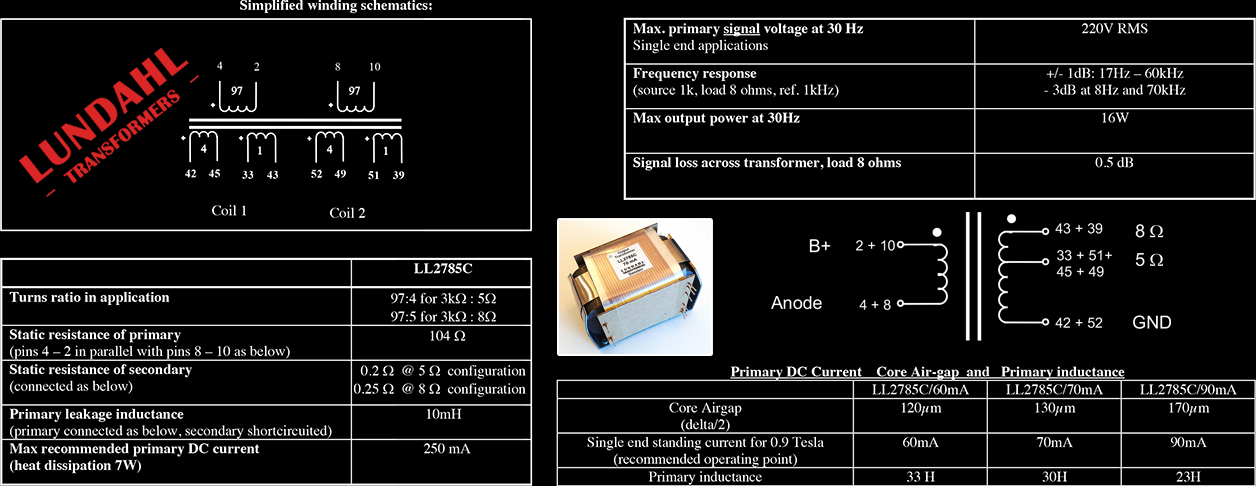
With Sakuma apparently having built no amplifiers to sell but purely for his own enjoyment and that of the patrons at his Concord restaurant in Tateyama/Chiba prefecture, a mythology which developed around his systems had no commercial confirmation opportunities other than visiting his place or hearing his amps at certain 'audio concerts' in Japan, Milan, Paris and Seattle between 1994-1997. He enjoyed listening in mono not stereo. Today's Master 300b is obviously a 2-channel creature. Just as obviously, Dragan's circuit rather diverges from the Japanese auteur's who pursued a narrow-bandwidth sound "with endless energy and sorrow" on Altec A5 and horn-loaded Lowthers with a Garrard 401 turntable, Grace tonearm and Denon DL-102 cartridge. The Master 300b generates its main voltage gain with that octal 6SN7 twin triode. Basic performance specs are a low 2V input sensitivity, 10Hz-50kHz bandwidth at -3dB, S/NR of 70dB, 3% distortion (no parameters given) and 22kg. The rectifier is a 5U4, resistors are by Kiwame, Mundorf supplies the caps in the CLCLC filter and in lieu of Sakuma's interstage transformer there are Rike Audio Q-Cap paper/copper-oil coupling capacitors. This concludes my introduction to let Simone take over. Below we see the basics of Dragan's chosen Swedish output transformers. If you're new to direct-heated single-ended triode amps, the 97:5 turns ratio to achieve an 8Ω output impedance from a 3'000Ω source impedance explains the need for them. – Ed.