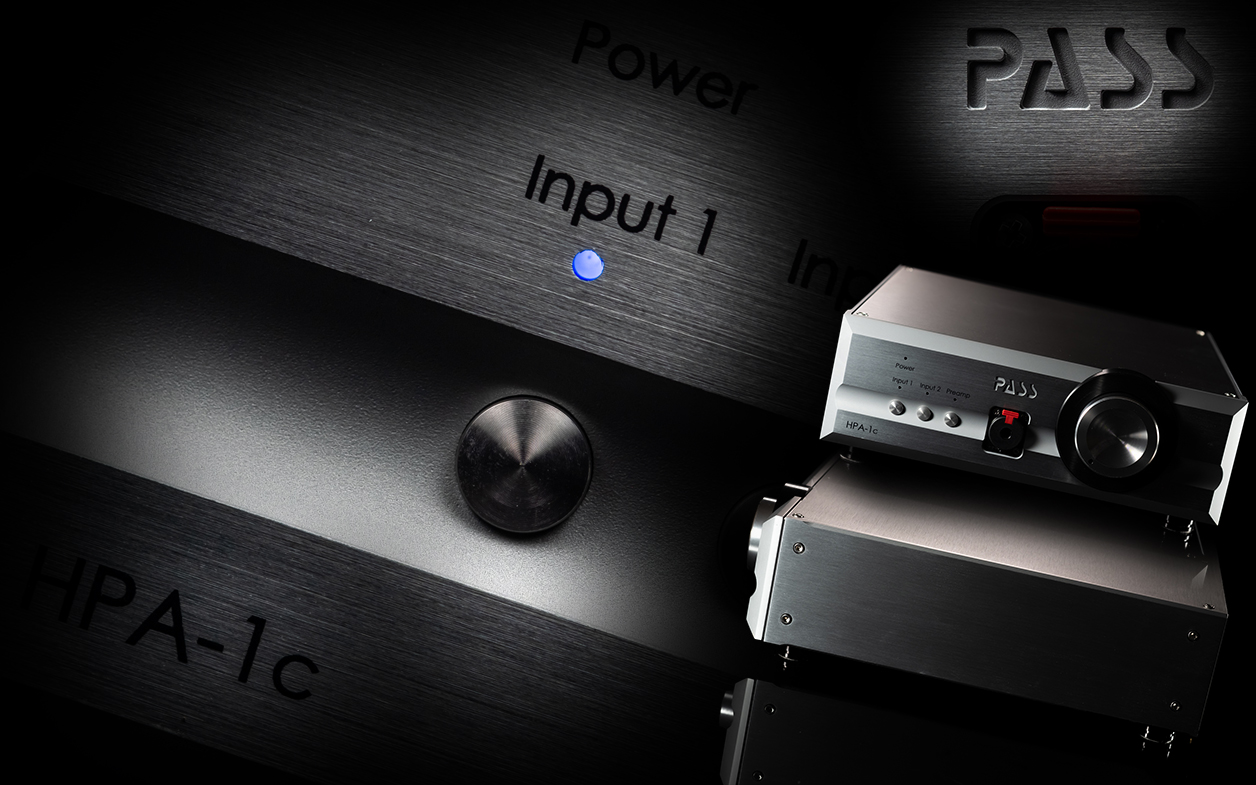
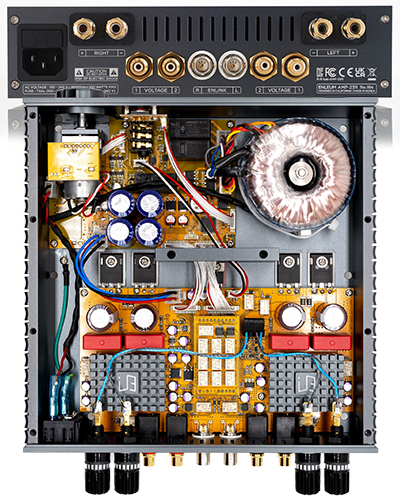
 In this setup, my dedicated music iMac with Audirvana Studio feeds a Singxer SU-6 USB bridge which then outputs I²S over HDMI to the Laiv Harmony DAC beneath the iMac. Twin slaved LHY LAN distributors pre-condition cloud files incoming via 20m CAT8 copper off my modem. Local files live on the 4TB SSD atop the DAC. Either way, Audirvana's SoX upsampler handles initial 4 x resampling before the DAC applies its own. Doing the majority of that math on the iMac's bigger processor sounds better. At right we see the minimalist innards of the Enleum with a pair of lateral Exicon Mosfets per channel. Like the HPA-1c, there's no XLR input nor XLR4 headfi out. My inner judge Herr Fairskin was as satisfied as the crusty bugger gets when true parity—same price and specs—never figures. Granny Smith vs Bramley apple is as good as it gets. Further on which, the visual juxtaposition renders the Pass a Hanners Jumbo apple; or the Enleum a Rockit mini. Either way, the HPA-1c's vault-like construction is a rarity for dedicated headphone amps. Buyers enjoy a super-butch reminder about where their coin dropped.
Now to sonic penny dropping not pinching. By eliminating the bench press from consideration where triple power might have the edge, the FiiO FT7 was my stand-in for a friendly load at a still friendly price that performs quite a few tiers above its ask and from experience scales like a cut-string kite as the preceding hardware refines. For music I spun up some more recent finds like Dilek Türkan's Vuslatin Baska Alem, Øystein Sevåg's Lacrimosa, Claude Chalhoub's Oremus and George Dalaras' Kati Ellades then personal standards from my lengthy playlist assembled for reviews.
My takeaway was obvious. The Korean challenger was more lit up in the presence region and above. This made it a bit cooler, sharper and shinier. The HPA-1c was sweeter and slightly softer. It also felt more intimate, the AMP-23R more distanced or aloof. On subjective detail recovery from extremely low self noise, both were exceptional. The 1c's sweetness wasn't of the cloying sort which like sticky honey clumps things together. It was far more finely dosed and specific to timbre, not inter-image connective tissue; and also affected textures. Again, those were gentler without brooking any diminished or blurry separation. If you're into deep insight as I am, this was halwa without the syrup and its toothache. On certain bass-heavy tracks, the Enleum hit a bit harder and more forward. Though its application is low, it does use negative feedback. Given this final comparison, I felt ever more certain that the HPA-1c's seductive organicity enfolded in very high resolution must be down to its refusal of NFB.
If not, I shall have to eat my suspenders and wash it down with some pickled crow juice.
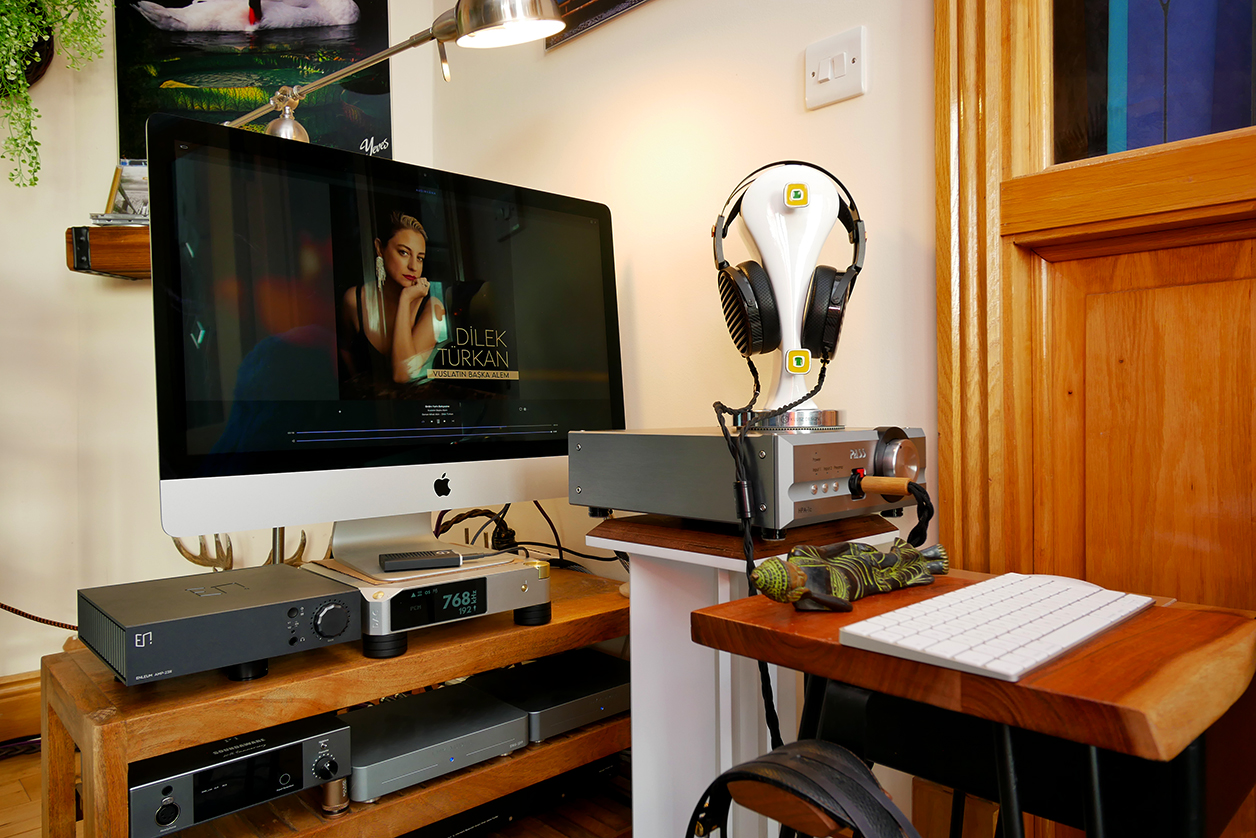
Also uncertain is whether on my full-size circumaural loads, a comparison between original HPA-1 and current 'c' iteration would net any difference when still lower noise could primarily or exclusively matter to high-sensitivity IEM. But that would be purely academic. Nine years later, the one and only Pass Labs amp dedicated to headphones remains fully competitive and quite possibly first amongst equals. Do a job properly and completely the first time around. It'll withstand the scrutiny of time like Ireland's famous stone walls which stand erect well after roof timbres have rotted, collapsed and weeds fully occupy what once was a treasured residence now fit only for lost sheep. If on the other hand a comparison between 'a' and 'c' would give the current version the edge even on standard loads, gains made over time called more experience simply added the proverbial cherry. Either way, the minimalist if sizeable HPA-1 remains a real winner. Respect!