Reviewer: Dawid Grzyb
Transport: Innuos Statement, fidata HFAS1-S10U
DAC: LampizatOr Horizon360 w. Stradi 5U4G + Psvane Art TIII 4x KT88 / 2x 6SN7
USB components: iFi audio Mercury3.0
Network: Fidelizer EtherStream, Linksys WRT160N
Preamplifier: Trilogy 915R, Thöress DFP
Amplifier: Trilogy 995R, FirstWatt F7, Enleum AMP-23R
Speakers: Boenicke Audio W11 SE+, sound|kaos Vox 3afw
Headphones: HifiMan Susvara
Interconnects: LessLoss Entropic Process C-MARC, Boenicke Audio IC3 CG
Speaker cables: Boenicke Audio S3, LessLoss C-MARC
Speaker signal conditioning: LessLoss Firewall for Loudspeakers, Boenicke ComDev
Anti-vibration conditioning: 12x Carbide Audio Carbide Base under DAC, preamp and speakers
Power delivery: Gigawatt PC-3 SE EVO+/LC-3 EVO, LessLoss C-MARC, LessLoss Entropic Process C-MARC, Boenicke Audio Power Gate, ISOL-8 Prometheus
Equipment rack: Franc Audio Accessories Wood Block Rack 1+3
Review component retail: $4'045
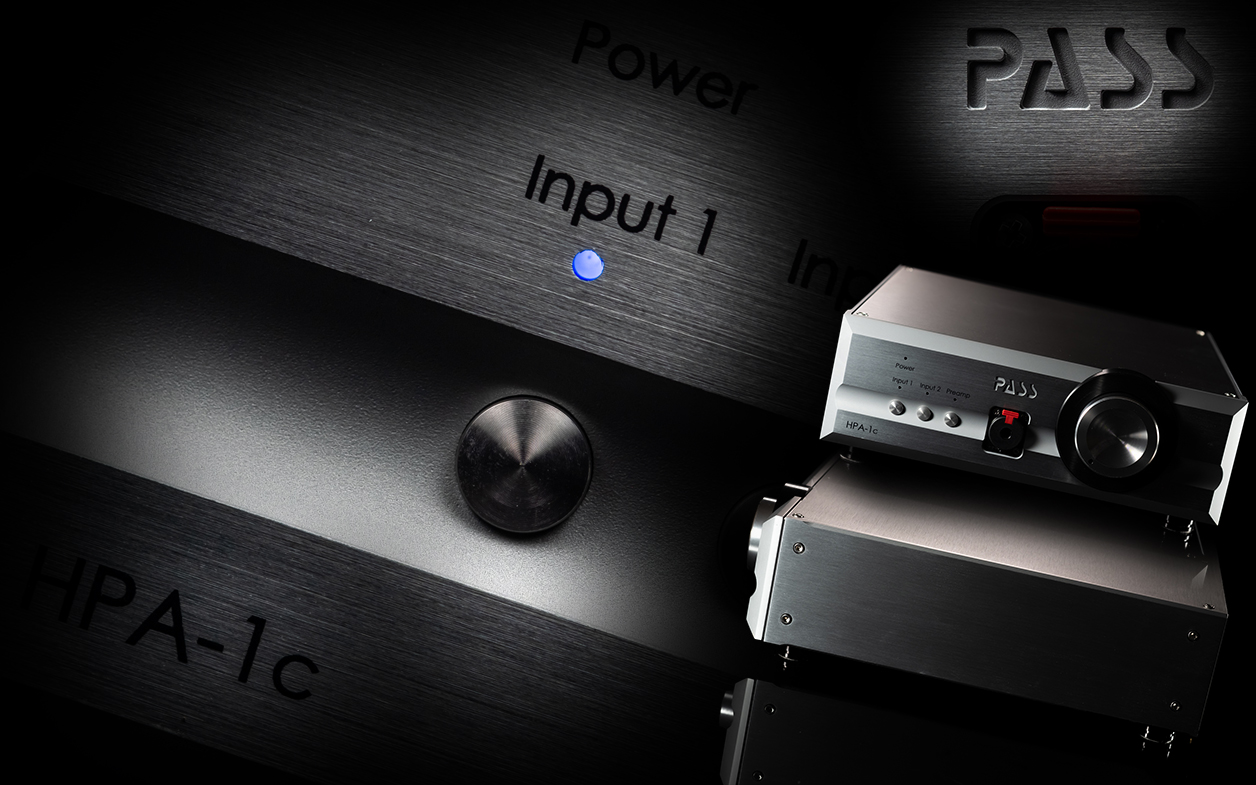
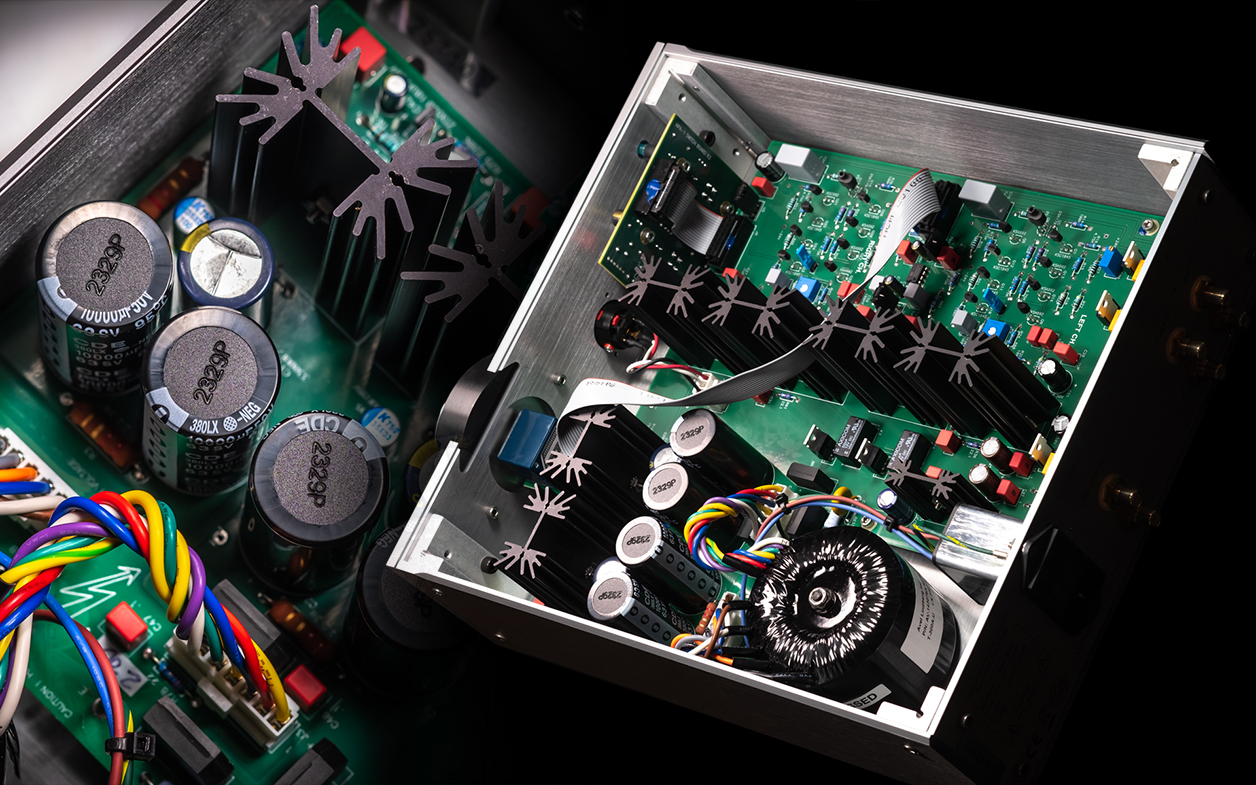
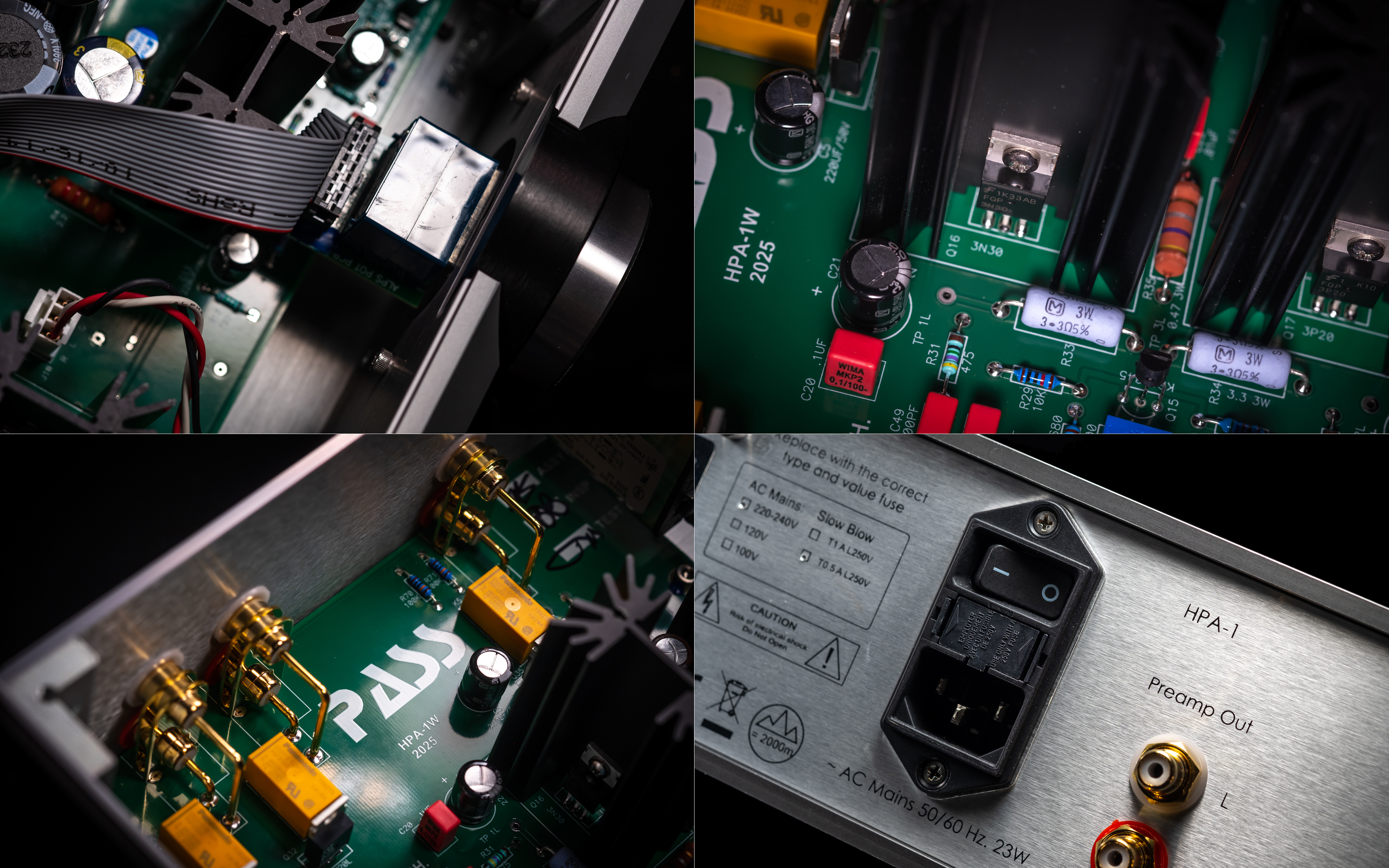
Visually the HPA-1c is identical to its predecessor so quite brutalist. Transistor-based headfi gear rarely takes on such substantial imposing form. The HPA-1c is purely analog — no DAC, no display, no remote, not even digitally controlled relay volume. As the most affordable product in the Pass Labs lineup, it represents a deliberate balance between cost, craftsmanship and sonic integrity. While most buyers will approach it as a headfi amp first, it also promises superb preamp performance like its predecessor did. Inside the HPA-1c is a single-ended fully discrete no-feedback circuit. The only op-amp is a DC servo. An unusually tall low-noise Avel Lindberg toroidal transformer with dual Faraday shielding feeds four capacitors totalling 40'000µF followed by discrete voltage regulators each with its own heatsink. The updated power supply runs ±15V rails instead of the earlier 24V equivalents. The amplification stage runs Toshiba JFETs for voltage gain, Fairchild Mosfets for the direct-coupled Class A output stage. An Alps potentiometer controls volume, all signal and power-supply circuitry mounts to a single large PCB with redesigned ground plane. My plan for testing the Pass loaner had taken shape long before it arrived. Since I don't do much headfi these days, it made more sense to first use it as a preamp. To make the necessary component swaps easier, I adjusted a few things. My Innuos server/streamer, LampizatOr DAC and sound|kaos monitors remained in play. However, Trilogy's 995R/915R pre/power combo replaced with my Enleum AMP-23R as fixed-gain power amp driven alternately by the Pass or considerably pricier Thöress DFP. Once that comparison was done, the Pass and AMP-23R went head to head on my head. To chart that performance I used Susvara Unveiled and Campfire Cascade headphones. Finally, the Pass also paired with Vision Ears VE5 IEM, partly to gauge its noise floor and partly because any such in-ear experiments aren't on Srajan's menu.
Let's first talk Pass Labs house sound. Every product from this company I encountered prior to the HPA-1c shared a similar sonic DNA. Elegance fits it best. I mean a voicing that doesn't elevate a single trait above the rest but combines tonal richness and fruitiness with resolution and openness, albeit without a clear bias toward either illumination and spatial grandeur or weight and bass authority. This voicing sits roughly midway between these groups, leaning slightly toward the latter. The HPA-1c continues that lineage. Its mission isn't to fix a system that's off but to elevate one that's already right. Yet it's also the second Pass component I encountered whose sonic identity is anchored by one dominant trait that forms the foundation for everything else. I'd already sensed this in the XP-22. The HPA-1c follows suit. When a manufacturer highlights low S/NR, I immediately think of strong noise rejection expressed through a particular kind of audible silence. That may sound counterintuitive but stay with me. The more noise strips away, the darker the virtual backdrop behind all images becomes. As that residual haze disappears, this background turns into true blackness which separates good gear from top-tier performers. This isn't a new discovery. Many audio specialists known for cables and isolation products pursue the same goal. My entire system is filled with accessories designed to suppress incoming noise so I can fully experience that eerie ink-black canvas and its many benefits. Just as the XP-22 before it, the HPA-1c granted me access to that realm within seconds.









Although the HPA-1c's ability to render pristine inky-black space might seem just one attribute, its impact reaches far. First, it keeps a host of unwanted artifacts at bay. This is why the HPA-1c doesn't know how to do sharp, piercing, garish or over-exposed. Its aesthetic in fact lies on the opposite end of that spectrum. Secondly, its sound is utterly free of grain, remarkably smooth, non-fatiguing, flowing and genuinely refined. Thirdly, that degree of noise rejection enables muscular density, a wide tonal palette, vivid colour saturation, expansive dynamics, agility and control. On gentle recordings it sounds sweet, saturated, voluptuous and serene yet easily reveals its firm, contoured, open and hard-hitting nature on heavy rock, metal or bass-rich ambient. Its charmingly organic, tonally rich personality always shines through but how much surfaces depends on the music. Most importantly, the HPA-1c makes it abundantly clear that audible flashiness manifested as roughly chiselled edges or excessive brightness isn't on the menu. As elegant and posh as this aesthetic is, it steadfastly avoids the sort of tricks which over time lead to fatigue. It's why Pass Labs hardware, including today's HPA-1c, can outlast many speakers, DACs and amps. This 'safe' tuning is one of its core assets.
The Thöress DFP is a very different far more specialized beast. Its vintage exterior and 6J5GT driver tube for a 12GN7 unity-gain buffer might suggest sound built primarily on warmth, harmonic richness and that pleasing sense of body and weight. While that impression isn't entirely wrong, it also has three surprising aces up its sleeve: enormous dynamic range, remarkable speed and a striking sense of spatial intimacy that makes foreground images large, ultra present and alive. These qualities define the DFP's character, making it unusually direct and engaging. Although I don't use it often, it's why I'll never part with it. On a more personal perhaps idealistic note, to me the DFP represents the very best this hobby can offer. That it so clearly reflects its maker's values and engineering skills is no small part of its charm. When switching between it and the Pass, I never sensed the threefold price gap between the two. It confirmed that today's Pass is perfectly at home amongst far more expensive company. Yet while both impressed, the DFP and HPA-1c were audibly different in character. With the German in play, the presentation became more incisive, articulate and outlined, quicker on its feet and more immediate, rather ironic given its tube pedigree. With it my system felt snappier and more electric whereas the HPA-1c was calmer and darker. The former's sportier attitude suited my taste perfectly though it sometimes rendered certain recordings a bit mechanical, with a touch of grain as though that was the price for the extra energy. In that sense the DFP consistently produced a more juvenile and intense sound. The HPA-1c sounded effortlessly fluid and organic throughout my playlist. 'Darkness' is often a polite euphemism for limited resolution, intelligibility or dynamic range but not in this case. The HPA-1c's inherent blackness and firmly grounded tonality yielded a presentation that was exceptionally informative, dynamically expansive, coherent and always ready to entertain. If the DFP projected its brilliance outward, the Pass glowed from within. Where the former was radiant and extrovert, the latter felt sensual, grounded and quietly confident yet capable of surprising muscle, agility and speed when called upon. If the Thöress were a DAC, it would be a modern ΔΣ design with DHT in its output stage. The Pass would be a contemporary R2R counterpart. All told, the HPA-1c left me thoroughly impressed as a preamp; a remarkable feat for a device conceived primarily as a headphone amp.