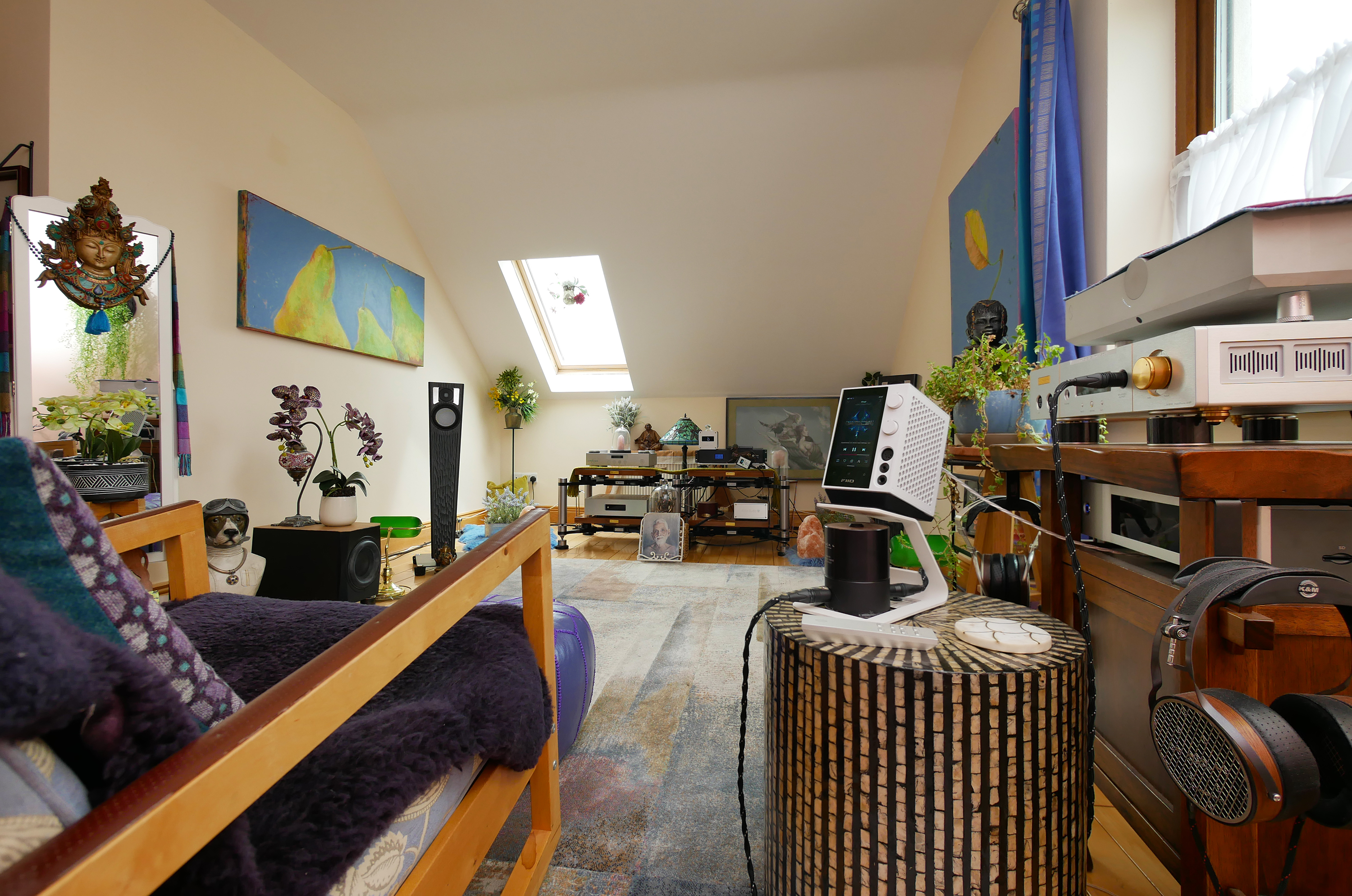
 The sound-chaser comparisons seated the analog crossover, power amplifier, subwoofer and passive noise trap in either the Vibex or OnFilter to require complete shut-down of these components. The front-end gear of SD-card transport, USB bridge and DAC with analog volume remained powered up throughout as it plugs into its own power spur due to distance. This test showed that there's more to sonically relevant power distribution than maximum EMI filtration before quality power supplies in bespoke hifi kit apply their own ripple suppression and smoothing. Or was Vlad's generic power cord pipped to the post by my usual LessLoss cord on the Vibex filter? Its 15A end meant that it wasn't interchangeable. Either way, my usual AC/DC filter rendered the sound more dimensional, layer specific and in higher contrast or relief. The OnFilter was flatter, coarser and less teased out. I certainly couldn't point a finger at specific components which the OnFilter lacked or used at lesser quality. I couldn't even open the thing. I only know that the Vibex was designed not just on the bench but with extensive listening. The OnFilter used a precision scope and complies with international safety codes and industrial specs but involved absolutely zero listening. In movies it's "no animals were harmed", here "no ears were used".
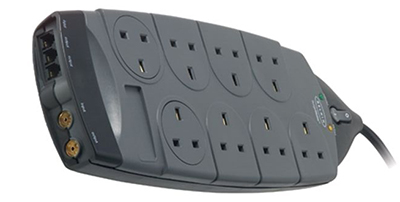
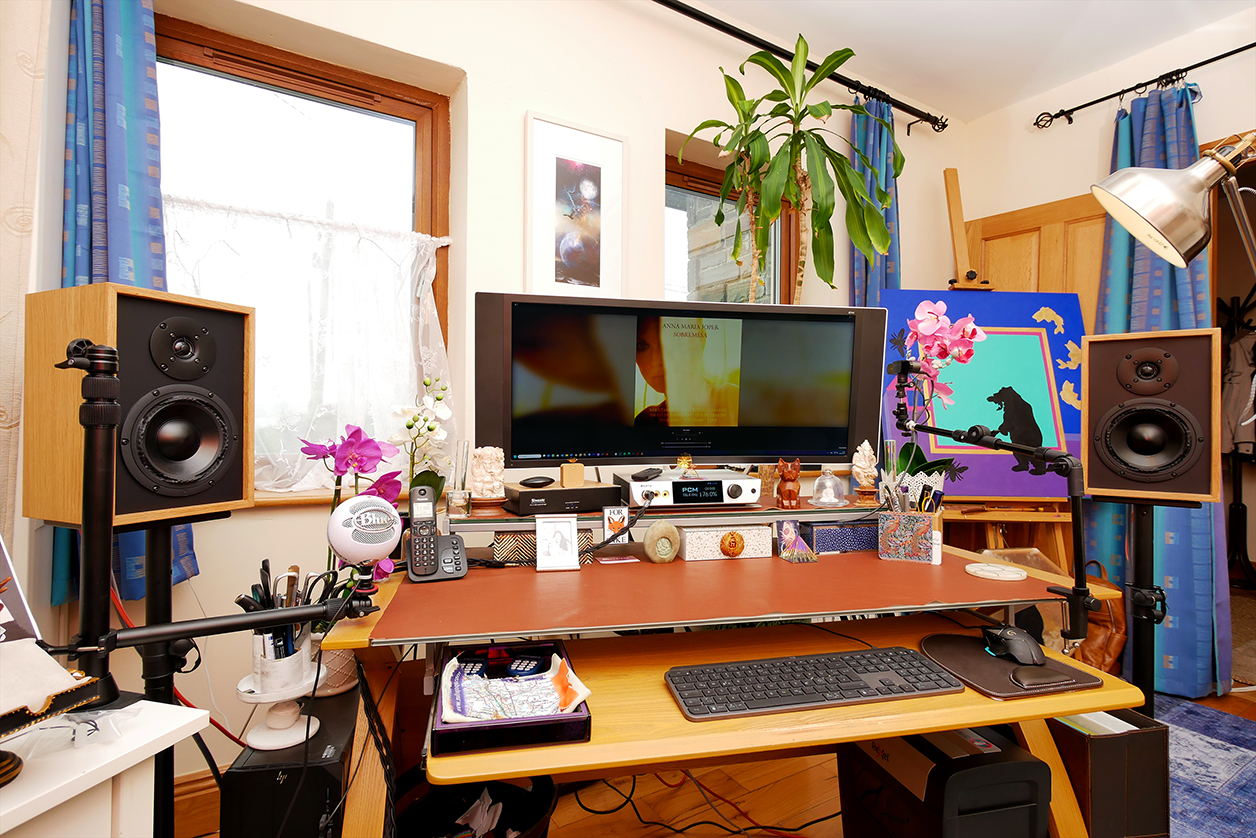
For Vlad to adapt his PDU beyond current surge protection and proven EMI suppression should demand extensive subjective listening. That might involve comparisons of parts that measure identical but sound different. It might challenge his beliefs about audiophile myths. Could the prospect put the maloik on a textbook engineer, kibosh his best-laid ponders to pander to us? Might he be better off filling incoming audiophile orders as is? Don't stress success? Keep pricing happy? Let extremists shop elsewhere? Such riddles are Vlad's to solve. I had more systems to test. The next stop was my office desktop. Here a high-power Win11/64 workstation and 34" monitor, USB bridge, DAC/pre and DSP active monitors plus sundry lights all hang off a wall duplex via this Belkin SurgeMaster. This AC treatment is the opposite of posh. Call it poor, plebeian, functional without any frills. Electric Avenue stuff. Would that give the OnFilter a clear edge?
First the gizmo freaked out past the occasional 1'000mVpp (!) reading. Its yellow bar flickered well past the halfway point. For my first and only time as it turned out, its tiny tinny speaker made nasty noises. This was far worse than the load of the kitchen refrigerator or anything still to come. The OnFilter instantly silenced the gizmo's squawk. Now the yellow line showed just one bar, the mVpp values moved between 20-50 for a massive EMI reduction. Unholy crap? To find out how crappy, I compared the Singxer SU-2 USB bridge, Luxsin X9 DAC/pre and DMAX P61 DSP active speakers with class D switch-mode power all plugged into the Belkin bar with surge protection to being plugged into the OnFilter. One of the music tracks I used was the lilting "Mae Negra" of Anna Maria Jopek's Sobremesa album. It guest stars Paulo De Carvalho whose vocals are pure sunshine.












 Not only is it a lovely bossa-flavoured tune with gorgeous male and female voices. It has real strings. To my ears bowed strings are most susceptible to baked-in rust. It's a kind of metallic grit that most insidiously embeds in violins, violas and celli. It outs itself easiest upon subtraction. And I certainly noticed its exit with the OnFilter in play. The same factored on "Bolero Triste", a well-recorded all-instrumental equivalent on Matthieu Saglio's El Camino de los Vientos. Vlad's black box sounded more refined, smooth and silken. A subliminal sizzle or etch like hot oil in a pan had left. My small office proved to be quite the EMI swamp. Bereft of power distribution of any ambition other than multiplied outlets, OnFilter's big measured success held hands with equally clear sonic success. Goal! The strategizing smart money might now project. Could fronting a passive power strip we already own with OnFilter's small CleanSweep be ideal for EMI-intense conditions? It certainly became a conclusion I entertained. From that perspective, the smaller more affordable model could be the silver bullet?
In my first two systems, I had two different results. The fully tweaked rig with power distribution which already nicely suppressed EMI if not as low as OnFilter, the PDU found itself outclassed. In my office whose power distribution was Computer Emporium level whilst the gizmo threw conniptions for the level of EMI detected, the PDU had the plain advantage. My main room held another op to triangulate the OnFilter and see whether additional anecdotal evidence could generate a firm conclusion.