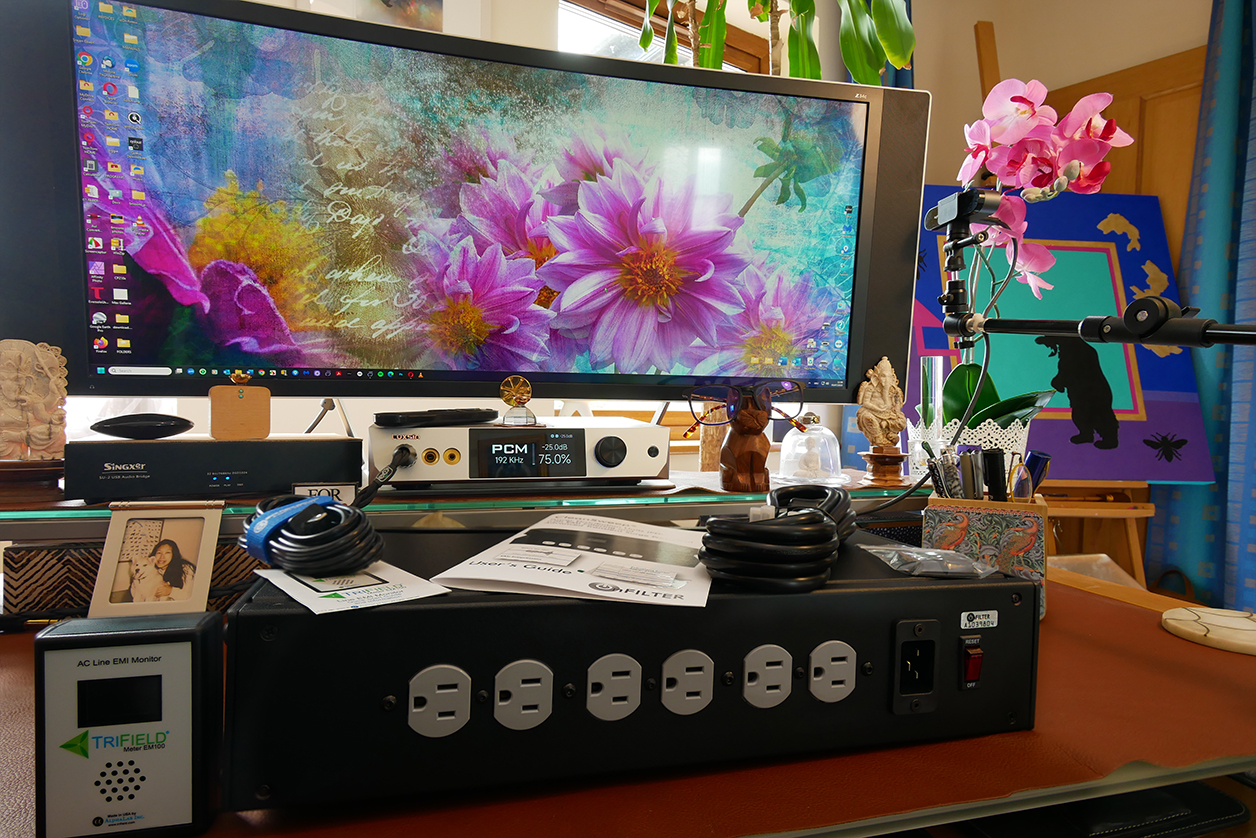
Perhaps because it arrived from the land of the brave and free where cannabis is legal and drug use rampant, I encountered 'opened by customs' tape on both the outer and inner cartons but no other evidence of disturbance. My package included the bubble-wrapped filter, a thick industrial 3m power cord with required 20A end and desired UK wall plug; four spare bolts; four glue-back rubber bumpers; a user's guide; and as extra the TriField gizmo with its own power cord and manual. Fitted with a number of tamper-proof bolts, the OnFilter innards clammed up like Dracula on a sunny day. Two 'warranty void if seal is broken' stickers on the belly reinforced Count Vlad's insistence on leaving his guts alone. How to critique his proverbial black box from an audiophile perspective?












The top cover rang like a son of a bell. None of its edges fix to the case in their middle, just one bolt per corner. Only our sort frets over ringy sheet metal. Today of course we're the designated jury, judge and executioner. It wouldn't take much to appease our haughty lot. As is, its majority will call the casework too lightweight. The bad-vibe brigade also wants proper isolation footers, not stick-on bumpers. Snazzier casework and isolator upgrades will add costs. Sonic benefits could be marginal to nil. Perception. Like Physics, it's a heartless ditch. From the outside I saw nothing suspicious about the socketry. Its industrial origins have it look like any other and the US outlets of my sample had surprising mechanical bite for really firm connections. In most home installs a 20A IEC is obviously non-standard. Wranglers of 15A-terminated boutique power snakes will feel disenfranchised. The resettable power breaker is lit. Listeners doing their best work in the dark could prefer that it wasn't even if its rear location causes just marginal glow.
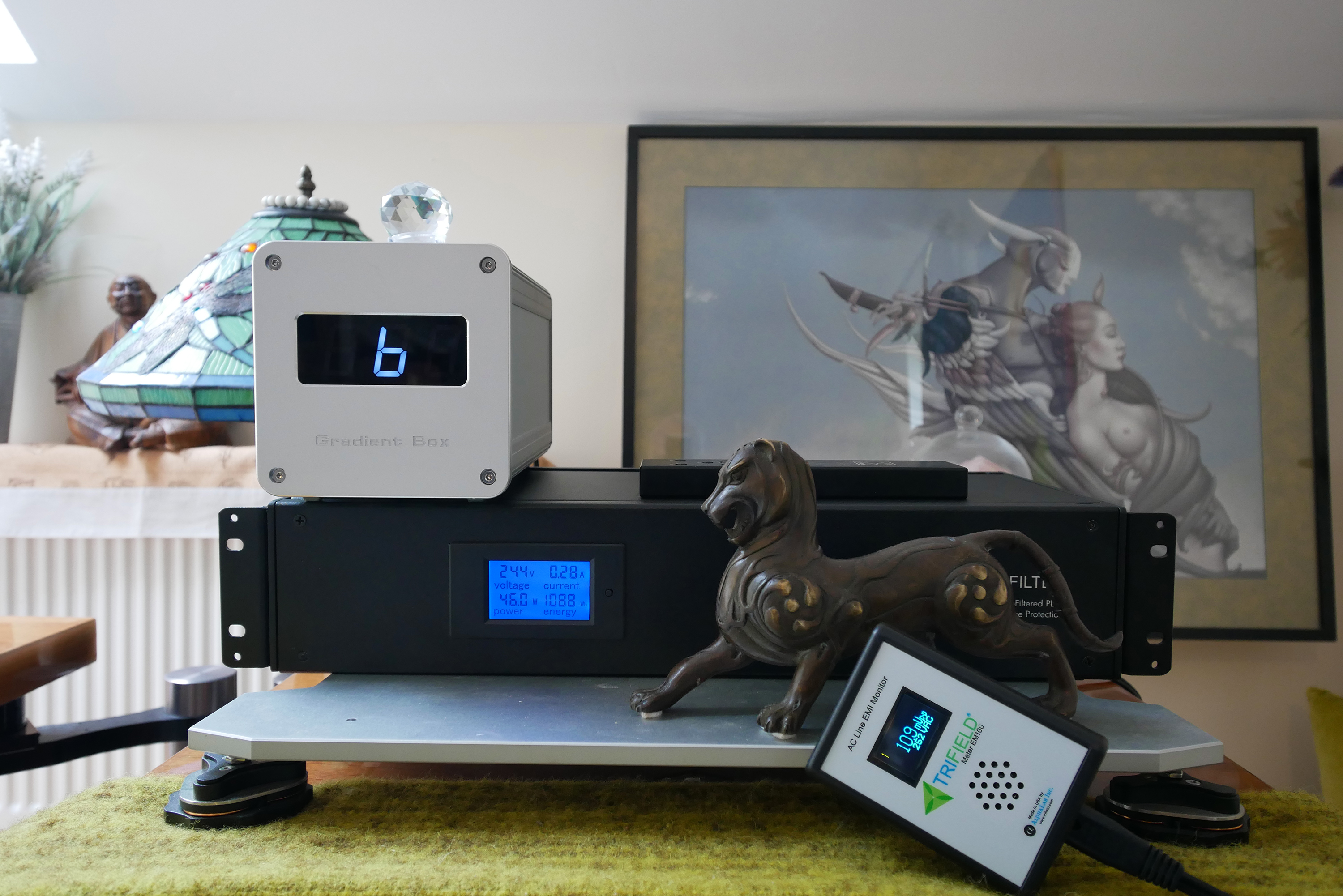 The gizmo said 252VAC, the OnFilter 244…
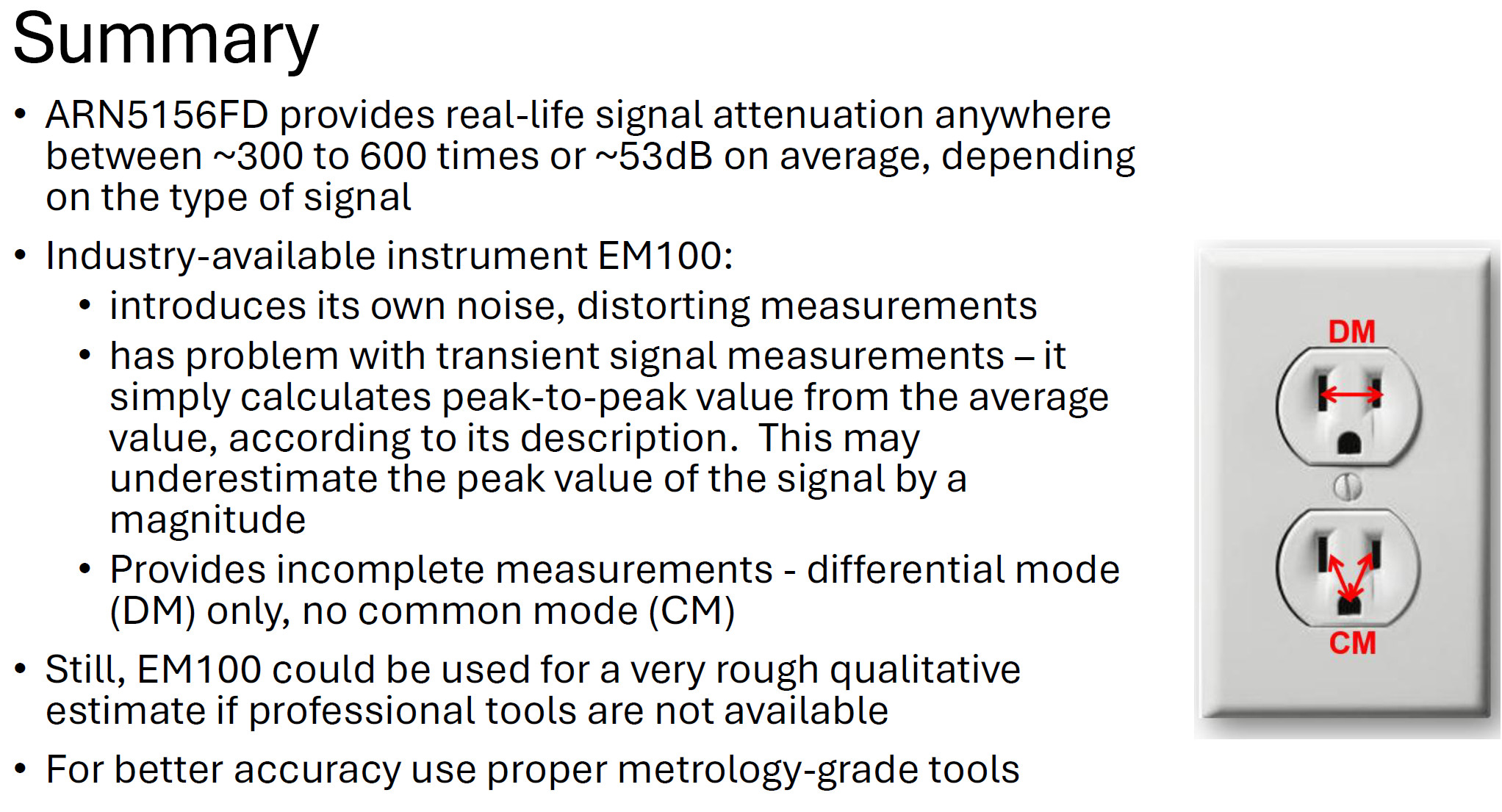
The laser-etched white writing on the fascia is crackingly crisp. It loses no points on execution. Less-is-more freaks could still prefer it wasn't there. The display itself is dark blue on royal blue. That's low contrast but perfectly legit from up close as its size mandates in the first place. Once the novelty factor of tracking our power consumption wears off, certain homies could prefer if the display could defeat. Only light up on demand. Plugged into a kitchen wall socket, it showed voltage of 242V, power of 0.0W and current of 0.00A since I had no load plugged in, energy of 1'086Wh. When the gizmo plugged into the same kitchen outlet, it showed rapidly flickering 48-232mVpp of EMI spikes. When the OnFilter seated again in the wall socket and the gizmo in one of its own, that reading suddenly alternated between 9.8 and 11.2mmVpp. Knowing from Vlad's own tests that the gizmo tracks only about half of the EMI reduction his device really performs, we'd estimate that my values missed ~50%. Even so, the difference which the gizmo captured was undeniable. The PDU did what it says on its tinny tin. Truth in advertising. How quaint. Time to advance from half-empty kitchen fridge to fully stocked hifi bar in the lounges. With the upstairs system at idle, the gizmo's wall reading flickered rapidly between 42.3 and 124mVpp. With the gizmo in my usual Vibex AC/DC filter, the flickering stopped. Now the figures merely changed more slowly between 25.2-33mVpp. Despite making no specific EMI cutting claims, my Vibex filter was clearly effective. Yet seating all my kit in the OnFilter instead further halved the reading to 9.9-10.9mVpp. Vlad's device clearly cut still more electromagnetic interference; for pennies on the Vibex pound. With an audiophile jury keen on audible benefits, what was the sonic so subjective verdict?