Preamplitude. It's another feature that must inform a conclusion. Though costing more than twice, Laiv's Harmony DAC lacked it and headfi facilities. Their dedicated headamp/pre dropped the converter stage. My audiophile career ditched active pres when I discovered John Chapman's TAP-X, a relay-switched TVC which later adopted Dave Slage's tapped autoformers. As an alternative I discovered E.J. Sarmento's STP and its STP-SE upgrade with denuded Vishay resistors, preamps under Wyred4Sound which below unity gain applied no voltage gain to act as passives with active i/o buffers. This finally led me to Pál Nagy's icOn autoformer passives under his LifeChanger Audio brand. Having already built multiple systems without the additive if speed/res-reducing action of active pres for many years, I've since ditched the whole breed for D/A converters with analog volume. They include the iFi iDSD Pro Signature, COS D1, Cen.Grand DSDAC 1.0 Deluxe and Sonnet Pasithea. Costing 1/3rd of the least of those, the X9 not only adds headfi which only my iFi does. Like them it doesn't cheap out with digital on-chip volume but goes analog; and discrete switched resistor matrix at that.

To judge the X9's variable output feature, these DMAX P61 might seem verboten. They're DSP actives with sophisticated time-correction code. Puritanical notions point at their A/D conversion for instant disqualification. Here too times changed. Modern A/D converters are incredibly transparent. My iFi proved it. The differences were dead obvious. The thrice-priced Brit was more organic, creamy and dimensional, the Chinese challenger more transient energetic, fresh and stark. For preamplitude with an ultra-accurate monitor, I give iFi a clear nod for greater connective-tissue presence and lengthier decays. Just as clearly, headfi mode as the X9's true focus gave it the lead. Here's another of its niceties we already covered in passing. Rather than being live simultaneously as tends to be standard, the X9's outputs switch so connected gear not currently selected won't load down the circuit. To see how classic passive monitors of very different voicing would respond, Zu's new Method monitors had already departed Köln/Germany on their way to Ireland's Shannon. So I set up my AMP-23 as their driver in power-amp mode hence with Enleum's gain at max.
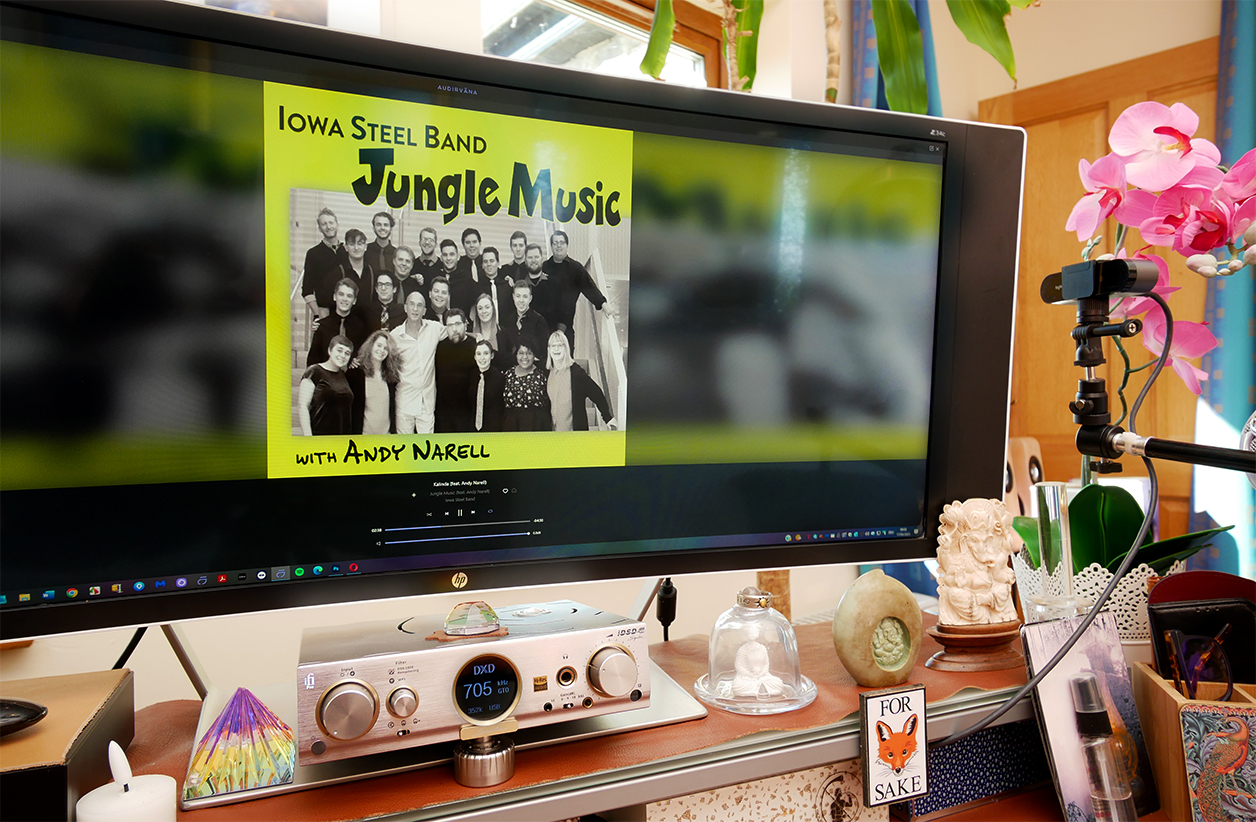 Lacking Luxsin's far sharper more sophisticated angled display, I cloned the same effect by canting the iFi up. How quickly one can get spoiled.










With the American monitors the X9's R2R attenuator sat at ~ minus 25dB for standard SPL so with beaucoup gas in its tank. In the nearfield high loudness can simply get obnoxious quickly. Far more important is being able to play at civilized levels so our ears go the distance in pleasure not pain whilst the tunes show up in full colour not pale and malnourished. With the DMAX actives being rather more down-to-the-bone revealers, they had mapped a greater delta between iFi and Luxsin. Though this latest Zu speaker offers more presence-region and lower treble insights than its stablemates with the larger 10.3" widebander—plus this throat-loaded tweeter kicks in at 5kHz a good octave lower than Zu's other coaxials—the overall level of resolution doesn't equal the Slovakian oaks. This rather shrunk the difference between these variable converters to have the 2/3rd savings over the iFi dominate that discussion. With these speakers I'd go after the Luxsin and secure the superior headamp.
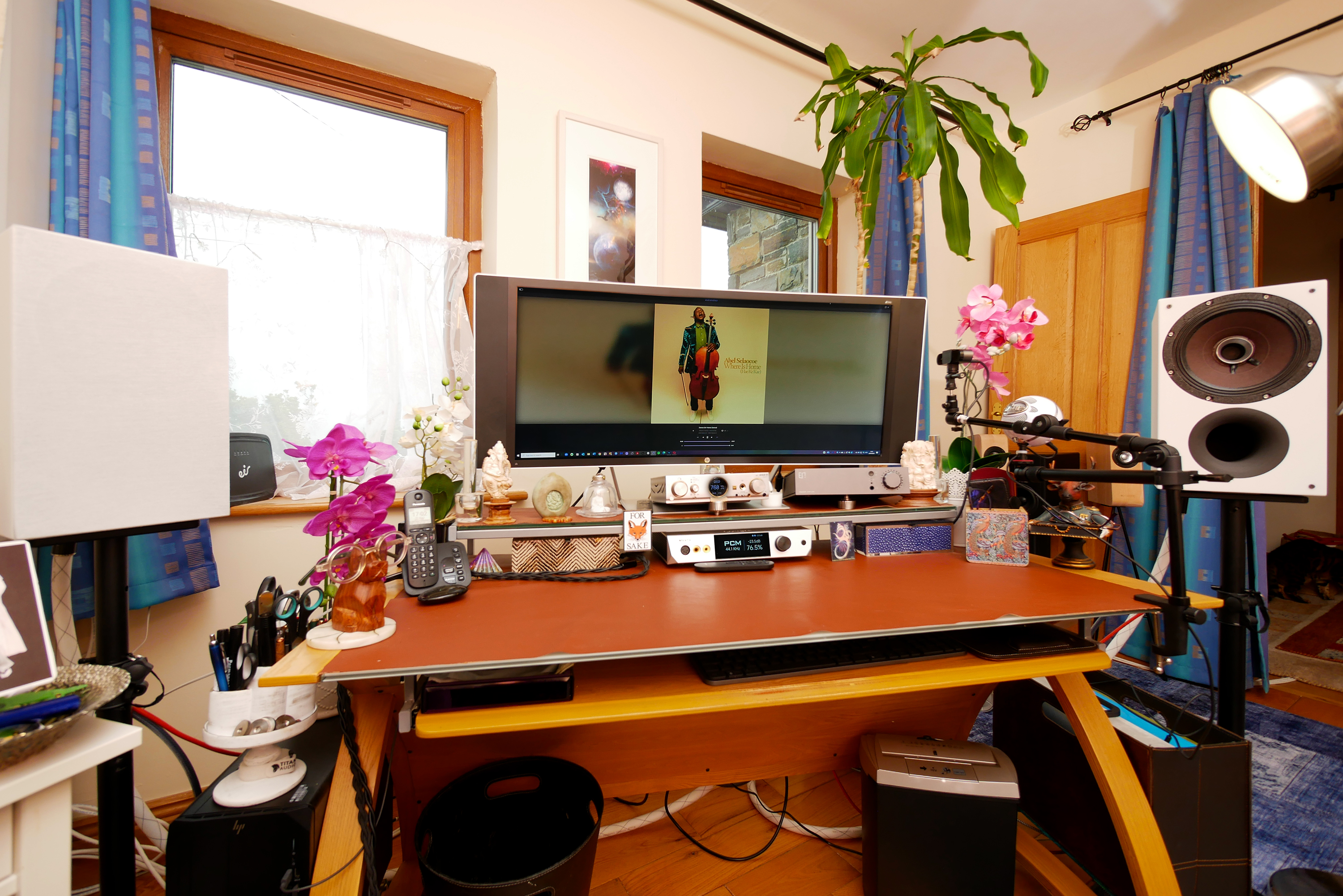
Sadly the current always-on WiFi/Bluetooth transmitters needled and fogged up my brain despite having removed the antennae and their wiring. It wasn't as bad as stock but I couldn't live with the X9 as is. The enclosure isn't sufficient to contain the constant radiation of microwaves which USB doesn't require to stream off the network. So I popped the lid again, redid the antennae leads and repacked the deck to return to Luxsin. In the absence of an RJ45 network port, WiFi is obviously essential for some of the X9's features and wireless users in general. Check. Just please make it software defeatable so fossils with last-century brains like yours truly aren't left out in the cold.
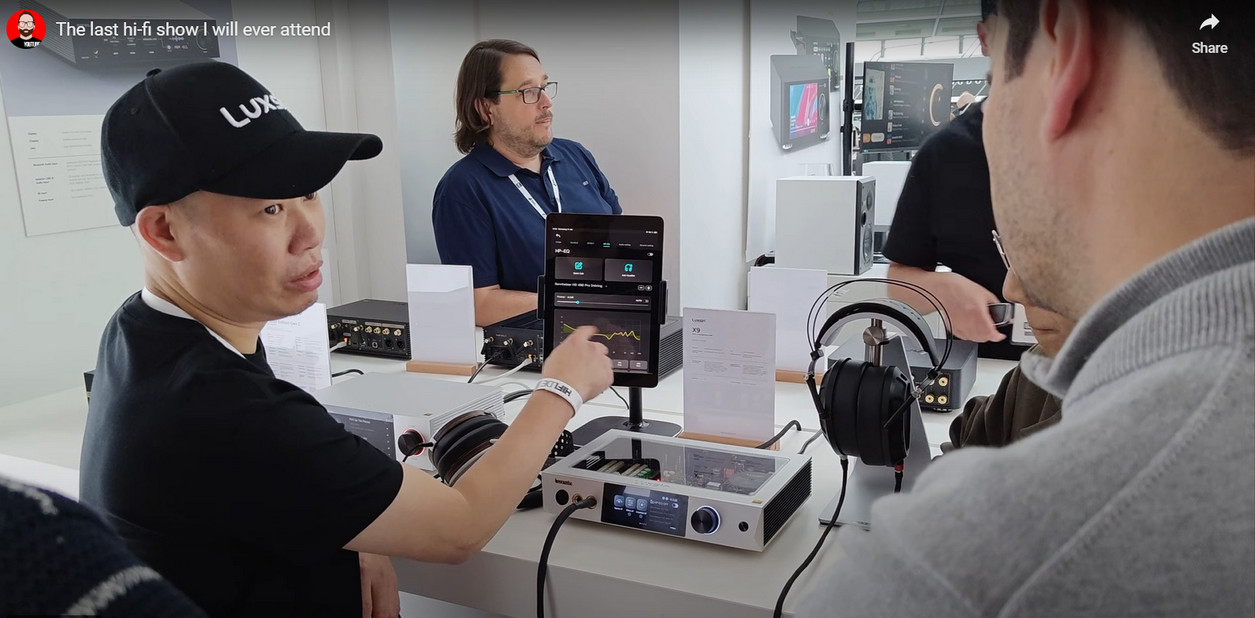 From John Darko's Munich 2025 video showing marketing director Terry Jiang demo the EQ curve library feature of the X9.
Conclusion. 2024 gave us Laiv Audio. 2025 gave us Luxsin. Both rank highly in my book of hifi discoveries. It's all too easy to become blasé and inured when good things keep happening. One begins to take them for granted. One overlooks the efforts involved, the years of behind-the-scenes work preceding any new launch. Thanks to the Zidoo/Eversolo umbilical, Luxsin enjoy serious in-house software engineering to make the smartphone audience feel right at home. On the desktop a crystal-clear responsive touch screen really is the cat's meow. Integrating access to a Roon opra-equivalent library of custom EQ compensation profiles for already 2'500 different headphones without a license fee adds a few lives to our cat's seven. Purr City.
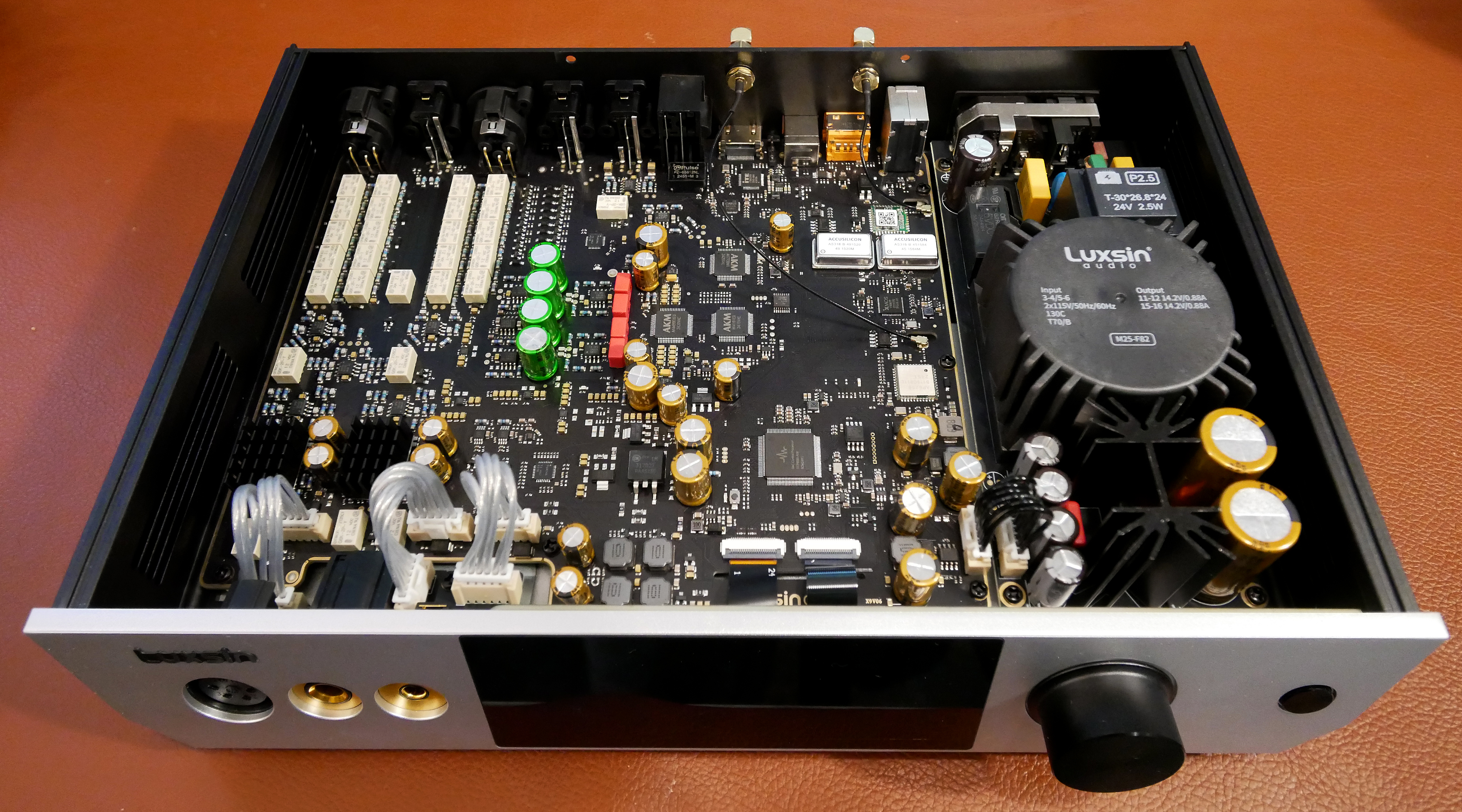
That I couldn't avail myself of said feature wasn't the fault of Luxsin but my brain's. I tried the 'update' USB port with an RJ45 adapter to wire to my router but couldn't access the Internet. Here's to hoping that Luxsin's IT team can write a firmware update to open a wired LAN back door even if just for short-term use to download a few EQ profiles. Not having heard an Eversolo, it's probably too cheeky of me to proclaim the X9 an Eversolo for headphones. But just how off could such a claim be, demands Cap'n Obvious? As a newbie to the house (sound) of Zidoo, I'll paraphrase the X9 as playing it fresh, resolute, controlled and keenly enunciated so more transient than decay centric. On subjective timing I'll call it taut, tensioned and dry rather than relaxed, fluid and wet. That's the default tuning. In HeadFi mode as this deck's declared raison d'être, seasoning with crossfeed and stereo width shifts those parameters. It's my contention that for those to telegraph as usefully as they do relies on starting off with high neutrality and precision.
 Note the discrete rather than standard ribbon wiring for the headphone outputs.
For some that stock voicing could be the end. For others, customizing it with all of the X9's tuning facilities could be the lengthy beginning. Those are its somewhat chameleonic charms whilst 4W/32Ω should fill the sails of most all loads to a full clip. So there's rather more to Luxsin's compact X9 than its sticker or physical stature let on. With Headfi being how most of today's 20-somethings consume their tunes, the X9 looks at a very broad swath of prospective buyers indeed. And for them rather than our hobby's silver-haired fat cats, the price seems just right. Even though current politics are a very different colour indeed, for hifi we really live in a new Golden Age. And if I may say so, Luxsin just added some shine to it!
Luxsin reply: Hi Srajan, thank you so much for the review, I truly appreciate the time and effort you put into it. I'll check with our team regarding the possibility of a USB network connection and/or software defeat of WiFi and Bluetooth once I'm back in China next week. – Terry Jiang
Publisher's addendum: As promised, by May 28th Terry's email arrived. "Attached is a custom firmware specifically for you. Please copy the file into the root directory of a USB-A drive to perform a local update. With this firmware, WiFi completely disables. As for Bluetooth, the BT chip only powers on when you select Bluetooth as the input source. It remains unpowered at all other times. Please note that the X9's USB ports do not support network functionality so WiFi-related features remain unavailable even with this firmware. This is the best I can offer at the moment given the current hardware limitations." Once Terry's .pkg file loaded and installed, the display tracking progress, my antediluvian brain was promptly in the radiation-free biz. Talk about going above and beyond. On behalf of the card-carrying brigade donning tin-foil helmets, thank you Luxsin!