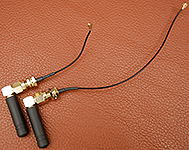
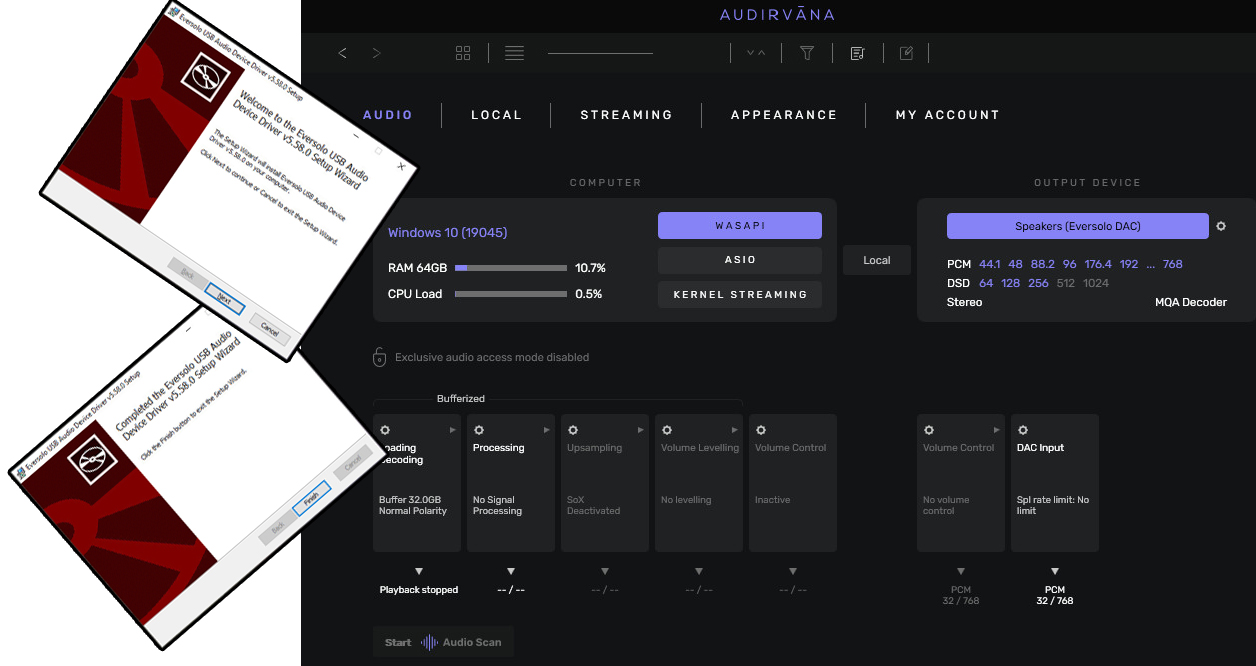
 WiFi first. To import into the X9 the headphone/s of our choice for EQ profiles, we must run WiFi. Being allergic to its microwave radiation, that left me out in the cold¹. More network-savvy shoppers would have known by the absence of an RJ45 port. Yours truly didn't get the memo. No matter, I could still explore xfeed which comes in three doses: default [700Hz, 4.5dB], popular [700Hz, 6dB] and relax [650Hz, 9.5dB]. But first things first. Using a Win 10/64 workstation on my desktop, I had to download Luxsin's Windows driver. I then had to set Audirvana Studio to the new output device which appeared as 'Speakers (Eversolo DAC)' capable of PCM768 and DSD256. I ran Audirvana's SoX upsampler at 176.4/192kHz as per usual first. Using Luxsin's auto-gain feature via the 6.3mm port, both my aune SR7000 and Final D8000 came up as 50Ω so very close to their published 55/60Ω specs. Raal 1995's Immanis with 32Ω transformer instead registered as 16Ω. The included plastic RC wand needed twin AAA batteries to then relieve me of posting finger prints on the X9's glossy glass. Setting display and knob light ring to max brightness for the first photo op and a VU meter option I fancied, I hit 'play' and had sound.
__________________________
¹ Feeling the microwave activity on my brain, I asked Terry how to defeat it. "There's currently no option to turn it off in software. If you want to completely disable it, I suggest you remove the WiFi antenna and disconnect its cable from the motherboard. This requires opening the top cover and performing the process manually." Given that the Bluetooth and WiFi antennae leads don't hard-solder to the board but use micro push-on connectors, that surgery was child's play and my brain just as quickly seemed out of the frying pan. I had the same issue then remedy with my iFi iDSD Pro Signature DAC and Gold Note IS-1000 Deluxe integrated. Being sensitive to WiFi radiation puts me in the extreme minority. Still, our kind would really prefer if manufacturers didn't make its constant emission the fixed default but allowed the user to turn it on/off at will like my FiiO R7 does. Such radiation is UHF noise. Less is definitely better!
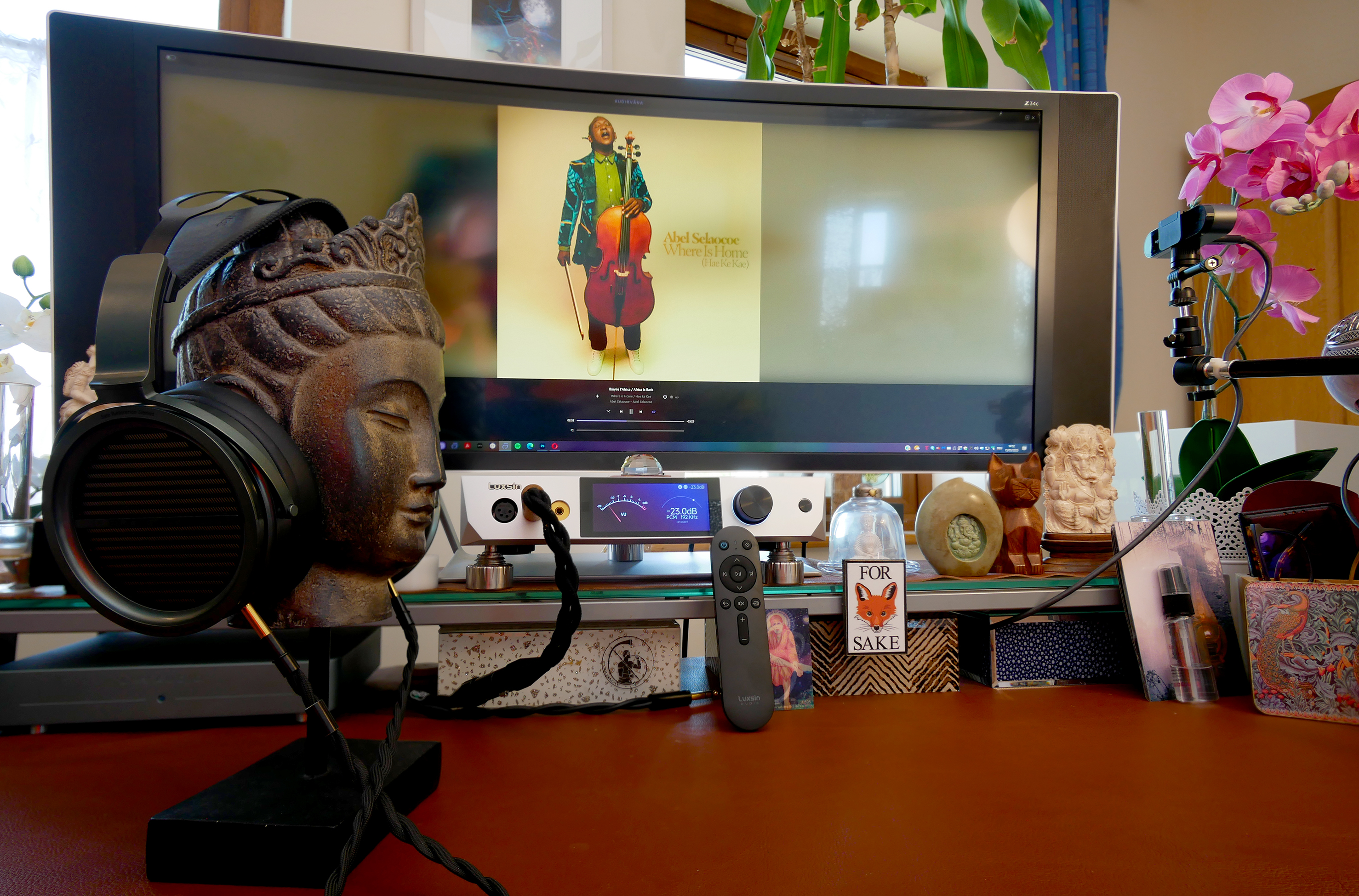
I set the attenuator to 0.5dB steps—you might prefer 1dB, 2dB or 3dB—and bypassed extra processing. Each time we change volume, the display cleverly defaults to momentarily just large dB figures well visible from afar. Preamp mode really is catered to. Bravo. Another shout-out is due the UK-style generic power cord. Someone at Luxsin had paid graceful attention to my Irish locality and swapped the EU Schuko plug for an imperialist Brit termination. If the devil's in the details, this one had his Ps and Qs sorted. I tried Audirvana's resampler set to DSD256. By using USB-B not coax, I had instant satisfaction. The devil wears Prada? I might try crossfeed but cross dressing in high heels? That would be a step too far, hairy calves, twisted ankles and all.
 Use the mouse-over loupe enlarger or open image in new tab to see at full size.













We could shave legs with digital filters but wouldn't cut any stubble. Their contributions are minuscule compared to PCM⇒DSD256 resampling vs pure PCM; or Audirvana's SoX vs r8Brain algorithms. We can trim the X9's analog input gain by ±12dB; shift channel balance by ±15dB; set ARC or eARC and our favoured boot-up volume. Outputs—headfi, RCA or XLR line-out—switch in a sub menu. Strangely the pre-outs aren't selectable whilst a headphone remains plugged in. A future firmware update might remedy that?² Under the 'effect' tab we have stereo width from mono to 100; style (classical, dance, popular); tone (±10dB bass, mid and treble controls); and subwoofer which includes low-pass hinges from 40-300Hz; 1st thru 4th-order slopes; ±15dB of gain; and mixed mono or stereo output. Purists in their spit-shined boots will tremble to call it all the devil's workshop. But these functions can be bypassed so they're overreacting. That's simply part of their job description. Most of us have to work for a living.
__________________________
² "This isn't a bug. It's actually something we designed on purpose. Since the X9 is mainly a headphone amp, we made the headphone output top priority in the output order. We value your feedback and will gather input from users to evaluate whether this output behaviour should be adjusted in future updates." If I'm the only one to mention it, it should certainly stay as is. Laudable is simply Luxsin's willingness to listen to feedback. The final decision on what best serves buyers always remains with the maker.
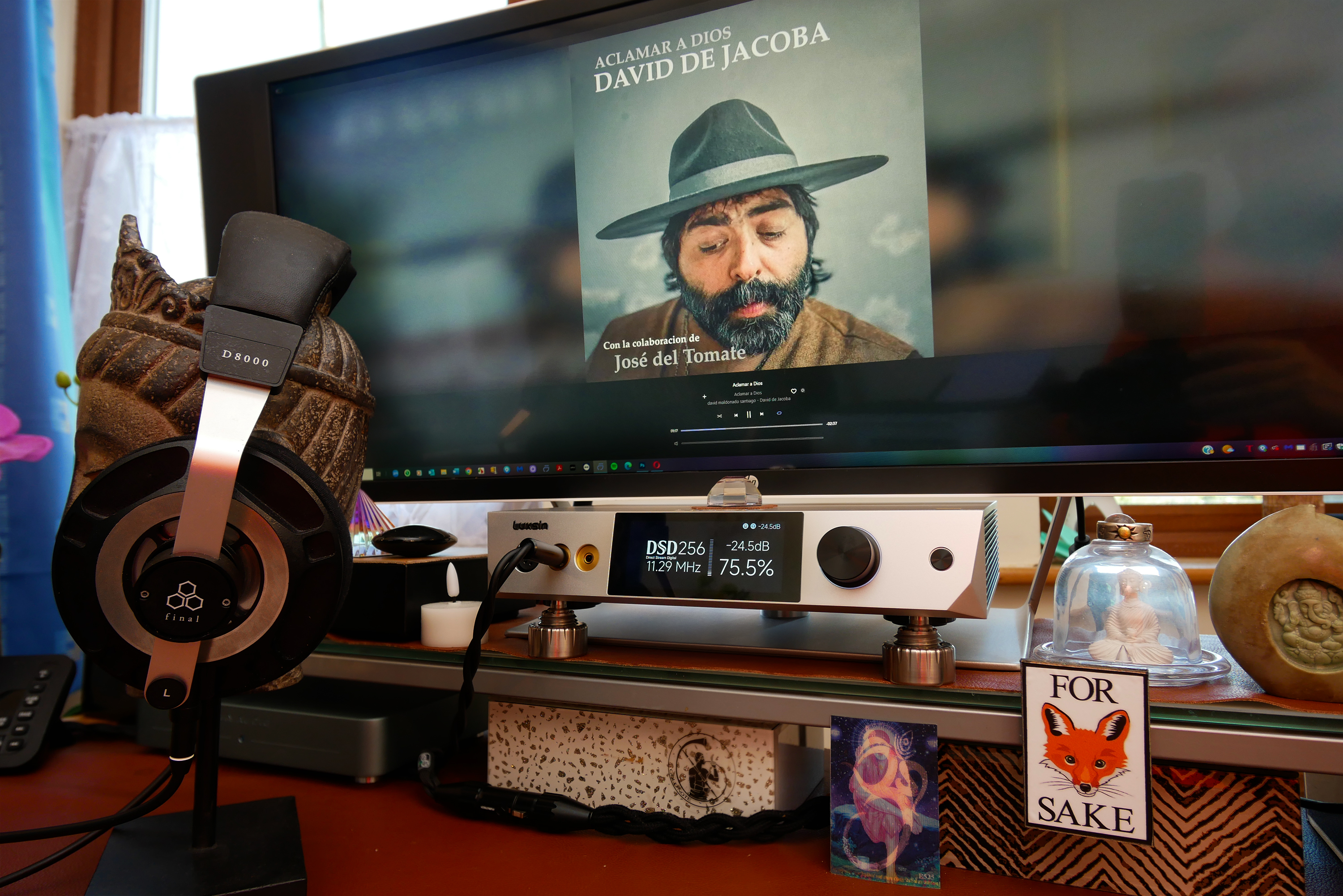
Before we go sonics, let's briefly comment on the X9's fine finishing and industrial design. Though it's Luxsin's maiden product, the backstory pretty much guaranteed a mature launch which my physical inspection confirmed. Design DNA is a thing. So is being tethered to a big mothership. Here it even includes running warm to the touch as though it whispered a faint echo of class A bias. Further to posh, my triple-ribbon Immanis off the XLR4 port hit full cruising altitude at -15dB on the dial for plenty of untapped headroom; or ECM-style productions that peak at -10dB to set their medium level lower than red-lined Pop. If we black out the display, the volume knob's light ring blinks very lazily. It gives us visual feedback that the deck is 'on' should we close shop and forget. Now we too are fully 'on' about the X9's many functions. Time for first listening impressions.