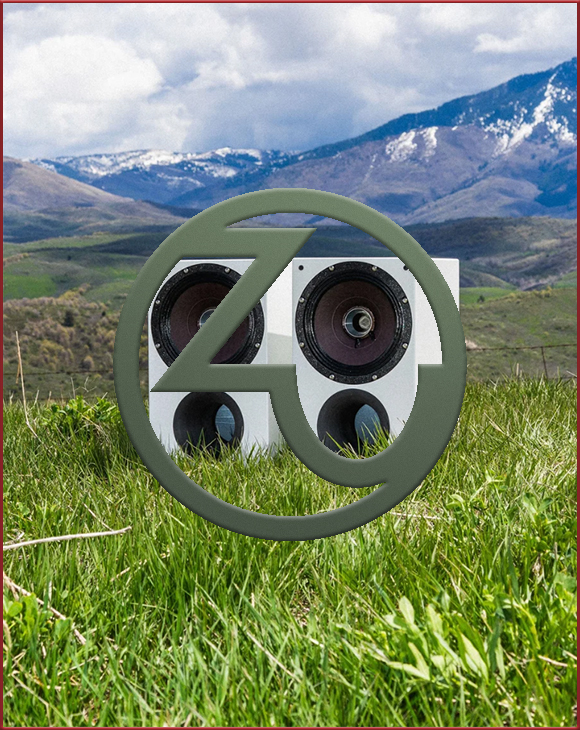
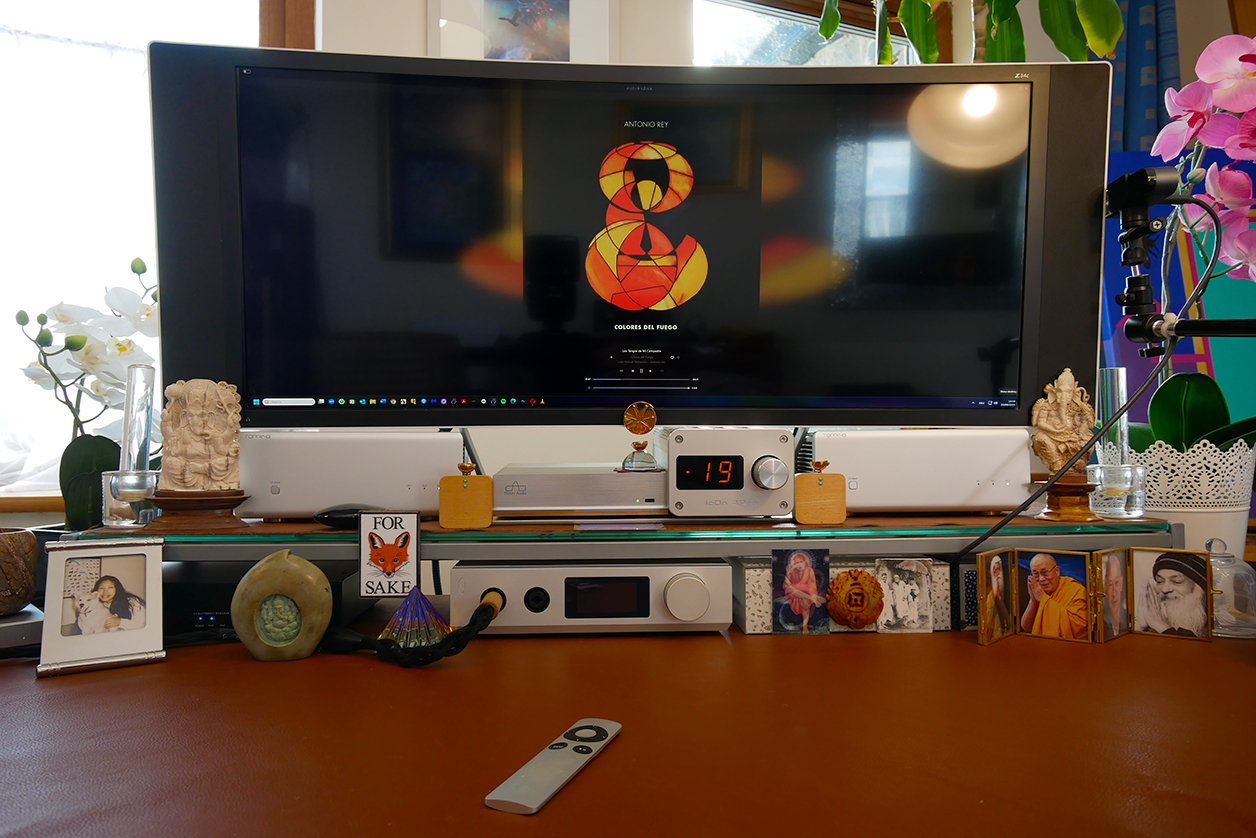
 Topping my desk are Topping class A/B discrete B200 monos with big outboard SMPS. They're the best-measuring amps ASR ever tested for S/NR so raw resolution. They replaced 10-year old Ncore 500-based Nord amps with Rev. D discrete class A input buffers. Whilst those dry damped class D monos had languished in my hifi cemetery with no faith in a second coming, they did find themselves unexpectedly recommissioned when Grzegorz Rulka's Virtual Hifi Viper landed on my 28-inch tall NorStone perches. These compact monitors in 3D-printed cabs with textured surfacing run a compact subwoofer-style driver full-range to 5kHz. There a small dipole Mundorf AMT takes over. Dual opposing passive radiators larger than the main driver reinforce the low end for a quasi 11½" two-way.
The outré choice of Dayton carbon-fibre Epique woofer with matching radiators builds in tonal meat with response to well below 40Hz. Avoiding darkness is excellent off-axis response plus that terrific open-backed Mundorf tweeter. When juiced by muscle amps, testosterone not dimness, chunky not lazy is the upshot. Because that tuning builds into the transducer, my choice of amps chased maximum clarity with minimal personality. This felt extra desirable when Thorsten Loesch's flagship DAC for iFi—also capable of 1'024 DSD resampling plus two optional tube modes none of which I use—hangs its own meat rather than leans it. In that context, Charlie bled out some virtual air from the tone tyres whilst driving up insight and articulation.
For my tastes this change in tuning was an attractive step forward. The sound remained organic and texturally rich whilst stage depth opened up. So did separation into layers and image spacing. In this round which, again, had appropriated the iFi DAC's usual power supply for Charlie, our little Norseman hadn't just secured parity but a lead in finesse, elegance and fitness. It dropped some subcutaneous fat to firm up and clarity was higher. Once again this categorically nixed headphone drive, remote-controlled volume, XLR outputs and more. Yet for what my ears registered, Børge's mini wore the medal. To make it work did necessitate the icOn 4Pro volume control; and an extra interconnect. No free breakfast even if you don't do lunch. But ears are strange fellows. They live in their own world. Significant others and accountants don't have the key to it. Instead there's a sign on the door: gone fishing.
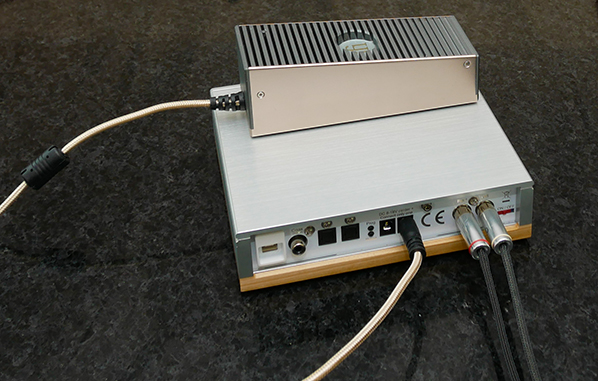 If that sounds like a whole lotta chill, affirmative when USB wall power through Apple's little adaptor is our bait. With that my firm grippy sound clearly lost drive so colour intensity, tone heft, dynamics and presence. It registered very much like a system tuned around an active preamp which suddenly goes passive or DAC direct
To not rewrite any of the above, all of it referenced iFi-quality power, not USB. To hear Charlie at his best, invest in something classier than 0.5-2A drive. Because my SilentPower units created such a gap and priced right on the nose, here's a link to their product page.
Still on provisos, on my desktop Charlie stuttered when I executed certain commands in WordPress, Opera or Outlook Express whilst streaming Qobuz Sublime through Audirvana. This was despite being isolated from my Win11/64 workstation by Singxer's SU-2 USB bridge. My iFi DAC never exhibits audible interference when parallel processes shake my USB tree. This won't be an issue if all you do is listen. But if you multi-task whilst hifi'ing as I obviously do in my work space, it's an annoyance. Don't drink and drive becomes, listen naught else. That disqualified Charlie in my office.
Off he hoofed it into the main system to replace its Sonnet Pasithea. That's my highest-res DAC based on split-level R2R processing whereby the lower bits get processed like the higher bits then amplitude corrected in the analog domain to improve low-level linearity. By making the resistor ladders' reference voltage variable, Pasithea also builds in non-lossy volume control. Once again Charlie held hands with the icOn TVC whose XLR outputs drove my usual 6m interconnect.









Before revving up attention zoom to chase potential minutiae, my casual rounds with Charlie already knew that he and the goddess—Pasithea was one of the Greek Graces—belonged to the same sonic aesthetic. Whilst seeming not as microdynamically intense or high contrast as usual, nothing about my sound's style changed enough to telegraph any personality shift. That was a real achievement. Before direct A/B might diminish its shine, I listened to Charlie without comparisons. Make him my new status quo as though he were the ne plus ultra. Because, in the world of my wallet, if reverting to my Dutch DAC only pegged the needle a bit, the Norwegian challenger would be quite the budgetarian ne plus ultra. Once I entered the zoom zone, it didn't require much to sort out the facts. One, Pasithea had greater drive like a more muscled amp hits harder, struts more and conveys grander gravitas. It even staged taller which was a surprise. Two, Charlie sounded drier so not as harmonically rich. Where the Dutch R2R DAC really rides those dipole AMT tweeters for sheen and moisture from high overtones not subdued by 2.5MHz direct-coupled amplifiers, the Norwegian damped down some of that glistening gossamer. Its tone textures were a bit matter, those of Pasithea glossier. One could compensate for the offset in raw drive by simply goosing Charlie's output voltage. Cheat by making it play a bit louder. It wouldn't alter the lower micro resolution and its various manifestations. But it could have one soon forget that really, its motor runs on somewhat lower lazier RPM.
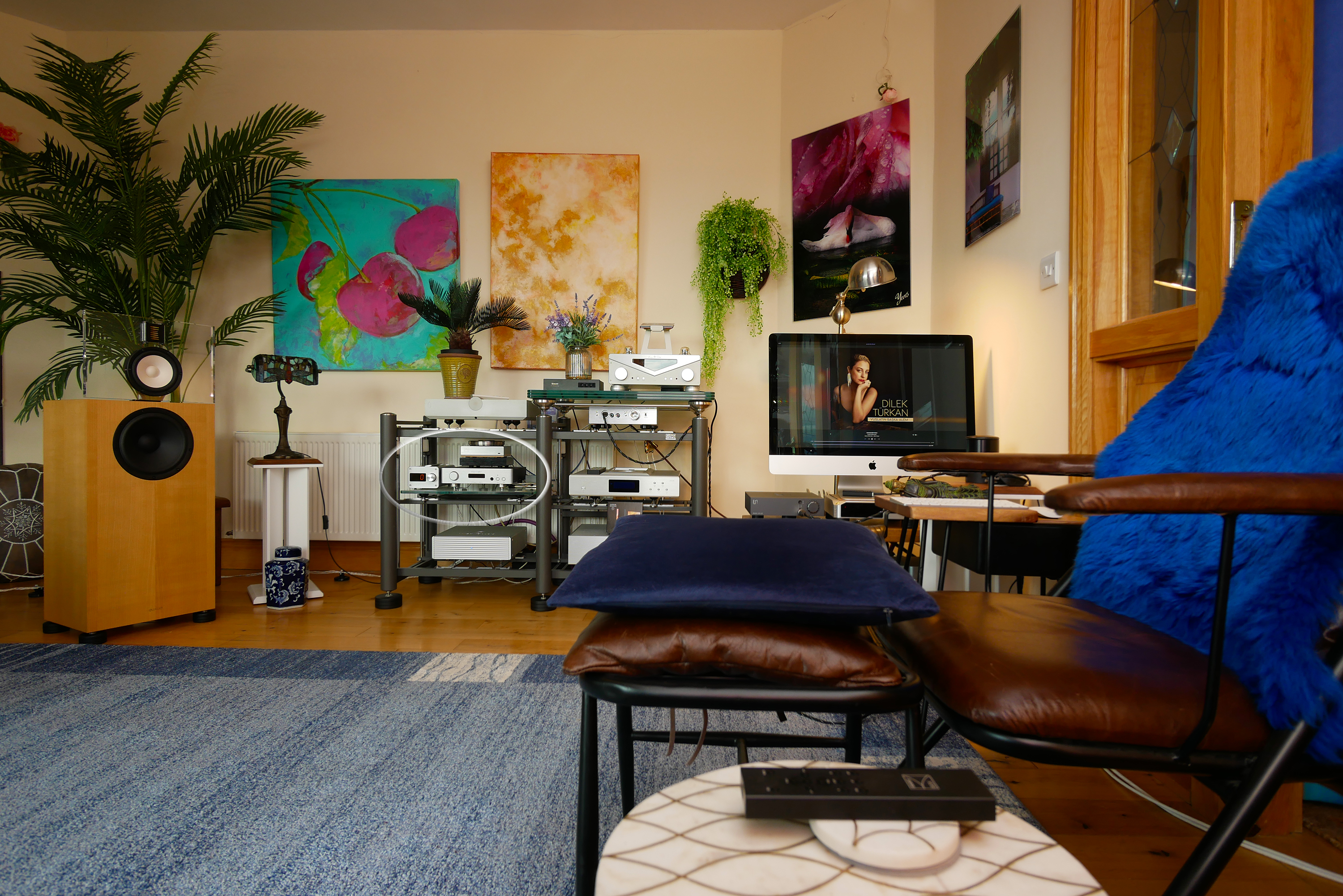
"That's it?" Quite. 3+ times the expenditure buys you more i/o, premium remote-controlled no-loss volume, more resolution and raw shove. But if you don't need extra inputs or outputs and set volume with a preamp or integrated, we're down to drive and res. Bolting an active preamp to Charlie would likely equalize the drive matter. That only leaves micro-detail magnification which never improves past a source when all gain circuits add noise whilst acting as subtle filters. How much resolution one can exploit is thus very much a function of what happens downstream from a DAC. I wager a guess that shoppers in Charlie's neighbourhood won't have the necessary ultra-rez ancillaries. By that metric, Charlie becomes a Pasithea Petite of sorts; what's appropriate and useful rather than top-heavy and inconsistent with the rest of the rig.