 Børge: Why did I make the DA 256? Because I wanted to offer a better looking, more convenient, more capable and better sounding DAC than the USB DAC128 series. And I wanted to make all of this available as an irresistible package at a price not hit by the extreme inflation of the audio industry. I wanted Henry Audio to be the most accessible Hi-End audio equipment in today's market.
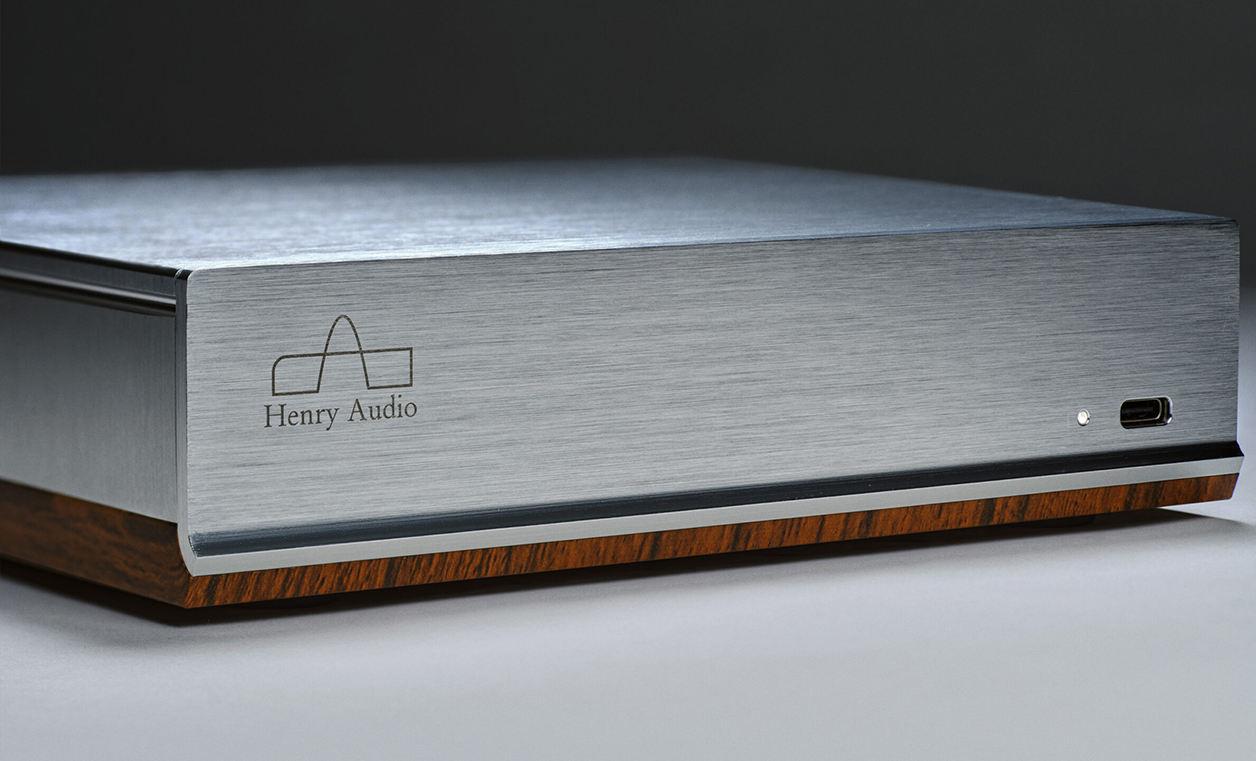
Henry Audio is named after my grandfather Henry who was a boat builder all of his life. He built them solidly, very solidly. Anything I make that carries his name must be solid and reliable like the things he made. After having sold 1'700 units of the 128 series spread out over 4 generations of hardware, Covid and the chip crisis effectively ended the product. The DA 256 looks good. I always wanted to make a DAC with premium housing and chassis. The beautiful exterior design by Suzanne Arnesen was a large motivator to finalize and commercialize it. Some of my consulting assignments as an electrical engineer have been with consumer electronics companies. I learnt from the best how important convenience and the user experience are. That is why the DA 256 has no source selector. It understands which source feeds it signal and stays locked to it. Making electronics that think for you and feel intuitive is very very hard. But it's worth 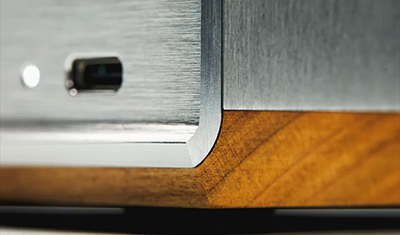 it when the end product demands no involvement and simply adapts to the music you listen to. The frontal USB-C connector is part of the same story. When your friends come over and want to listen to their music on your hifi, do you give them your WiFi password, pair Bluetooth, share a streaming service login; or simply let them plug their cell-phone into the DAC?
I opted for the dirt-simple USB cable option. Plug, play, enjoy, experience the music. Early prototypes used large and clunky USB connectors. It was only after all major smartphone makers had transitioned to USB-C that I decided to launch a product with this feature. Ask any seasoned developer of D/A converters and they will tell you that two of the most important things to get right are the power supply and clocking. These were on the top of my docket, too. The sound quality of the DA 256 owes a lot to an advanced engineering project I did with the Norwegian Defence Research Establishment. There my task was to develop amplifiers for analog sensors with extreme demands on bandwidth and signal-to-noise ratio. The task was solved by first developing new tools and methods for delivering sufficient broadband power where needed, directly at the integrated circuit. The decoupling networks were later enhanced still further and put into the DAC. The challenge is simple but not very simply solved: to ensure that the DAC chip has sufficient power from below the lowest audible frequencies to high above the highest digital clock frequency.
Another research project that found its way into the DA 256 is the reception of S/PDIF coax and Toslink. This had already been solved with decent results and a channel selector before. But I wanted to do two better with automatic source selection and playback over the most precise clock solutions. Combining the needs of digital audio receiver chips and discerning end users was very hard. The control logic was rewritten from scratch three times before I was happy with the intuitive look and feel capable of decoding all sample rates up to 192ksps. I know of no other DACs that decode such a wide range of signals whilst auto-selecting the source as flawlessly as the DA 256. Because USB playback already uses precision crystal oscillators right adjacent to the converter chip, I wanted to utilize those for the digital audio receiver as well. Those receivers usually perform what is called 'master clock regeneration', a process fraught with analog noise sources and high complexity. A major part of what makes digital sound 'digital' is the lack of absolute precision in the all-important master-clock signal. The DA 256 on the other hand uses digital buffering to make sure that the arriving digital audio signal can have less than ideal timing precision while the signal delivered to the DAC chip arrives with pristine timing. The DA 256 is the only DAC I'm aware of that doesn't even consider the regenerated master clock. This was a major technical achievement and one I'm proud of having in the product.






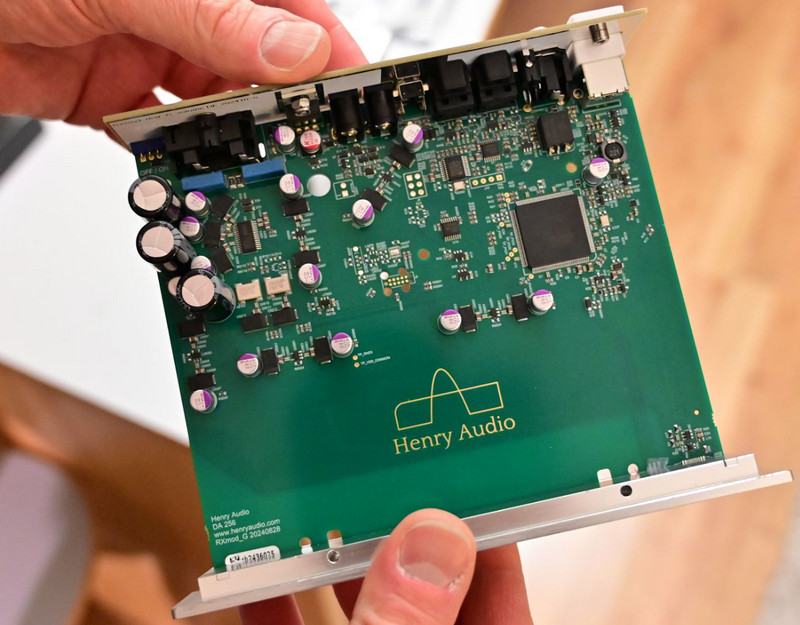 The power must not only arrive very cleanly at the chips that use it but enter the product in a convenient good-sounding way. The most convenient way is to use the rear USB port and connect the DAC to any computer. This works very well and covers the needs of almost all users. But some people want more. They may have a precision power supply purchased with a different piece of Hi-End audio electronics. Therefore the DA 256 has two slightly different DC inlets on the rear. Between them they can accept clean power from a vast selection of supplies. The supplies can feed the DAC anywhere between 8-16VDC and will automatically override USB power.
All functions of the DAC work with all power sources. So it is entirely possible to power it from a rear DC input while playing music from a cell phone or CD player, no computer involved. Hi-End audio experiences should not be limited to those who can pay a fortune or stumble across lucky vintage finds. The DA 256 is the heart of any audio system because it is the first place where digital becomes analog – tangible, physical. While consecutive units will add volume control and power to the speakers, the analog signal is never as good as it is exiting the DAC. The ambition with the DA 256 was to make much more than the entry-level USB DAC 128 series. But like with its predecessor the price/performance ratio had to remain outrageous. And when seeing the deeply emotional responses of end users who have received their DACs and tests in the Hi-End audio press, we're proud to say that we have pulled it off! [Photo credit my-hiend.com, photo linked to original page.]
The PCM5142 I use is a modern delta-sigma chip. I don't provide any upsampling or signal manipulation before the data enter it. As a modern ΔΣ it does have multiple built-in oversampling filters. We did serious listening tests to select the filter we're using. I made DACs before that used FPGA to let us choose the filter with full license. That is a very interesting proposition but something I will leave for much more complex DACs than this.
An FPGA could also handle DSD conversion for when the DAC chip doesn't support it natively. I choose to focus on the main PCM formats rather than add the effort (and reduce the DAC chip selection) needed for DSD support. The DA 256 supports all rates from 16/44.1 to 24/192 on all of its digital inputs. I know that rates like 176.4/192kHz are rare on Toslink/coax but I chose to include those as it didn't require more electronics, just finer programming. One of the most special innovations of the DA 256 is how it reclocks incoming S/PDIF and optical data. The regenerated master clock is often a source of jitter and 'digital' sound. In the DA 256 that is replaced with an advanced buffering algorithm and very precise fixed-frequency crystal oscillators. This innovation is quite audible when you listen to complex music over those sources. The PCM5142 handles all IV conversion. The only thing it requires is a basic low-pass filter on its output. I provide what the datasheet requires with high-grade parts. One very strong quality of this chip is that it generates its own negative supply. That way I don't have to build complex power supplies, particularly for the negative supply. What I did instead was to give it a very fine selection of decoupling capacitors. The local energy delivery at every single load point actually stems from the defense-grade instrumentation amplifier project I did some years ago. There we needed extremely wideband and low-impedance power delivery. A DAC has the same issue in that it operates from the deepest analog frequencies to the high harmonics of the highest digital clocks. The decoupling capacitors were specified and selected for 10Hz-1GHz. The PCM5142 runs natively at the industry-standard 2Vrms RMS.