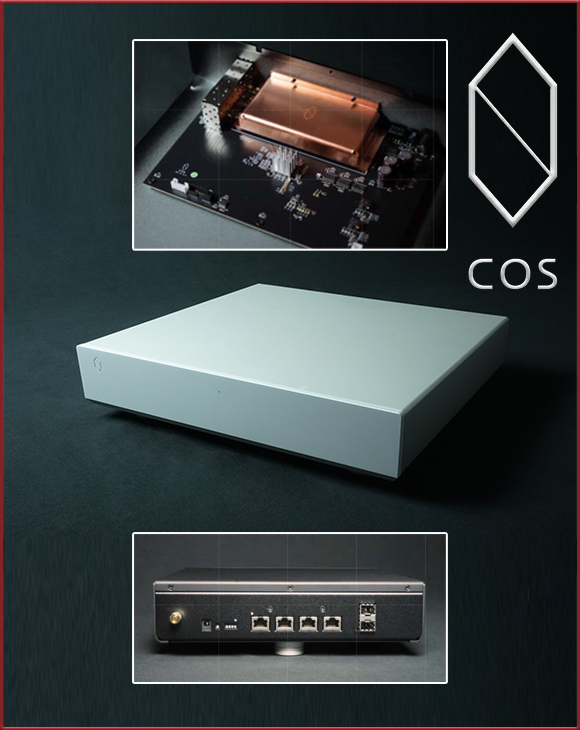
 Attitude adjuster. As the manual puts its, "the S6 is not a standard network peripheral. It is a precision‐engineered instrument designed specifically for high‐fidelity audio streaming. By minimizing network noise and timing errors aka jitter, the S6 allows your digital music to reach its full expressive potential. There are four RJ45 copper ports supporting 10, 100 and 1'000Mbps speeds. To achieve lowest possible noise, each port can be individually activated via switches on the back panel. We highly recommend setting unused ports to 'off'. Open ports emit continuous fast-link pulses to search for connections. Disabling them eliminates unnecessary HF noise.
"Port settings are only read once during boot-up. If you change a switch position, power cycle the S6 for the change to take effect. Due to its high‐capacity smoothing capacitors, the unit may take several seconds to fully discharge and power off. Each copper and fibre port features dual-status LED. Steady amber signals a 1'000Mbps connection. Steady green and amber are for 100Mbps, flashing shows active data transmission. For stealth mode, our master LED on/off switch locates at the bottom of the chassis."
This told us two things. 1/, don't dare call the 2.6kg S6 a generic utility network switch. 2/ Unlike much of the 'audiophile' competition, it implements proper port management¹.
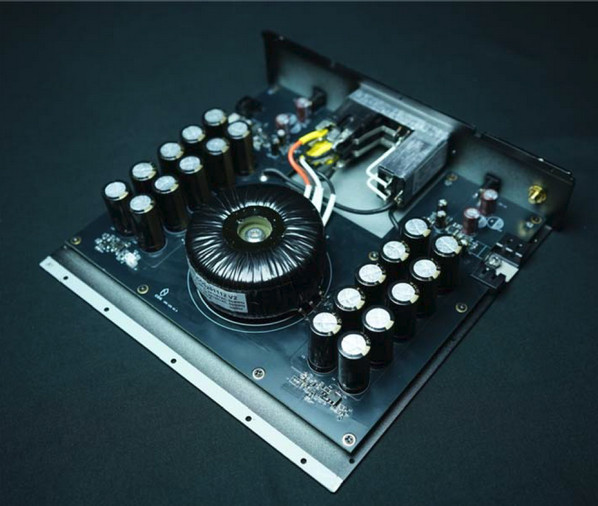
Meanwhile the 4kg LPS1 power supply² ended up with twin power ports, one at 12V/1A, the other at 12V/2A. The S6 takes the former. The LPS1 thus ships with two 1m 6n-copper DC umbilicals. Their shielded dual-core geometry presents as ~110Ω. They are additionally fitted with large EMI ferrite chokes. These DC cables come in two flavours; DCC1 and DCC2. The only difference between them is conductive mass (28-gauge or 0.32mm x 9 cores vs. 19-gauge so 0.653mm x 9 cores); and that the latter gets a double not single layer of PE insulation. Internally the LPS1 integrates this Swiss-made Schurter AC input module with medical-grade filters to purify the incoming AC. Its energy reservoir consists of 10 x 4'700µF Elna caps per power port whilst linear voltage regulation is by precision op-amps. Both the LAN distributor and PSU measure the same 26x25x6cm WxDxH and come in silver or black.
__________________________
¹ Many audiophile switches have too many ports for home-based hifi use yet no means to disable them. Not only does this create the above-mentioned HF pulses which constantly attempt to make a connection. Open ports also create ingress points for airborne HF noise which such devices are supposed to combat in the first place. It's why brands like Ansuz, Furutech, Nordost & Co. sell add-on noise traps to plug into open ports. It seems rather simpler and cheaper to disable them and defeat the entire link protocol for the unused jacks. Being able to kill their twin LEDs is another small detail of proper signal management. After all, once we have signal transmission, who needs rear-facing idiot lights? Should we have no signal, we simply turn them back on to check whether the problem is upstream with our router, network cable or a bad connection; or downstream. Now these LEDs serve as short-term diagnostic helpers when needed but go 'off' when not.
² For a 36-watt low-current power supply, that AC transformer certainly looks overspec'd for the job.








The ancient Emerald Tablet's principle 'as above so below' even applies to today's exotic audiophile topic. It's considered virtually inviolate that in power amplifiers tasked to drive the variable Ω and reactive back-electromotive forces of loudspeakers, apparently overbuilt super-stiff power supplies capable of on-demand high current and quick energy recovery make a very noticeable difference. Common sense would like to believe that once we're down to a 12V/1A wallflower load like this S6 network switch, surely that no longer applies. But as Stephen Gong explained much to his team's own chagrin because it triggered redesigns and associated delays, it still does. Whilst 'overbuilt' no longer means kilowatt power and 2'000VA transformers like a d'Agostino amp applies to its drive-anything task, scaled down for purpose, our crew from Taiwan followed the same thinking. If our experience tracks their promise—that doubling our outlay to include their LPS1 sounds demonstrably better—we'd have to admit that even today's seemingly menial task of distributing robust Internet data packages with built-in error protocols still isn't immune to audiophile upgrade chicane. As always in such matters, determining whether the difference delta feels commensurate with the ask becomes a very personal matter. It's typically predicated upon looking whether applying the same funds elsewhere wouldn't reap bigger returns. All of that depends on how far along our hifi journey we are. Can €1'400 still buy us a better speaker, amp or streamer? It's only when that question is already far in our rear-view mirror that today's hardware even shows up on any reasonable menu. But whether we pick one or both of these items then still depends on our overall system resolution; and the degree to which we practice attentive listening then value the performance areas which the COS kit affects. One guy's better-layered depth of field is another gal's so what. That's all the typical small print I can muster for this occasion. It's time to get ears on.
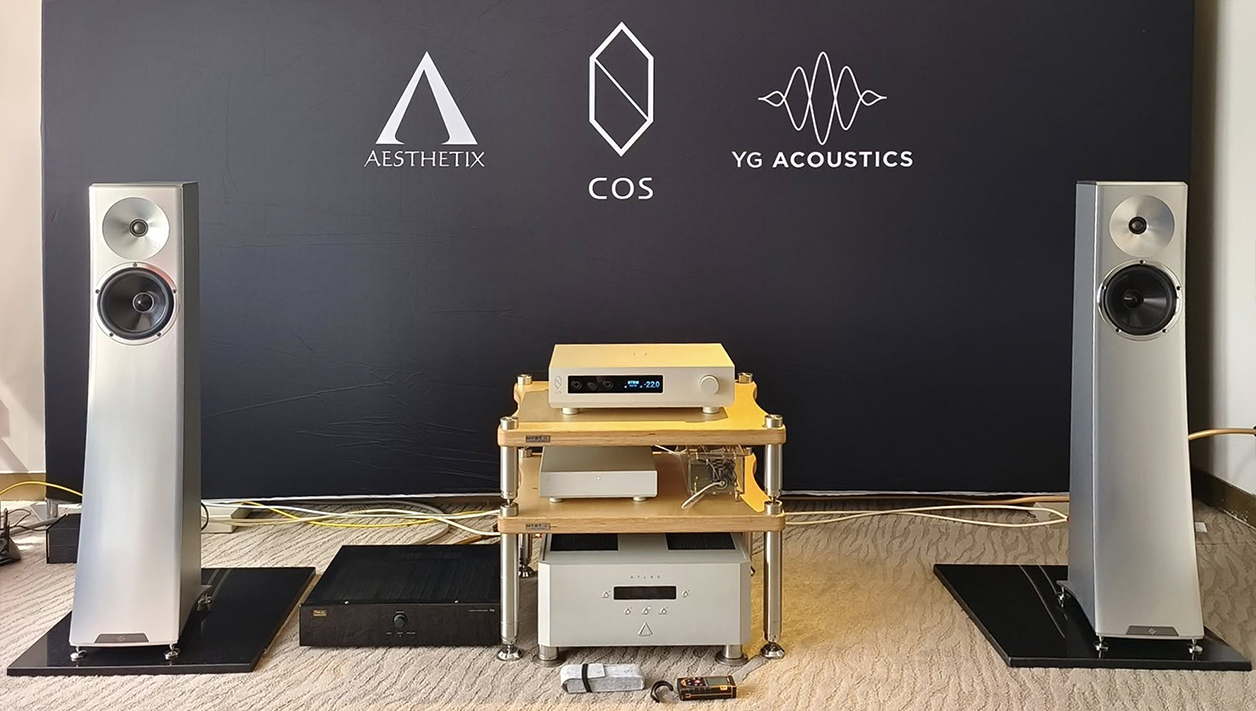
FedEx dispatch of my samples met air-traffic controllers in Taiwan, Frankfurt, Wiesbaden, Duiven, Kingsbury and Shannon. Why stopovers in Wiesbaden, The Netherlands and the UK? Were there no direct flights from Frankfurt to Dublin? Passenger and freight routes diverge. International freight carriers use different hubs than business or holiday travellers. With the Straight of Hormuz closure just then triggering global fuel shortages, extra frequent flyer miles weren't really a thing. Fuel prices at German petrol stations were at €2.30/litre in the North. Americans whose president caused the whole mess were moaning over $4/gallon which works out to €1/litre. As in so many other areas, things are relative. That's the perfect segue into the subjective portion of this gig. But first…