A parallel review on Voxativ's Alberich2 speaker system—a unique widebander hybrid with active RiPol bass—offered a useful triangulation op to compare digital transmission paths into the same D/A converter. After I wrapped the speaker review, I asked for a 1-week loan extension on Cen.Grand time. This was kindly granted and put another hi-rez weapon into my tool belt like a jeweler's screwdriver looking for really tiny fasteners. Just then I had an experience one room over that was pertinent to this assignment. "On a certain day of Mercury retrograde or whatever cosmic entanglements cause PC gremlins, my trusty Singxer SU-2 USB bridge in the office stopped passing signal. My Windows 11/64 control panel showed active output, my iFi iDSD Pro Signature DAC no signal. When I seated the same iFi USB3 cable in the DAC instead, I had instant sound. I tried an old Audiobyte Hydra X USB bridge. No sound. That was weird. A PC should see right through any USB bridge or hub to look straight at the DAC connected to it. And, a PC shouldn't distinguish between outputting to a USB bridge or DAC. But that day it did. I capitulated and ran my DAC USB direct and resumed music listening. A short while later I opened Photoshop. Instant sound crackling and dropouts. Eventually that misbehaviour stopped then resurfaced when I used Opera for some web surfing whilst Audirvana continued streaming Qobuz. Such audible interference never happens with my USB bridge. Suddenly without it—Mercury and my office system behaved normal again the following day—I was tacitly reminded how USB shares resources with other devices and processes across the USB tree with intermeshed layers and drivers. Even Audirvana's extreme hog mode wasn't sufficient to eliminate this intermittent 'crosstalk' distortion when parallel computing processes caused latency or other glitches."

This was my first-hand evidence for JianHui's contention that USB's error correction is lossy. It won't matter to peripherals like a mouse, keyboard or printer. It did matter for streaming music whilst I ran Outlook, Word, Opera, Photoshop, WordPress, YouTube, VPN and Malwarebytes concurrently. Though I never multi-task on my dedicated music iMac, I obviously do in my office. Otherwise I'd get no publishing done. It seems clear that load-intense multi tasking stresses a computer's USB layers far more than my use of the iMac ever sees. The latter's solitary program running while I listen to music is Audirvana Studio. That CPU load is probably roughly equivalent to Gold's load on LTSC to minimize or sidestep USB's inferiority?










 Armed with a few favourite singers—Abed Azrié's Omar Khayyam, Dhafer Youssef's House of Mirrors, Dulce Pontes' Lagrimas—and the Cen.Grand remote for the DSDAC, I set certain tracks on endless repeat. Then I switched between POW and BNC coming in from the Gold; and HDMI/I²S coming off my Singxer SU-6 USB bridge hence the iMac. POW sounded fuller, fruitier and more suave. USB from the Apple was a bit leaner and more sharply focused. BNC sounded like POW. This held from album to album. There was something to JianHui's PCIe/POW protocol. Once I shifted to grand classical like Bruckner, Janacek and Tchaikovsky symphonies or tone poems as some of the most challenging repertoire in my playback, the gap widened a tad. If our music majors on milk-diluted tea with cucumber sandwiches, it shrinks. That doesn't take away from Gold's very solid currency, only how much it buys against the exchange rate of our particular usage and current reference.

 Prior experience had already suggested so and this encounter merely reissued it: properly curated PCfi over USB leaves little room for gains. Mind the italicized qualifier. Gold is turnkey. All secret handshakes bake in. No learning then practicing new recipes. Simply plug in an Ethernet cable, exit POW into a Cen.Grand DAC; or I²S or S/PDIF into all others. Hello streaming fully optimized. We needn't undergo my 10+-year PCfi initiation. Most people don't have the time or inclination. Too geeky. Let a clever engineer serve you. Don't even bother doing dishes. Running on Windows lowers the barrier of entry. It's all familiar. With J.River pre-installed, just read its manual to get the hang should you be new. The ability to HDMI-out into a large display or TV is a lifesaver if we hate to use smartphones or tablets for everything. The PCIe interface guarantees that whatever USB peripherals we attach—mouse, keyboard, screen, NAS, microphone, camera, coffee maker—can't ever interfere with music streaming. Segregate and conquer.
Cen.Grand's particular featurization for a music streamer looking like a fine piece of hifi struck me as most comprehensive. Whether POW will go kapow or kapoof is unknown. External I²S still hasn't agreed on one standard and in many ways POW is one more expression of it hoping for adoptees. There's no global committee or regulatory agency that would enforce standardization and compliance across our industry's colourful mix of multi-nationals, consortiums owned by investment funds, privately operated large firms, small family outfits and tiny boutique entrepreneurs. If it makes sound and doesn't flame out, it can and will sell; somewhere. Where does that place the Cen.Grand GLD1.0 Deluxe? In my two prior reviews on the brand, I called them the new Denafrips even though they also have aspects of the very upscale Audio Music. Where Cen.Grand go beyond both fellow Sino brands—and until their own streamer bows, also Laiv—is having already authored an ambitious streamer. Because the concept blurs the lines of computers to raise maker and seller concerns about potential handholding of less IT-savvy clients post sale, many audio brands stay away from it. JianHui Deng has embraced it. So now must his dealers should buyers need help during their ownership period. A short-term review loaner has naught to say about a given soft/firmware platform's long-term stability. Diving deeper into PCIe explanations will require someone more fluent in Computerese like Chris Connaker or John Darko.
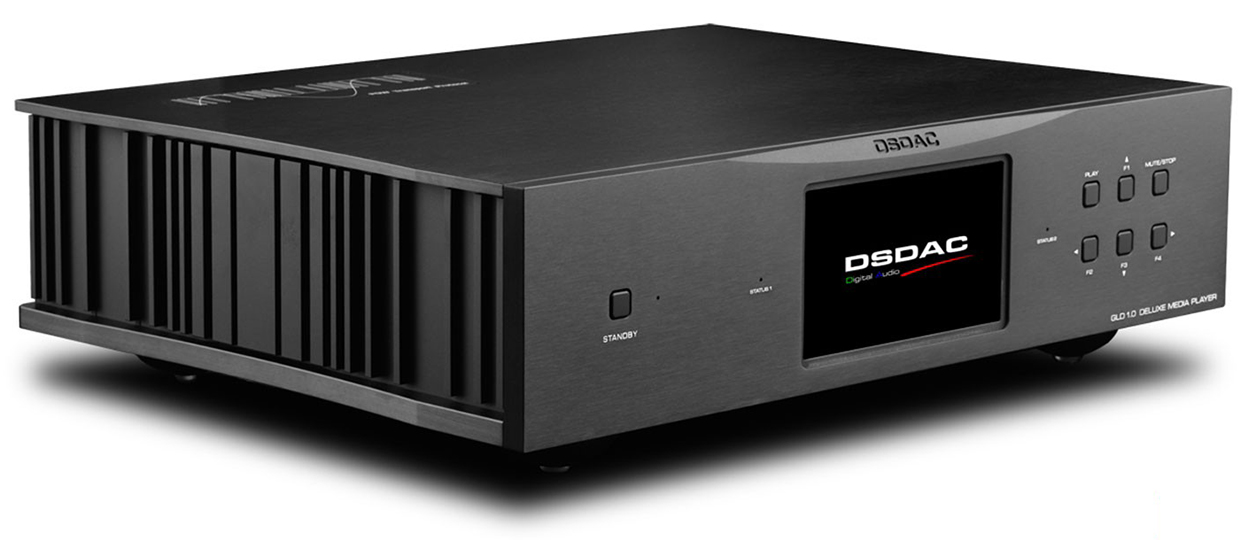
From my perspective as a diehard PCfi practitioner on Windows and MacOS, Gold was perfectly intuitive to operate by generic mouse and keyboard. Joe & Jill WiFi will dance the tablet tango. I'll continue being a Mac macher. That's German for doer. Though the GLD1.0 Deluxe sounded a bit more plumptious to give that glam word one more cameo, the difference delta to my domestic setup was very narrow. Anyone expecting more is either just starting out with a hand-me-down laptop; or still has faith in the digital-domain streaming genie at the high end. She escaped my shattered bottle long ago. The prospect of another three wishes leaves me unmoved. That genie's powers are very small. As for a Cen.Grand hat trick whose genie is strong, I awarded both Mr. Deng's Silver Fox headphone amp and DSD-über-alles Deluxe DAC then acquired them for personal use. Chances are that the engineering behind the GLD1.0 was even more involved. But as already explained, over against an iMac with extra RAM, Audirvana Studio and a €699 USB bridge with I²S, I thought its sonic advances too narrow. Meanwhile non-tablet use still requires a keyboard, mouse and larger display to ring the till about double. So no third wish granted. Swapping between Cen.Grand DAC and my Sonnet Pasithea—a very high-resolution R2R DAC with split processing of the lesser bits and variable reference voltage for volume—changed the sound far more. That said, in the game of metres then centimeters then millimetres which high-end audio veers into the longer we play the game, little things matter once big things are properly sparkling. The Cen.Grand GLD1.0 Deluxe in full POW mode strikes me as aiming at those who mean to shine up their streaming front end to a glossy lustre because they've tackled all the bigger chores already. If that's you and you're not a computer-audio nerd who rolls his own and gets enjoyment from authorship and code tweaking, the GLD1.0 Deluxe might have your number. Just don't expect the stock LTSC platform to operate exactly like Windows Home. It doesn't embed Microsoft Store so may not install your favourite app. But if you're a J.River fan, you'll be up and running in no time. Should you want to go full pork, pay extra for the Windows Home license. Either way, happy days.
 PCM resampled to DSD256 in Audirvana then transmitted I²S through the Singxer bridge.
That also goes for the POW-fitted DSDAC 1.0 Deluxe whose new I²S input is a real boon even without the companion GLD. It allows us to stream hi-rate PCM and DSD into it without USB and perform all or some upsampling in player software. The inverse is true also. We can enjoy the GLD1.0 Deluxe or Standard without their companion Cen.Grand DAC because the PCIe protocol precedes the legacy and I²S outputs not just POW. It's full of POWer. Happy days indeed!
Postscript. A few weeks post publication, I learnt of a collaborative new synchronous digital interface developed by Sforzato and Soulnote of Japan called ZeroLink and executed on DVI rather than HDMI. This review covers the product and its details. Use Google Translator if you don't read Polish.