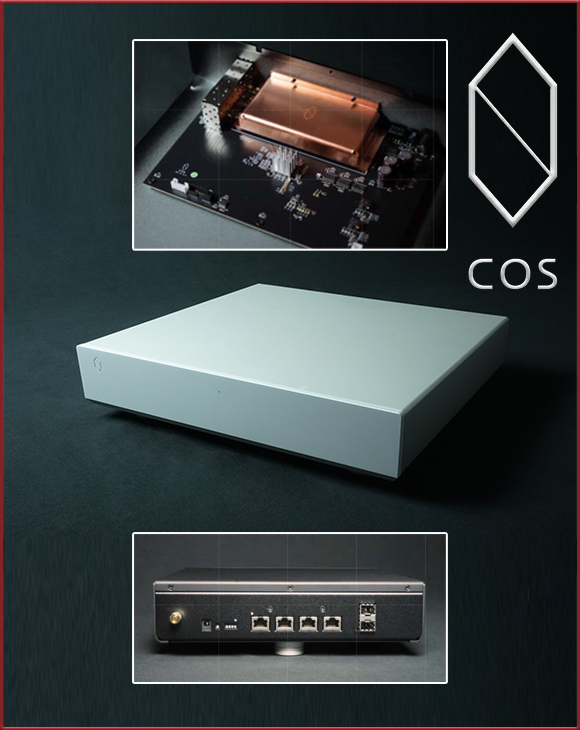
 "Our main control system hardware is a BKCM11EBI716W Intel NUC with an 11th-gen i7-1165G7 CPU. That gives us 4 cores, 8 threads, a 2.8GHz base frequency, turbo speed up to 4.7GHz, 16GB dual-channel memory, integrated AX201 Intel WiFi 6 and Bluetooth 5.1 and 500GB of SSD storage. The output ports are 4 x USB, 1 x USB-C, 1 x RJ45 1GB, 1 x HDMI video. The latter can connect to a TV or monitor which then bypasses the internal display. Which display to use can be toggled by switch.
"The digital processing system connects to the main control system via a PCIe interface with seven subsystems: receiver, isolator, data processing, clock and POW transmission modules, S/PDIF module and power supply. Firmware with complex algorithms allows PCIe to operate in synchronous mode to process and output data and clocks at high quality. PCIe is a data bus until recently reserved for high-speed internal PC components like high-power graphics cards. Unlike USB which communicates with a CPU through layers of drivers, buffers and operating systems, PCIe offers direct access to the processor. This results in faster, synchronously timed data transmission with minimal latency and no jitter. POW is short for 'parting of the ways' to indicate that the audio data transmit via fibre optics whilst the clock transmits via 50Ω BNC coaxial cable. The POW receiver module in the DAC combines these data into an I²S signal. With telecom-grade light transmitters and receivers, bandwidth reaches the Gigahertz range and transmission distance extends to several kilometres.
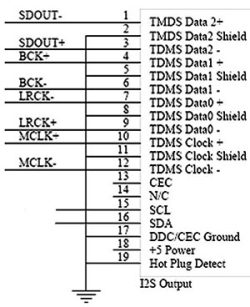
"Our POW interface can transmit 8-channel high-bit data and could potentially support multi-channel DSD playback devices in the future. In parallel to the fibre-optics + BNC outputs, our POW module also integrates I²S over HDMI with the most popular pin config as shown to meet market demand.
"By using JRiver as our preinstalled default playback software which the end user can replace with alternates like Audirvana or Roon, remote control apps are available for both iOS and Android devices. Any music platform that supports ASIO should be supported. So is NAS playback. Our machine can output in DoP or native DSD mode selectable by rear toggle."
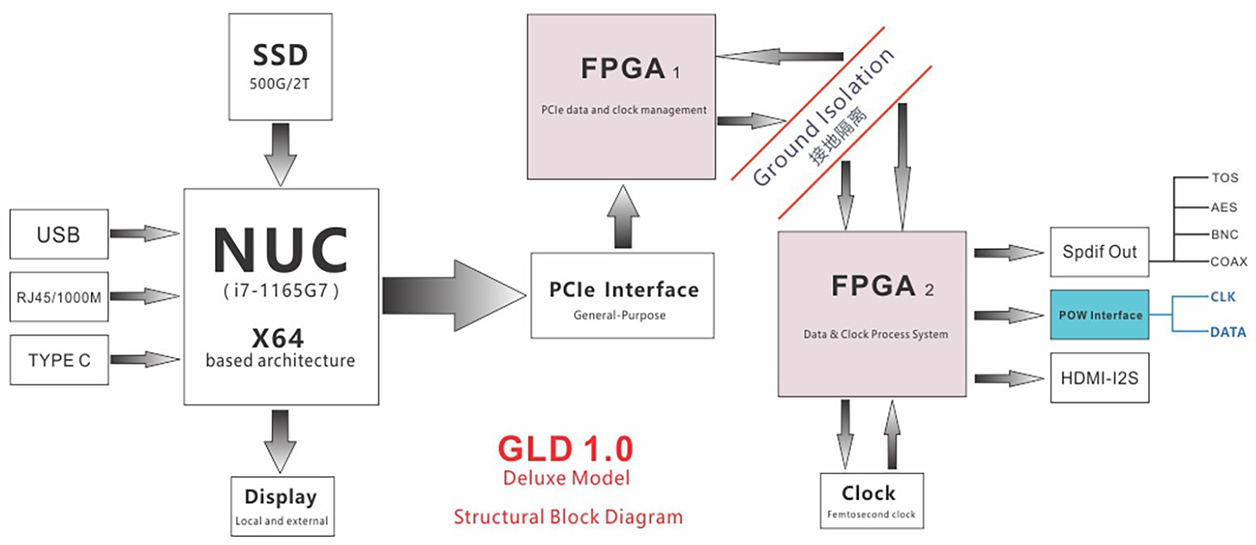
As shown, 24/192 PCM and DSD 64 'legacy' connections for AES/EBU, coax, Toslink and BNC support all standard DACs. I²S over HDMI with its higher bandwidth and sample-rate support adds a performance boost for converters capable of receiving such data whilst for now the best POW interface remains exclusive to Cen.Grand DACs. Other brands like Bel Canto, Lumin, Nagra and Playback Design too champion fibre-optic transmission but executing it with a separate clock line and new protocol makes Cen.Grand's different. An added bonus is the HDMI video port by which to scale up the small frontal display to a far bigger screen; and spare USB ports for mouse and keyboard to operate Gold without a wireless tablet or smartphone.







"The GLD 1.0 runs the same file/network management features as a computer because it is in fact one. So you can use it exactly like a computer and access your local area network wired or wireless. The Windows LTSC operating system is the cleanest available. If you prefer other player software than JRiver, you can install it as long as it supports ASIO. If in the future other brands want to adopt our POW receiver module in their DACs, I would be more than happy to support them. POW is one of the highlights of the GLD1.0 which not only represents advanced hifi tech but delivers exceptional sound quality." This triggered an immediate question since Cen.Grand DACs discard the 'send' clock to entirely regenerate it. How can the POW protocol's isolated clock line now offer measured or sonic advantages over S/PDIF? "While our DSDAC models disregard the source clock, to generate our own clock signal they must sync to the source clock even though its quality won't affect the sound quality. But POW isn't just for our own converters. I hope that all future DACs will use it. That's simply contingent on the GLD1.0 becoming globally popular. But POW is the only way to transmit very high sample rates across multiple channels and simultaneously eliminate the USB protocol's acceptance of data errors. To this day many owners of top-level CD players insist that they perform better than even expensive streamers. My contention is that USB causes this quality difference so we don't use it for our outgoing signal transmission."
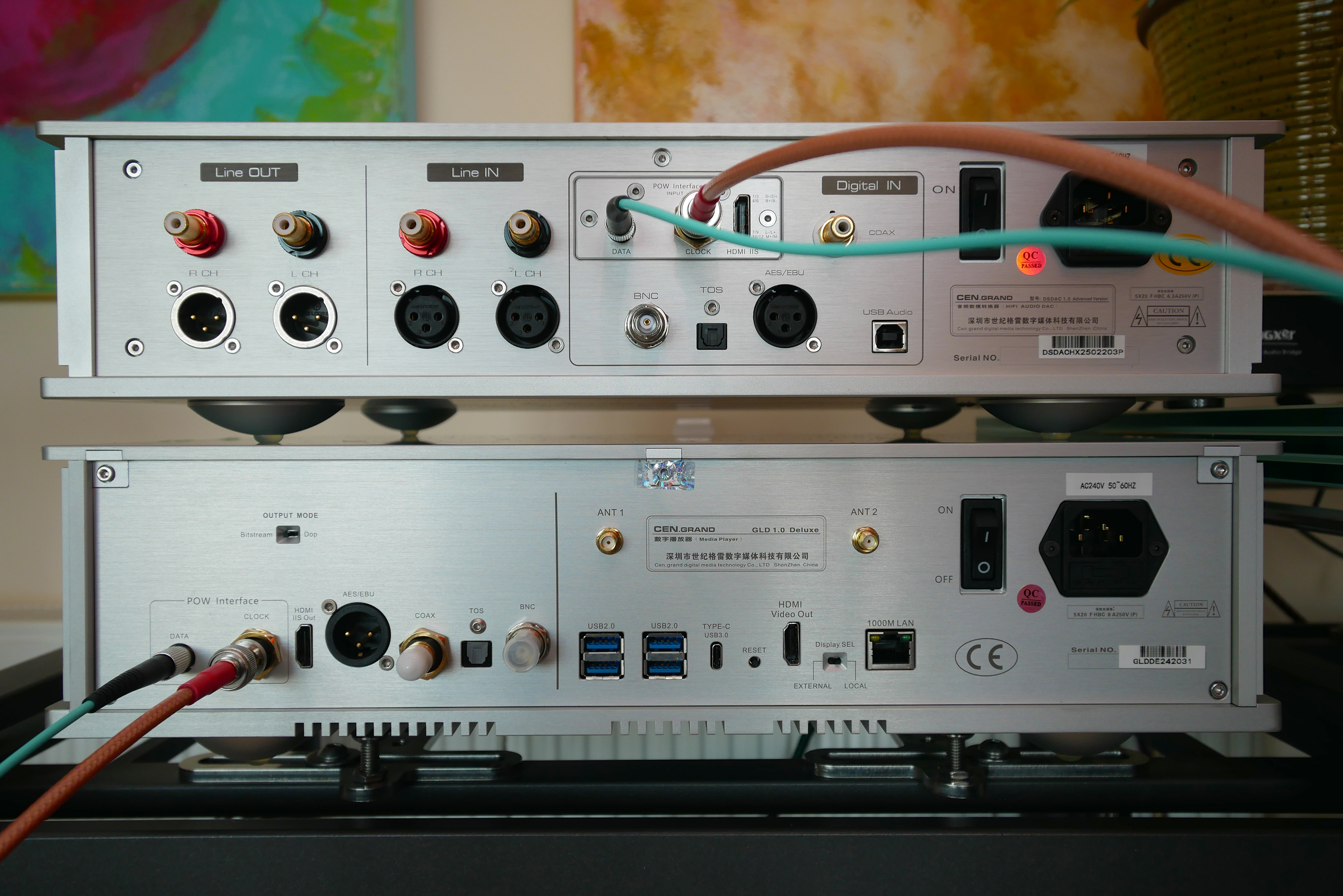
The green fibre-optic cable uses screw collars on each end to lock solidly to the chassis connectors.
So POW's benefit for my DSDAC 1.0 Deluxe deck wouldn't be its isolated clock signal but absence of USB's influence on music data whilst being able to carry very high-rate PCM or DSD signal just like I²S. In fact, POW is I²S on a proprietary interface. I asked Mr. JianHui whether for his own DACs on 16/44.1 Redbook, POW offers any advantage over S/PDIF. "The advantage of the GLD1.0 is that it obtains error-free data then converts them to I²S output through the POW interface whilst also generating S/PDIF signal for its classic ports. Compared to POW, our S/PDIF outputs offer equivalent performance limited to lower sampling rates. Does POW offer a technical/sonic advantage over S/PDIF? Yes, I think so." That last sentence begged for more clarity. "POW is simply a high-performance method for transmitting high sample-rate data. The quality of the data and clock it transmits is set by the front-end system. The GLD1.0 outputs the same data and clock over S/PDIF so theoretically these ports have identical performance. But different transmission methods still affect clock performance. With its two optical and electrical conversions for example, Toslink is slightly worse than coax. The POW clock is a BCK or bit clock directly used for D/A conversion without intermediate steps. With S/PDIF, data and clock re-encode so in the DAC, a phase-lock loop must extricate the BCK signal. With regular DACs this makes S/PDIF inferior to POW. In our own DSDACs however, the front-end clock doesn't participate in the D/A conversion. Hence S/PDIF's weaker clock quality is masked. In that case, receiving S/PDIF or POW data from the GLD1.0 results in the same quality with only the usual S/PDIF limit of PCM192 and DSD64 being different."