After I'd penned the previous page, this tale suspended like an episode's cliffhanger for a good year…
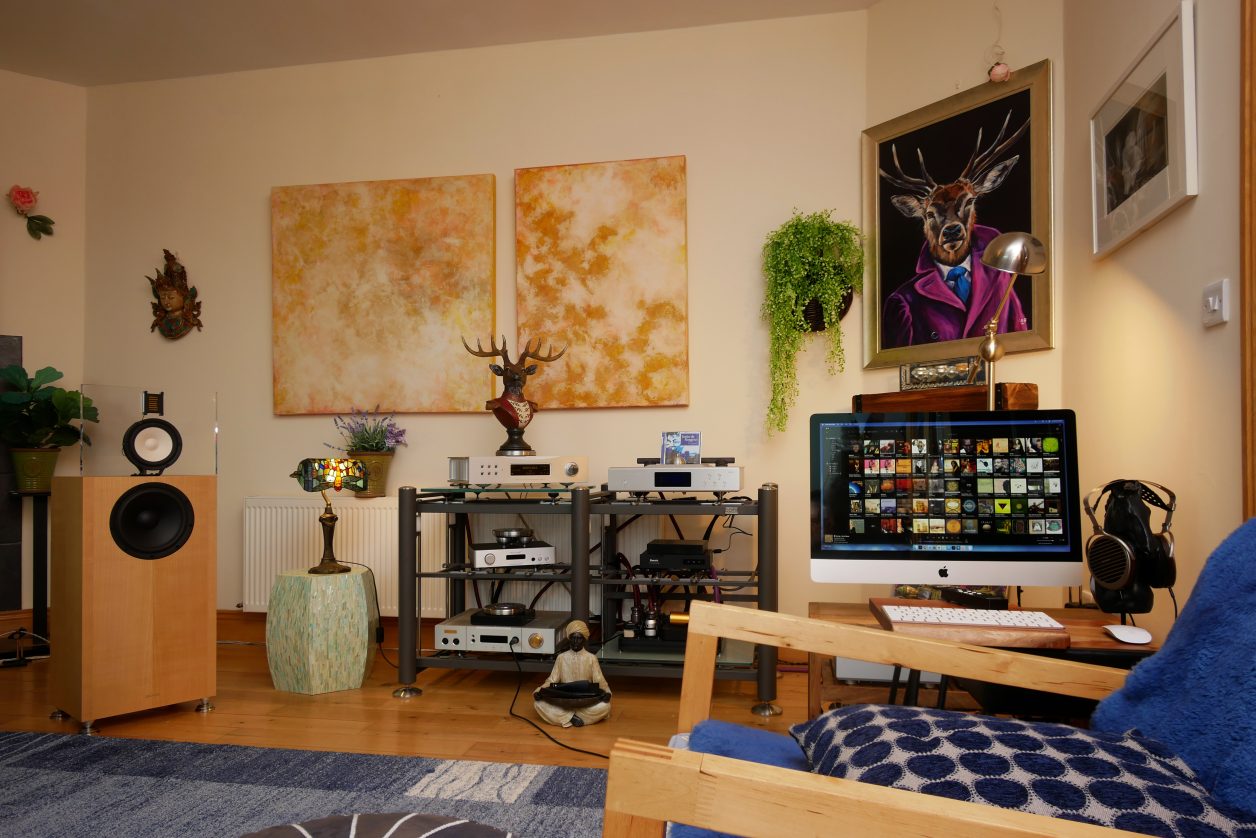
… but not before showing you my domestic Cen.Grand setup with two of their components; then the designer's where only the EMM Labs SA/CD transport and ATC speakers go off brand.
 JianHui Deng with one of the systems in his factory.
By December 2024, more details emerged. "The GLD1.0 is a digital transport with only digital outputs, the GLS1.0 a full media player with DAC. The OS of GLD/S1.0 is Win10, the default media player probably JRiver but users can install other players like Audirvana or Roon. Both models come in standard/deluxe versions with a Celeron/i7 CPU respectively. The digital circuitry between both differs somewhat. The DAC of the standard version will likely use Asahi Kasei, the Deluxe will be our own DSDAC 1.0 installed. That's our 2024 road map. The domestic price for the GLD1.0 has been set at RMB26'000, the Deluxe at RMB40'000. The GLS1.0 remains TBA. It will be a high price but worth it. Other details remain open because they're still in progress."








On June 1st 2025, Mr. JianHui was back. "Over the past year I've been busy with new product development. The GLD1.0 has been in pilot production since last August and already sold very well to domestic fans. The GLD1.0 became their favourite player even though they have other brands of players already. To date none of the more than 200 users have sold their GLD1.0, knowing full well that they are unlikely to find a superior streamer. This is almost miraculous when any new hifi product is certain to have at least some people abandon it within six months, especially digital. I will officially launch it at the Guangzhou show next month and hope you will do the review. Since it is a digital transport, it must work with a DAC, preferably your DSDAC1.0 Deluxe connected via my POW interface. You will have to add that module to your machine, upgrade the microcontroller program and replace the flash chip in the FPGA. I don't know whether you're up for that. Please let me know."
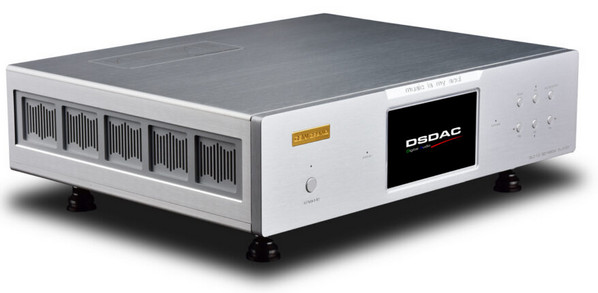 To insure no issues, Mr. Deng next proposed to replace my DAC with a new one of all required hardware/firmware updates. Being relieved of the potential to cause ham-fisted mischief, I accepted. Cen.Grand's streaming transport and DSD DAC would work together as intended. [Standard version at right. Deluxe version uses square buttons.] With its X64 Windows OS, the declared intent of the GLD1.0 henceforth just Gold is to eliminate the USB protocol "in favour of high-speed customized PCIe transmission [Peripheral Component Interconnect Express] with robust error checking regardless of using Windows, Linux or Android. The error-check mechanisms are primarily managed by the ECC/CRC hard-disk controller and file system (meta data and data block checks). For critical/sensitive files, applications often add extra hash checks like MD5 or SHA-256. Under normal use conditions, the error rate of modern hard drives is 1 error per 12.5TB for consumer grade, 1 per 125TB for enterprise grade, 1 per 1.25PB for modern SSD.
"In the file data reading and storage phase without clock synchronization, hardware design has little impact on data accuracy. Improving hardware such as enhancing power supplies or using high-precision clocks does not improve data integrity. To fundamentally address the issue, the root cause of sound quality degradation must be identified. Since the error probability in reading file data from the file system is extremely low, the only possibility is data transmission. Many digital players use the USB audio protocol for their internal data transmission process. Since that protocol allows data errors, the problem lies here. It's why the GLD1.0 adopts PCIe. Replacing the USB audio protocol with PCIe for transmission working in synchronous mode was a highly challenging task. To achieve it, our system incorporates a complex clock and data system as well as unique POW data clock transmission protocol. This architecture has been granted a national invention patent of China."