Country of Origin

Reviewer: Srajan Ebaen
Financial interests: click here
 Main system: Sources: Retina 5K 27" iMac (i5, 256GB SSD, 40GB RAM, Sonoma 14), 4TB external SSD with Thunderbolt 3, Audirvana Studio, Qobuz Sublime, Gustard U26 USB bridge, LHY Audio SW-8 & SW-6 switch, Sonnet Pasithea; Preamp: Hattor Audio ARP-S; Active filter: spl Audio Crossover MkII; Power amplifiers: Vinshine/Kinki Dazzle & mono NC500 Nord Acoustic amps on subwoofer; Loudspeakers: Qualio IQ [on loan]; Subwoofer: sound|kaos D15; Cables: Exact Express Flame, Furutech; Power delivery: 2 x Kinki/Vinshine Tai Hang on amps and source stack, Furutech DPS-4.1 between wall and conditioners; Equipment rack: Artesanía Audio Exoteryc double-wide 3-tier with optional glass shelves, Exoteryc amp stands; Sundry accessories: Acoustic System resonators, AudioQuest FogLifters; Room: 6 x 8m with open door behind listening seat; Room treatment: 2 x PSI Audio AVAA C214 active bass traps
1st upstairs speaker system: Source: FiiO R7 into Soundaware D300Ref SD transport to Cen.Grand DSDAC 1.0 Deluxe with POW; Preamp/filter: Lifesaver Audio Gradient Box 2; Amplifier: Kinki Studio EX-B7 monos; Loudspeakers: sound|kaos Vox3awf; Subwoofer: Zu Method; Cable loom: Exact Express Earth; Power delivery: Vibex Granada/Alhambra, Akiko Audio Corelli Corundum & Castello Solo; Equipment rack: Hifistay Mythology Transform X-Frame [on extended loan]; Sundry accessories: Furutech cable lifts, Furutech NFC Clear Lines; Room: ~3.5 x 8m
1st upstairs headfi system: DAC: Cen.Grand DSDAC 1.0 Deluxe with POW; Headamp: Cen.Grand Silver Fox; Headphones: Raal 1995 Magna, HifiMan Susvara
Desktop system: Source: HP Z2 workstation Win11/64; USB isolator: LHY UIP; LAN distributors: LHY AS6 Pro & SW6-SFP; Ethernet reclocker: Stack SmoothLAN; DACs: Gustard R26II & Audalytic DR70; Preamp: Topping A900; Speaker amps: Topping B200 monos; Headphone amp: Enleum AMP-23R; Loudspeakers: Virtual Hifi Viper; Headphones: Final D-8000, aune SR7000, FiiO FT7, HifiMan Susvara Unveiled
2nd upstairs headfi system: Shanling EM7; Headphones: Meze 109 Pro, Fiio FT3, HifiMan HE1000 Unveiled
2nd upstairs speaker system: Source: smsl PL200T CD transport, 1TB microSD; DAC: Shanling EM7; Crossover: Lifesaver Audio Gradient Box II; Amplifiers: LAIV Crescendo Chorus monos; Loudspeakers: MonAcoustic SuperMon Mini with Dynaudio S18 subwoofer
2-channel video system: Source: Oppo BDP-105; All-in-One: Gold Note IS-1000 Deluxe; Loudspeakers: ModalAkustik MusikBoxx; Subwoofer: Zu Mission; Power delivery: Furutech eTP-8, Room: ~6x4m
Review component retail: €1'090
 |
 |
 |
 |
 |
 |
 Bass gala, who'll be your +1?
In a budget tux, to do just bass—as in, with a passive dual 12" subwoofer?
The obvious answer is class D on fast-recovery switching power. Think low-Ω current delivery without a herniating power transformer.
She says ICEpower, he quips Purifi, I fancy nCore. S'all good. Nord Acoustics have the three of us covered. I'd already been there 9 years ago and done that with their 1st-gen NC500 monos. Those still do yeoman duty on my big 2×15" sound|kaos Gravitas D15 RiPol sub in the downstairs main rig. Like that Energizer bunny, they just keep running.
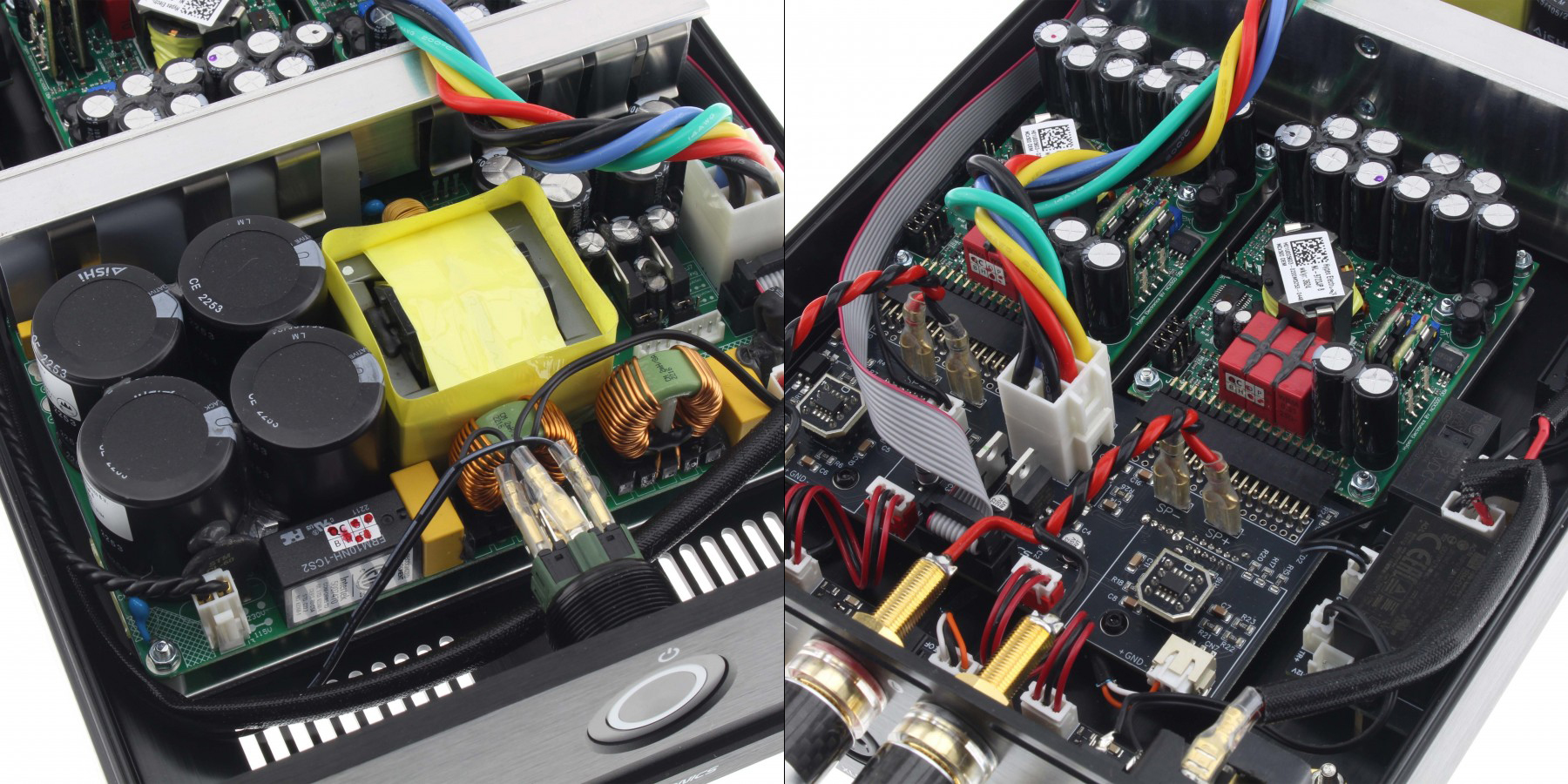
To switch things up for an inbound 2×12" smaller RiPol version for my bigger upstairs system, my mouse pointer headed for France this time. Hello Audiophonics outside of Bordeaux. I'd bought from them repeatedly before. This time I picked their half-width NCx500 stereo amp.
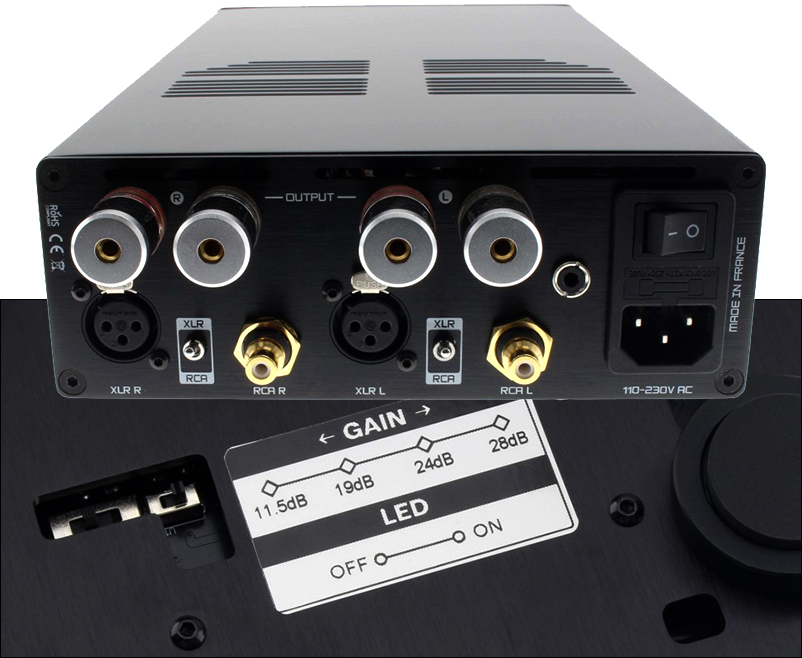
It packs dual-mono power stages, Hypex's big 1'200-watt power supply, a tidy build, switchable RCA/XLR, defeatable power LED and—ideal in a 2.1 system where sub gain must follow speaker gain—four voltage-gain options accessible via convenient dual-mono belly sliders (my rear-panel overlay covers up the other channel's switch).
At 600wpc/4Ω with an ultra-low noise floor, this is ideal kit to kick a passive sub into high gear and provide big folded-dipole woofers with the kind of damping they best obey. Front this amp with an active crossover of your choice and presto, bass gala in style. It's not for an exactly rent-a-tux single-evening ticket but neither are we visiting a Saville Row tailor with a half-year waiting list.
Grzegorz Rulka's feedback had helped me zero in on this amp. He had experience with it as well as ICEpower and Purifi; and used the lot during the R&D of his Supernova, an open baffle with dual 15" woofers that dips to <3Ω. Greg is a bass head who loves loud. With this NCx500 platform he's never experienced any headroom or control issues. At my lower SPL, I'd never know any either. That settled the matter. Bass gala coming up. Just because, I'll also cover what this amp sounds like full-range when not just used as a dedicated bass maker. Will it then still make hey; or go all dry and colourless brown like hay? What's ace for mega woofers needn't be mega for the treble. It's why many active speakers like KEF's latest LS Luxe put class AB on their tweeters, class D on the mid/woofers. To be sure, I was only looking to ace the bass. But some readers might like to know whether this potent little amp is appropriate also for normal use.









On normal use I had no better starting place than my desktop. Here Topping B200 monos power/control Virtual Hifi Viper monitors. At €1.2K/pr they're priced within snogging distance. Their nested-feedback discrete class AB operation was designed for superlative noise/distortion specs—just like Hypex. This setup meant that Audiophonics' triple 4Ω power crushing Topping's was purely academic. Despite lower ~83dB speaker sensitivity, this nearfield proximity doesn't actually eclipse my 1-watt median for playback SPL. This would be no strong-man competition. This would be about more or less sophistication. About which, most shoppers should prefer the NCx500's built-in SMPS taking one standard power cord over Topping's external laptop brick with figure-8 power cord which for stereo eats up two power sockets. With a well-appointed office system like mine, spare AC outlets are in very short supply once you add lights, shredder, printer, fan, landline phone, router, PC and monitor screen. Never mind St. Patrick driving them all out of Ireland. Behind that desk it's a mosh pit of adders. Let's not mention the American mink introduced 70 years ago in commercial fur farms. Numerous escapes and deliberate releases had minks rapidly colonize the Irish countryside; a severe threat to local biodiversity. No such risks to domestic hifi diversity. The only actually Irish audio brand I know make cables and powerline filters in Belfast. That's the island's Northern part. In the Republic there's only Sennheiser's Tullamore facility. For hifi, evergreen Eire is an arid desert, 6moons an alien presence. It's where well-stocked EU resellers/importers like Audiophonics can make all the difference. These French are now well past their humbler 2005 DIY beginnings. It's why popular Singaporean startup LAiV quickly pursued a presence in their online sales portfolio. Aside from selling stalwarts like HifiMan, Matrix, Shanling and very many others, Audiophonics also promote their own products—225 on last count. A lot of them still cater to DIY. Solder slingers could buy OEM class D modules, wrangle up their own chassis then wire everything up. With today's amp, Audiophonics have done that work for us. But if you wanted to enter this game on a micro budget, do check out their 3E Audio TI TPA325x boards; or assembled amps. Those are the same folks who license designs to Aiyima. WiiM too bake with these Texas Instrument chips. So does much other Sino class D. The NCx500 aims higher. Equivalent turnkey offers which pack these nCore guts can be had from Apollon, Buckeye and the aforementioned Nord Acoustic. Other than different chassis and input buffer opamps—many of those are socketed so swappable for the likes of Burson, Sonic Imagery, Sparkos Labs, Virtual, Weiss—they should be virtually interchangeable. Now one shops purely on price; silver or black finish; and general execution of case work.
 A Chinese desktop: Three LHY decks, three Topping chassis, Audalytic and Gustard DACs. Matching this performance in EU/US currencies would eclipse this reviewer's budget given how I run five speaker and four headfi systems.