Größenwahn. This German compound word means delusions of grandeur or megalomania. It's how popular propaganda—about needing big speakers to fill a 48m² room—has indoctrinated us. Now we look at my final setup and arch an eyebrow—or two. "Oh really? Grow up. Get yourself a proper box and stop making believe." It's what those bushy eyebrows mean. With a RiPol sub of 2×15" woofers set up powered by 700W/4Ω mono amps, I had a sharp razor which could trim cocky eyebrows back to zero in one fell pass. True, the +5dB/20Hz sub could add ~15 cycles of occasional reach. The far more relevant difference came from engaging my active hi/lo-pass crossover. That created quasi cardioid dispersion below 100Hz to eliminate the room's lateral mode, reduce its longitudinal mode plus generally cancel more time-delayed room gain. Just so, sub bypass ran Saturn full-range to show that its raw reach really left nothing significant under the carpet. For time/frequency linearity, ported omni bass simply came a far second behind directional 'super' dipole bass. But that's how all such comparisons go regardless of speaker pedigree. If we want stand-mounts with real bass, it's either ports or passive radiators. On the latter, the absolute max is Virtual's Cobra monitor with six 7" passive radiators breaching the 30Hz threshold by summing to more than a 15" woofer. Josep opted for a single slot port. Größenwahn? Not on 95% of all music. So let's get into Saturn's achievement after we replace its colossal—and at €4.9K/pr colossally dear—Grecian perch with a 32cm (!) shorter Krion version from Kroma. It cut the tweeters and soundstage height down to correct size whilst minimizing visual impact.
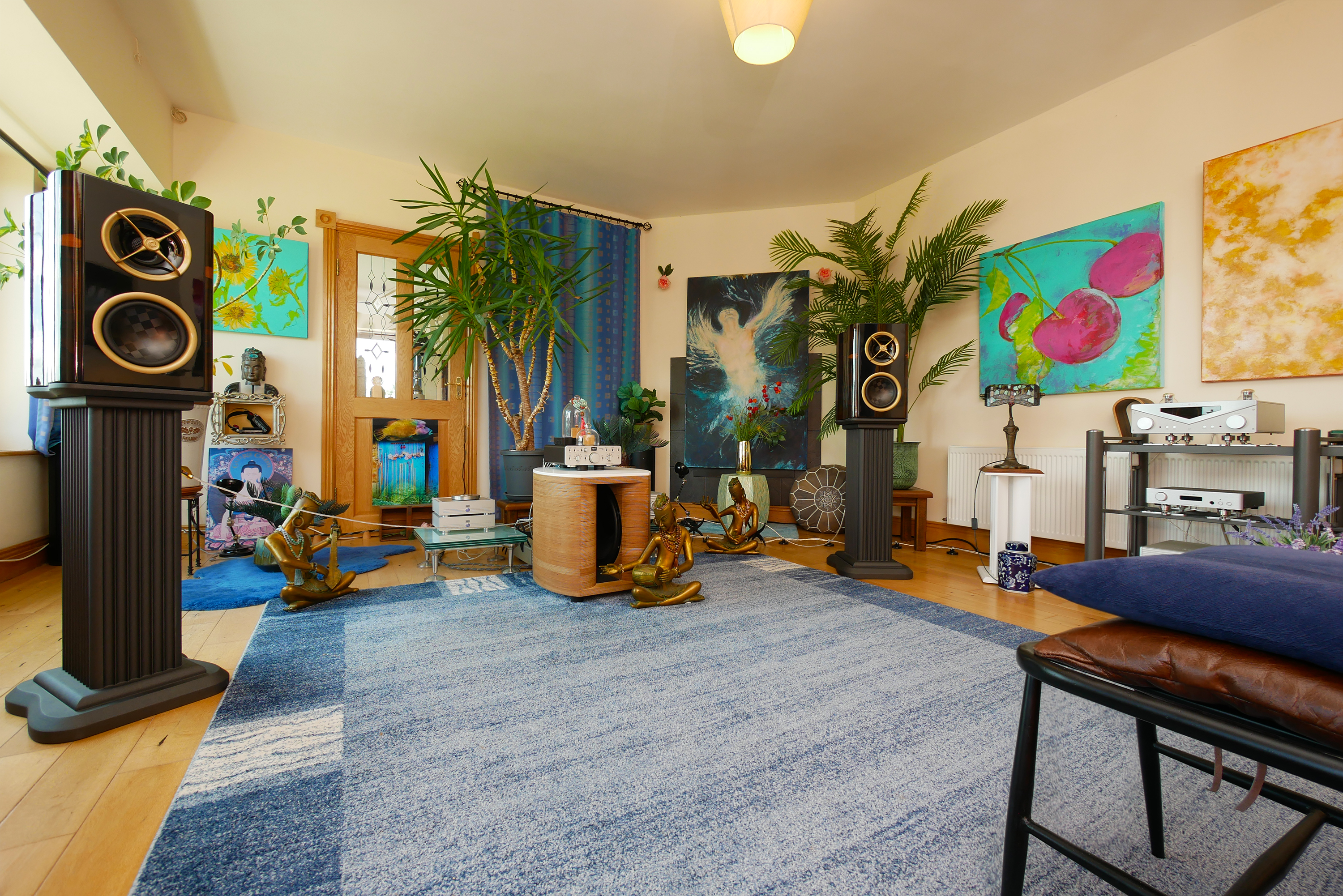
Many moons ago in still less dictatorial colonies, maverick auteur Anthony Gallo explained to me that his ideal midrange Ø was 3-4". To this day a few brands using equivalent midrange domes follow his religion. Danish marques Raidho then Børresen have long promoted 4-5¼" mid/woofers paralleled for extra cone surface in bigger 2½-way models. On the other side of the 2-way table work Zu's Method monitor and Soul VI with their coaxial cellulose drivers of 8" and 10.3" respectively. Big classic Tannoy scaled up that dual-concentric recipe to 12" even 15". We could find the middle ground to be today's ~7 inches. The first assumption for bigger drivers is more bass. Some of it smaller drivers can offset with cubic volume, porting and sensitivity loss. More relevant for bigger drivers then is the decline of insight and speed in the hand-over octaves to the tweeter. In broad strokes, here the usual balance is between mass/fullness and detail/acceleration. Already Josep's stylistic cues of heavily figured dark wood, massive architectural stand and yellow-'gold' trim seemingly aimed at a mid-century British men's club suggest an allegiance to tone mass and density over Scandi briskness. Port-endowed extension and textures add to it. Saturn Pandora prioritizes a slightly darker heavier chunkier ethos just as Qualio's bigger IQ30 did versus my resident IQ in a more recent review. My ears preferred the tuning of the smaller more impulsive IQ. From that preference the costlier wider version with its bigger drivers looked like a step down not up. Our Spaniard's ace card is the twin tweeters' resolution magnifier. It counteracts the usual aperture shrinkage which bigger mid/woofers impose on resolution in the presence region. Josep gets to have his darker chewier moister cake whilst the imaging/staging-first crew otherwise in pursuit of a smaller Raidho with ultra-fast planar tweeter get their lemony resolution fix. Meanwhile the plusher brigade won't suffer any uptilt of subjective lumens. That's because Saturn's embedded detail zoom isn't about the gloss, brilliance and air regions where my various dipole Mundorf AMT and ribbons hold an advantage. It's about the two octaves bracketing 2kHz.









What on this page took me a few minutes and one paragraph to pen took many years of regular time to actually encounter: a speaker voiced heavier than I typically fancy yet which does not suffer the relative opacity of common bigger mid/woofers in the handover region to their tweeters. A ported 5" 2-way Børresen monitor behaves quick and aspirated in very obvious ways. It's tuned to rev high and corner briskly. A Zu Method monitor proposes a very different ride. Audionostrum's Saturn Pandora splits their divide such that devotees of either camp can find enough common ground to stick around. Once they do, they might feel the magnetic attraction which opposing polarity generates to contemplate potential conversion. Hearing it so convincingly done made for some personal novelty. How Josep's 7½" chequered carbon cone and Orbiter module shake hands in the region where human hearing is at its keenest is quite special. We enjoy graduated depth layering, locked imaging and the overlay of a recorded acoustic onto our own as qualities from the quickened camp; plus richer more sonorous textures and tone heft from the Harbeth and Spendor factions. This prevents any extreme sound that would err squarely on the side of plump or lean. I'll call the finely calibrated balance rich as the realm this sound inhabits or comes from yet imbued with enough superior separation and ambient resolving powers to welcome lovers of higher resolution which otherwise would look elsewhere whilst managing without the lit-up airs of 'exotic' tweeters which focus on the two top octaves.
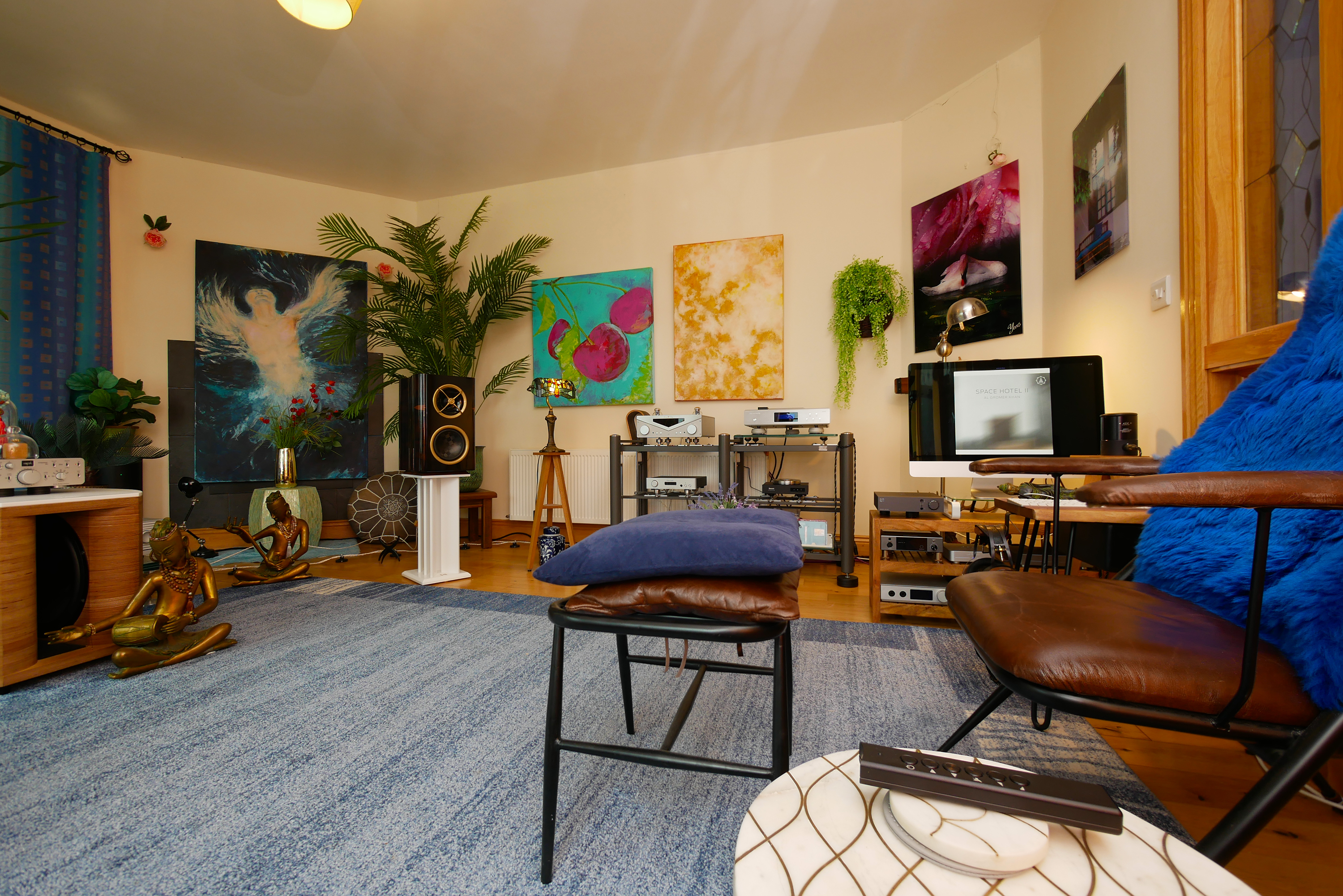
If that suggests a crafty balancing act, quite. Quasi hybrids which don't walk on the dotted line of mythical neutrality but with a foot on either side of it… that's not something one comes across every day. It's multi-tasking; being good at seemingly opposing jobs, simultaneously. Rather than cancel out, they complement. Again, that explanation is easy. Actually materializing it isn't; at least not in my experience. It tells me that Barcelona's Josep Maria Gallart at this stage in his career must be a very mature and crafty designer who according to his catalogue is comfortable working from varying vantage points. For example, his broad-shouldered 95dB twin-ported 12" Triton two-way with Beryllium tweeter and cellulose mid/woofer is an homage to 1970's studio monitors. It's virtually guaranteed to prioritize different qualities than today's Saturn monitor. As the ODS array proved all along, Audionostrum are no cookie-cutter enterprise. And their line-up packs more variation than most catalogues do which regurgitate the same recipe to different price points. That said, I found the massive stands far too tall, without levelling provisions and inexplicably costly. The same money could secure my upstairs pair of excellent 250W class AB mono amps with linear power supplies and still leave more than a grand in the till.
 Full-size Saturn with dual 9½" woofers of which the moon of Pandora is mere satellite.
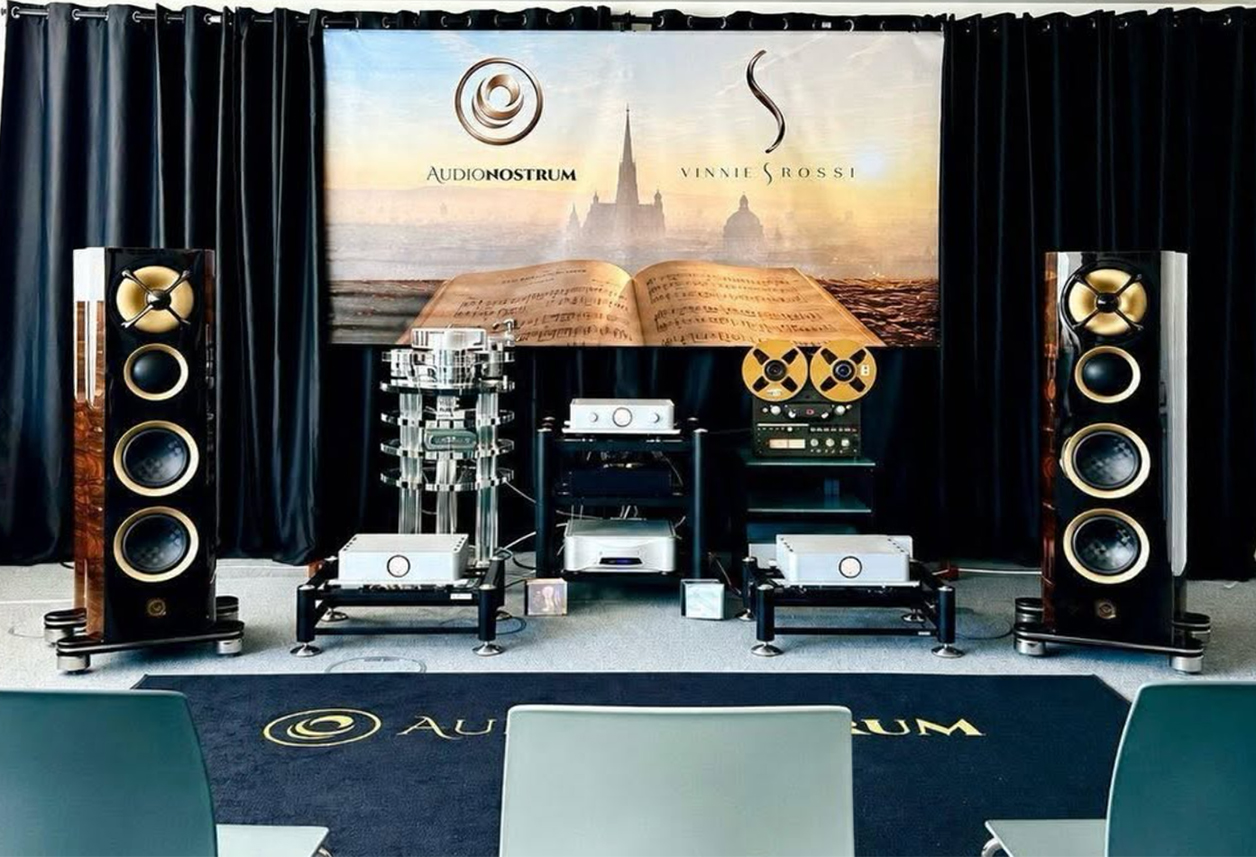
Of course attendees to this June 2026 exhibit in Vienna wouldn't have been caught thinking so small when faced by such ambitious audio aristocracy as Artesanía, Crystal/Siltech, Esoteric, Transrotor, Vicoustic, Vinnie Rossi and ZYX. In such company comments like mine fall on deaf ears; and understandably so. Context is everything.