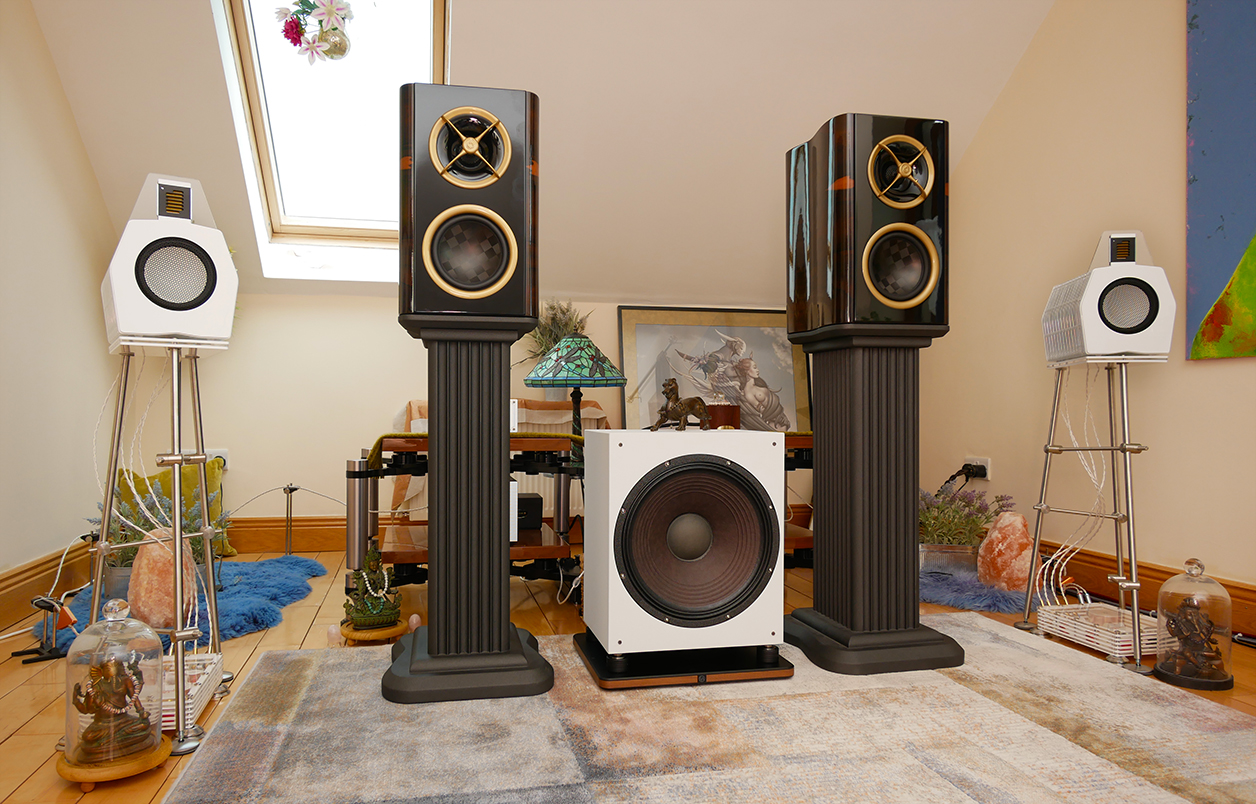
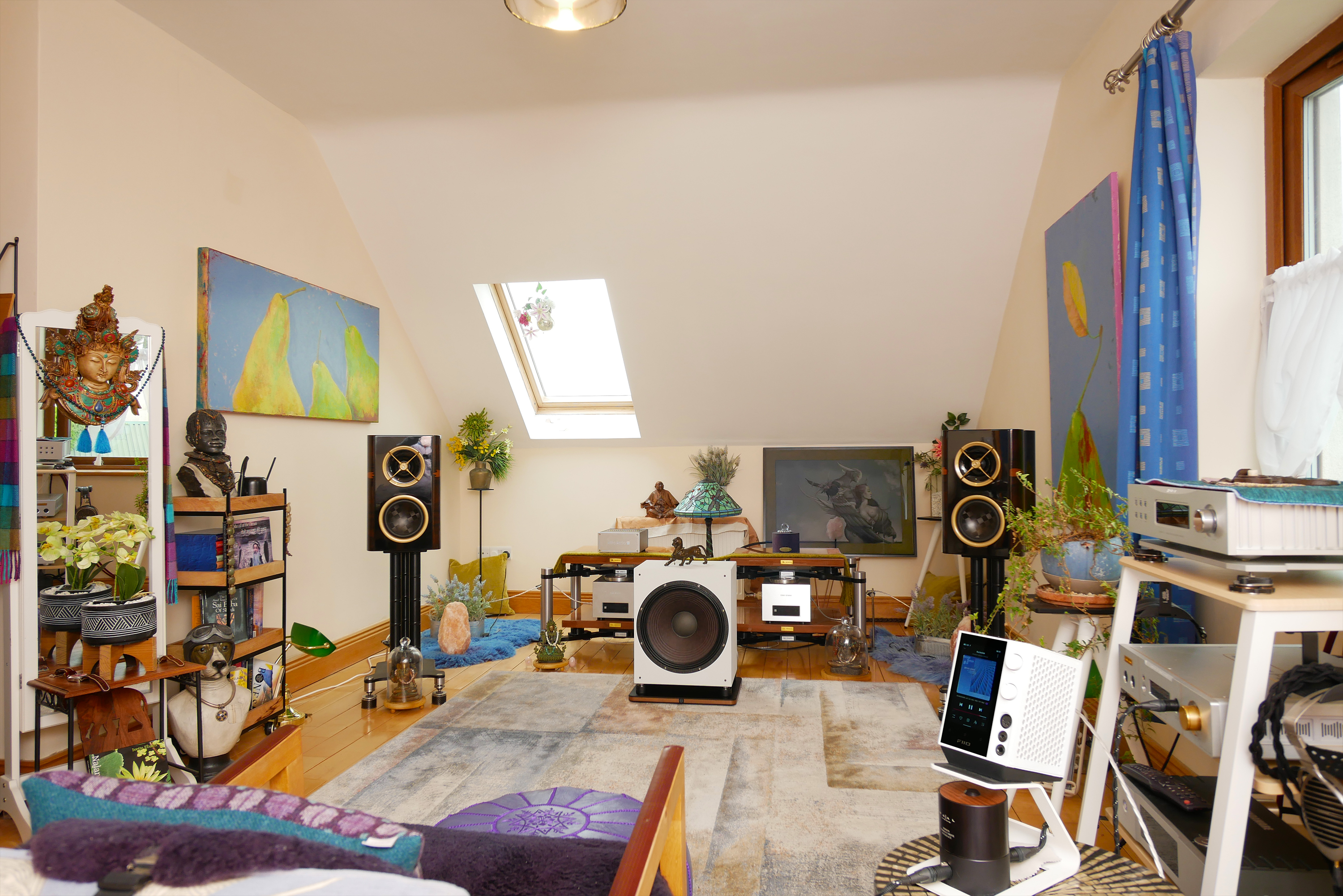
On the appointed day, the subcontractor which the DSV freight forwarder had engaged to bridge the final distance to my rural dwelling had broken down the original pallet to do the job without lift-gate lorry. This was after four subcontractors with the necessary lorries had refused the assignment. Memo to outlier buyers ordering palletized wares: expect delays if your location falls outside established supply routes that people in big cities take for granted. It's nothing sellers have control over. The more remote you live, the less enthusiastic 3rd-party delivery companies become. They want to build up a full load for your region. If that's sparsely populated, this could take a while. But certain inconveniences are a fair price to pay for a secluded life. I'm amazed when van-carried smaller shipments from Hong Kong arrive at my door in 3 days. Whilst the monitors showed up in a burly wooden crate with foam liners as one hopes for, the monolithic stands hid behind black shrink wrap and beneath it, 15+ metres of bubble wrap presumably because to make the Oslo show, a proper box for the stands wasn't available yet. A paying customer certainly wouldn't find such packaging commensurate with the ask. Once unpeeled and with uncharitable thoughts over my subsequent repacking job, my tape measured a stout 82cm for these Dorian columns. Given the low-slung Ikea rocker in this room, the tweeters would fire well above my head. So I used my own lower stands to compensate. My taller testing throne downstairs might be more accommodating to the Grecian posts. But first I wanted a few rounds in my smaller room representative of where many actual buyers might hope to park these. For this duration, the 15-inch subwoofer bypassed.
With my critic's super power, it took mere minutes to chance upon something special. Before you call me a narc—a self-deluded narcissist—my super power is a 30-min. long track which I hear nearly daily as the intro to an Osho meditation. My super power is naught but familiarity; deep familiarity. I've used this track in many different systems over the years. It's a layered affair of singing bowls, bells, mini cymbals, chimes and other oscillating objects conjuring up a Tibetan temple atmosphere. One of these intermittent metallic bells is high-pitched and farther back in the mix. That puts it behind lower louder bowls and gongs to partially obscure. In some systems, these tiny high-pitched pings aren't audible unless I play louder than the meditative purpose wants. In others they flash faintly but quickly go dark again. With Saturn's twin-tweeter system, they rang out not only in crystalline clarity but virtually twice as long as before. Not 'ping' or even 'pinng' but 'piiiiinnnnnng'. What's more, the Orbital array even tracked actual overtone modulations inside these mini events whereby multiple harmonics typical for singing bowls rub against each other to warble whilst one or two of them extinguish quicker than the last. In one fell swoop Josep's twin-tweeter invention had, in that low-treble discipline, eclipsed my favourite single tweeters of dipole Mundorf AMT followed by Raidho's monopole planar. This fell into the tired reviewer cliché of hearing things never heard before. Cliché notwithstanding, this was a real incident: dead obvious and a first. It quickly illustrated Josep's claims for his HF invention; and how it works. It better tracks music's most subdued trailing edges. It's how our ear/brain reconstructs recorded space. Decays rapidly fade as they lose amplitude. System noise works against them. Phase shift does. Many tweeters may be too heavy to follow them to their ultimate ends. Whatever the actual mechanics, Saturn pursued these fades farther. Whilst this particular recording is far from brilliant—it was 'mastered' to mid-70's cassette tape in India's Poona—it presaged how this ability would manifest in top-quality recordings of clearly mapped acoustics.








The next very obvious aspect compliments of a cinematic Jamshied Sharifi track with big drums and low synths was that—unlike my resident ModalAkustik MusikBoxx sealed two-ways petering out at ~60Hz to need a subwoofer by design—Saturn nearly went a full octave lower. In this size room, a sub really was unnecessary. Having Zu's sealed Method on hand confirmed that. Granted, our Spandiard isn't that compact. Driver diameter, cubic volume and vented loading all eclipse my sealed residents. Thinking readers already worked out that if the Orbiter system applies extra finesse to planktonic fades, shouldn't the same quality apply to rising edges? Precisely. Transient steepness in time and its microdynamic elevation show our ear/brain where images localize. On the same well-mastered Sharifi track from his One album, this extra degree of placement articulation, inside recorded space which was already better mapped with this more complete recovery of trailing fades, nicely registered. In the most basic of terms, call this more visual imaging. To be sure, all of it came off without any HF brightness. This quality did not crack open the usual Pandora's box of faux resolution which rides on a turned-up forward treble. It wasn't an amplitude effect of loudness goosed across a particular band. It rather seemed that the piezo tweeter's 'oscillatory field' refined or enlivened the main tweeter's energies. At least that's how my non-technical brain clumsily attempted an explanation.
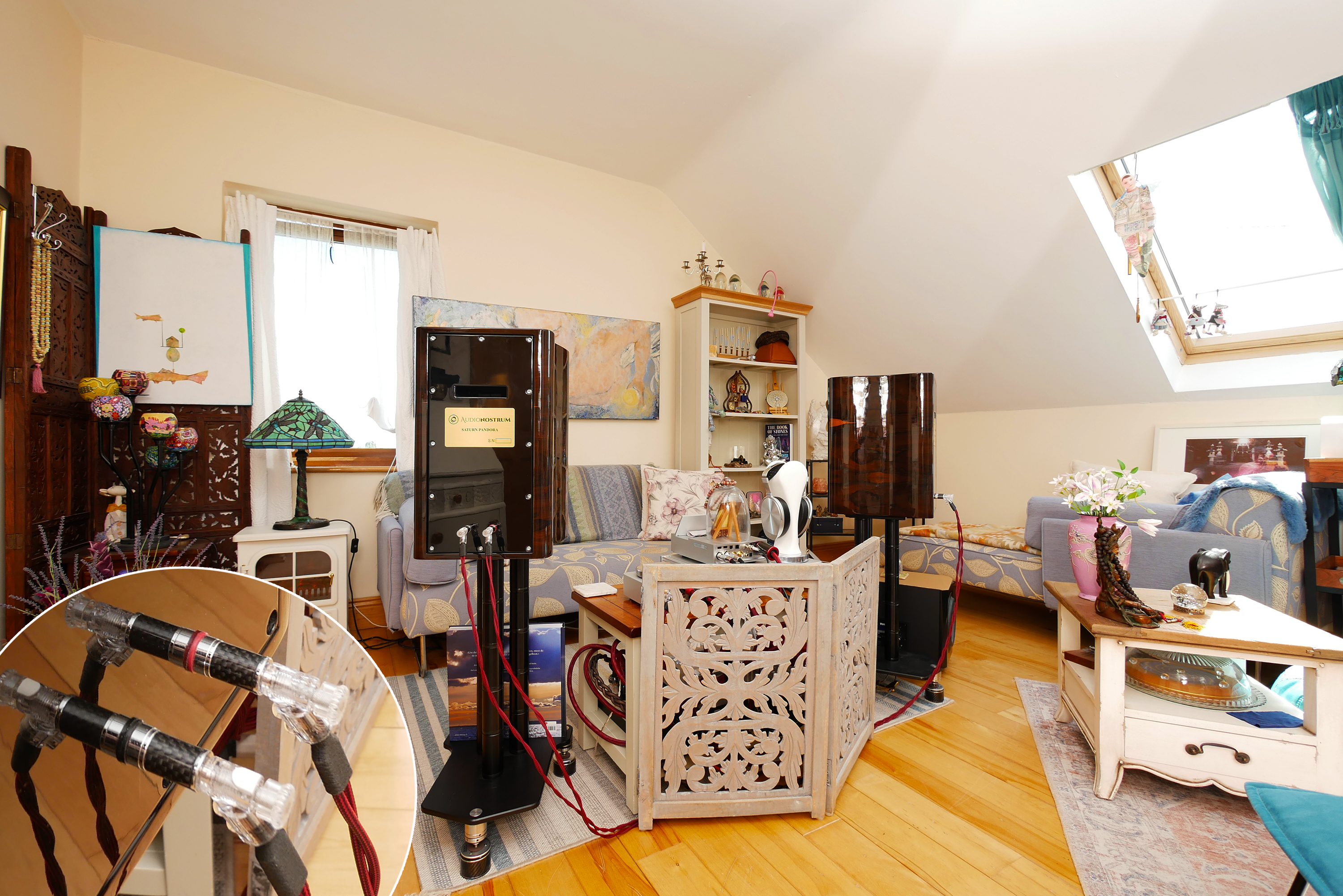
For a proper in-situ look at the speaker's back, I traipsed into my 2nd upstairs system. This is a nearfield setup but unlike my office desktop, has a couch against the wall and the speakers surrounded by open space for minimal room reactivity. Whilst the slick carbon-fibre terminal barrels look stylish, I prefer hex or winged nuts. With spades, my hands gain easier purchase. Here my cables ended in bananas to make it irrelevant. Twelve exposed screw heads to secure the back plate aren't the last word in stylishness but most installations won't show them. Despite being quite deep, the Saturn Pandora weighs less than size could suggest so is easily transported and moved. I personally didn't love the slightly baroque styling of matte-gold frontal trim and ornate veneer but had no argument with its fine execution. Plus, other finish options exist. We aren't locked into this one.
Back onto lower treble tintinnabulations. The Orbiter obviously won't arbitrarily add decay times as though bolting more RT60 to our room. Most sounds decay rather rapidly. That's how they rendered. But nothing Iingers like a Tibetan singing bowl. So it's how I first keyed into the Orbiter's special skills. Now it's important to stress that Saturn's isn't a top-down style by any metric. Its treble finesse doesn't lay on like gloss polishes a surface. Rather, it radiated from the inside out. It's how the piano of Vassilis Tsabropolous was recorded on Melos; suffused by light from a bright venue. Saturn's take quite differed from my main speakers' dipole airiness. Those are Qualio IQ, with an open-backed Mundorf AMT allied to SB Acoustic's 6½" papyrus-cone version of Saturn's 7½" carbon-fibre TeXtreme cone. Box-loaded, the latter played its bandwidth thicker and darker. On image specificity and out-of-the-box staging gush, my hybrid dipole still had a small edge. For a ported 2-way speaker of darker tuning to come this close was simply an achievement. And, downstairs Saturn willingly scaled up to quite intense SPL and slammed unexpectedly hard on the Miles_Gurtu collab album with its edgy electronica and wunderkind percussion. So let's follow that lead.
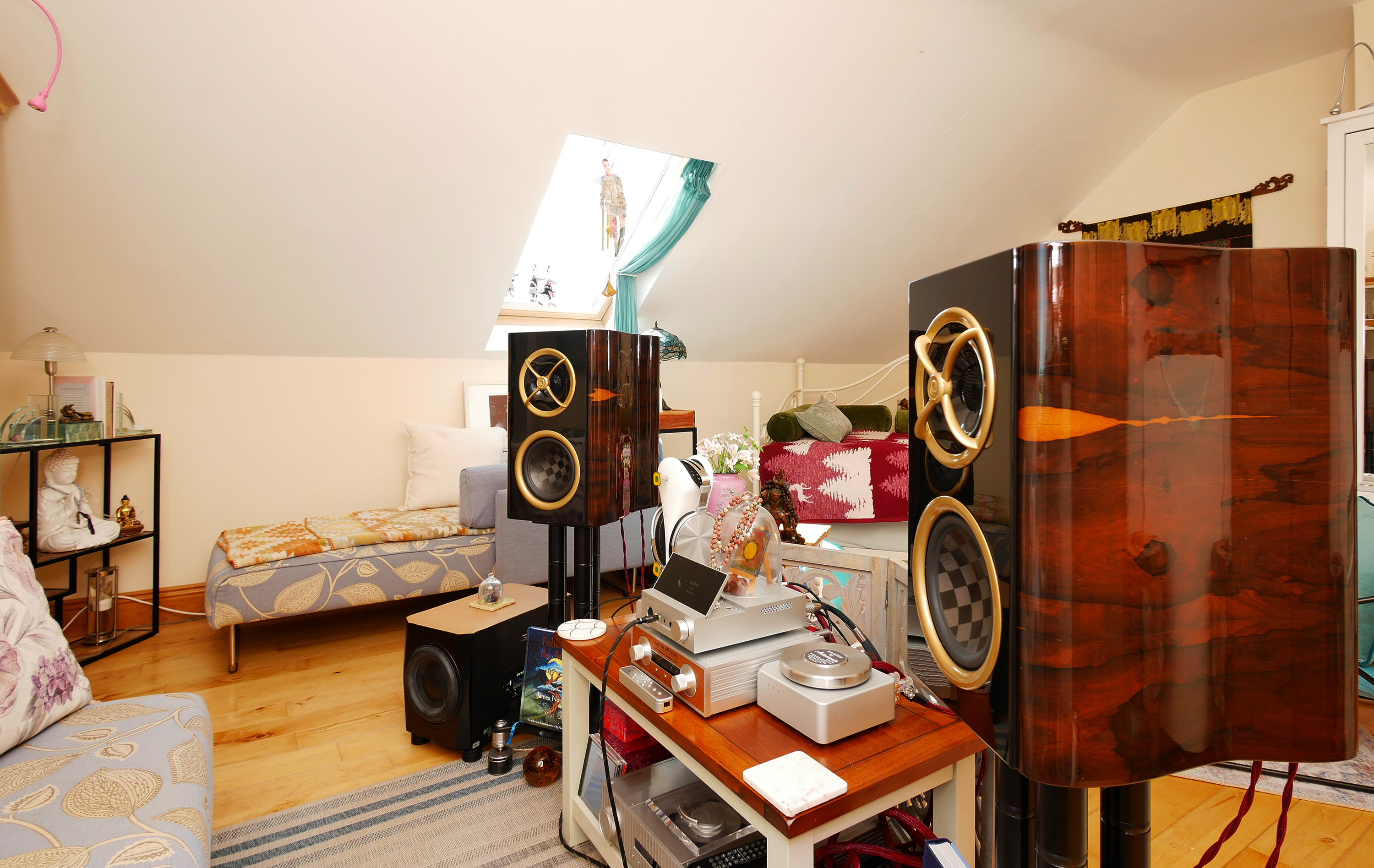 Simon Audio Lab AIO as CD transport, Shanling EM7 as 1TB SD transport and DAC, Hattor quad silver autoformer passive preamp, LAiV Crescendo monos.