
 The second order of sonic sleuthing had to determine where my 15V iFi/SilentPower PSU made more of a difference; if any. That again was an easy answer: on the digital not analogue component. I love Robert 'Robi' Svärd's Del Alma album for its musical sophistication, not its blasé dynamic compression. Just so, using the glorious "Ecos de Albayzin" linked at right, the external ultra-low-noise supply better cut through the track's rollicking density. To my inner inspector, that made the redlined crime scene of 'everything equally loud at all times' easier to comprehend. With the proper suspect arrested, all lines of inquiries were ticked off. Before I proceed, I should say that since my desktop reconfigured to its current pairing of amps and speakers, I've not heard an R2R DAC here. My main system ran various Denafrips Terminator versions over the years before I moved on because I found them too thick and insufficiently resolved. My best in-house DAC is the R2R Sonnet Pasithea from flying Dutchman Cees Ruijtenberg. It uses his unique split-level processing which treats the least/less-significant bits like the most relevant then rebalances the amplitude offset in the analog domain. My upstairs system is fronted by an I²S-fed Cen.Grand DSDAC 1.0 Deluxe which resamples all PCM to DSD1'024 on the fly. The last DAC I heard on the desktop just before moving in the Audalytic was FiiO's K15 running dual-mono AKM AK4497SVQ. Before that is was a 12-year old flagship DAC based on dual BB PCM1792 chips.
The Audalytic DR70 buffered by the companion HP70 did something obviously different. It reminded me of a Peruvian friend in Switzerland. He spoke Spanish, the ancient Inca tongue quechua, French and a bit of English. This polyglot background created interesting expressions like hallucinante. He'd use it for a heightened emotional response to a fabulous sunset over Lac Leman; or for the New Year's fireworks above Vevey which so happened to launch right below the 3rd-floor balcony of our penthouse suite in Le Mont Pélèrin. That word suggested itself now for a very particular mix of tonality and soundstaging. The former was very fruity or juicy. The latter is a bit harder to describe because whilst feeling bigger, that wasn't the primary difference. It was more billowy like a sail under extra slack yet in simultaneously higher contrast to have images pop harder. This very vivid constellation of tonality and imaging, together, reminded me of what very good direct-heated triodes can do when not tasked with speaker drive. To be sure, this wasn't about frequency response, phase shift, dither effects of subliminal noise or other valve artifacts. It also wasn't the softness of DSD though to a mellower degree, converting PCM to DSD can have a somewhat similar impact on more billowy elastic staging. This was still other than that; and stronger. At this juncture I didn't yet know how my tag team of minis split responsibility for this result. For that the DR70 had to direct-drive the amps using its own attenuator.
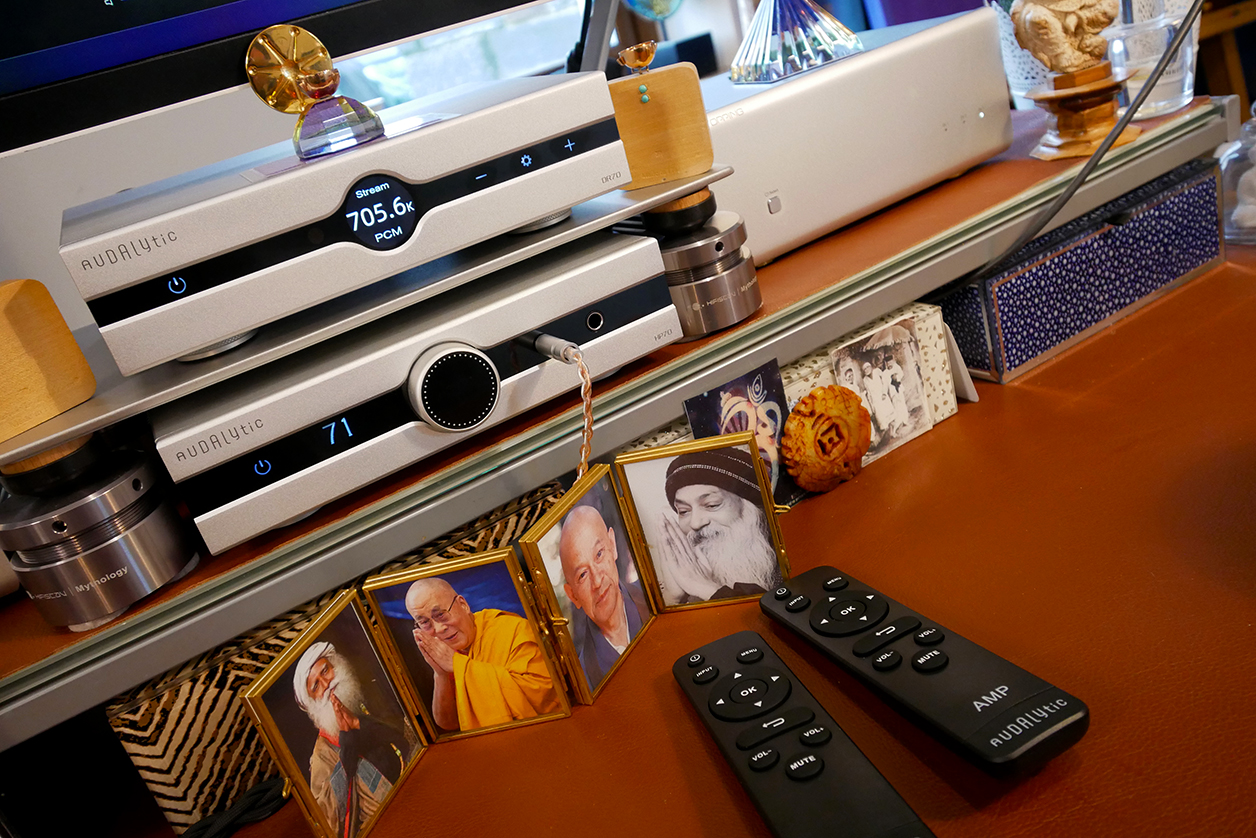
The DR70 was astonishingly good on its own; but did fall short on two counts. One, its low end was distinctly lighter. Adding the active preamp made the bassment far more – um, active. Two, that peculiar tonal fruitiness with its lingering decay trails was weaker in direct mode. But in the bliss that is ignorance, of not having an HP70 for contrast, the €399 spent on just the DAC/streamer certainly pushed the boat out very unexpectedly. Whilst my realsizing gambit could have been satisfied with FiiO's K15, I truly adore this combo. It will definitely stay not limp back dejectedly to France. So I reverted to USB mode. I despise the very idea of routing local music onto the LAN back through my noisy router rather than isolating the computer from the LAN then outputting USB. Since my Singxer SU-2 bridge lacks a USB output whilst the DR70 has no I²S whereby to transcend the S/PDIF ceiling and exploit Audirvana's upsampling algorithm to the full, I bought a silver LHY Audio UIP—yup, that's what it's called—to replace the black Singxer. That smaller box has single USB i/o plus a 10MHz clock input. Where the Stack Audio regenerator is the ingoing noise barrier on Ethernet, the LHY box will act as the outgoing noise barrier between switch-mode powered HP Z2 workstation with multiple computing add-ons hanging off its USB tree; and Audalytic's USB input. It might go without mention but to be certain, balanced headfi performance equalled speaker performance.











 From baksheesh I had arrived at bhakti; what Indians calls the practice of devotion or path of love. I was surprised to react so strongly to these affordable twins not on the path of Abhyasa which disciplines the mind but via Navdha Bhakti whose nine forms include Shravanam (listening) and Atmanivedan (surrender). Before you cringe over such esoteric terms, consider that what this downsizing interlude replaced had once cost +€10K for the DAC/pre and headamp; managed with just €750; and surpassed it. Granted, 'just' remains a relative term. But can we agree than a 90% cost savings has teeth, legs and other significant body parts we get to keep? As my first Gustard gig, I couldn't have known that I'd possess a G-spot. Now that I do, I've agreed to follow up with their bigger R26II and D26 DAC-pre/CDT combo. No worries, not bound for my desktop. Wouldn't even fit. That mention merely underscores how my first Gustard encounter impressed to want another. As a reluctant bystander to the selfie culture, handing out awards for personal purchases feels anathema. Under circumstances of ordinary review loans, the DAC would have forced my hand without any effort. That's simply not the intended takeaway. Giving these Audalytic-branded models a closer look is. For myself, I couldn't be happier. From punt to end of hunt in one friendly transaction.
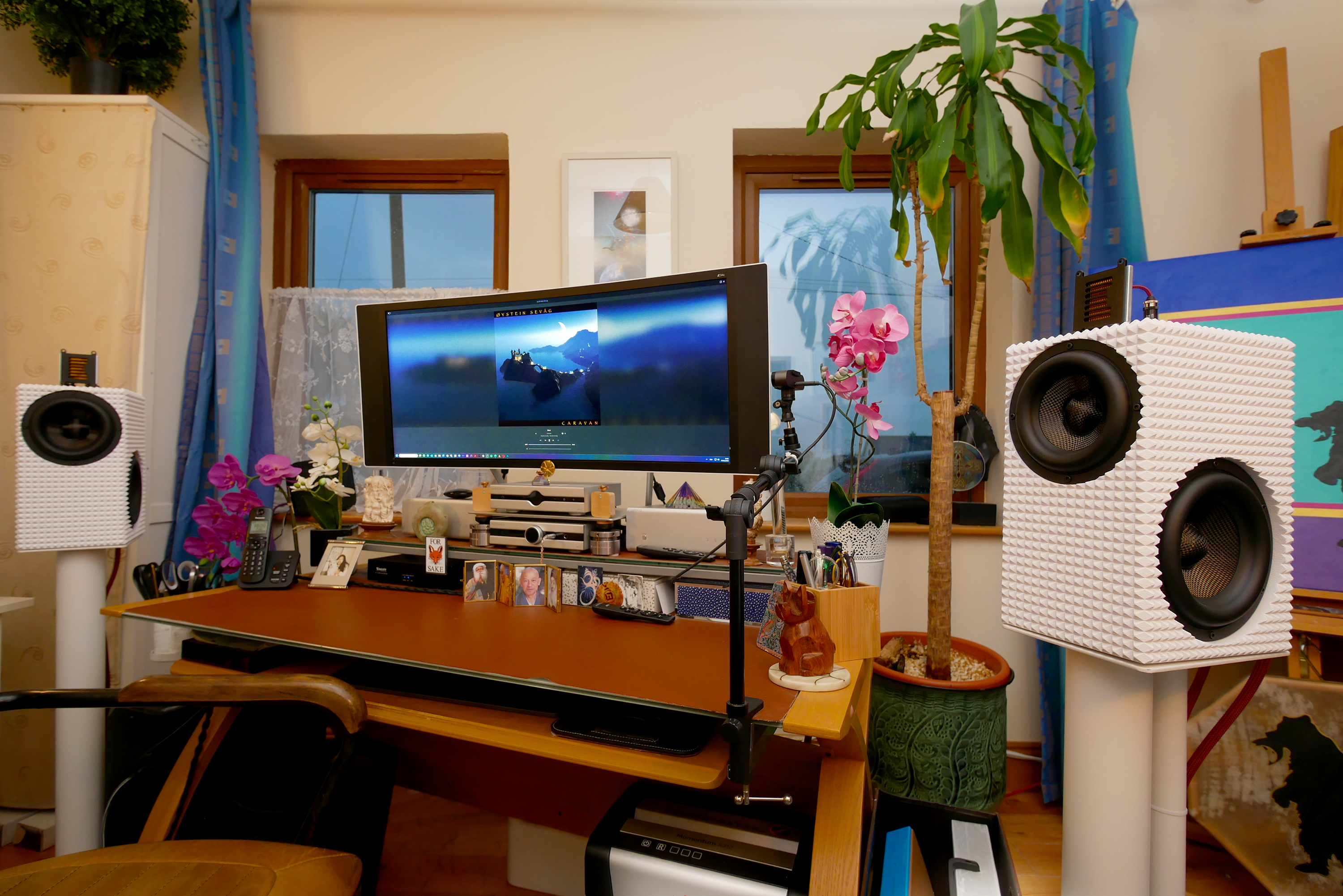
In the Western print press, Denafrips and Holo are established serious digital players. I'm not sure whether Gustard can match them yet on that type of brand awareness and standing. Given what they can do at these price points, I'd be shocked if they didn't belong into the same class. So when it's time for your next digital upgrade; or your first purchase – remember the names Gustard and Audalytic. Here's the thing. DAC differentials tend to be skinny. Inserting the DR70/HP70 combo made for a fat difference. Was this a peculiarity of my particular hardware context, a rare constellation blessed beaucoup by the usually moody hifi deities? I couldn't say. As a regular retail purchase, for once I'm strangely unconcerned. I'll say this. Gustard clearly know digital, how to exploit discrete R2R for a very vivid sound and make that matter in a €399 DAC with analog volume and basic streamer. This becomes even more potent when strapped to the matching €349 active preamp with discrete R2R volume. That's ideally considered a twofer. But no matter how I dice it, Audalytic's bijou twins are a genuine discovery worth making some noise about.
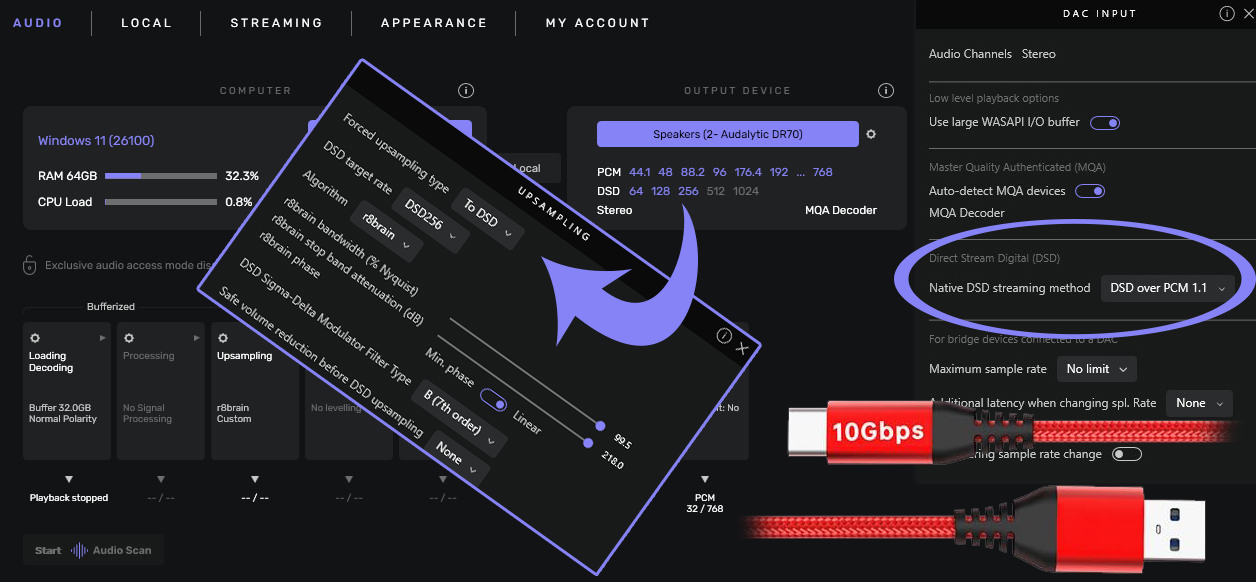 Once I discovered DSD Direct mode, it's become my favourite way of listening to the DR70.
Now I have. Someone else take over…


Audiophonic's brand page
